
Insulation Company in Crestline, CA
Blown in insulation is the most common call we get from Crestline homeowners, and for good reason. Most of the cabins and second homes up here were built between the 1950s and 1980s with 2×4 framing and whatever insulation the original builder bothered to install, which usually means thin fiberglass batts that have settled, compressed, or been chewed through by rodents. At 4,600 feet with hard freezes and a long heating season, that means propane bills that climb every winter and floors you do not want to walk on barefoot in January. The combination of mountain cold, older construction, and wildfire-hardening requirements under Chapter 7A makes Crestline insulation work different from anything a low-desert contractor handles. Placentia Insulation has served Crestline since 2018, and we match the material to the job, not the job to whatever we have on the truck. Call (855) 773-6429 for a free estimate.
Why Crestline Homes Are Different
Crestline sits in the wildland-urban interface at 4,600-plus feet in the San Bernardino Mountains. That elevation changes everything about how insulation performs and what it has to do. Winter brings hard freezes and snow, so underfloor and attic insulation are not comfort upgrades here, they are the difference between a propane bill that hurts and one that is manageable. Summer sun is intense at altitude, and occasional Santa Ana winds push fire risk to the top of every material decision.
The housing stock compounds the challenge. Most Crestline homes are mid-century mountain cabins or 1970s and 1980s second homes on pier-and-beam or slab foundations, framed with 2x4s and finished with wood siding. Many have thin or nonexistent insulation under the floor and in the walls. Open soffit vents and unscreened gable vents are standard, and those are classic ember entry points during a wildfire. On the narrow, sloped lots off Lake Gregory and along the 92325 ridge roads, open foundation vents are common too. The first thing our techs flag on a Crestline walkthrough is often not R-value, it is that those vents are ember intake points. Chapter 7A of the California Building Code effectively requires ignition-resistant exterior assemblies in the wildland-urban interface, which means vent screening, fire-rated sheathing, and non-combustible cavity insulation like mineral wool are code considerations, not optional extras. That is a different job than what an installer an hour down the hill in San Bernardino sees all week.
Our Main Crestline Services
Crestline homeowners call about two insulation problems more than anything else: underinsulated attics that leak heat all winter and drafty, hard-to-reach areas that conventional batts never sealed properly. Here is how each one works up here.
Attic Insulation in Crestline
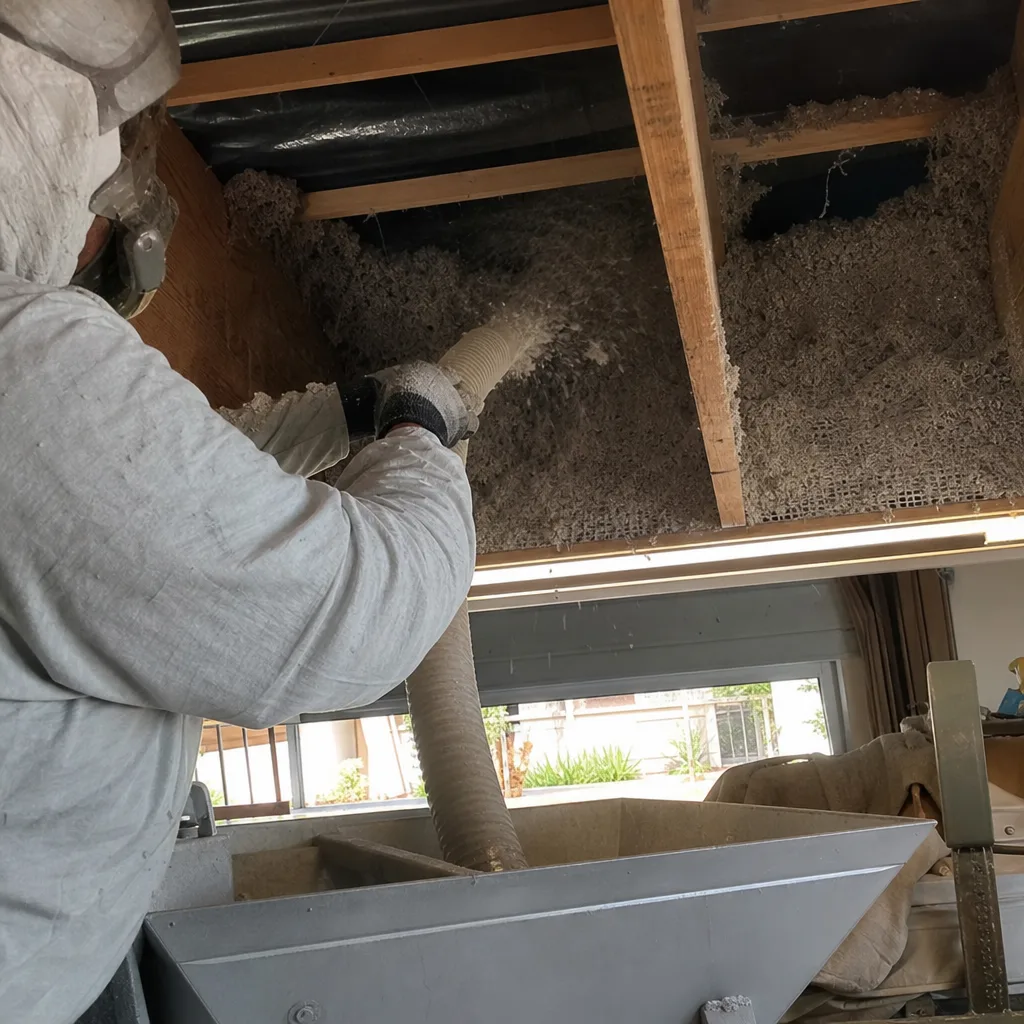
Attics in Crestline cabins are usually shallow, awkwardly framed, and accessible only through a small hatch or a pull-down stair in a hallway ceiling. Heat rises through the ceiling and exits through whatever insulation is up there, which in many of these older homes is a few inches of compressed fiberglass from the Reagan administration. The fix is not always more of the same. On a Crestline attic job we assess the existing venting first, because ridge and gable vent placement matters for both snow-season moisture control and ember resistance. Depending on the structure, we may recommend blown-in fiberglass, cellulose, or a sealed spray foam approach. One local condition that changes the work: attic temperatures can swing sixty degrees between a summer afternoon and a winter night, so the material has to handle that cycle without settling or degrading. Learn more about how we approach this in the mountains on our Attic Insulation in Crestline page.
Spray Foam Insulation in Crestline
Spray foam solves problems that batts and loose fill cannot reach, and Crestline has plenty of those problems. Half-walls meeting rooflines, rim joists over pier-and-beam foundations, knee-wall attics behind upstairs bedrooms, and crawlspaces with awkward access are all common up here. Closed-cell foam adds structural rigidity and a moisture barrier, which matters in a climate that gets snow sitting on roofs for weeks at a time. Open-cell foam is often the better fit for tight ceiling cavities where closed-cell expansion could stress old framing. The Chapter 7A conversation is relevant here too: foam must be covered by ignition-resistant materials in some exterior assemblies, and we follow those details carefully. For the full picture on materials and methods in the mountains, see Spray Foam Insulation in Crestline.
What happens when you call
- 1
A real person answersNo phone trees — you reach a local pro.
- 2
You get an upfront price rangeHonest numbers before anyone is dispatched.
- 3
A background-checked tech heads outLicensed & insured, dispatched right away.
- 4
You approve before work beginsNothing starts until you say go.
Blown In Insulation in Crestline
Blown in insulation is our most-requested service in Crestline, and the reason is straightforward: it is the fastest, most effective way to add meaningful R-value to an old mountain home without tearing out walls or floors. Most 92325 homes have accessible attics and open crawlspaces, which makes loose-fill installation practical even on sloped lots where bringing in batts would be awkward. We install blown-in fiberglass and cellulose, and we match the material to the house, not the house to the material. For the deeper background on this method, our Blown In Insulation hub page covers the full process.
Cellulose Insulation
Signs you need it
Your attic has less than six inches of settled insulation, your heating bills climb every winter, or an energy audit flags uneven ceiling temperatures in rooms on the same floor.
What it costs in Crestline
Blown-in cellulose in a typical Crestline attic runs $1,400 to $3,400 depending on square footage, existing material removal, and access difficulty on sloped lots.
How we do it
We air-seal ceiling penetrations first, then blow GreenFiber cellulose to the target depth using a hose run from a truck-mounted machine, working around trusses and vent baffles as we go.
Blown In Attic Insulation
Signs you need it
Snow melts off your roof faster than your neighbors’ roofs, bedrooms over the garage are cold in January, or you can feel a temperature drop the moment you step into your upstairs hallway.
What it costs in Crestline
A complete blown-in attic insulation job in Crestline typically falls between $1,400 and $3,400, with the higher end reflecting deeper attics, removal of old batts, and difficult hatch access.
How we do it
We check baffle and vent placement first so we do not create an ember trap or trap moisture, then blow insulation to the R-value the attic framing can realistically hold without blocking airflow at the soffits.
Blown In Cellulose Insulation
Signs you need it
Your existing attic insulation has compacted to half its original depth, or you want a dense-packed application to fill irregular wall cavities in an older frame cabin.
What it costs in Crestline
Dense-packed cellulose in walls runs $2,200 to $4,500 in Crestline depending on wall area and whether we are working from the interior or exterior side of the framing.
How we do it
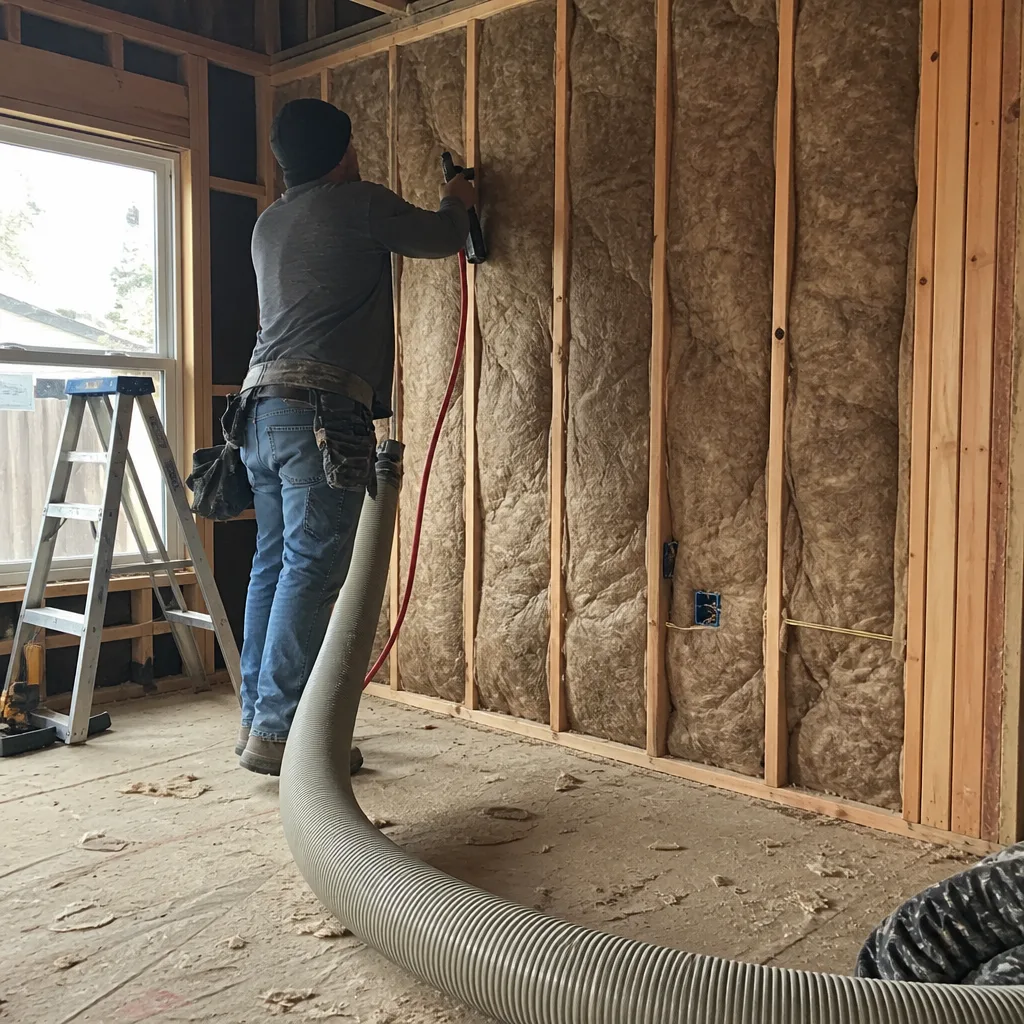
We drill access holes at measured intervals, insert a fill tube, and pack GreenFiber cellulose to the density the cavity width calls for, then patch and finish each hole cleanly.
Blown In Fiberglass Insulation
Signs you need it
You want a loose-fill attic insulation with predictable settling characteristics, or your current fiberglass batts are moisture-stained and no longer performing anywhere near their original spec.
What it costs in Crestline
Blown-in fiberglass for a standard Crestline attic runs $1,200 to $2,900, depending on depth, access, and whether old insulation needs removal first.
How we do it
We load the blowing machine with Johns Manville or Knauf loose-fill fiberglass, run the hose to the attic, and apply at a consistent depth, checking coverage with depth markers as we work.
Loose Fill Insulation
Signs you need it
Your attic floor has gaps, irregular joist spacing, or tight corners where batts never fit tight in the first place, leaving cold spots you can map with a thermal camera.
What it costs in Crestline
Loose-fill insulation in attics, knee walls, or enclosed floor cavities in Crestline generally ranges from $1,200 to $3,400 depending on material and the number of separate areas we are filling.
How we do it
We set access points where the cavity layout allows, install fill tubes or guide the hose to each bay, and blow material until the cavity is uniformly filled without voids or overpacking.
What Blown In Insulation Costs in Crestline
| Item | Typical range in Crestline |
|---|---|
| Blown-in fiberglass attic insulation | $1,200 – $2,900 |
| Blown-in cellulose attic insulation | $1,400 – $3,400 |
| Dense-packed cellulose wall insulation | $2,200 – $4,500 |
Does blown in insulation settle over time in Crestline’s climate?
Cellulose settles slightly in the first few weeks, which is why we install it to a slightly higher initial depth. Fiberglass settles less. We calculate for settlement so the final R-value meets the target after everything stabilizes.
Can blown in insulation be added on top of existing insulation in a Crestline cabin?
In most cases yes, provided the existing material is dry and free of rodent damage. We check for moisture intrusion from snow melt first, then add new material on top to reach the target depth.
Brands We Service in Crestline
We stock and install GreenFiber cellulose, Johns Manville and Knauf loose-fill fiberglass, Rockwool mineral wool, CertainTeed batts, and both Icynene and Demilec spray foam. For Crestline jobs we keep the most common mountain-home materials on hand, so a standard attic or underfloor job is not delayed waiting on a truck from down the hill. See the full lineup at our brands page.
Pricing for Insulation Company in Crestline, CA
| Service | Typical range in Crestline |
|---|---|
| Blown-in fiberglass attic insulation | $1,200 – $2,900 |
| Blown-in cellulose attic insulation | $1,400 – $3,400 |
| Dense-packed cellulose wall insulation | $2,200 – $4,500 |
| Attic insulation (full project) | $1,900 – $4,800 |
| Spray foam insulation (open-cell) | $2,400 – $5,600 |
| Spray foam insulation (closed-cell) | $3,600 – $8,000 |
| Underfloor insulation | $1,600 – $4,200 |
| Acoustic/fire mineral wool insulation | $2,600 – $6,400 |
The two biggest price drivers in Crestline are access and prep work. A house on a steep 92325 hillside with a crawlspace you have to belly into costs more to insulate than a flat-lot home with a standing-height foundation, and removing old, rodent-damaged or moisture-compromised insulation adds labor. You will get a written, line-item price before any work starts, and that price does not change unless the scope does.
Neighborhoods We Serve in Crestline
We work throughout the 92325 ZIP code, from the narrow ridgeline streets above Lake Gregory to the flatter pockets near the center of town and the wooded lots that climb toward the Crestline summit. Our typical response window for a Crestline estimate is within a few days, with faster scheduling available for urgent fire-season remediation work.
- Lake Gregory area
- Crestline ridge roads above highway 138
- Valley of Enchantment side streets
- Summit corridor
- Cedarwood and surrounding cabins
Service Area – Cities Near Crestline
Along with Crestline, we serve mountain and foothill communities throughout the San Bernardino range. Homeowners in Lake Arrowhead, CA and Muscoy, CA call us for the same mountain insulation challenges Crestline faces. Down the hill, we cover San Bernardino, CA and Highland, CA for whole-home insulation, spray foam, and blown-in work.
Serving Crestline, CA — Our Local Coverage Area
We’re based in the Crestline area and know this community well. Use the map below to see our service coverage — if you’re nearby, we can almost certainly help.
FAQs About Insulation Company in Crestline
We schedule Crestline estimates within a few days in most cases. For fire-season concerns like exposed cavity insulation or unscreened foundation vents, we can often prioritize a visit because we understand the urgency of Chapter 7A compliance up here.
Most insulation-only work does not require a permit, but any project that involves changes to exterior assemblies, venting, or fire-rated sheathing may need compliance documentation under Chapter 7A. We can tell you early in the walkthrough whether your scope crosses that line, and we have handled enough Crestline jobs to know what the county is looking for.
Yes. Many Crestline homes need underfloor and attic insulation addressed together, especially older cabins with open foundation vents and shallow attic insulation. We can scope both areas in one visit and schedule the work so the most urgent area is done first, typically the same day if access allows.
If your Crestline home is cold in winter, hot upstairs in summer, or you are sorting out what Chapter 7A means for your insulation, call us at (855) 773-6429 for a free estimate. We will tell you honestly what your house needs, what it costs, and what can wait.
What happens when you call
- 1A real person answersNo phone trees — talk to a local insulation pro.
- 2You get an upfront price rangeHonest numbers before anyone is dispatched. No surprises.
- 3A background-checked tech heads outLicensed & insured, typically within 30–60 min.
- 4You approve before work beginsNothing starts until you say go.
What Crestline Customers Say
"He did a blower door test before and after and gave me the numbers. I like being able to see the difference rather than being told about it."
— Rachel Sullivan"Told me the crawlspace didn't need doing and only the attic did. Half the job, half the money."
— Adriana Rodriguez"Handled the utility rebate paperwork, which knocked a real amount off the final cost."
— Gilbert Ramirez