
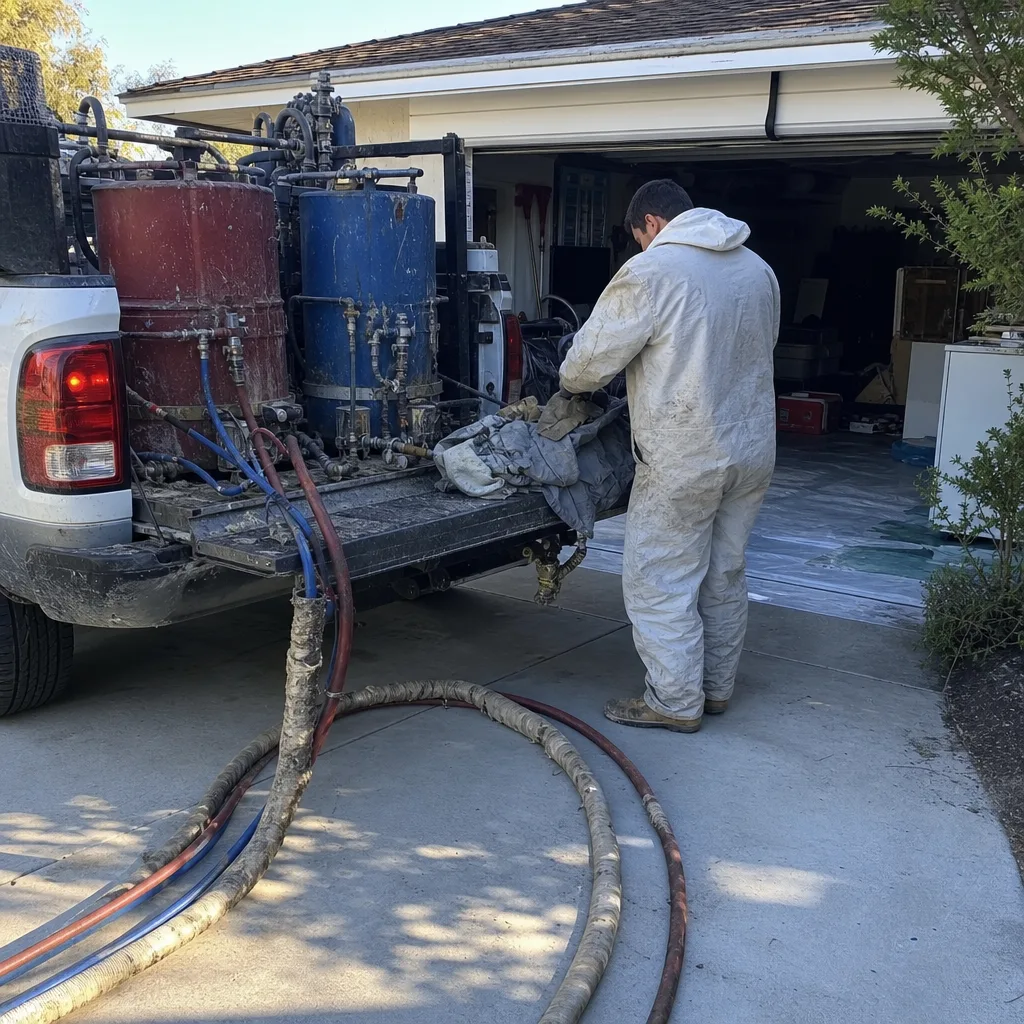
Fast, Reliable Spray Foam Insulation Across Highgrove
Spray foam insulation in Highgrove typically costs $1.80 – $4.50 per board foot installed, with most whole-attic projects in the 92313 zip code landing between $4,200 and $9,800 depending on foam type and square footage. The bigger story in Highgrove isn’t just the install, it’s whether the foam gets paired with proper attic ventilation so it actually handles the 140°F+ attic heat this neighborhood deals with from June through September. We work throughout Highgrove weekly, from the older streets off Center Street to the ranch tracts near Michigan Avenue, and we know exactly how these mid-century attics behave when the inland sun hits them. Call (855) 773-6429 and we’ll give you a straight read on what your attic needs, no pressure.
Why Placentia Insulation Is Highgrove’s Preferred Spray Foam Insulation Company
Highgrove’s housing stock isn’t like newer Inland Empire developments. These are 1950s through 1980s tract and ranch homes with vented attics, original framing, and insulation that’s often been sitting there through forty or fifty triple-digit summers. Alan Whitcomb, who leads our team, has spent years studying how those attics fail: batts crushed by foot traffic, soffit vents painted over, gable vents that never moved enough air. We’re not a general contractor who happens to spray foam on slow days. Insulation is the entire job, every day, for every crew member.
Homeowners around Grand Terrace and Colton often call us after seeing neighbors’ results in Highgrove. What keeps them calling is the same thing: we pull the old material out, look at how the attic breathes, and only then choose between open-cell Icynene or closed-cell Demilec foam. That selection matters. You don’t spray the same chemistry on a vented 1960s ranch as you would on a sealed modern build. Highgrove homes almost always need vented assemblies, and we treat that as a hard requirement, not an upsell.
Most insulation contractors carry one or two product lines. We carry eight brands so your home gets what it actually needs. That means we’re never forcing closed-cell onto an attic that wants open-cell, and never pretending a radiation barrier isn’t the missing piece. Alan Whitcomb started this company to solve that exact mismatch problem, and it’s the reason we keep getting called back to Highgrove streets year after year.
Garage Spray Foam Insulation in Highgrove
Garage Spray Foam Insulation in Highgrove is one of the most common upgrades we do for homeowners who’ve converted a garage into a workshop, home gym, or storage space that gets unbearably hot by noon. Many Highgrove garages have uninsulated walls and door panels, which means they absorb the same inland sun that bakes the roof. A typical garage spray foam job in Highgrove runs $1,400 – $3,800 depending on whether we’re doing the ceiling, the shared wall with the house, or the full envelope.
Ceiling and Shared Wall Applications
When a garage shares a wall with living space, that wall is usually the place heat sneaks inside. We apply closed-cell foam against the shared studs to create both a thermal break and an air seal. For garage ceilings under unconditioned attics, open-cell foam on the deck plus baffled ventilation keeps the garage noticeably cooler without trapping moisture in the rafters.
Detached Garage Considerations
Detached garages in Highgrove sit in full sun and radiate heat for hours after sunset. Foaming the wall cavities with Demilec closed-cell makes a measurable difference, especially when paired with a reflective barrier on the roof side. We see detached garage projects run toward the higher end of the range simply because there’s more exposed surface area to cover.
Closed Cell Spray Foam Insulation in Highgrove
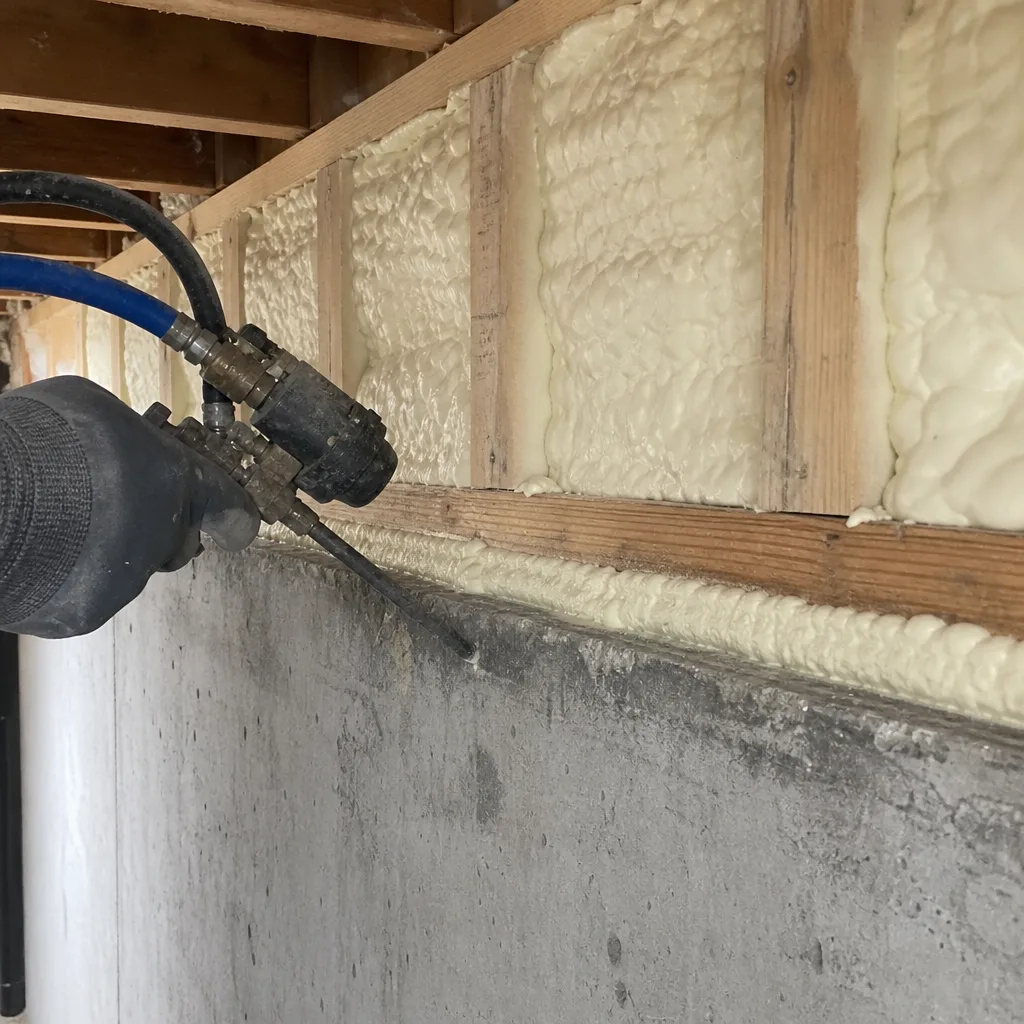
Closed Cell Spray Foam Insulation in Highgrove is the right call when moisture control and structural rigidity matter as much as temperature. In a climate this dry, people tend to forget that Highgrove gets occasional heavy winter rains, and old vented attics can still load up with humidity. Closed-cell foam acts as both an air barrier and a vapor retarder, which makes it ideal for knee walls, rim joists, and any attic assembly where we’re trying to stop conditioned air from escaping while keeping exterior moisture out. Closed-cell work in Highgrove typically runs $2.10 – $4.50 per board foot, and a focused rim-joist job is often under $2,500 while a full attic floor application lands in the $6,000 – $9,800 range.
Rim Joist Sealing in Older Homes
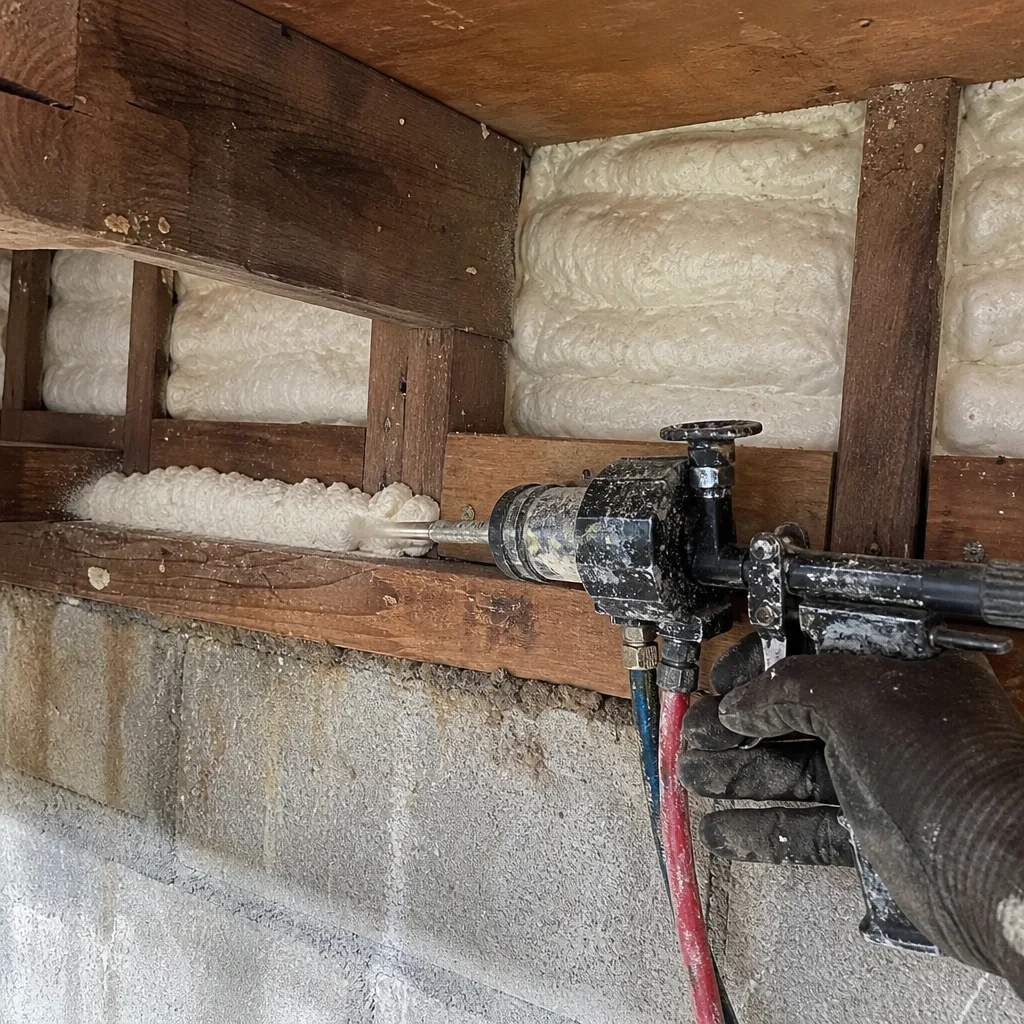
Highgrove’s fifties and sixties ranchers often have completely unsealed rim joists, which means hot air pours into the crawlspace in summer and conditioned air leaks out year-round. Closed-cell foam pressed into the rim joist bays stops that exchange. It’s not glamorous work, but it’s where the energy math actually happens.
Knee Wall and Bonus Room Coverage
When a Highgrove homeowner has a converted bonus room or a half-story with knee walls, closed-cell on the back side of those walls makes a dramatic difference. We spray it on the attic side, then verify the soffit baffles are still clear so air moves the way the original roof design intended.
Trusted Brands We Service in Highgrove
We stock and install Icynene and Demilec spray foam systems, and we’ve chosen those two for a reason. Icynene’s open-cell line handles Highgrove’s vented attics beautifully: it lets moisture move while sealing air leakage. Demilec’s closed-cell gives us the rigidity and vapor control we need for rim joists, knee walls, and garages. Because we also carry Rockwool and GreenFiber for adjacent applications, we’re never stuck trying to make one product solve every problem. For Highgrove customers, that means we can match the material to the job, not the job to whatever’s on the truck.
Common Spray Foam Insulation Problems We See in Highgrove Homes
- Foam over collapsed fiberglass. Spraying new foam directly over original batts that have been crushed by fifty years of heat cycling and foot traffic traps a layer of dead insulation that does nothing. We remove the failed batts first, then spray a clean substrate.
- Sealed foam with no soffit ventilation. A vented attic with closed-cell foam sprayed across the ceiling and no baffles creates an oven. Radiant heat gets trapped above the foam and cooks the shingles from below. We address airflow before or during every foam install in Highgrove.
- Cracked lath-and-plaster ceilings from thick closed-cell. Older Highgrove homes with original plaster ceilings can’t handle thick layers of rigid closed-cell foam. Too much of it, applied too fast, can cause differential expansion and crack the plaster. We regulate depth and lift thickness on legacy homes.
- Foam run-up around wiring and fixtures. Highgrove has its share of knob-and-tube and older recessed light housings. Foam applied against those without clearance is a fire hazard. We identify those conditions during the walkthrough and route the install around them safely.
Pricing for Spray Foam Insulation in Highgrove, CA
Highgrove pricing breaks down by square footage and foam type. Open-cell Icynene runs $1.80 – $2.90 per board foot. Closed-cell Demilec runs $2.10 – $4.50 per board foot. A typical 1,200-square-foot attic with open-cell lands around $4,500 – $6,500, while closed-cell on the same attic pushes toward $8,000 – $9,800. Rim joist work stays affordable, usually $1,800 – $2,500 for a standard ranch footprint. Garages clock in at $1,400 – $3,800 depending on surfaces treated. The main cost drivers in Highgrove are access height, whether we’re removing old batts first, and whether the job includes adding soffit baffles. We give free estimates and real numbers before any work starts. Call (855) 773-6429 and we’ll walk your attic with you.
We Also Serve Cities Near Highgrove
Our crews cover Highgrove constantly, and we also run jobs into Highgrove‘s neighboring cities: Grand Terrace, Colton, Loma Linda, and Rubidoux. If you’re in one of those communities and dealing with the same inland attic heat, the same team handles your spray foam work with the same local understanding. Our Spray Foam Insulation service spans the whole Grand Terrace-to-Rubidoux corridor.
Serving Highgrove, CA — Our Local Coverage Area
We’re based in the Highgrove area and know this community well. Use the map below to see our service coverage — if you’re nearby, we can almost certainly help.
FAQs About Spray Foam Insulation in Highgrove
Yes, spray foam works well in Highgrove as long as it’s paired with the attic ventilation the home already needs. Highgrove’s summers routinely push attic temperatures above 140°F, so the foam’s air-sealing properties prevent that superheated attic air from leaking into living space, while the ventilation path we maintain lets radiant heat escape rather than getting trapped above the foam. Without ventilation upgrades, foam alone underperforms and can even make things worse. Call (855) 773-6429 and we’ll explain exactly how the airflow in your attic would work with foam.
We rarely recommend spraying over existing batts. In Highgrove’s older homes, those original fiberglass batts are usually compressed, dust-filled, and no longer performing as an insulation layer. Spraying over them seals in that failure and complicates any future inspection or repair. We remove the old material first, fix any ventilation issues, and then apply the foam directly to the attic floor or roofline. The result is a cleaner, longer-lasting, and measurably more effective installation.
For most Highgrove garages, closed-cell Demilec is the best option because it provides a strong thermal barrier in a thinner profile and adds structural rigidity to older wall framing. If the garage ceiling opens into vented attic space, we may use open-cell Icynene on the ceiling and closed-cell on the walls. Which direction we go comes down to how the garage is built, whether it’s attached or detached, and whether you’re trying to keep it comfortable or just stop heat from bleeding into the house through the shared wall. Estimates are free, and we’ll tell you what works for your setup.
Spray foam seals the thermal boundary, but it doesn’t replace ventilation. In older Highgrove homes with vented attics, we must maintain a clear air path from the soffit vents up to the ridge or gable vents. That means installing baffles before spraying, especially when foam goes against the roofline. Without the air path, the heat radiating off a sun-baked roof deck stays trapped above the foam and can shorten the roof’s lifespan. We treat ventilation as a required companion to any foam install, not an optional extra.
Spray foam is safe for lath-and-plaster homes when applied correctly. The concern is thickness and expansion: closed-cell foam expands as it cures, and if we spray it too thick against a brittle plaster ceiling, the expansion force can crack the plaster. On older Highgrove lath-and-plaster homes, we control lift thickness, use lower-expansion open-cell where appropriate, and take extra care around original ceilings and walls. We also check for knob-and-tube wiring and unrated recessed lights before any foam goes in, since those are fire-clearance issues that must be handled first.
Call for a Free Highgrove Spray Foam Estimate
Highgrove attics get hotter than most of Southern California, and the fix is more than just adding foam. It’s matching the right product to your house, pulling out what’s failed, and making sure the attic still breathes the way it was designed to. Alan Whitcomb and our crews know these mid-century homes because we work on them every week. Call (855) 773-6429 and book a free estimate. We’ll walk the attic with you, show you what we’re seeing, and give you a number you can actually plan around.
Written by Alan Whitcomb, Owner at Placentia Insulation, serving Highgrove and the surrounding Inland Empire communities.