
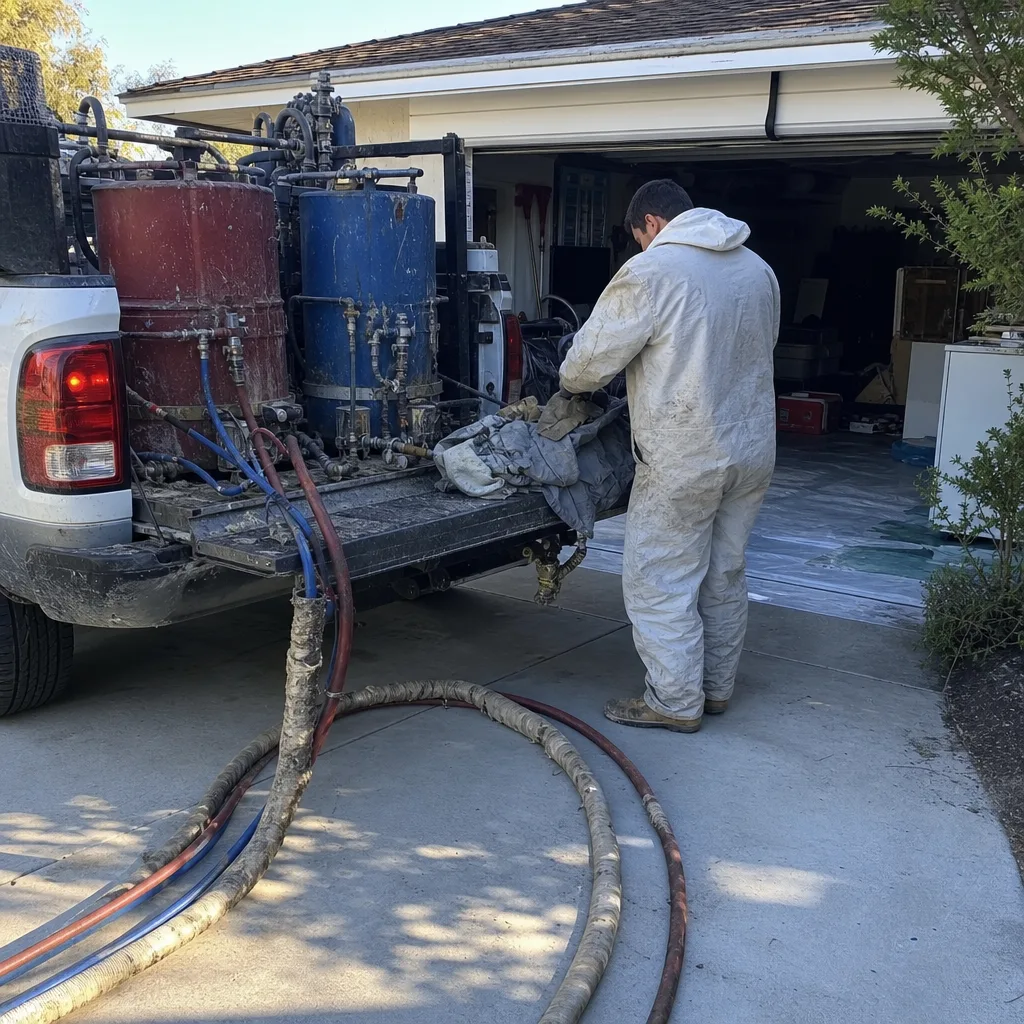
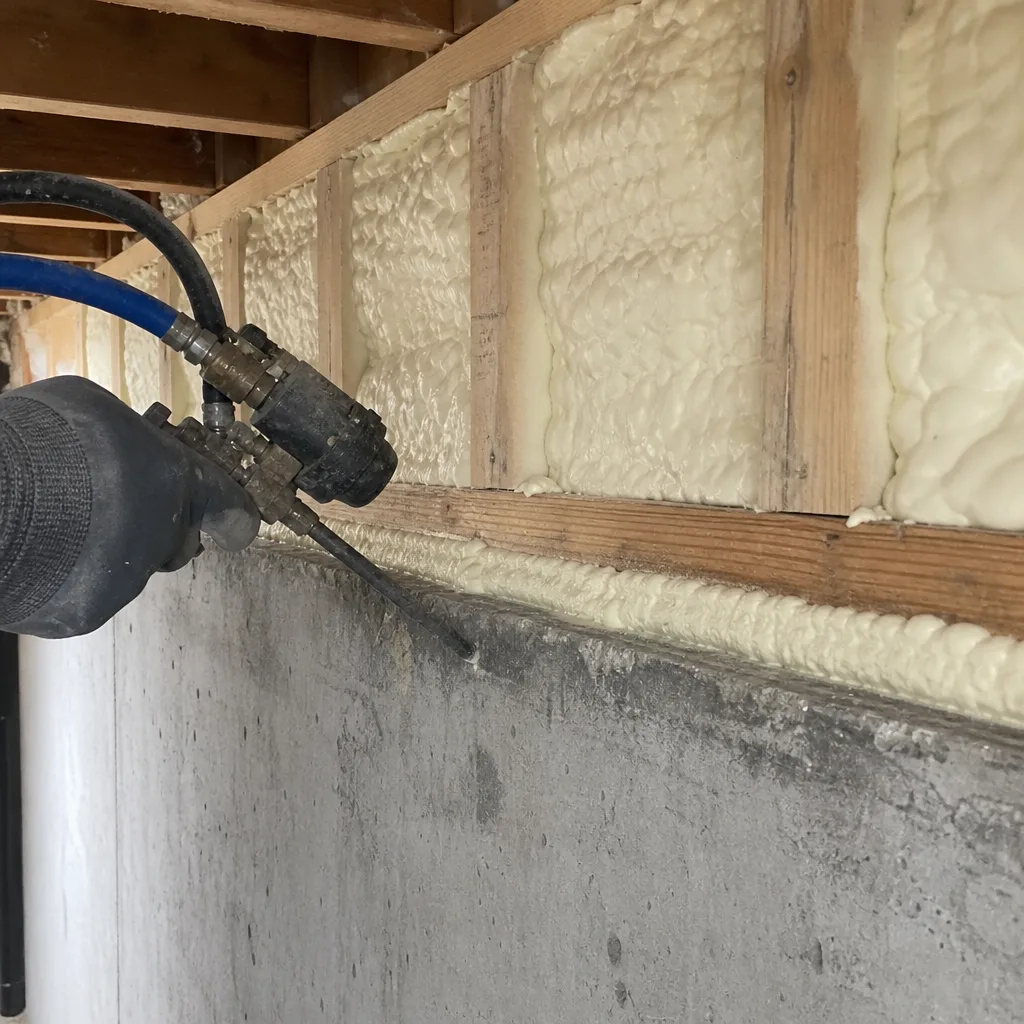
Fast, Reliable Spray Foam Insulation Across Highland
Spray foam insulation in Highland is a different job than it is in Redlands or Loma Linda. The Cajon Pass wind corridor changes everything about how foam should be specified and installed here. We’re Placentia Insulation, led by Alan Whitcomb, and we’ve been through enough Highland attics to know exactly what those winds do to insulation. Call us at (855) 773-6429 and we’ll give you a straight answer about what your home actually needs.
Most Highland homes we inspect are mid-century tract builds from the 1950s through the 1980s. Original fiberglass batts have settled, shifted, or been shoved around by decades of wind. Spray foam solves the wind problem in a way no batt ever will. We stock both open-cell and closed-cell foam from Icynene and Demilec, so we can match the chemistry to your specific exposure. Not the other way around.
Why Placentia Insulation Is Highland’s Preferred Spray Foam Insulation Company
Highland homeowners keep our schedule full because we understand the wind. That’s not marketing language. It’s the literal difference between a foam job that holds and one that erodes. On the mountain-facing side of a home near Baseline or Victoria, gusts funnel through the pass and hit gable ends with enough force to displace loose insulation. We’ve seen it in homes off Highland Avenue, along Greenspot Road, and throughout the 92346 zip code. The fix is a closed-cell foam specified thick enough to act as a structural wind barrier, not just an R-value upgrade.
Alan Whitcomb built Placentia Insulation around one trade. Insulation. Every crew member, every piece of equipment, every conversation with a homeowner is about getting air sealing and thermal performance right. We carry eight manufacturer lines – Owens Corning, Johns Manville, Knauf, Rockwool, CertainTeed, Icynene, Demilec, and GreenFiber – because no two Highland homes have identical problems. A 1962 ranch with a low-pitch attic needs something different from a 2005 east-side subdivision build. When you call, you’ll talk to someone who can explain the difference in plain English.
Response time to Highland is typically same-week, often same-day during our lighter spring months. If your attic is already baking at 150°F and your AC is running nonstop, call (855) 773-6429. We’ll get you on the schedule fast.
Spray Foam Attic Insulation in Highland
Spray foam attic insulation is the single highest-impact upgrade for a Highland home because the attic is where the Cajon Pass does its worst work. In a typical 92346 tract house, the original fiberglass batts are thin, settled, or piled at the north end of the attic where years of wind pushed them. The job involves air sealing every top plate, can light, and wire penetration, then applying foam directly to the attic floor or roofline depending on whether the attic is vented or conditioned. A standard spray foam attic insulation job in Highland runs $2,800 to $6,500 for a 1,200 to 1,800 square foot home, with closed-cell at the top of that range because of the wind-resistance requirement.
Conditioned Attic Conversion
For Highland attics that already struggle with heat, converting to a conditioned attic is often the right call. We spray closed-cell foam on the underside of the roof deck, turning the attic into a semi-conditioned space that stays within 10 to 15 degrees of the living area. This stops the 150°F attic problem at its source and protects any ductwork running through the attic.
Windward-Side Reinforcement
On the mountain-facing slope, we specify extra foam thickness. This isn’t optional in Highland. The windward gable end and the first several joist bays along that slope take debris-laden gusts during Santa Ana events. Two inches of closed-cell Icynene on that side versus one inch on the sheltered side is a specification detail you won’t hear from a company that doesn’t know the pass.
Spray Foam Wall Insulation in Highland
Spray foam wall insulation in Highland gets specified for two reasons: wind-driven air infiltration and the need to seal older wall cavities without tearing out drywall. Most mid-century Highland homes have either minimal wall insulation or thin R-11 batts that leave the stud cavities drafty. When winter winds hit the north and west walls of a home off Greenspot Road or near the base of the mountains, the air pressure difference pulls conditioned air out through every outlet and switch plate. Injecting open-cell or closed-cell foam into existing walls runs $1,800 to $4,200 depending on wall area and access, and it stops that pressure-driven leakage at the building envelope.
Retrofit Wall Injection
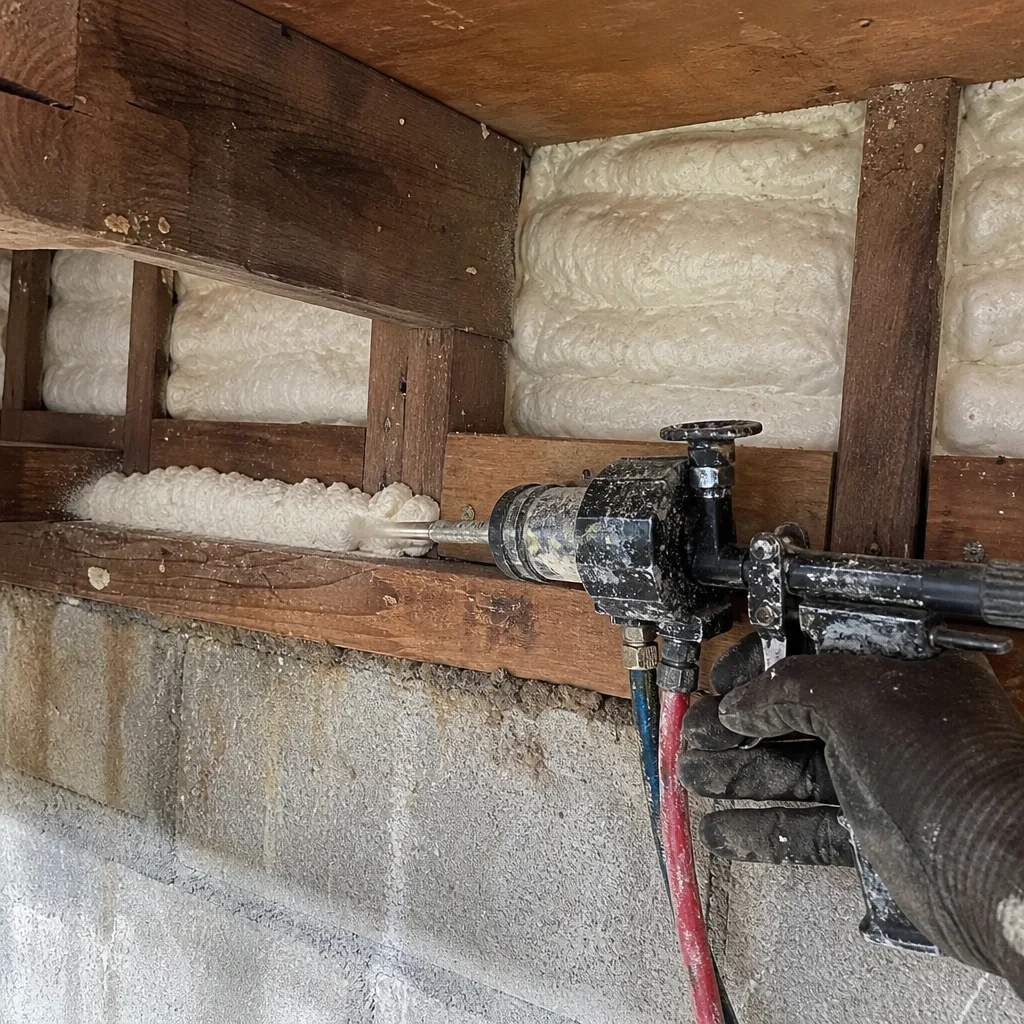
For existing Highland homes, we inject foam through small holes drilled in the wall sheathing or interior drywall. The foam expands to fill the cavity and eliminates the air channels that made the wall breathe like a screen door. This is especially effective on the windward side of older homes where the original insulation has slumped or never filled properly.
New Construction and Addition Walls
If you’re building an addition or a new home on the east side of Highland, we recommend closed-cell Demilec for the perimeter walls. It acts as both insulation and air barrier, which simplifies the wall assembly and gives you a tighter envelope from day one. For a typical single-story addition, plan on $3,000 to $7,000 for wall spray foam depending on square footage.
Trusted Brands We Service in Highland
We don’t stock one foam and call it a day. For Highland customers, we keep Icynene and Demilec in active inventory because those two product lines cover the full range of open-cell and closed-cell applications this city demands. Icynene open-cell works well for interior wall cavities where sound dampening matters. Demilec closed-cell is our go-to for attic roofs and wind-exposed gable ends where structural rigidity and air sealing are non-negotiable. We also maintain a full stock of CertainTeed and GreenFiber products for the blown-in and batt portions of a job, so when your Highland attic needs foam on the windward side and cellulose or fiberglass everywhere else, one crew handles it all. No subcontracting. No waiting on a second vendor.
Common Spray Foam Insulation Problems We See in Highland Homes
- Wind-scoured fiberglass batts. Years of Cajon Pass gusts push loose insulation away from the mountain-facing joist bays, leaving the south-facing ceiling bare against the summer sun. We find this on nearly every pre-1980 Highland home we inspect.
- Open-cell foam erosion on gable ends. Open-cell foam applied without wind-resistant detailing gets worn away during Santa Ana events, reopening air channels. Highland’s wind exposure demands closed-cell on the windward gable, and we see failed open-cell jobs there regularly.
- Foam applied over old batts without air sealing. Some homeowners get foam sprayed directly over original fiberglass without sealing the top plates first. The result is trapped hot attic air pushing condensation onto the cool side of the roof deck during cold winter nights. We see this in Highland specifically because of the temperature swing between 105°F days and 30°F nights.
- Undersized attic venting paired with spray foam. Older Highland tract homes have minimal soffit and ridge venting. When foam is added without addressing ventilation, moisture builds. We always assess venting before recommending an attic foam strategy.
Pricing for Spray Foam Insulation in Highland, CA
Here are honest numbers for the Highland market. Open-cell spray foam installed in an attic runs $1.10 to $1.50 per board foot. Closed-cell, which we recommend for wind-exposed areas, runs $1.50 to $2.40 per board foot. A typical 1,200 to 1,800 square foot Highland home with spray foam in the attic will land between $2,800 and $6,500. Wall retrofit work adds $1,800 to $4,200 depending on access. Rim joist sealing in a crawl space runs $600 to $1,400. These are real ranges for this city, not bait numbers. What moves the price: foam depth, whether the attic is vented or conditioned, access difficulty on low-pitch roofs, and how much air sealing prep the old framing requires. Call (855) 773-6429 for a free estimate. We’ll give you a line-item number, not a vague range.
We Also Serve Cities Near Highland
Placentia Insulation covers Highland and the surrounding communities along the 210 and 10 corridors. If you’re in San Bernardino, Muscoy, Redlands, or Loma Linda, our crews are already working in your area. The same Spray Foam Insulation expertise we bring to Highland applies, though each city has its own wind and heat profile we account for.
Serving Highland, CA — Our Local Coverage Area
We’re based in the Highland area and know this community well. Use the map below to see our service coverage — if you’re nearby, we can almost certainly help.
FAQs About Spray Foam Insulation in Highland
Highland sits at the mouth of the Cajon Pass, which means debris-laden gusts hit the mountain-facing side of homes with enough force to displace loose insulation and erode open-cell foam. We specify closed-cell foam and extra thickness on windward gable ends – a detail that doesn’t apply in sheltered cities like Redlands or Riverside. Call (855) 773-6429 and we’ll assess your specific exposure.
It can, but it’s usually the wrong approach. Foam applied over old batts without first air sealing the top plates traps hot attic air and creates condensation against the roof deck during cold Highland nights in winter. The correct sequence is removing or consolidating the old batts, air sealing every penetration, then applying foam.
Closed-cell foam is the right choice for Highland’s low-pitch attics. It provides a higher R-value per inch, acts as an air and vapor barrier, and holds up to the heat. We use Demilec closed-cell on most Highland attic jobs because the density also resists the wind erosion that open-cell suffers on the mountain-facing slope.
Spray foam seals the air leaks that fiberglass can’t. Fiberglass only slows conductive heat loss; it does nothing about the air pressure differential that pulls warm air out of your home when canyon winds push against the walls. Foam stops that air movement entirely, which matters more on a 30°F January night in Highland than it does in a milder coastal city.
Usually yes, at least partially. We remove or consolidate the old fiberglass from the areas where foam will be applied, because foam needs direct contact with the sheathing or subfloor to create a proper air seal. In some cases we’ll leave batts in place on the floor and spray only the roofline, but that decision gets made after we inspect your specific attic.
If you’re in Highland and your energy bills are climbing while rooms stay uneven, call Placentia Insulation at (855) 773-6429. Alan Whitcomb and our crews know this city’s wind patterns, its housing stock, and its attic problems better than any generalist contractor ever will. We’ll give you a straight answer, a specific recommendation, and a free estimate. No pressure. Just foam done right for the Cajon Pass.
Written by Alan Whitcomb, Owner at Placentia Insulation, serving Highland since the company’s founding.