
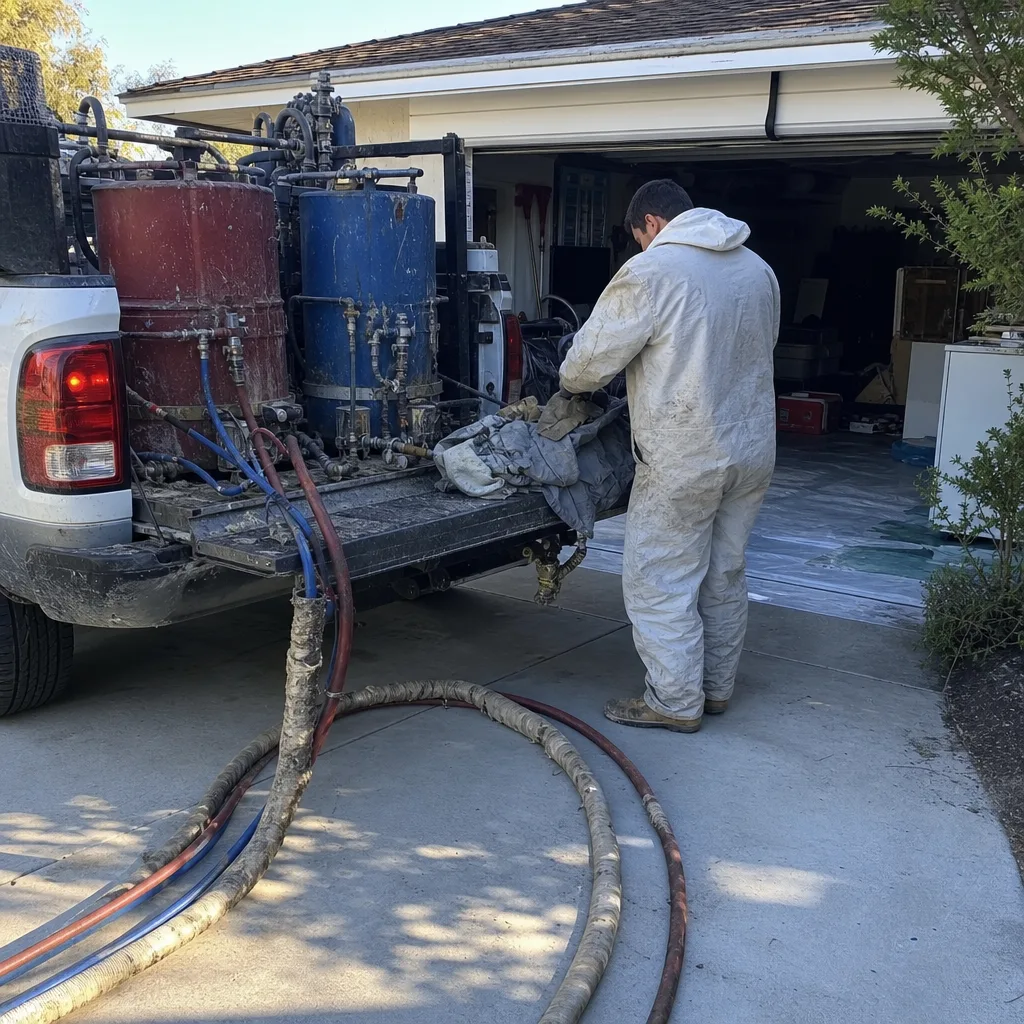
Fast, Reliable Spray Foam Insulation Across Lynwood
Spray foam insulation in Lynwood usually costs $2.50 to $6.50 per square foot installed, depending on whether you go open-cell or closed-cell and what surface we’re treating. Most attic jobs in the 1950s stucco homes off Atlantic Avenue run $2,800 to $6,400 for a full air seal and R-38 build-up. We get crews to Lynwood same-week, often within 48 hours, and Alan Whitcomb leads every estimate. That’s the short answer. If you want the details on why spray foam behaves differently in a 90262 postwar bungalow than it does in newer Orange County construction, keep reading. Call (855) 773-6429 and we’ll walk your specific house with you.
Most of the homes we work on in Lynwood were built between 1948 and 1965. Small stucco-on-wood-frame, single-story, on tight lots. They share a problem: the wall cavities are empty, and the attic has maybe two or three inches of fiberglass that compacted into a paper-thin crust decades ago. That’s the house we’re writing about here. If you live near Lynwood Park, down Long Beach Boulevard, or over by the 105, you know exactly the kind of heat we mean come July. Spray foam is often the only retrofit that works in these shallow attics, because it seals and insulates in one pass.
Why Placentia Insulation Is Lynwood’s Preferred Spray Foam Insulation Company
Placentia Insulation is a pure-play insulation contractor. We don’t do roofing on Monday and insulation on Tuesday. Every crew member, every truck, every conversation is about one trade. That focus matters more in older cities like Lynwood than anywhere else, because the houses here don’t tolerate generic advice. We match the material to the job, not the job to whatever we have on the truck.
Our crews know the housing stock here. We know what a 1953 stucco bungalow on a 5,000-square-foot lot looks like inside its walls. We know where the knob-and-tube wiring runs in these houses and how to foam around it safely. Alan Whitcomb has walked attics and crawled into converted garages all over 90262, and he trains every technician on the same standard: inspect first, quote exactly, then install to code. Lynwood homeowners tell us the same thing over and over: other contractors gave them a number without ever looking in the attic. We don’t work that way.
Because we carry both open-cell and closed-cell foam from Icynene and Demilec, we can specify the right chemistry for each section of a Lynwood house. A shallow attic gets one treatment. A garage conversion with no ventilation gets another. One product won’t do both jobs correctly, and we never pretend it will.
Closed Cell Spray Foam Insulation in Lynwood
Closed Cell Spray Foam Insulation is the higher-density option most Lynwood homeowners choose for garage ceilings, rim joists, and enclosed conversions where space is tight. It’s a two-component foam that cures into a rigid, water-resistant, vapor-blocking layer with about R-7 per inch. In Lynwood’s inland-adjacent heat, that matters because the afternoon sun hammers exterior walls and converted garages with radiant load that open-cell can’t fully stop. A typical closed-cell job on a Lynwood garage conversion runs $3.75 to $6.50 per square foot installed, depending on access and surface prep.
Garage Conversions and Added Units
Lynwood has an unusually high number of garage conversions and rear additions, many unpermitted and never insulated at all. Closed-cell foam is the right call here because it acts as an air barrier and vapor barrier in one. It also adds shear strength to older wood framing, which matters in a 1950s structure that wasn’t built for living space. The work often means crawling through a three-foot opening and foaming an enclosed cavity with no ventilation. We bid these jobs only after seeing the space.
Rim Joist Sealing Under Raised Floors
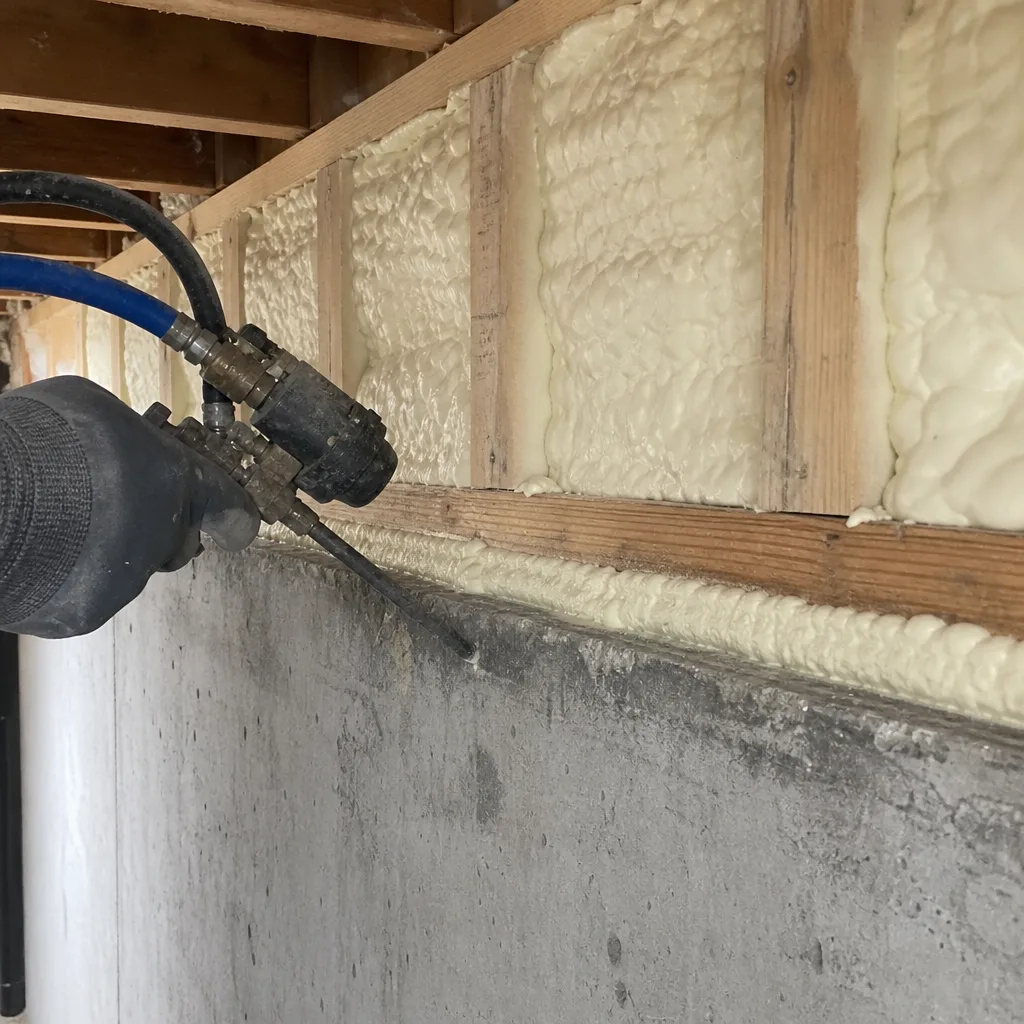
Many Lynwood homes sit on raised foundations, and the rim joist where the floor meets the foundation wall is a wide-open draft channel. Closed-cell foam seals the rim joist tight, cuts dust infiltration, and blocks the dry Santa Ana air from pulling conditioned air out of the house. It’s a small job, usually $800 to $1,500 in a typical 1,100-square-foot Lynwood home, but it changes the comfort profile fast.
Open Cell Spray Foam in Lynwood
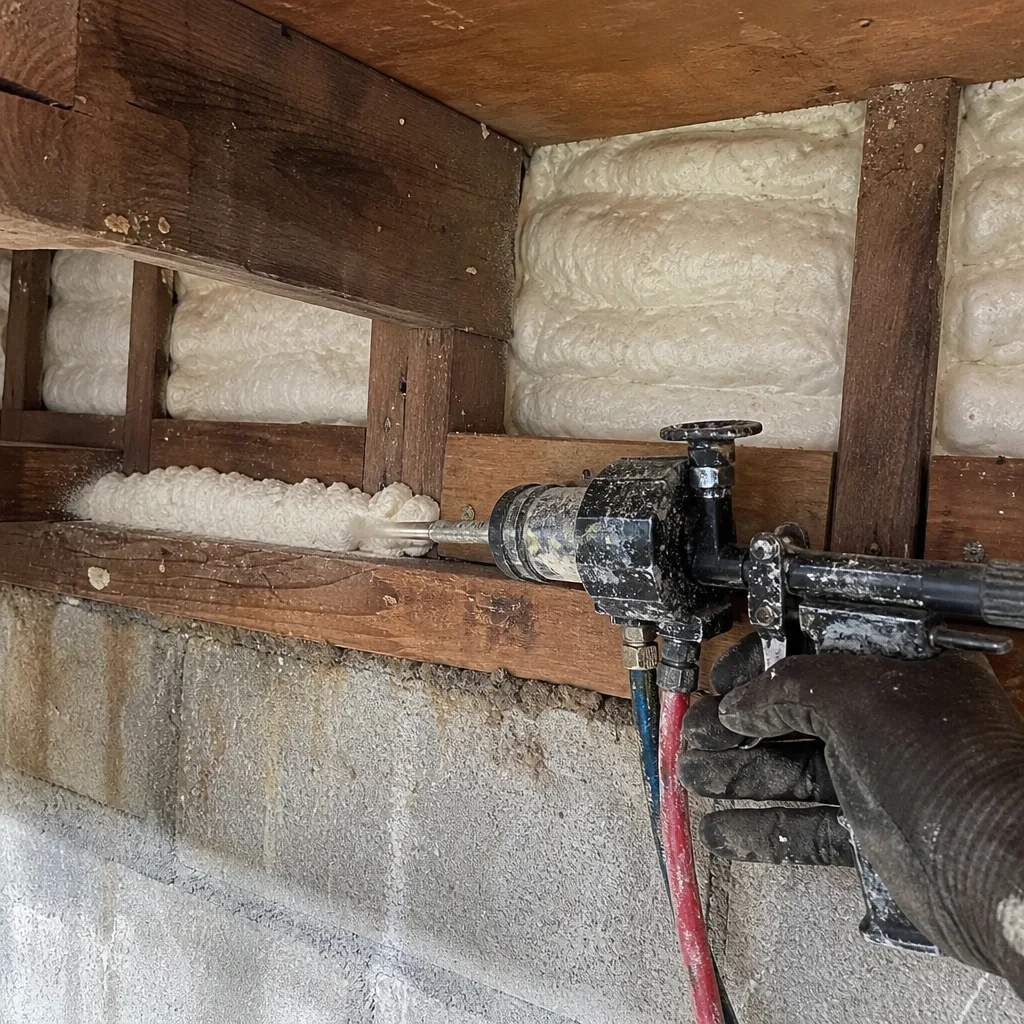
Open Cell Spray Foam is the lower-density, air-permeable foam we use most often in Lynwood attics, where the goal is air sealing plus a thick thermal layer at a lower cost per board foot. It runs about R-3.6 per inch and fills shallow 2×6 or 2×8 rafter bays completely, which is exactly what these 1950s roofs have. A standard attic in Lynwood, around 900 to 1,100 square feet, runs $2.50 to $4.25 per square foot for open-cell at the recommended depth. The air sealing is what actually fixes the radiant heat so common in this housing stock.
Shallow Attics and Radiant Heat Control
The postwar homes off Atlantic Avenue and the Alameda corridor have shallow attics with maybe three feet of headroom at the peak. Fiberglass batts don’t work well here because they sag, compress, and leave the air channels open. Open-cell foam follows the roofline, seals the framing, and stops the stack effect that pulls hot air through the ceiling into the living space. In a Lynwood summer, that’s the difference between a bedroom that hits 84°F by 4 p.m. and one that stays at 76.
Sound Control Between Rooms
Open-cell foam also cuts noise transfer, which matters in small-lot Lynwood neighborhoods where houses sit six feet apart and converted garages become home offices or rental units. Foam on the party wall of an added rear unit reduces the neighbor-to-neighbor noise complaint cycle. It’s a secondary benefit, but one we hear about from property owners on Long Beach Boulevard and around Fernwood Avenue.
Trusted Brands We Service in Lynwood
We install and service Spray Foam Insulation from Icynene and Demilec, two of the most recognized manufacturers in the foam category. Both open-cell and closed-cell chemistries are in active inventory, so we don’t wait on a supplier or push one product because it’s all we carry. For Lynwood homeowners interested in complementary materials, we also offer GreenFiber blown-in cellulose for attic top-ups and Owens Corning fiberglass where it’s actually the right fit. Eight brands, three methods, one specialty. The material decision starts with the house, not the truck.
Common Spray Foam Insulation Problems We See in Lynwood Homes
- Compacted attic insulation from the 1950s and 60s. The original fiberglass in these shallow attics has flattened to a fraction of its rated R-value. Radiant heat pours through the ceiling, and the house can’t hold cooling. We remove or foam over the old layer depending on condition.
- Uninsulated garage conversions and rear additions. These spaces were never framed with insulation in mind. Walls are empty. Ceilings have nothing. The temperature swing between the main house and the converted space is often 10 to 15 degrees. Closed-cell foam is usually the fix, and the work happens in enclosed, awkward spaces.
- Knob-and-tube-era wiring in foam zones. Homes built before about 1960 often still have active or abandoned knob-and-tube wiring in attic and wall cavities. Spray foam directly over live knob-and-tube is a fire hazard and a code problem. We flag it during the walkthrough and coordinate with a licensed electrician, or use foam-safe barriers around the conductors if code allows.
- Santa Ana wind infiltration through rim joists and wall gaps. The dry, gusty winds find every penetration in these old stucco envelopes. Foam sealing the rim joist, top plates, and exterior corners stops the draft and keeps dust out. It also stabilizes indoor humidity, which matters more than people realize in a dry, windy climate.
Pricing for Spray Foam Insulation in Lynwood, CA
A full attic air seal with open-cell spray foam in a typical 900 to 1,100-square-foot Lynwood ranch runs $2,300 to $4,700. A garage conversion treated with closed-cell runs $3,000 to $6,500 depending on wall area and access. Rim joist sealing runs $800 to $1,500. Spray foam roof deck applications run $4.00 to $7.00 per square foot because they require closed-cell and careful staging. These are real numbers for this city’s market, not a statewide average. What moves the number in Lynwood specifically: whether the attic is shallow and cramped, whether the walls are accessible from the exterior through stucco, and whether knob-and-tube wiring adds prep time. Every estimate from Placentia Insulation is free, itemized, and written by Alan Whitcomb or a senior tech after inspecting the actual space. Call (855) 773-6429 and we’ll put a number on your house, not a range chart.
We Also Serve Cities Near Lynwood
Our crews run Spray Foam Insulation in Lynwood and cover the surrounding cities every week. South Gate and East Rancho Dominguez sit right up the 710, and we’re in Willowbrook and Paramount regularly since many of those homes share the same postwar stucco construction. If you’re just outside Lynwood city limits, call (855) 773-6429 and ask about our schedule for your ZIP.
Serving Lynwood, CA — Our Local Coverage Area
We’re based in the Lynwood area and know this community well. Use the map below to see our service coverage — if you’re nearby, we can almost certainly help.
FAQs About Spray Foam Insulation in Lynwood
Yes, and we do it all the time. Most garage conversions in Lynwood were framed without any insulation in the walls or ceiling, so the space bakes in summer and chills in winter. Closed-cell spray foam applied directly to the stud and rafter cavities solves both problems in one pass. We inspect the structure first because unpermitted conversions sometimes have framing or electrical issues that need to be addressed before foaming. Call (855) 773-6429 for a free inspection and quote on your conversion.
Open-cell foam is usually the best choice for the main attic of a 1950s Lynwood home. It fills shallow rafter bays completely at R-3.6 per inch and air-seals the ceiling plane, which is the real fix for radiant heat gain in these houses. If the attic is vented and space is extremely tight, we may recommend closed-cell at a thinner depth to still meet code. The right call depends on what we see in the crawl.
Yes. Live knob-and-tube wiring cannot be buried in foam because the foam traps heat and creates a fire hazard. We identify the wiring during the walkthrough and either work around it with foam-safe barriers or coordinate with a licensed electrician before the job starts. This is a standard part of our process in Lynwood because so many of these homes were wired this way from the start.
Spray foam is the most effective draft stopper available because it expands to fill cracks, gaps, and rim joist cavities that fiberglass simply lies against. Sealing the rim joist, top plates, and any exterior wall penetrations stops the Santa Ana wind from pulling conditioned air out and pushing dust in. The dry wind load in Lynwood makes air sealing just as important as R-value.
We install Icynene and Demilec spray foam, both open-cell and closed-cell. Most foam contractors carry one brand. We carry two so we can match the chemistry to the application, whether that’s a damp rim joist, a tight attic, or a garage conversion that needs a vapor barrier. The brand is the tool. The house decides which one gets used.
Contact Placentia Insulation in Lynwood
If you own one of Lynwood’s postwar stucco homes and the July heat turns your back room into an oven, we know exactly what’s happening inside your walls and attic. Alan Whitcomb and the Placentia Insulation crew have worked this housing stock long enough to give you a straight answer on your first call. Estimates are free. The phone number is (855) 773-6429. Call and ask for a site visit. We’ll come out, look at the actual attic and walls, and write a quote for your specific house, not a template.
Written by Alan Whitcomb, Owner at Placentia Insulation, serving Lynwood and surrounding cities since the company’s founding.