
Fast, Reliable Spray Foam Insulation Across Manhattan Beach
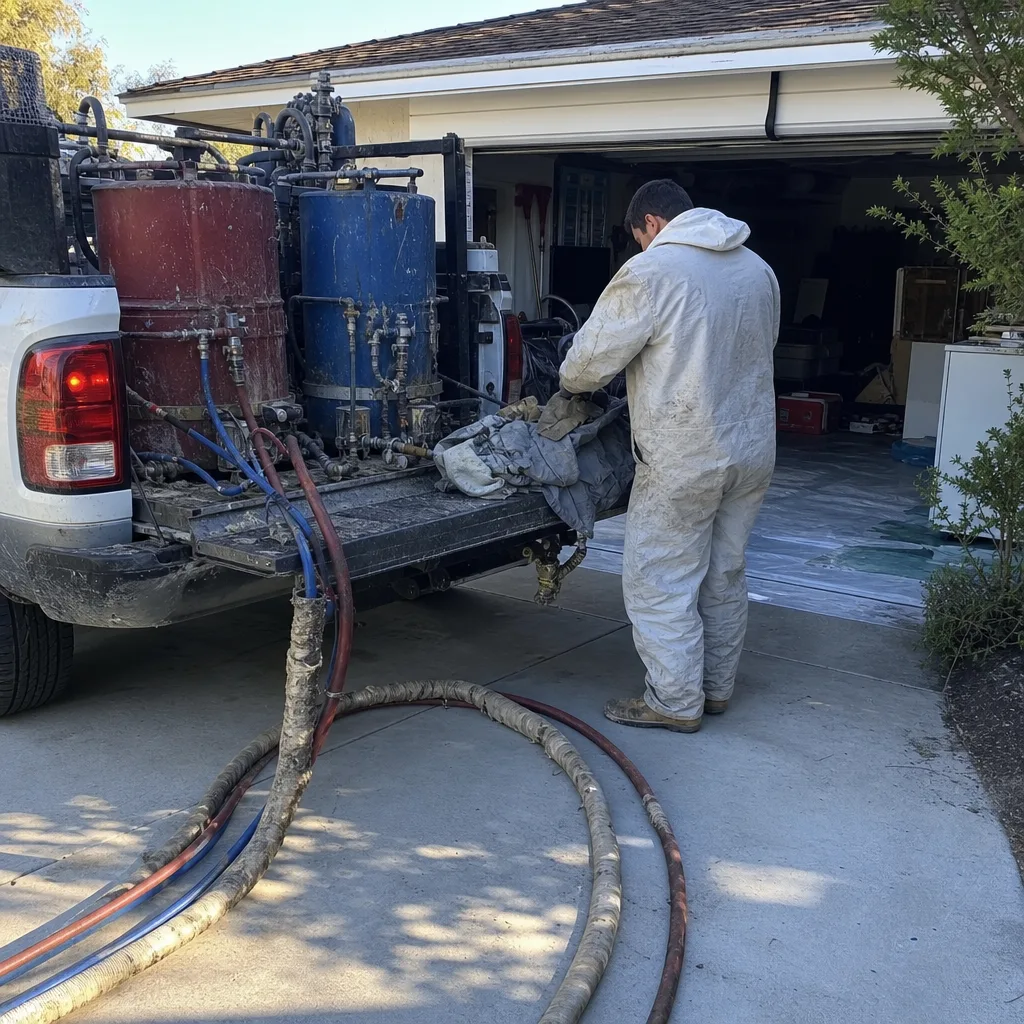
Spray foam insulation in Manhattan Beach typically costs $2.50 to $6.50 per board foot installed, with most attic and wall projects landing between $3,800 and $11,500 depending on square footage and foam type. We run crews into Manhattan Beach weekly, and most jobs are completed in one to two days once we’re on site. If you’re dealing with uneven temperatures in a remodeled Tree Section home or condensation staining on vaulted ceilings near the Strand, call (855) 773-6429 and we’ll walk you through what’s actually happening before we ever quote a number.
What makes Manhattan Beach different from most markets is simple: the marine layer. Morning fog rolls in off the Pacific, salt rides the onshore breeze, and your home’s insulation has to handle moisture before it ever thinks about temperature. That changes the foam chemistry, the installation details, and the hardware we specify. You need someone who knows that before they start spraying.
Why Placentia Insulation Is Manhattan Beach’s Preferred Spray Foam Insulation Company
We’re an insulation-only contractor. That’s the whole business. Alan Whitcomb has built Placentia Insulation around one trade because spray foam in Manhattan Beach isn’t a side job you bolt onto a roofing or HVAC ticket. It’s a material science decision, especially in the sand and Tree Section homes where unvented roof assemblies demand precision. Our crews carry eight brands, not one or two. That means when a beachfront property needs a closed-cell foam that can handle salt air without corroding its attachment points, we don’t just shrug and spray whatever’s on the truck. Our Spray Foam Insulation team matches the product to the problem.
We’ve done enough work in 90266 and 90267 to know the difference between a house in the Hill Section on a clear day and the same house when the fog sits low for a week straight. That’s the difference between a foam spec that keeps moisture out and one that traps it behind a tongue-and-groove ceiling. You can’t learn that from a manufacturer’s PDF. You learn it by pulling back stained boards on Marine Avenue and seeing what the onshore breeze actually does to a hot-roof assembly.
Our response time to Manhattan Beach is same-day for phone estimates and usually one to three days for an in-person attic inspection. We carry the equipment and material volume to start the next week, not the next month.
Spray Foam Attic Insulation in Manhattan Beach
Spray foam attic insulation in Manhattan Beach is usually specified as closed-cell foam applied directly to the roof deck, especially in the remodeled sand-section and Tree Section homes built with vaulted or cathedralized ceilings and no attic vent. This is the Manhattan Beach signature problem: an unvented “hot roof” where the foam has to act as both insulation and the vapor control layer. Get the foam thickness wrong or skip the air sealing at penetrations, and warm conditioned air finds the cold roof deck at 2 a.m. and condenses on your cedar. A typical closed-cell attic application in Manhattan Beach runs $4,800 to $11,000 depending on roof area and attic depth.
Closed-Cell for Unvented Roof Decks
For vaulted ceilings with no attic, we spray Demilec closed-cell foam directly against the underside of the roof deck. Closed-cell gives you R-6.5 to R-7 per inch and, critically, acts as a Class II vapor retarder at roughly 2 inches of depth. That’s what keeps condensation off your ceiling boards. We’ve pulled too many stained tongue-and-groove panels out of Tree Section homes where a previous contractor sprayed open-cell in a cathedral ceiling and the homeowner found out six months later what the marine layer wanted to do all along.
Air Sealing Around Recessed Lights and Penetrations
In open, vaulted Manhattan Beach ceilings, every recessed light, ceiling fan box, and wiring penetration is a leak path. Spray foam’s real value is air sealing, and we spend a full day sometimes just sealing penetrations before the main spray. In the Tree Section, we recently sprayed Icynene closed-cell foam into a cathedralized ceiling that had been remodeled without a vapor retarder; the homeowner had noticed condensation staining on the tongue-and-groove cedar but no comfort issues. After removing the stained boards, we applied the foam directly to the roof deck, sealed all penetrations with stainless fasteners, and verified with a moisture meter that the assembly stayed dry through the next marine layer cycle.
Spray Foam Wall Insulation in Manhattan Beach
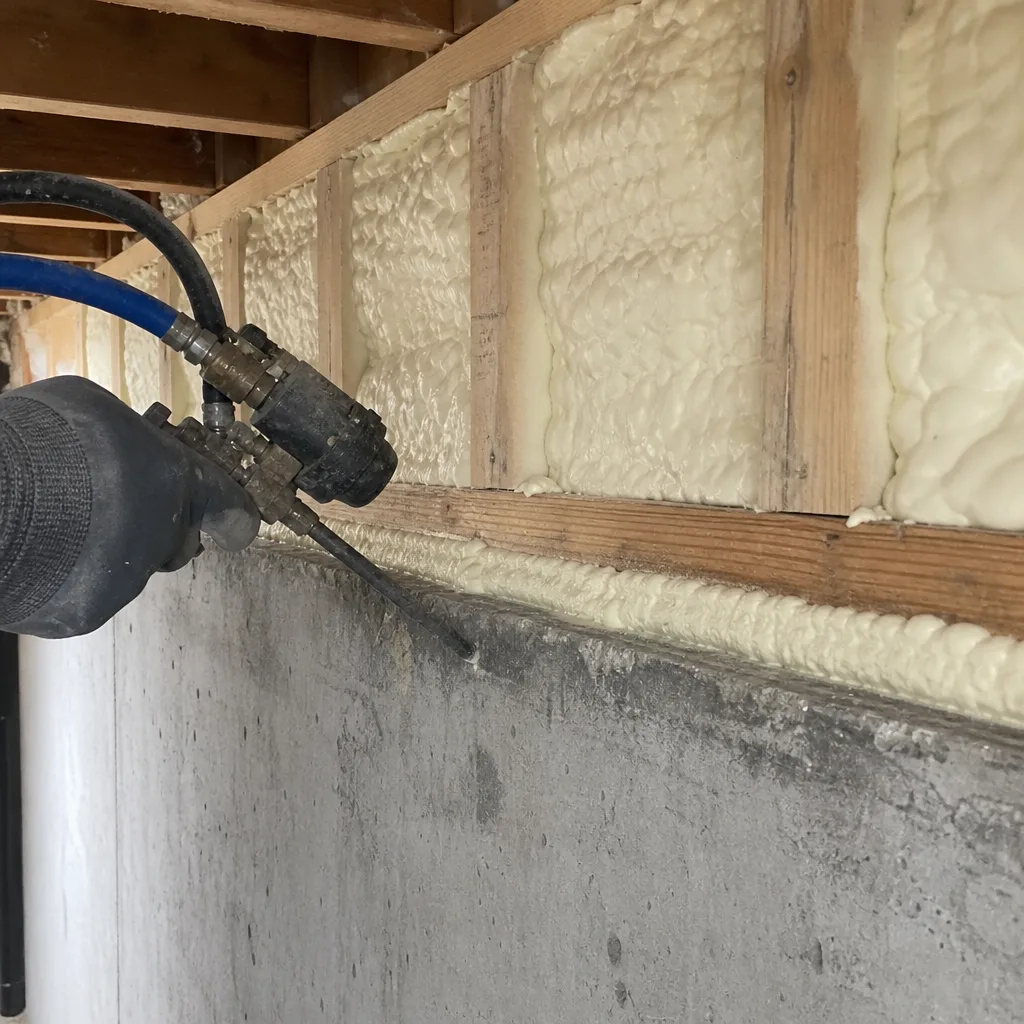
Spray foam wall insulation in Manhattan Beach works best as either open-cell Icynene for interior walls where you want sound dampening, or closed-cell Demilec for exterior walls where air sealing and a vapor barrier matter. The salt air along the Strand attacks foil facings and standard steel fasteners, so we spec coated or stainless hardware on any exposed attachment. Exterior wall spray foam here typically runs $2,800 to $7,200 for a standard home, depending on stud bay depth and whether we’re retrofitting an existing wall or insulating before drywall goes up on a new build.
Open-Cell for Interior Sound Control
Manhattan Beach lots sit close together. When a neighbor’s HVAC condenser sits ten feet from your bedroom wall, open-cell foam in the wall cavity cuts the sound noticeably better than fiberglass batts. We spray Icynene open-cell at roughly half a pound density, which gives you about R-3.6 per inch plus significant noise reduction. For a wall shared between a bedroom and a garage or between two units in a duplex near Rosecrans, it’s the call we make most often.
Closed-Cell for Air and Moisture Control in Exterior Walls
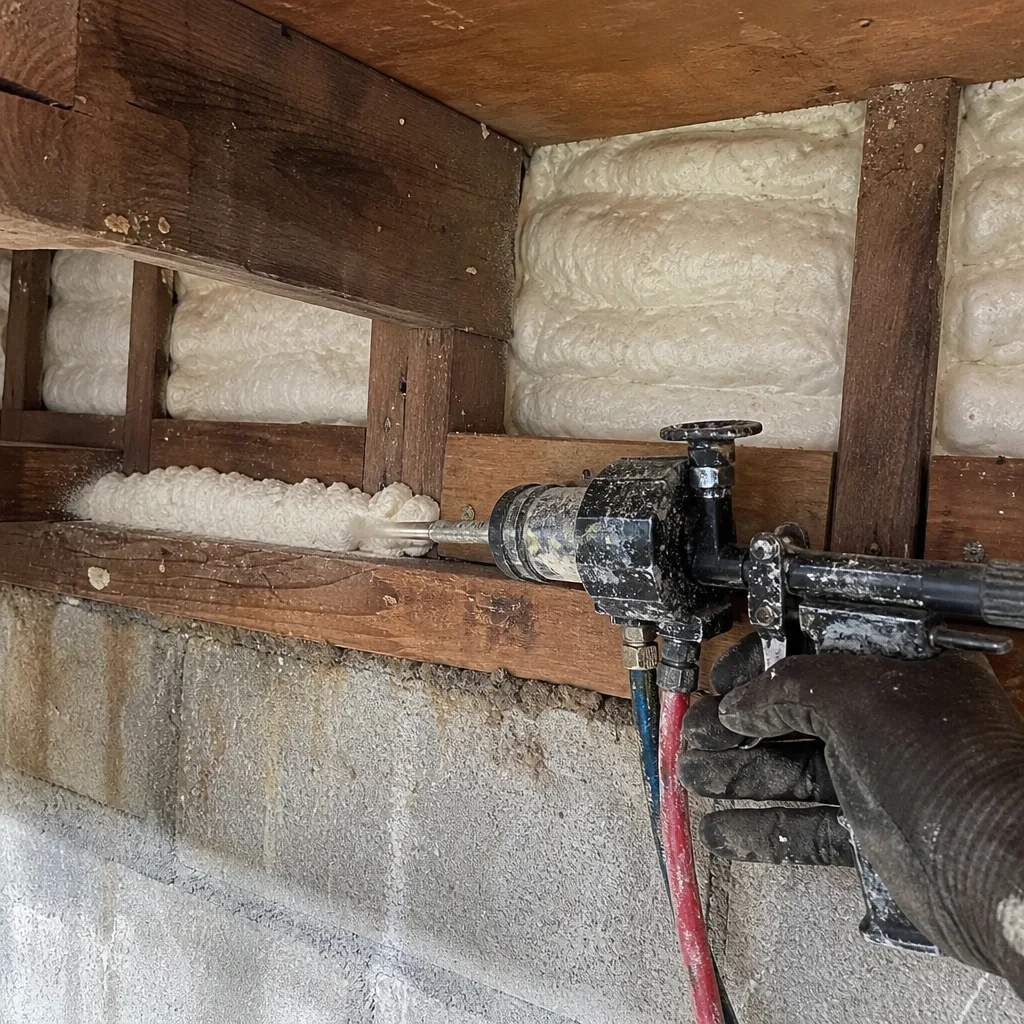
Beachfront homes in 90266 deal with salt-laden air pushing against exterior cladding every day. Closed-cell Demilec foam creates a continuous air barrier and resists bulk water intrusion in ways open-cell cannot. That’s why we use it on exterior walls within a quarter mile of the water. The thermal bonus is that the foam keeps wall temperatures steadier, which reduces condensation risk inside the wall cavity during the fog-heavy months from May through July.
Trusted Brands We Service in Manhattan Beach
We stock Icynene and Demilec spray foam exclusively, and we’re a certified installer for both. That matters in Manhattan Beach because these two product lines cover both foam chemistries properly. Icynene open-cell handles sound and cost-sensitive interior walls. Demilec closed-cell handles hot-roof attic assemblies and salt-air exterior walls. We also maintain a full range of stainless and coated fasteners for beachfront applications. You don’t have to wait on a specialty order when the coastal humidity means standard hardware won’t hold up. Call (855) 773-6429 and we’ll tell you which foam chemistry fits your walls, your roof, and your budget before we spray anything.
Common Spray Foam Insulation Problems We See in Manhattan Beach Homes
- Foam sprayed too thin in vaulted ceilings. In unvented cathedralized roofs, open-cell or thin closed-cell lets warm moist air reach the cold roof deck. The first symptom isn’t a high energy bill; it’s staining on custom wood ceiling boards in your living room.
- Salt air corroding standard steel fasteners. Beachfront homes within a few blocks of the Strand see premature rust on uncoated fasteners used to attach foam or furring strips. We specify stainless or coated hardware on every exterior-facing spray foam installation.
- Unsealed penetrations in open-concept ceilings. Recessed lights and wiring penetrations in vaulted tree-section homes let conditioned air escape through the foam plane. The foam looks fine but it’s not airtight, and the homeowner keeps wondering why the upstairs is five degrees warmer than the main floor.
- Foil facing delaminating from spray foam. Foil-faced foam boards that butt against spray foam in unvented assemblies corrode along the foil edge when salt air gets in. The foil separates from the substrate, and suddenly you have a gap where warm moist air can sneak past the insulation.
Pricing for Spray Foam Insulation in Manhattan Beach, CA
Here’s what we charge in Manhattan Beach. Open-cell spray foam runs $2.50 to $3.80 per board foot. Closed-cell runs $4.20 to $6.50 per board foot because the material costs more and the installation takes longer. A typical cathedralized attic in a Tree Section home is 1,200 to 1,800 board feet, putting closed-cell attic work at roughly $5,000 to $10,500. Exterior walls in a 2,000-square-foot home run $3,000 to $7,500. The cost drivers in Manhattan Beach specifically are roof deck access difficulty, how much existing insulation must be removed, and whether we need stainless or coated fasteners for beachfront exposure. Estimates are free. Call (855) 773-6429 and we’ll measure the actual square footage and give you a fixed number before any work starts.
We Also Serve Cities Near Manhattan Beach
We run crews into Redondo Beach, Rolling Hills Estates, Palos Verdes Estates, and Torrance on the same schedule as our Manhattan Beach jobs. If you’re just outside Manhattan Beach and wondering whether we cover your street, call (855) 773-6429 and ask. Chances are we were in your neighborhood last week.
Serving Manhattan Beach, CA — Our Local Coverage Area
We’re based in the Manhattan Beach area and know this community well. Use the map below to see our service coverage — if you’re nearby, we can almost certainly help.
FAQs About Spray Foam Insulation in Manhattan Beach
Yes, if it’s the wrong foam type or sprayed too thin. Closed-cell foam at 2 inches or more acts as a vapor retarder and prevents condensation on the roof deck. Open-cell foam in an unvented vaulted ceiling lets warm moist air reach the cold deck, and marine-layer humidity makes that condensation problem worse in Manhattan Beach than in inland cities. Call (855) 773-6429 if you see staining on your ceiling boards; we’ll tell you what’s causing it before you spend money on the wrong fix.
Closed-cell foam is the right choice for beachfront homes in 90266 within a quarter mile of the water. It creates an air and vapor barrier, resists bulk water intrusion, and handles salt air better than open-cell when paired with stainless or coated fasteners. We use Demilec closed-cell for most beachfront exterior walls and unvented roof decks.
Spray foam expands into cavities and seals every gap, crack, and penetration. In open-concept Manhattan Beach homes with vaulted ceilings and lots of recessed lighting, those penetrations are the biggest air leaks. Closed-cell foam creates a continuous air barrier that keeps conditioned air from escaping through ceiling penetrations, which also keeps salt-laden outside air from working its way into the house. The result is a quieter, more stable indoor environment.
It depends on the foam type and the roof assembly. Closed-cell foam at 2 inches or thicker serves as its own vapor retarder, so no separate vapor barrier is needed. Open-cell foam does not qualify as a vapor retarder under code, so if you’re in an unvented Manhattan Beach cathedral ceiling, open-cell would require an additional vapor control layer. We’ll tell you which applies to your roof after a 20-minute attic inspection.
We install Icynene and Demilec spray foam products exclusively. Icynene open-cell covers interior walls where sound control and cost matter. Demilec closed-cell covers unvented roofs and beachfront exterior walls where moisture and air sealing are the priority. Both are installed by our own crews, not subcontracted out. Call (855) 773-6429 and we’ll tell you which one your home actually needs.
Ready to fix the real problem? Whether you’re dealing with condensation staining on a vaulted ceiling or just tired of a fog-damp house that never feels quite right, call Placentia Insulation at (855) 773-6429. We’ll schedule a free estimate, inspect your roof deck and wall cavities, and tell you exactly what the marine layer is doing to your home and what it costs to fix it.
Written by Alan Whitcomb, Owner at Placentia Insulation, serving Manhattan Beach and the South Bay.