
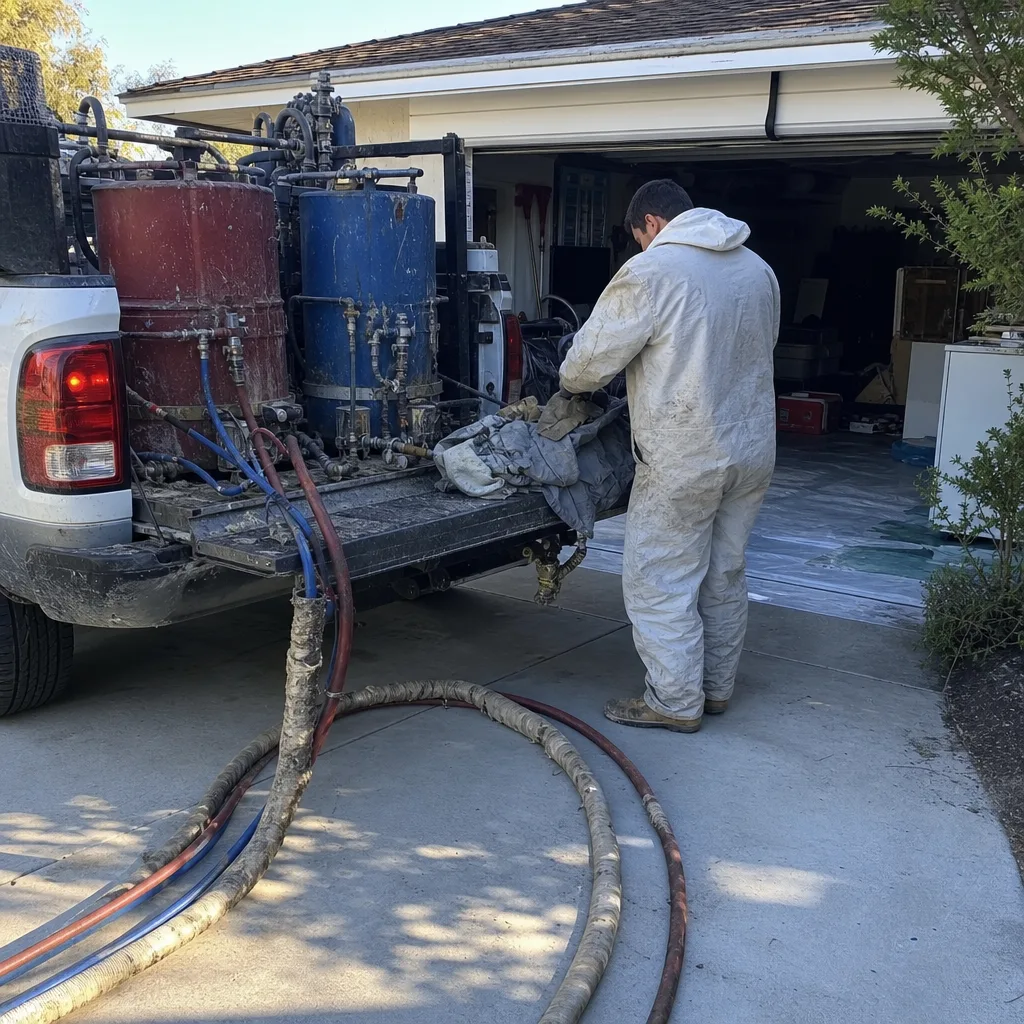
Fast, Reliable Spray Foam Insulation Across Rubidoux
Spray foam insulation in Rubidoux has to solve a specific problem: attics here routinely cross 140°F in July and August, and the older mid-century ranch homes that dominate the area were never built to handle that kind of sustained heat load. Most were insulated with thin fiberglass batts in the 1950s through 1970s, and after fifty or sixty years of thermal cycling, those batts have slumped, crushed, or turned to dust. We’re Placentia Insulation, and we specialize in fixing exactly this. Our Spray Foam Insulation team works in Rubidoux weekly, and we know what these attics look like before we even open the hatch. Call (855) 773-6429 for a free estimate, and we’ll tell you what your attic actually needs, not what’s easiest to sell.
Why Placentia Insulation Is Rubidoux’s Preferred Spray Foam Insulation Company
Rubidoux homeowners call us because we’re an insulation-only contractor, not a generalist. Every crew member who shows up at your door spends their whole week thinking about thermal envelopes, open-cell versus closed-cell chemistry, and how to get foam to bond to framing that’s been coated in fifty years of Inland Empire dust. That specialization matters when you’re asking whether an old vented attic can be sealed and brought inside the conditioned space without trapping moisture from the Santa Ana River bottom’s morning dew. We carry Icynene and Demilec spray foam systems, both open-cell and closed-cell, so we’re not forcing one foam chemistry onto every job. We match the material to the job, not the job to whatever we have on the truck.
Rubidoux customers also benefit from our eight-brand material library. Most insulation contractors stock one or two product lines. We stock eight, spanning Owens Corning, Johns Manville, Knauf, Rockwool, CertainTeed, Icynene, Demilec, and GreenFiber. For a Rubidoux ranch that needs sound dampening between bedrooms and fire resistance at the garage ceiling, Rockwool beats foam. For a roof deck that needs an air and vapor barrier in one pass, closed-cell Icynene wins. We recommend the right one for the actual condition, not the one that’s easiest to install.
Alan Whitcomb, our owner, has built this company around a simple principle: insulation is a long-term investment, and the person making the recommendation should be able to defend it in material terms. That’s why we talk in R-values, permeability ratings, and installation methods, not vague promises about energy savings.
Crawl Space Spray Foam Insulation in Rubidoux
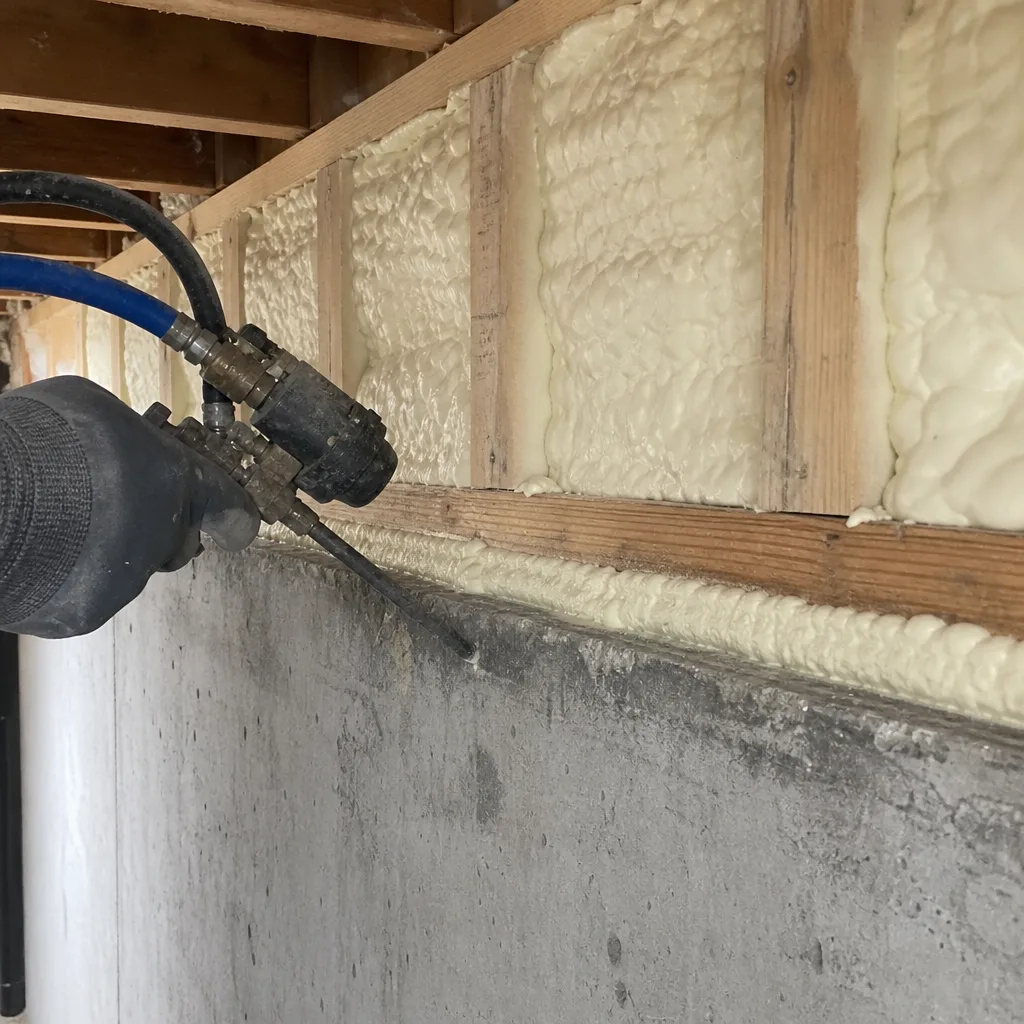
Crawl Space Spray Foam Insulation in Rubidoux addresses a specific condition: many mid-century ranch homes here sit on raised foundations with vented crawlspaces that pull in dust and dry air from the Jurupa Valley floor. The dry climate helps, but crawlspaces under these 1950s and 1960s homes still leak conditioned air through the floor framing, and dust infiltration through original foundation vents is constant. Closed-cell foam applied to the crawlspace walls and rim joists seals those gaps and keeps the floor above from feeling cold in winter, even when the crawlspace air is 50 degrees.
When Rubidoux Raised-Foundation Homes Need It
If your floors feel cold in January or your energy bills stay high despite attic insulation, the crawlspace is the likely culprit. We typically see fiberglass batts stuffed between floor joists that have sagged, absorbed dust, and stopped doing their job. Removing them and applying foam to the rim joists and foundation walls is a permanent fix. A typical crawlspace encapsulation with closed-cell foam in Rubidoux runs $3,800 to $6,500 depending on square footage and access height.
Dust and the Rubidoux Basin Floor
Rubidoux sits in a dust-prone basin. The fine particulates that settle on everything also work their way into crawlspaces. Foam seals the space off from that, and because this climate is so dry, we rarely need to address standing water the way we would in more humid regions. That keeps the job simpler, but surface prep still matters. Old framing has to be brushed and wiped before foam will bond properly.
Garage Spray Foam Insulation in Rubidoux
Garage Spray Foam Insulation in Rubidoux is usually about taming the afternoon sun. Detached and attached garages here face intense solar load from the south and west, and an uninsulated garage ceiling can hit 120°F by 3 p.m. in summer. That heat radiates into adjacent rooms, especially in ranch homes where the garage shares a wall with the kitchen or a bedroom. Foam applied to the garage ceiling or roof deck cuts that heat transfer dramatically. For a standard two-car garage in Rubidoux, expect $2,200 to $4,000 depending on whether we’re insulating the ceiling only or sealing the entire structure.
Attached Garages That Bake Adjacent Rooms
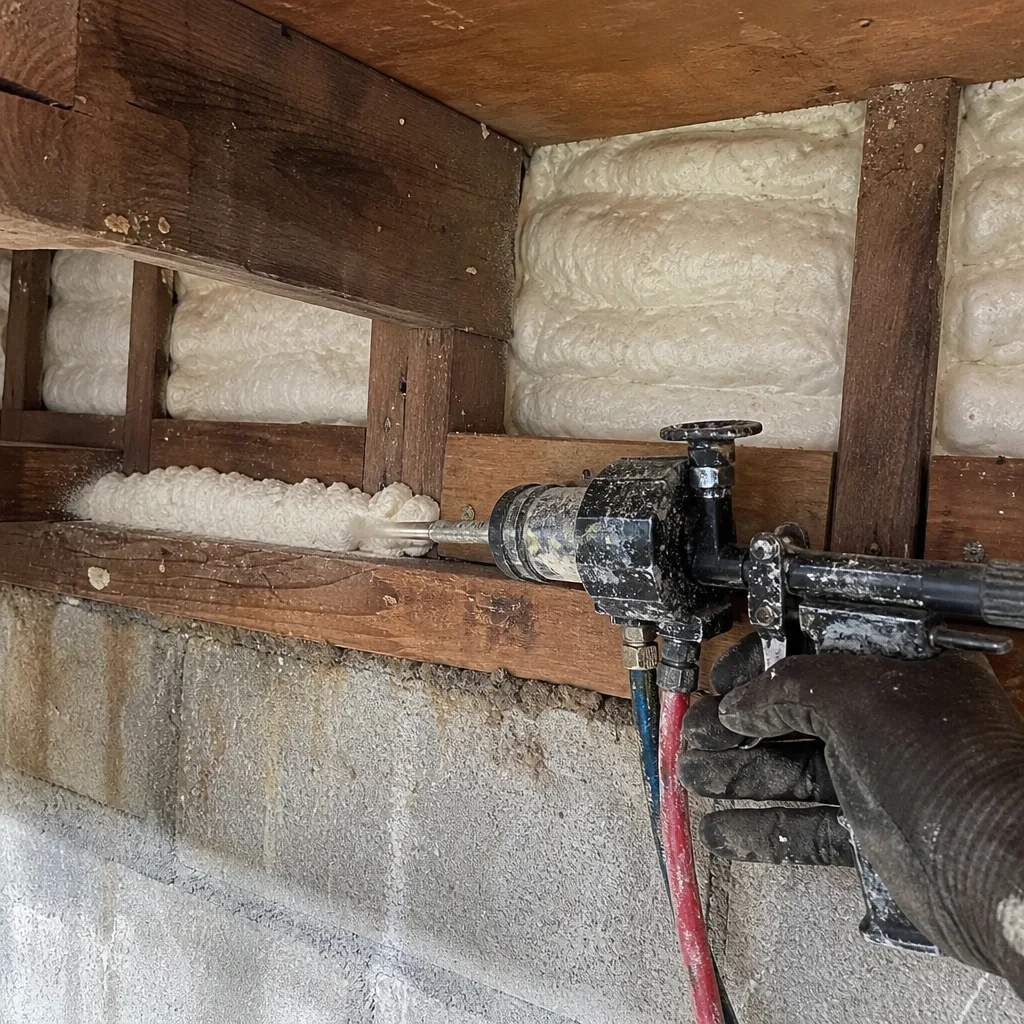
We’ve walked into Rubidoux homes where the bedroom next to the garage stays ten degrees warmer than the rest of the house all summer. The fix is almost always the garage ceiling. Closed-cell foam against the ceiling joists stops the radiant heat at its source, and it also deadens sound from garage doors and tools. If the garage is detached, open-cell foam is often the smarter choice for pure thermal performance at a lower material cost.
Why Foam Beats Batts in a Hot Garage
Fiberglass batts in a Rubidoux garage ceiling degrade fast. The heat cycles break down the paper facing, the batts slump, and within a few summers you’ve got gaps that let heat pour through. Foam doesn’t slump. It fills the cavity completely and stays in place for the life of the home. That’s why we recommend it for garage applications even when batts might be cheaper up front.
Trusted Brands We Service in Rubidoux
We install and service Icynene and Demilec spray foam systems in Rubidoux, and we keep local familiarity with the conditions that affect how those products perform here. Icynene’s open-cell foam excels in tight, awkward attic spaces where full expansion and flexibility matter. Demilec’s closed-cell formulations deliver the high R-value per inch and vapor-barrier properties that river-bottom dew conditions demand. We also work with Rubidoux homeowners who want CertainTeed fiberglass or Rockwool mineral wool where foam isn’t the right call. Having all of these in active inventory means we don’t push one brand. We recommend the one that fits the house and the climate, and we can usually start within a week of the estimate.
Common Spray Foam Insulation Problems We See in Rubidoux Homes
- Crushed mid-century fiberglass before foam. The original batts in 1950s to 1970s Rubidoux attics have been through fifty-plus summers of 140°F thermal cycling. They’re slumped off the joists, full of dust, and doing nothing. We vacuum them out before foam goes in because foam over failed batts is wasted money.
- Dust-coated framing that rejects foam adhesion. Decades of Inland Empire dust and smog settle on attic framing in Rubidoux. Foam won’t bond to that layer. We clean and prep surfaces first, which most crews skip because it’s slow. It’s also the difference between a job that lasts and one that delaminates in two years.
- Morning dew off the Santa Ana River bottom. Homes in the Rubidoux lowlands get seasonal morning condensation that wets roof-deck assemblies. Open-cell foam applied without a vapor strategy in this zone can trap that moisture. We specify closed-cell foam or a vapor-control layer for these homes, and we explain why at the estimate.
- Vented attics that should have been sealed decades ago. The old vented-attic model made sense when homes were built. In a 140°F Rubidoux attic, it’s a heat pump into your living space. Sealing the attic and bringing it inside the thermal envelope is the highest-impact upgrade most of these homes will ever get.
Pricing for Spray Foam Insulation in Rubidoux, CA
In Rubidoux, spray foam pricing tracks the size of the job and the foam type. Open-cell foam for a standard attic runs $1.50 to $2.25 per square foot of surface area. Closed-cell, which we use for roof decks and moisture-prone zones near the river bottom, runs $2.25 to $4.50 per square foot. For most 1,200 to 1,800 square foot Rubidoux ranches, an attic roof-deck foam application lands between $5,500 and $9,000. Crawlspace encapsulation comes in at $3,800 to $6,500. Garage ceiling foam for a two-car garage: $2,200 to $4,000. The old insulation has to be removed first in most Rubidoux homes, and that adds $800 to $1,500 depending on attic depth and condition. Call (855) 773-6429 for a free estimate and we’ll give you exact numbers for your house, not a range a salesperson read off a script.
We Also Serve Cities Near Rubidoux
Our crews work throughout the Jurupa Valley and surrounding Inland Empire. We regularly serve Riverside, Grand Terrace, Highgrove, and Glen Avon. If you’re just outside Rubidoux in any of these communities, the same crew and the same eight-brand material library are available to you. Call (855) 773-6429 and we’ll schedule a free estimate at your home.
Serving Rubidoux, CA — Our Local Coverage Area
We’re based in the Rubidoux area and know this community well. Use the map below to see our service coverage — if you’re nearby, we can almost certainly help.
FAQs About Spray Foam Insulation in Rubidoux
Because fiberglass, blown or batts, still allows air to move through it, and in a 140°F attic that air is carrying heat straight into your living space. Foam seals the attic and stops the airflow itself. In Rubidoux’s heat, sealing beats insulating every time. Re-blowing fiberglass into a hot, dusty Rubidoux attic is a temporary fix that ignores the real problem. Call (855) 773-6429 and we’ll show you the difference in your attic.
Yes, but for floor comfort and air sealing more than moisture control. Rubidoux’s dry climate means crawlspace mold is rare, but the unsealed crawlspace still leaks conditioned air and lets dust into the home. Closed-cell foam on the rim joists and foundation walls stops both. It’s a permanent upgrade that pays off in comfort and, over time, energy use.
Absolutely. A detached garage with no shade in Rubidoux becomes an oven by mid-afternoon, and that heat radiates into whatever you store there and, if it’s close to the house, into the home itself. Closed-cell foam on the ceiling or roof deck drops the interior garage temperature by twenty to thirty degrees in summer. It also makes the space usable as a workshop or gym when it would otherwise be unbearable.
The old fiberglass has to come out. In a 1960s Rubidoux tract home, it’s almost certainly slumped, crushed, and saturated with fifty-plus years of dust. Foam sprayed over that won’t bond to the framing, and you’ll have paid for foam that’s sitting on a bed of failed insulation. We vacuum out the old material, clean the surfaces, and seal the penetrations before foam goes in. Skipping this step is the most common mistake we fix from other contractors’ work.
Closed-cell is the safer choice near the river bottom. Rubidoux lowlands get seasonal morning dew that can wet roof-deck assemblies, and open-cell foam is vapor-permeable, meaning it can trap that moisture against the sheathing. Closed-cell acts as its own vapor barrier and gives you a higher R-value per inch. If your home sits in the Rubidoux lowlands, we’ll recommend closed-cell for the roof deck, and we’ll explain exactly why at the estimate.
Written by Alan Whitcomb, Owner at Placentia Insulation, serving Rubidoux and the Inland Empire.