
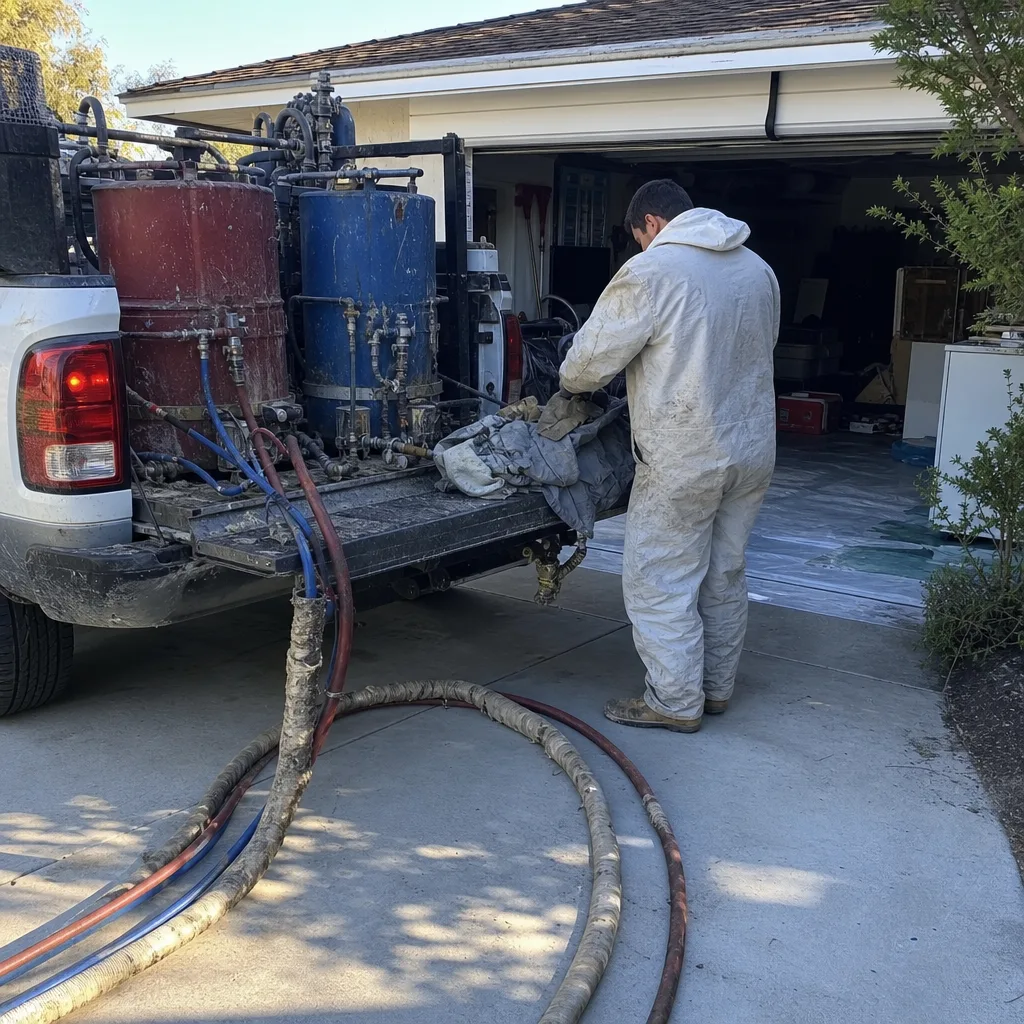
Fast, Reliable Spray Foam Insulation Across San Fernando
Spray foam insulation in San Fernando costs $2.40 – $5.80 per board foot installed, putting a typical attic roofline job between $3,800 and $9,600 and a single wall cavity retrofit between $2,100 and $5,400 depending on access and square footage. Most of our San Fernando work happens in the older stucco bungalows and mid-century tract homes concentrated in the 91340 and 91341 ZIP codes, where empty wall cavities behind original plaster are the norm rather than the exception. Our crews know these houses, know the hard stucco that cracks if you rush it, and know what the northeast Valley heat does to an uninsulated attic. If you’re tired of rooms that won’t hold cool air through a San Fernando afternoon, call Placentia Insulation at (855) 773-6429, and we’ll schedule a free assessment with a real insulation crew, not a sales rep.
Why Placentia Insulation Is San Fernando’s Preferred Spray Foam Insulation Company
Placentia Insulation is a dedicated Spray Foam Insulation contractor, not a generalist shop that runs insulation crews one day and plumbing the next. Every crew member, every tool on the truck, and every conversation we have with a San Fernando homeowner is about one trade: insulation, done correctly in houses that were never designed for it. That focus matters when you’re working on a 1930s stucco bungalow off San Fernando Road or a tight mid-century tract home near Cesar E. Chavez Elementary, where one wrong move with foam pressure cracks plaster you can’t easily match.
Alan Whitcomb built our approach around matching the material to the house, not forcing whatever’s on the truck. We carry eight brands, including Icynene and Demilec spray foam systems, because open-cell and closed-cell foam solve different problems, and a single-brand shop can’t offer you the right chemistry when you need it. San Fernando homeowners call us because we explain what’s behind their walls before we drill into them, and because we treat retrofit foam work as a craft, not a commodity.
Spray Foam Attic Insulation in San Fernando
Spray foam attic insulation in San Fernando is the single highest-impact change you can make to a house that bakes under the Valley sun between June and October. In the 91340 ZIP and surrounding blocks, attic temperatures in older homes routinely exceed 140°F on a hot afternoon, which means your ductwork is sitting in an oven and your living space absorbs that heat from above even after sunset. Spray foam applied to the roofline turns the attic into a conditioned buffer zone instead of a heat reservoir, and that’s why we recommend it so often here. A typical foam roofline job in San Fernando runs $3,800 – $9,600 depending on attic size, roofline complexity, and whether you need open-cell or closed-cell foam.
Closed-cell roofline for heat rejection
Closed-cell foam is our default recommendation for San Fernando attics because it pairs an air seal with structural rigidity and a high R-value per inch, which is what you want when the roof deck is radiating down on you. We apply it directly to the underside of the roof sheathing, sealing gaps, cracks, and penetrations that would otherwise pull heat into the attic. The result is measurable: a house that holds its cool through the afternoon peak instead of cycling the AC nonstop.
Sealing duct runs in brutal attic heat
A foam job that ignores ductwork is a half measure in San Fernando. We routinely find older metal duct runs in these attics leaking conditioned air into a 140°F attic. Our crews foam-seal and insulate those duct runs as part of the roofline work, because if the ducts are still cooking, the living space is still cooking. This is exactly the kind of detail a generalist contractor misses and an insulation specialist doesn’t.
Spray Foam Wall Insulation in San Fernando
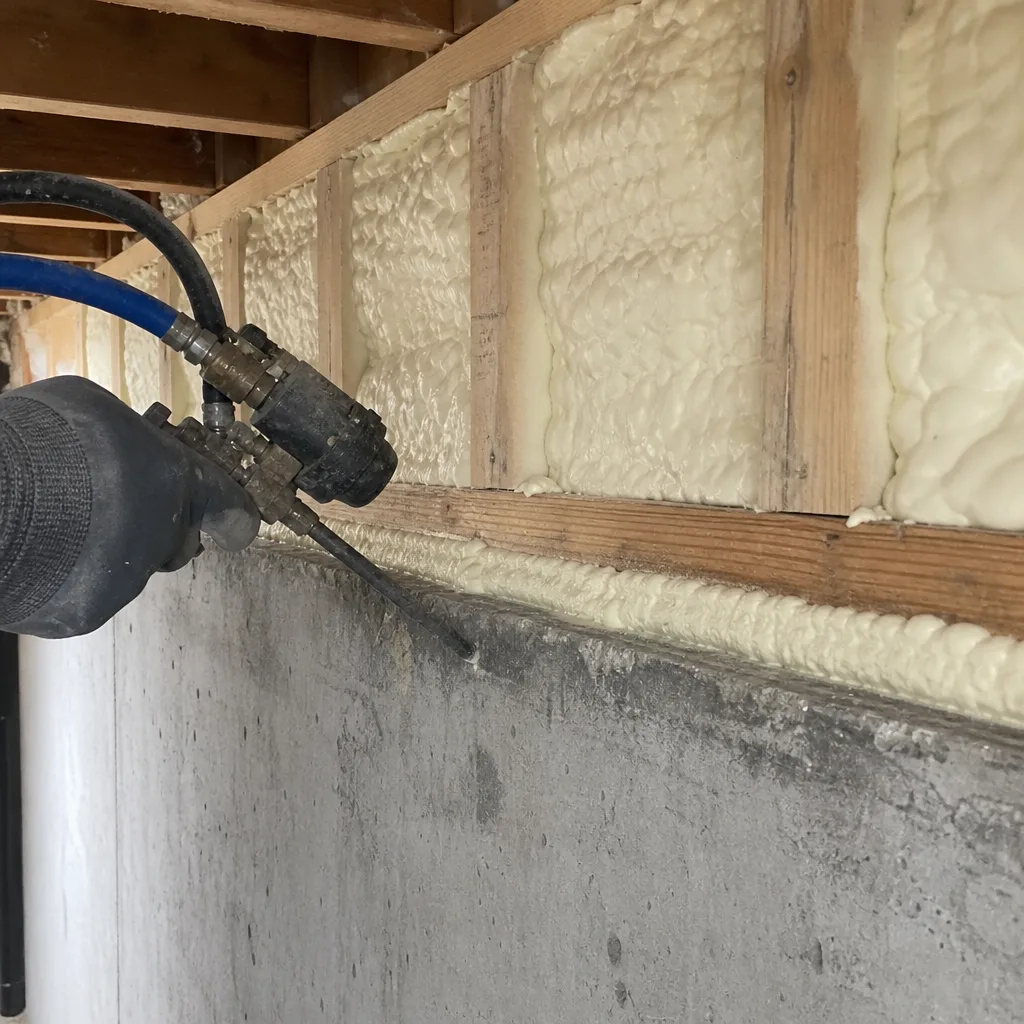
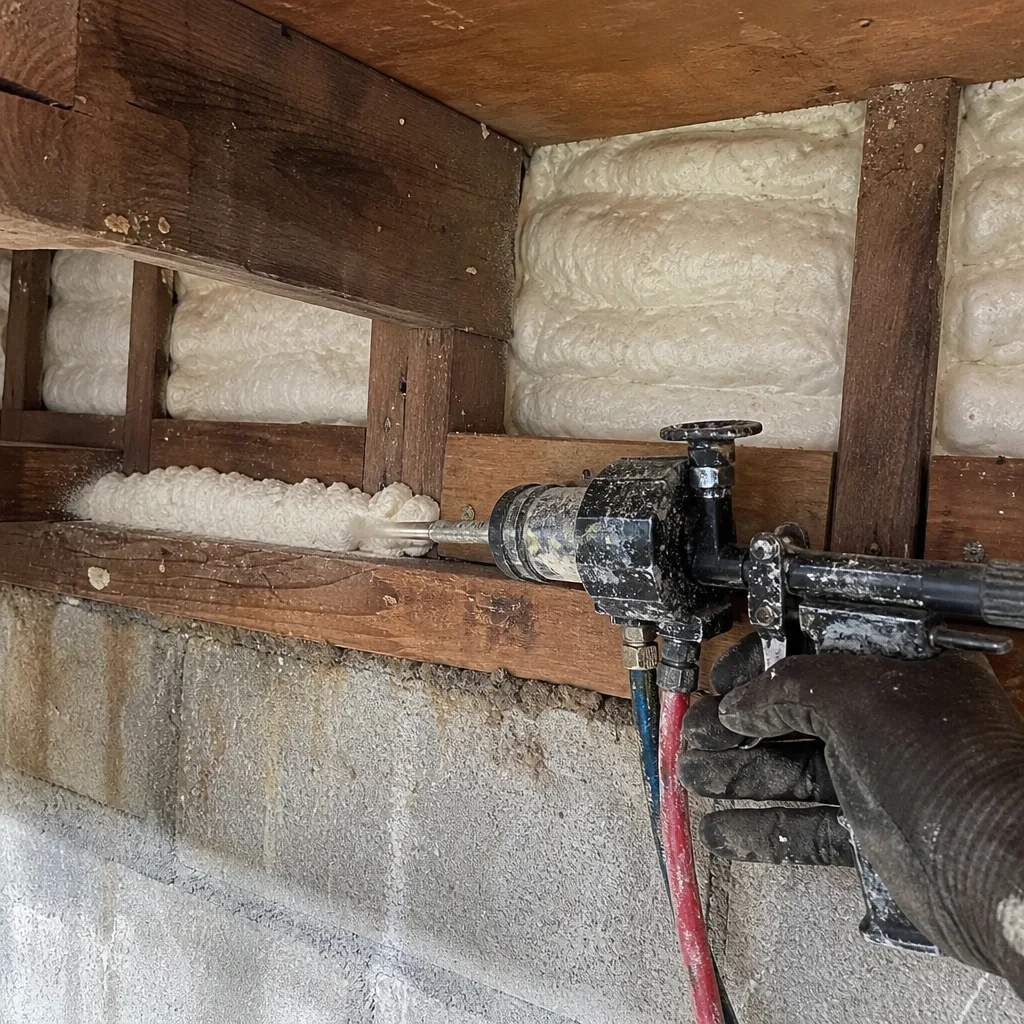
Spray foam wall insulation in San Fernando almost always means a drill-and-inject retrofit, not an open-cavity fill during framing. The city’s dominance of pre-war and mid-century stucco bungalows means we’re typically working behind hard stucco over original plaster, with cavities that were never insulated when the house went up. Closed-cell foam injected through drilled ports expands into those empty cavities, sealing them tight against both heat and air infiltration. A single wall retrofit in San Fernando runs $2,100 – $5,400 depending on linear feet of wall, cavity depth, and how much drilling the stucco requires.
Drill-and-inject into stucco assemblies
The skill in San Fernando isn’t knowing how to spray foam; it’s knowing how to drill through hard stucco without cracking it and how to meter foam pressure so brittle original plaster doesn’t blow out. We’ve done enough of these bungalows to know where the stud bays fall, what pressure the lath-and-plaster assembly will take, and when a cavity is better suited to one foam over another. That’s local knowledge you can’t get from a generic installer.
When the wall cavity is empty
If your home was built before the 1970s in San Fernando, there’s a very good chance the walls are hollow right now. We confirm with a thermal scan before we drill, but the pattern is consistent throughout the 91340 and 91341 areas. You’re not adding insulation to something that already exists. You’re filling a void that’s been costing you money every summer since the house was built.
Trusted Brands We Service in San Fernando
Most insulation contractors carry one or two product lines. We carry eight, because the right foam for a San Fernando attic isn’t always the right foam for a San Fernando stucco wall. For spray foam specifically, we install Icynene and Demilec systems, both open-cell and closed-cell, and we keep the materials and equipment stocked to service any of those jobs without ordering and waiting. If you already have spray foam from a prior project and need it inspected, repaired, or extended, we service all major open-cell and closed-cell systems rather than telling you it’s not our brand. That’s what it means to be a specialist with an eight-brand library.
Common Spray Foam Insulation Problems We See in San Fernando Homes
– Foam installed over old knob-and-tube-era empty cavities without air sealing first. The foam traps heat in the wrong places because the air leaks were never addressed. We see this in houses where a prior contractor sprayed the rafter bays but skipped the wall plates and rim joists, and the homeowner is still paying summer bills that don’t make sense.
– Foam blown too aggressively into brittle original plaster-and-stucco walls. Contractors who usually frame new walls don’t always know how much pressure 80-year-old lath and plaster can take before it cracks. The stucco survives; the interior plaster doesn’t. We meter pressure and use the right foam formulation for old assemblies.
– Attic foam jobs done without sealing the punishing-temperature duct runs. The roofline is foamed, but the ductwork is still sitting in a hot attic leaking conditioned air through every joint. The room never cools properly, and the homeowner thinks spray foam doesn’t work. It does work; the job just wasn’t finished.
– Undersized open-cell foam in spaces that needed closed-cell. Open-cell has its place, but in a cramped old San Fernando attic with tight rafter bays, the R-value per inch matters. We’ve corrected jobs where the wrong foam chemistry was selected because it was what the installer had on hand.
Pricing for Spray Foam Insulation in San Fernando, CA
We Also Serve Cities Near San Fernando
Placentia Insulation covers the surrounding Valley communities, including North Hills, Shadow Hills, Northridge, and Van Nuys. If you’re in one of those areas, the same San Fernando retrofit approach applies, since the housing stock and heat regime are nearly identical. Call us and we’ll let you know when our crews are in your neighborhood next.
Serving San Fernando, CA — Our Local Coverage Area
We’re based in the San Fernando area and know this community well. Use the map below to see our service coverage — if you’re nearby, we can almost certainly help.
FAQs About Spray Foam Insulation in San Fernando
Can you spray foam into the walls of an old San Fernando stucco bungalow without cracking the plaster?
Yes, in most cases. The key is drilling carefully through the stucco sheathing and metering foam pressure low enough that the original lath-and-plaster doesn’t blow out. We’ve done enough drill-and-inject work in San Fernando’s pre-war and mid-century bungalows to know what those assemblies will take. Every job starts with a wall cavity inspection and thermal scan, so we know what we’re filling before we drill. Call (855) 773-6429 and we’ll assess your walls specifically.
Why is spray foam a better fit than blown-in for San Fernando’s older homes?
Closed-cell spray foam adds an air seal and a vapor seal in one pass, which matters when you’re working inside old empty cavities where air leaks are the bigger enemy than conduction. Blown-in cellulose has its place, and we install it too, but in San Fernando’s harsh heat, the air-sealing quality of closed-cell foam is what keeps rooms cool. The right answer depends on the house, so we assess before recommending rather than defaulting to a single method.
Does spray foam in the attic actually help with San Fernando’s summer heat?
Yes, and it’s measurable. A foamed roofline keeps the attic from turning into a 140°F heat reservoir, which means your ductwork isn’t cooking and your ceiling isn’t radiating heat into the living space after the sun goes down. In San Fernando’s inland Valley heat, this is the single biggest difference between a house that holds its cool and a house that runs the AC from noon to midnight. We see it every summer on the homes we retrofit.
What brands of spray foam do you use for these retrofits?
We install Icynene and Demilec spray foam systems, covering both open-cell and closed-cell chemistry. We choose the foam based on the job: closed-cell for heat rejection and structural strength in old wall cavities, open-cell where the priority is air sealing at a lower cost per board foot. If you have questions about foam chemistry, call (855) 773-6429 and we’ll explain it in plain terms.
How do you handle dense, working-class San Fernando homes where the whole house is older stock?
We work one cavity at a time, and we don’t pressure homeowners into whole-house retrofits they don’t need. Many of our San Fernando jobs start with the attic roofline, because that’s where the biggest heat gain lives, and expand from there as budget allows. We’re a specialty contractor, not a sales operation, and the goal is to fix the worst problem first and let the results speak for themselves. Call us and we’ll give you an honest assessment of what matters most in your house.
Written by Alan Whitcomb, Owner at Placentia Insulation, serving San Fernando and the surrounding Valley communities with spray foam, attic, and blown-in insulation since day one.