
Spray Foam Insulation in Sedco Hills: What It Costs and Why Prep Matters Here
Spray foam insulation in Sedco Hills homes typically costs $2,800 – $7,500 for a full attic encapsulation, with rim joist work running $900 – $1,800 and crawl space applications between $2,200 and $5,000. Most Sedco Hills jobs are completed in one to two days. But here’s what most coastal-city insulation pages won’t tell you: this specific ZIP code has a dust and temperature problem that changes how spray foam has to be prepped and installed. If you’re reading this from a house off Grand Avenue or somewhere up in the hillside tracts near the 92531 corridor, you already know the wind never quite stops here.
Our crews work in Sedco Hills regularly. We know the 1980s-90s tract homes, the vaulted ceilings, the inset garages, and the attics you can barely crawl into. Call (855) 773-6429 to talk through your specific house.
Why Placentia Insulation Is Sedco Hills’s Preferred Spray Foam Insulation Company
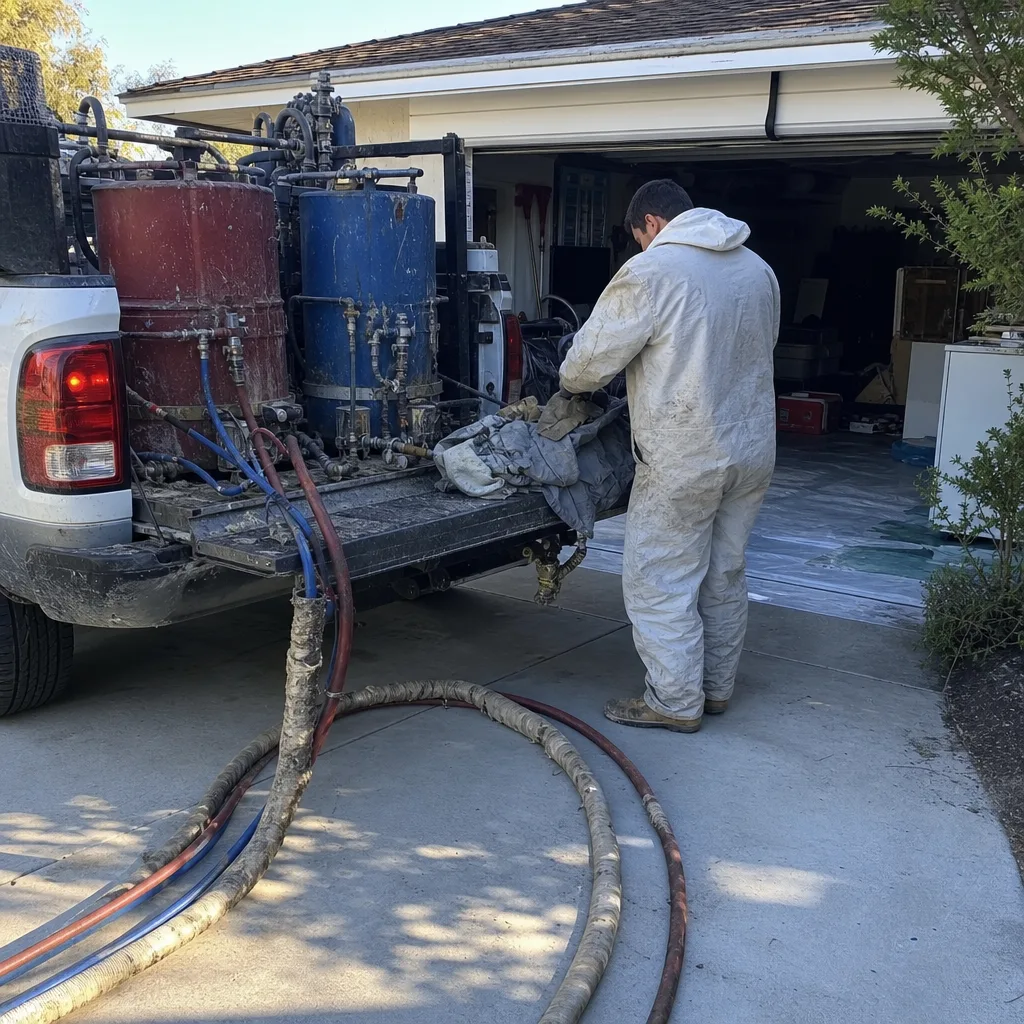
We’re an insulation-only contractor. That means every truck we send to Sedco Hills carries spray foam rigs, not a mix of plumbing fittings and roofing nails. Alan Whitcomb built Placentia Insulation around one trade, and that focus shows up in the details: our crews can tell you whether your vaulted ceiling needs open-cell Icynene or closed-cell Demilec, and they’ll explain why the dust load in your attic changes the preparation work. Most insulation contractors carry one or two product lines. We carry eight brands, including Icynene and Demilec for spray foam, so Sedco Hills homeowners get what their house actually needs, not what happens to be on the truck.
Response time to Sedco Hills from our Placentia base is typically same-day for estimates and within three to five business days for installs, depending on scope. We’ve worked enough homes in the 92531 ZIP to know exactly what the wind does to attic assemblies here. That local knowledge means we don’t show up surprised when we find dust-packed fiberglass on the windward side of your attic. We expect it, and we plan for it.
Crawl Space Spray Foam Insulation in Sedco Hills
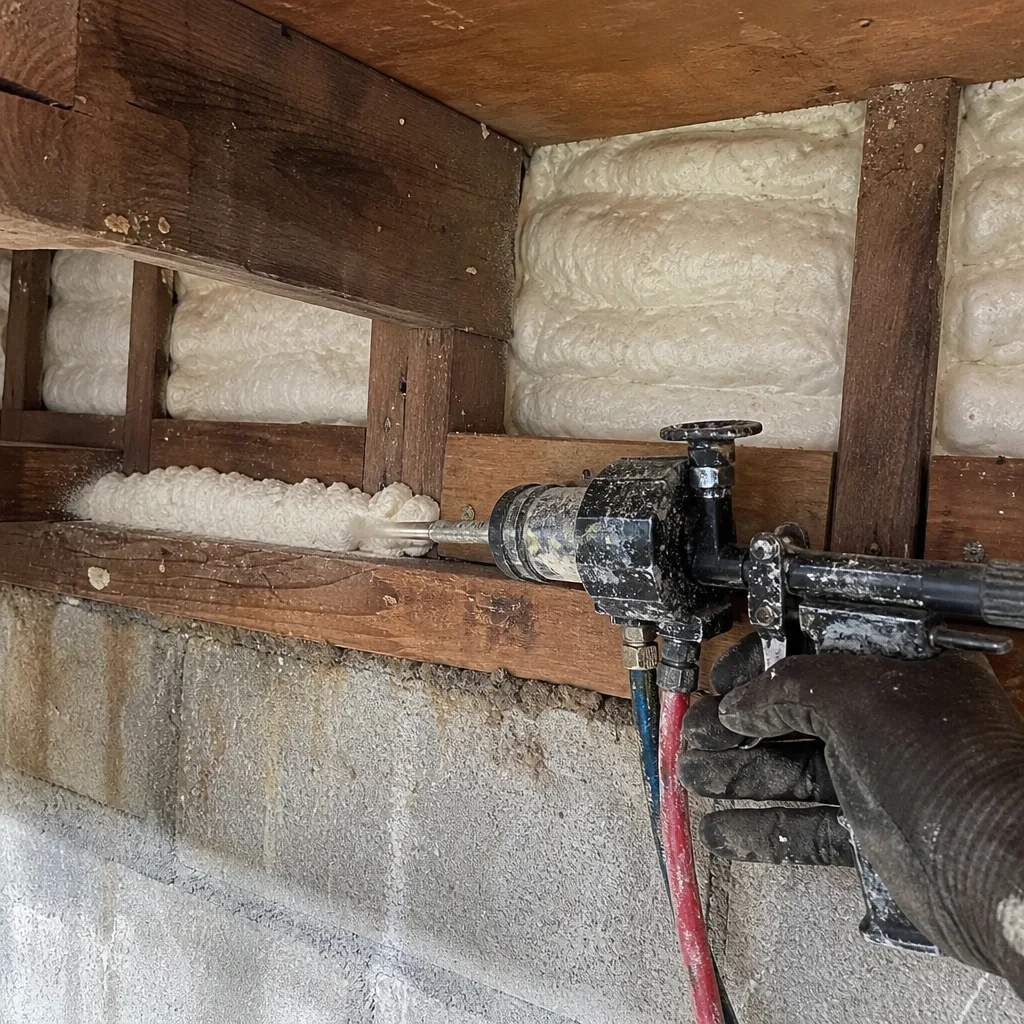
Crawl Space Spray Foam Insulation in Sedco Hills addresses a specific problem this area shares with few other Southern California communities: the same wind corridor that blasts dust through attic vents also drives air up through the crawl space, carrying dust and heat into the floor system. Homes on graded hillside lots off the main Sedco Hills corridor often have crawls that act like bellows. Air leaks in, dust settles, and the floor above feels cold on winter nights and warm by midafternoon in July. Spray foam seals that air path.
A typical crawl space encapsulation in Sedco Hills runs $2,200 – $5,000 depending on square footage, access clearance, and whether we’re sealing rim joists only or doing a full floor-to-joist application. Closed-cell Demilec is usually the right call here because it blocks moisture migration from the soil, which matters on hillside lots where drainage moves water toward foundation walls.
Rim Joist Sealing for Hillside Crawls
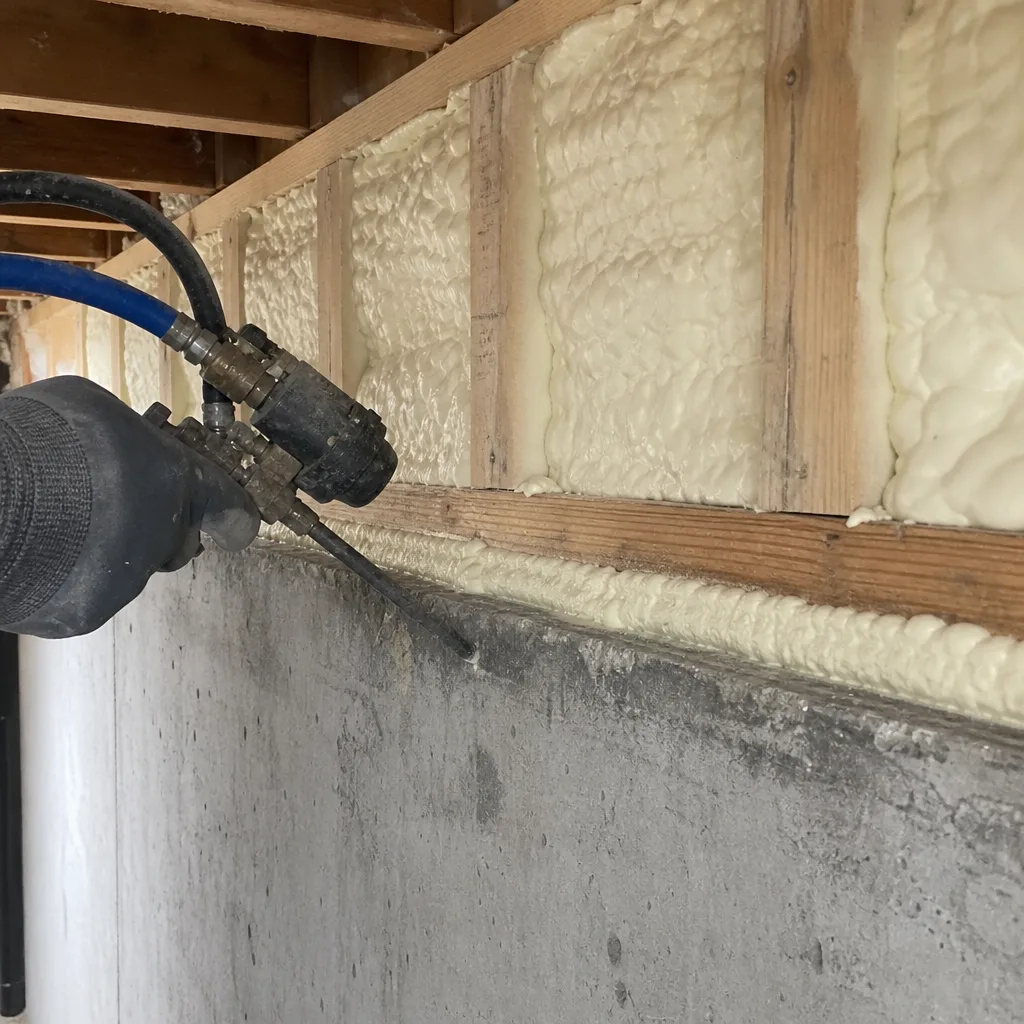
The rim joist is where the floor framing meets the foundation wall, and in Sedco Hills it’s the single biggest air leak in most crawl spaces. We spray closed-cell foam along the entire rim band to stop the wind-driven air movement that pulls dust and heat through the assembly. On hillside homes with stepped foundations, this is often the difference between a crawl that behaves and one that dumps hot air into the living space all afternoon.
Moisture Control and Dust Barriers
Because Sedco Hills’ wind pushes fine dust into every available gap, we typically recommend a full crawl seal rather than spot treatments. The foam creates a continuous barrier that dust can’t penetrate, and closed-cell foam’s vapor resistance keeps ground moisture from moving up into floor framing. That matters when winter nights drop near freezing and warm indoor air meets cold floor surfaces.
Garage Spray Foam Insulation in Sedco Hills
Garage Spray Foam Insulation in Sedco Hills is one of the most overlooked fixes for homes with the inset attached garages common to this area’s 1980s-90s tract construction. These garages share a wall and often a ceiling with living space, and the original builders rarely insulated either surface properly. The result: a garage that hits 110°F in August, radiating heat into upstairs bedrooms, and a ceiling assembly that lets cold air pour down through the floor above on winter nights.
Foaming a garage ceiling in Sedco Hills typically costs $1,500 – $3,200 for a standard two-car footprint, depending on whether we’re working around existing storage or finished surfaces. We use open-cell Icynene for most garage ceiling applications because it fills the irregular cavities around door tracks, hatch framing, and recessed fixtures, whereas closed-cell adds too much rigidity when the assembly needs to flex. The goal is air sealing first, thermal resistance second.
Garage Ceiling Air Sealing
The garage ceiling is where Santa Ana wind pressure finds its way through the gaps around door tracks and electrical boxes. Spray foam seals those penetrations in one pass, which no batt ever does. In Sedco Hills, the windward side of the garage door is often the first place we see dust streaking through the assembly, so sealing the perimeter framing matters as much as insulating the field of the ceiling.
Shared Wall Treatment
When the garage shares a wall with a bedroom or hallway, we foam that wall cavity too. This blocks the stack effect that pulls garage air, and sometimes exhaust, into the living space. It also stops the dust that accumulates in garage door tracks and floor seams from being pressurized into the conditioned envelope every time the big door closes.
Trusted Brands We Service in Sedco Hills
Placentia Insulation stocks spray foam products from Icynene and Demilec, which gives us both open-cell and closed-cell chemistry to choose from for every Sedco Hills job. We also carry Owens Corning and mineral wool options through Rockwool when a different material better fits the application, like a fire-rated separation wall in an attached garage. Having eight brands in active inventory means we don’t have to force a product onto your house because it’s the only one we sell. We match the material to the job, not the job to whatever we have on the truck.
Common Spray Foam Insulation Problems We See in Sedco Hills Homes
- Dust-contaminated substrate failing to bond. The same wind corridor that pushes dust into your attic also coats the underside of roof decking and the top plates of wall framing. Spray foam won’t bond to a dusty surface, so crews who skip cleaning and priming end up with foam that delaminates within a few seasons. We clean and prime every surface before spraying, which adds prep time but prevents callbacks.
- Diurnal temperature swings stressing the bond line. Sedco Hills sees 100°F-plus summer afternoons and near-freezing winter nights, which means building materials expand and contract aggressively. The bond between spray foam and roof decking or rim joists takes real stress from that cycling. It makes proper surface prep, correct foam thickness, and the right chemistry selection critical here in ways it simply isn’t in coastal cities with milder temperature ranges.
- Vaulted ceilings hiding failed R-11 batts. Most of the hillside tracts in Sedco Hills were built with vaulted ceiling assemblies and R-11 or R-13 fiberglass batts that have been settling and degrading for 30 to 40 years. The problem: you can’t see that failure without opening the ceiling or crawling a nearly impassable attic. If we foam over failed batts without removing them first, the air gaps around recessed lights and top plates remain unsealed, and the foam underperforms.
- Windward-side insulation compaction. We’ve lost count of the Sedco Hills attics where the windward side of the assembly has blown-in fiberglass packed down to half its original depth, while the leeward side looks untouched. That uneven coverage is a direct result of the wind-funnel effect, and it means the house feels different room to room depending on which side faces the prevailing wind.
Pricing for Spray Foam Insulation in Sedco Hills, CA
Here’s what we quote most often in the 92531 ZIP:
- Open-cell attic encapsulation: $2,800 – $5,500 for a standard 1,500 – 2,200 square foot home
- Closed-cell roof deck application: $4,500 – $7,500, higher when vaulted ceilings or limited attic access slow the install
- Rim joist sealing: $900 – $1,800 depending on linear footage and crawl access
- Garage ceiling spray foam: $1,500 – $3,200 for a typical two-car attached garage
- Crawl space full encapsulation: $2,200 – $5,000 based on square footage and moisture remediation needs
Several factors move a Sedco Hills quote up or down: attic access clearance, dust remediation on contaminated surfaces, whether we need to remove failed R-11 batts first, and whether the garage or crawl space has existing finishes. Estimates are free. Call (855) 773-6429 and we’ll walk the house with you before quoting anything.
Why Sedco Hills Homes Need Different Prep Than Coastal Houses
Here’s the thing most insulation pages won’t say outright: a spray foam job in Huntington Beach or Newport Beach can be done with standard prep and standard chemistry, and it’ll hold up fine for decades. Sedco Hills is not a coastal environment. The wind-funnel corridor that runs through this valley pushes fine dust into attic and wall cavities so aggressively that our crews routinely find blown-in fiberglass compacted and contaminated on the windward side of homes, a condition that almost never shows up just a few miles west toward the coast. That dust changes everything. It sits on the underside of roof decking, on top plates, on the face of existing batts. Spray foam applied over that contamination forms a weak bond that fails early, and the failure usually shows up as foam pulling away from the structure at the edges, which lets air bypass the very seal you paid for.
On a graded hillside tract home off the Sedco Hills corridor, our crew pulled the original settled R-11 batts from a vaulted-ceiling attic and found the windward bays packed with dust-compacted fiberglass, leaving the wood frame exposed. We sealed the top plates and rim joists with Icynene spray foam and closed the inset attached garage ceiling in the same pass, cutting the Santa Ana wind infiltration path that had been driving 100°F-plus summer heat straight into the living space. The homeowner reported the upstairs rooms holding temperature through the afternoon for the first time since the house was built. That’s the kind of outcome you only get when the crew understands what the local environment actually does to a building assembly.
We Also Serve Cities Near Sedco Hills
Our Spray Foam Insulation crews cover the full Sedco Hills area plus nearby communities including Lakeland Village, Canyon Lake, Meadowbrook, and Quail Valley. If you’re in one of those ZIP codes and tired of guessing at your insulation problem, call us. We’ll tell you straight what you need and what it should cost.
Serving Sedco Hills, CA — Our Local Coverage Area
We’re based in the Sedco Hills area and know this community well. Use the map below to see our service coverage — if you’re nearby, we can almost certainly help.
FAQs About Spray Foam Insulation in Sedco Hills
Because the wind-funnel corridor pushes fine dust into attic cavities, and that dust prevents spray foam from bonding properly to roof decking and framing. We clean and prime surfaces before spraying, which adds labor but prevents the delamination that happens when crews skip it. Call (855) 773-6429 to schedule a free attic assessment, and we’ll show you exactly what’s been collecting in your assembly.
Yes, and the difference is usually dramatic. Closed-cell foam on the roof deck blocks radiant heat gain from the sun beating down on your shingles, while open-cell foam in walls and rim joists stops the wind-driven hot air from pushing through the assembly. Homes we’ve foamed in the 92531 ZIP routinely hold indoor temperatures through midafternoon that used to spike by 4 or 5 p.m.
Almost always yes. Those inset garages share ceiling and wall assemblies with living space, and most were built with zero insulation. Foaming the ceiling and shared wall turns a 110°F heat sink in August into a buffer zone that stops the radiant transfer into bedrooms above. It also cuts the dust that Santa Ana winds force through garage door gaps and into the house.
They stress the bond line more than in coastal areas, which is why proper surface prep and the right chemistry selection matter so much in Sedco Hills. Closed-cell foam handles the expansion and contraction of wood framing better than open-cell when applied to roof decking, while open-cell works well in interior wall cavities where temperatures stay more stable. We select based on where the foam goes and what the local climate will do to it.
Yes, though it takes different equipment and more time. Many Sedco Hills homes have vaulted ceiling assemblies with attic access hatches too small to crawl through, which means we often work from the exterior by removing sections of roof decking or use specialized spray rigs to reach into tight cavities. This is exactly the kind of access problem that separates an insulation specialist from a generalist contractor who’s never had to work a hillside tract at 100°F.
Call Placentia Insulation for Your Sedco Hills Spray Foam Project
If your Sedco Hills home has rooms that won’t hold temperature, an attic full of dust-compacted fiberglass, or a garage that turns into an oven every summer, we can fix it. We’ll assess the house, explain what’s actually going on in the assembly, and quote you a number that includes the prep work other crews skip. Alan Whitcomb and the Placentia Insulation team know this area and its houses. Call (855) 773-6429 for a free estimate, or to just ask a question about what your insulation is doing right now.
Written by Alan Whitcomb, Owner at Placentia Insulation, serving Sedco Hills and the surrounding communities.