
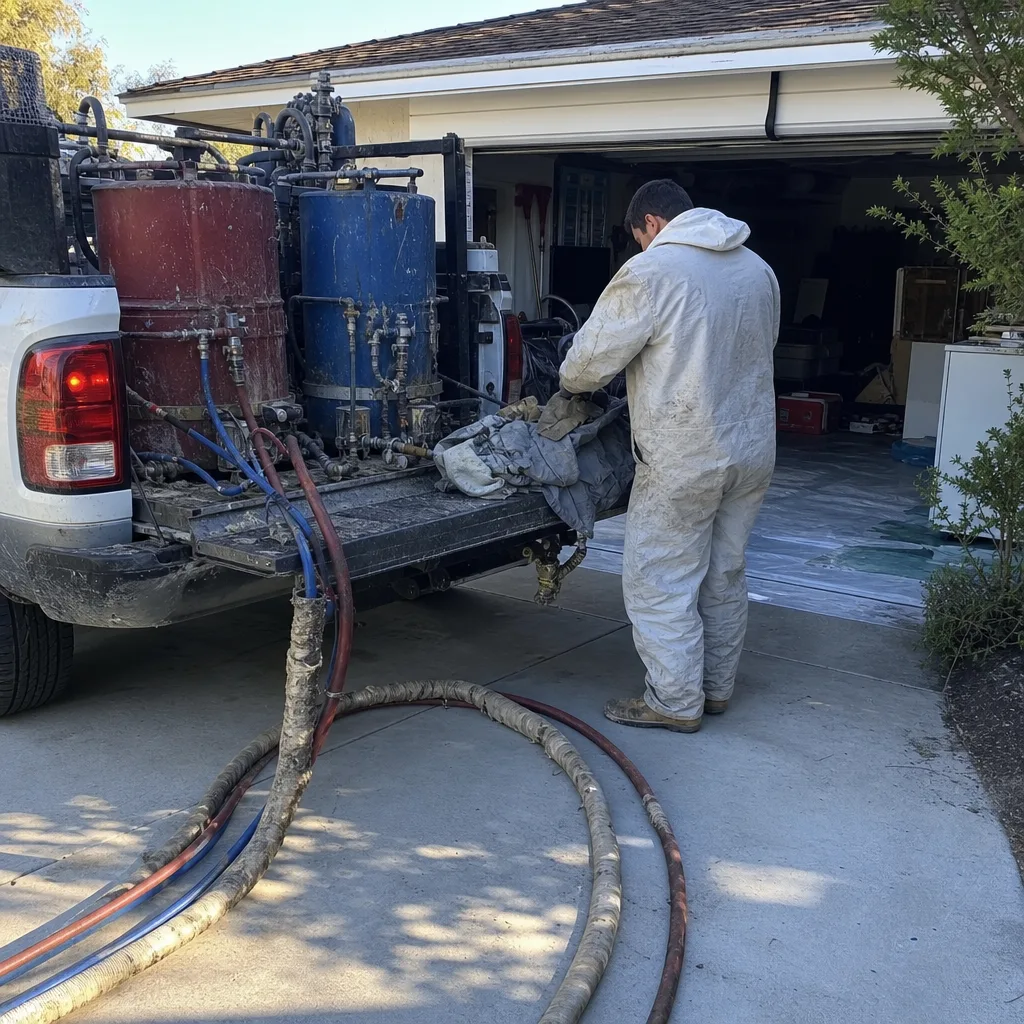
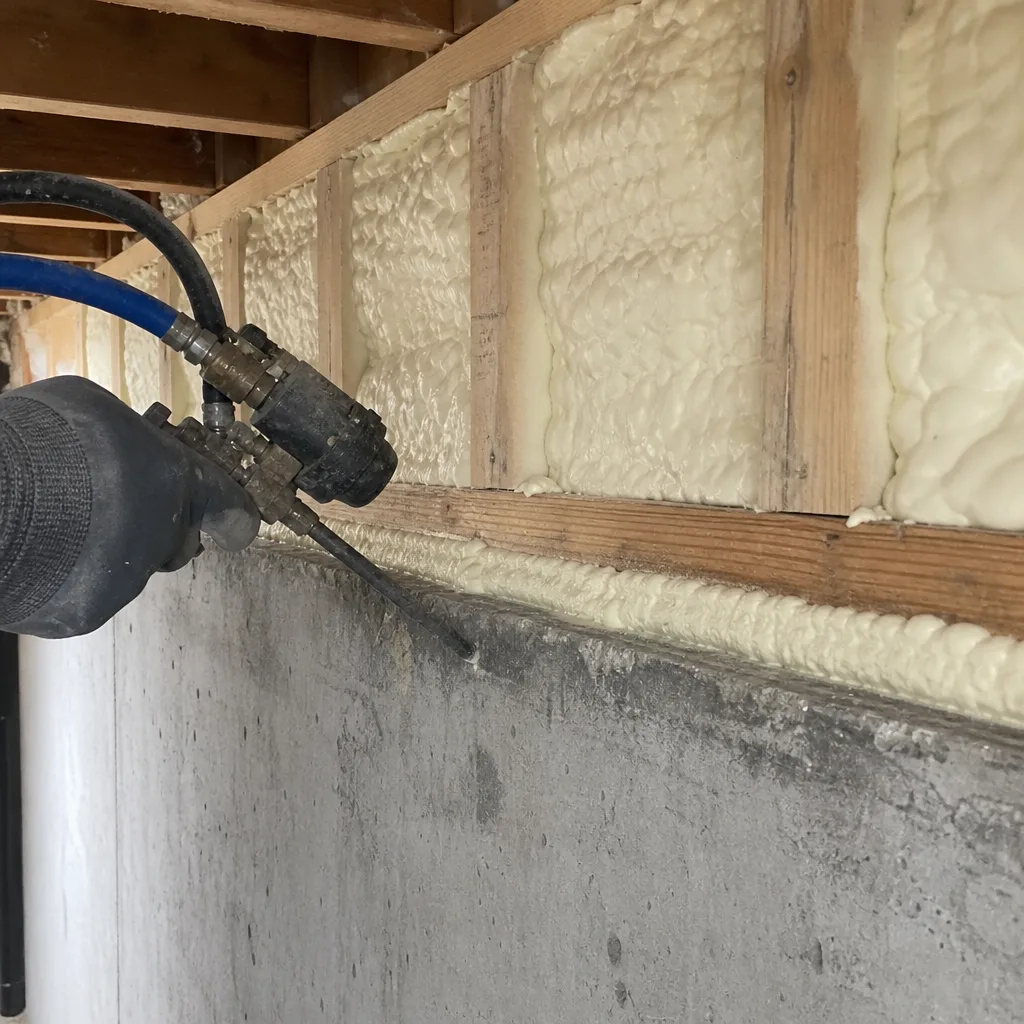
Fast, Reliable Spray Foam Insulation Across South San Jose Hills
Spray foam insulation in South San Jose Hills typically runs $2.50 to $6.50 per square foot installed, depending on whether you need open-cell or closed-cell foam and where it’s going. Most jobs in this ZIP code are completed in a single day, and we stock both Icynene and Demilec foams for hillside tract homes. If your attic temperature swings hard between floors or your cooling bill climbs every August, you’re dealing with insulation that was never sized for this kind of inland heat. Call us at (855) 773-6429 for a straight answer about your home, not a sales pitch.
Why Placentia Insulation Is South San Jose Hills’s Preferred Spray Foam Insulation Company
We spend a lot of time in the 91792 ZIP code, and we’ve learned the quirks of these hillside tracts. The homes here sit on sloped lots, which means attics don’t follow the neat rectangular shapes you see in flatland neighborhoods like Valinda or Rowland Heights. Our crew checks framing and ventilation paths before foam ever leaves the truck. That pre-inspection step is why we don’t get called back for condensation problems or blocked soffit vents that other installers create by spraying first and looking second.
We’re insulation specialists. Not a general contractor who does insulation on the side. Our guys install attic insulation, spray foam, and blown-in every working day. They talk R-values, vapor drive, and thermal bridging like other crews talk football. When you call with a question about your South San Jose Hills home, the person on the phone actually knows what’s happening inside your walls and ceiling. That matters when you’re deciding between open-cell and closed-cell foam for a cramped hillside crawl space.
We carry eight brands across the trade: Owens Corning, Johns Manville, Knauf, Rockwool, CertainTeed, Icynene, Demilec, and GreenFiber. Most insulation contractors stock one or two product lines and try to make every house fit those products. We match the material to the job, not the job to whatever we have on the truck. For spray foam specifically, we’re backed by Icynene and Demilec, which means you get the right foam chemistry for your application: open-cell where you need breathability and sound control, closed-cell where you need structural strength and moisture resistance.
“Eight brands. Three methods. One specialty.” That’s how Alan Whitcomb runs the operation here. He’s built the team around a simple idea: insulation isn’t a side hustle. It’s the entire job. And in a hillside community like South San Jose Hills, where builder-grade attic blankets are failing after 40 or 50 years, that focus shows up in every inspection we do.
Crawl Space Spray Foam Insulation in South San Jose Hills
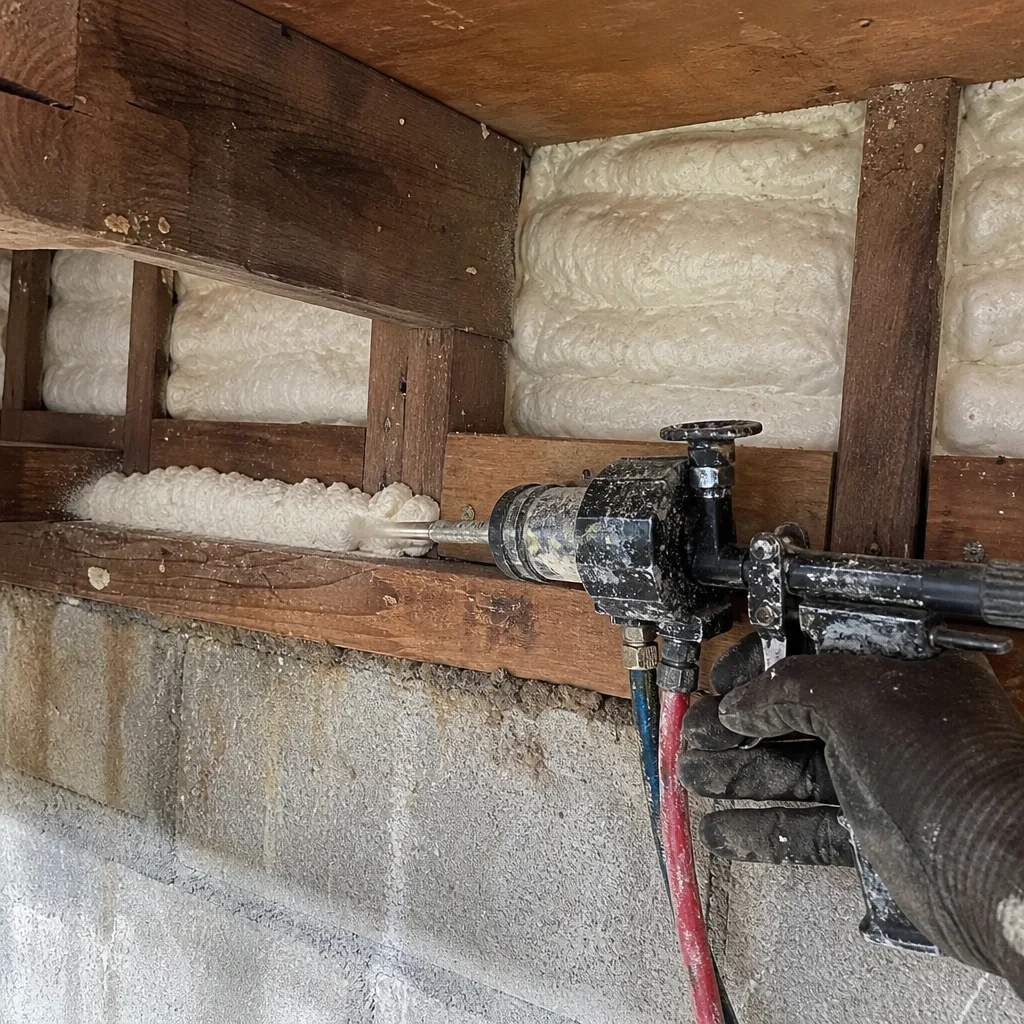
Crawl Space Spray Foam Insulation in South San Jose Hills requires a different approach than the flatland spec, because these homes were built into slopes and their crawl spaces are often shallow, irregular, and partially vented to soil that bakes all summer. On hillside lots, the downhill side of a crawl space can sit a foot off dirt while the uphill side is nearly sealed. Spray foam tells the truth about that framing: closed-cell foam seals the cracks and adds a moisture barrier at the same time, which open-cell can’t do in this kind of application. We typically recommend Demilec closed-cell for South San Jose Hills crawl spaces that show signs of dampness or pest intrusion, and Icynene open-cell where the space is tight and the priority is air sealing rather than vapor drive.
Cost for this work in South San Jose Hills runs $2.75 to $5.50 per square foot for open-cell and $4.00 to $6.50 for closed-cell, including surface prep and cleanup. The irregular shape of slope-adaptive crawl spaces can push labor slightly higher than a flat rectangle job, but the material itself is the same high-spec foam we spray everywhere else in the San Gabriel Valley.
When Hillside Crawl Spaces Need Closed-Cell
Hillside homes in the 91792 ZIP code often develop moisture on the uphill wall of the crawl space, especially after winter rains when the ground behind that wall stays damp for months. Closed-cell foam creates a vapor barrier that stops that moisture from migrating into floor framing. It also makes the crawl space dramatically warmer in winter, which means floors don’t feel like ice on January mornings in South San Jose Hills.
Sealing the Rim Joist in Sloped Construction
The rim joist is the band of wood where your floor framing meets the foundation wall, and on sloped lots it’s a chronic air leak. Spray foam applied to the rim joist in a South San Jose Hills crawl space stops the stack effect that pulls hot, dusty attic air down through the walls and cold air up from the crawl space. This is one of the highest-value square footage upgrades we do, because it’s cheap per square foot and pays back fastest on utility bills.
Garage Spray Foam Insulation in South San Jose Hills
Garage Spray Foam Insulation in South San Jose Hills solves a problem that almost every builder-grade home in this community shares: the garage ceiling and walls were never insulated at construction, so the garage swings to 100°F in summer and 40°F in winter. Your builder cut corners there because the garage wasn’t living space, but nobody told your home’s thermal envelope that. The garage shares framing and often a common wall with the house itself, so an uninsulated garage drags conditioned air out of your living room and makes your HVAC work double.
When we spray foam a garage ceiling in South San Jose Hills, we’re sealing the attic above it and the wall cavities at the same time. Open-cell Icynene is often the right call for garage ceilings on these stucco tract homes because it’s lighter, fills irregular framing gaps well, and deadens sound from the street. Cost for a two-car garage ceiling in the 91792 ZIP code runs $1,800 to $3,200, depending on whether we’re spraying the ceiling only or also doing the shared wall. Adding wall cavities runs another $1,200 to $2,000 for a standard tract garage.
Garage Door Perimeter Sealing and Smart-Opener Gaps
Spray foam alone won’t fix an underperforming garage door in South San Jose Hills. Builder-grade doors and openers here were cheap from day one, and they leak air around the perimeter and through the opener unit itself. When we spray a garage ceiling, we also check the door perimeter seal and note where air is moving around the door. Foam stops the surface heat; the door has to stop the infiltration. Homeowners who upgrade to a sealed, insulated door after we spray the ceiling see the biggest drop in garage temperature.
Trusted Brands We Service in South San Jose Hills
Placentia Insulation stocks three core spray foam lines for South San Jose Hills work: Icynene open-cell, Demilec closed-cell, and Rockwool mineral wool for applications where fire resistance or sound dampening is the main concern. We don’t push a single brand. We carry all of them so you get the right product for your specific hillside tract home. If you have a fire-rated wall requirement or want to cut street noise, Rockwool batts in the garage shared wall can outperform spray foam in those specific roles. For air sealing and moisture control, foam wins every time. We keep local inventory for fast turnaround within the 91792 ZIP code, so we’re not waiting on a distributor truck when your project is already torn apart in the driveway.
Common Spray Foam Insulation Problems We See in South San Jose Hills Homes
- Compressed builder-grade attic blankets on hillside-exposed roofs. The original fiberglass in post-1950s tract homes here settles and compresses over 40 or 50 years, and our inspections routinely find attics at R-10 when they should be R-38 or better. Hillside solar gain makes this worse: the same undersized attic in flatland Valinda just runs warm, but on a sloping South San Jose Hills lot it turns into a furnace by 3 p.m.
- Moisture trapped by improper ventilation paths in irregular attics. When a technician sprays foam into a slope-adaptive attic without first mapping the framing and clearing soffit vents, condensation builds against the roof deck and rots the sheathing from the inside. We see this on homes where a previous contractor treated a hillside attic like a flat rectangle. In South San Jose Hills, that mistake can be a five-figure roof repair.
- Builder-grade garage doors underperforming even after spray foam. We ran into this recently on Fairway Drive: a 1970s stucco tract home where the homeowner had foam sprayed in the garage ceiling but couldn’t figure out why the garage was still hot. The door was original, had no perimeter seal left, and the opener unit was leaking air into the garage cavity. Foam seals the ceiling; the door has to seal itself.
- Uneven coverage around slope-adaptive rim joists and framing gaps. Homes here have framing that follows the slope, meaning joist bays aren’t uniform. Blown-in insulation settles into those irregular bays and leaves voids. Spray foam, applied correctly after a framing check, fills the gaps and seals the air path. But skip the framing check and you’ll miss the worst leaks hiding behind the kneewalls and dropped soffits that tract builders used to fit houses to the hill.
Pricing for Spray Foam Insulation in South San Jose Hills, CA
Open-cell spray foam in South San Jose Hills runs $2.50 to $4.50 per square foot; closed-cell runs $4.00 to $6.50, with crawl space and rim joist work landing toward the bottom of those ranges and full attic roof-deck applications toward the top. For a typical 1,200-square-foot attic in a 1970s tract home, expect $6,000 to $10,500 for closed-cell roof deck foam, or $3,500 to $6,000 for open-cell. Garage ceilings run $1,800 to $3,200. Labor here runs slightly higher than flatland cities because irregular framing means more measuring and cutting, and the material has to be sprayed from awkward angles inside cramped attics. Call (855) 773-6429 for a free, exact quote. We’ll inspect first, then price. No pressure, and no sales pitch for foam you don’t need.
We Also Serve Cities Near South San Jose Hills
Our Spray Foam Insulation in South San Jose Hills team also covers the surrounding San Gabriel Valley communities: Valinda, Walnut, West Covina, and Rowland Heights. If you’re in one of those areas, our Spray Foam Insulation specialists offer the same eight-brand inventory and same pre-inspection standard on every job. Same crew, same trucks, same specialty. Just a different ZIP code.
Serving South San Jose Hills, CA — Our Local Coverage Area
We’re based in the South San Jose Hills area and know this community well. Use the map below to see our service coverage — if you’re nearby, we can almost certainly help.
FAQs About Spray Foam Insulation in South San Jose Hills
Hillside construction creates attics that are either cramped or unusually large with irregular framing, which means spray foam installation requires a custom ventilation and framing check before any application. We map the roof structure, clear soffit vents, and confirm baffles are in place before spraying, because slope-adaptive construction leaves framing gaps that flatland attics don’t have. Skipping this step in a South San Jose Hills home is how you end up with condensation trapped against the roof deck and rot in the sheathing. Call (855) 773-6429 if your attic has odd angles or knee walls, and we’ll assess whether it’s a candidate for spray foam or needs framing work first.
No, spray foam insulation does not improve the performance of a builder-grade garage door by itself. Foam seals the ceiling and shared wall, but the door perimeter and opener gaps are separate air leaks that require a sealed, insulated door or retrofitted perimeter gaskets to fix. We’ll point this out during inspection, because we’d rather tell you the truth than sell you foam and leave the garage hot. Call (855) 773-6429 for a garage assessment.
Closed-cell Demilec spray foam is the best choice for most crawl spaces in South San Jose Hills’ older stucco homes because it acts as both an air seal and a vapor barrier on damp hillside walls. Open-cell absorbs moisture, which makes it a poor fit for crawl spaces that see winter groundwater or humid soil. If your crawl space is dry and you only need air sealing, open-cell works. Call (855) 773-6429 and we’ll check the moisture conditions before we recommend anything.
If your attic insulation measures less than R-30, it needs upgrading; if it’s compressed, rodent-damaged, or showing R-values around R-10, it needs full replacement. We find R-10 all the time in hillside tract homes from the 1960s and 1970s here. The obvious signs are hot upstairs rooms, temperature differences between floors, and cooling bills that spike every summer. Call (855) 773-6429 and we’ll measure what’s there before recommending spray foam, blown-in, or a combination.
Yes, closed-cell spray foam on the roof deck is the single most effective upgrade for reducing solar gain in hillside South San Jose Hills homes. The foam creates an air seal and a radiant barrier against the sun’s heat before it reaches the living space. On a sloped lot where the attic sun exposure runs higher than a flatland home, this is the difference between a usable second floor and a sauna by August. Call (855) 773-6429 for a free estimate.
Contact Placentia Insulation for Spray Foam Insulation in South San Jose Hills
If your South San Jose Hills home is struggling with hillside heat, high energy bills, or an attic that’s too hot or too cold, we can help. We’ll inspect the framing, check your current insulation, and recommend the right product from our eight-brand inventory. No pressure, no upsell, no generalist guesses. Call Alan Whitcomb’s team at (855) 773-6429 today for a free estimate. We serve all of the 91792 ZIP code and the hillside tracts throughout South San Jose Hills, from Fairway Drive to the neighborhoods climbing the slopes above Valley Boulevard.
Written by Alan Whitcomb, Owner at Placentia Insulation, serving South San Jose Hills and the San Gabriel Valley.