
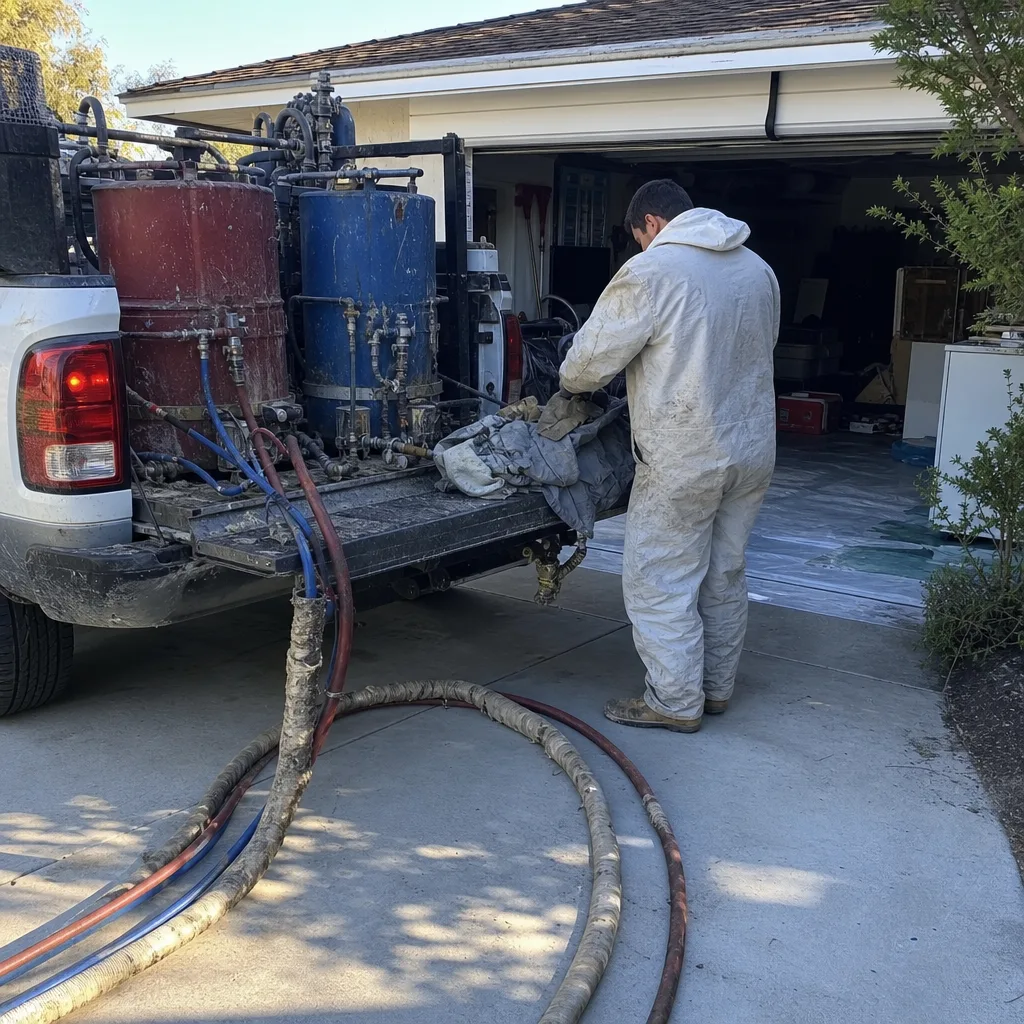
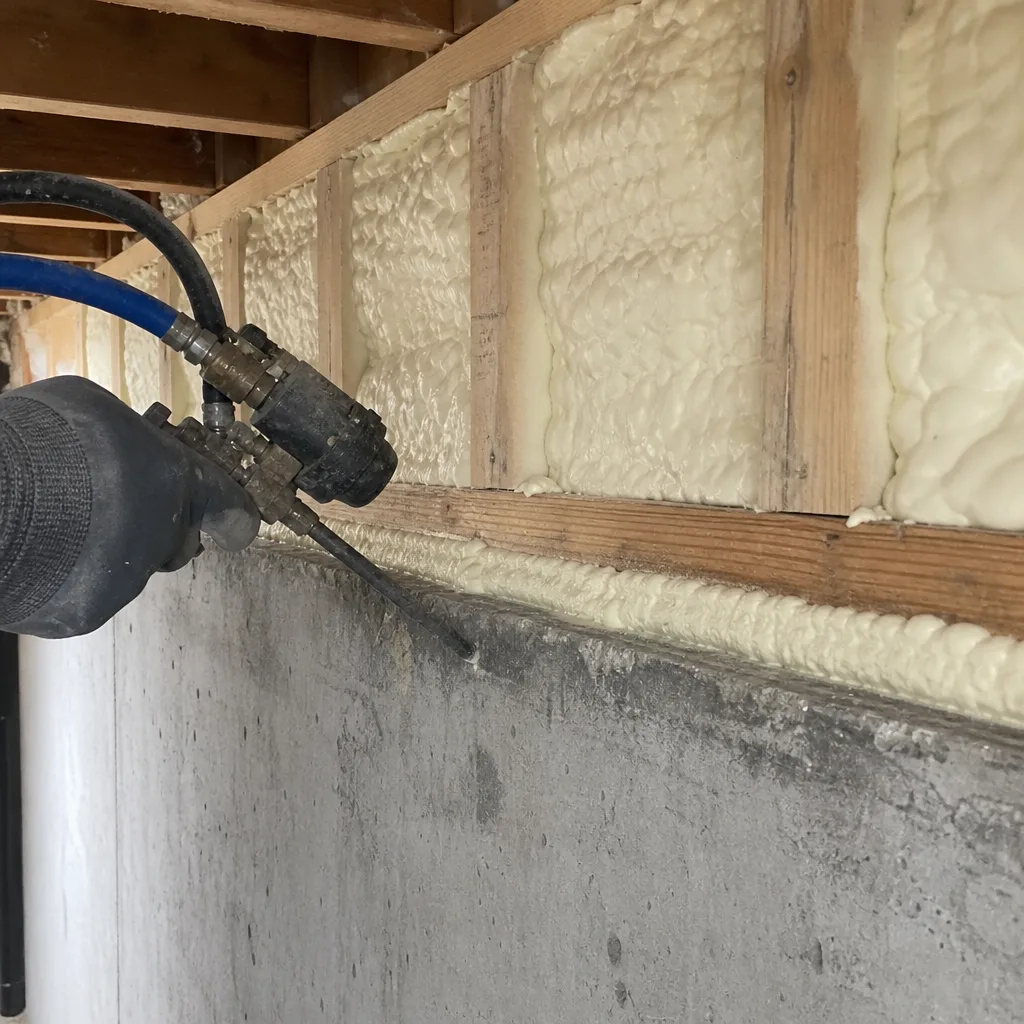
Fast, Reliable Spray Foam Insulation Across Wildomar
Spray foam insulation in Wildomar typically costs $2,400 – $4,800 for an average attic and is usually completed in one day. We work throughout the 92595 ZIP, from homes along Wildomar Trail to the master-planned communities near Clinton Keith Road. Placentia Insulation is a pure-play insulation specialist, which means every truck, every crew member, and every conversation we have is about one trade: insulation. Call us at (855) 773-6429 and Alan Whitcomb’s team will give you a straight answer about what your Wildomar home actually needs.
Why Placentia Insulation Is Wildomar’s Preferred Spray Foam Insulation Company
We know Wildomar’s housing stock the way a dedicated specialist should. Most of the homes here date from the 1980s through the 2000s: stucco exteriors, concrete tile roofs, wood-frame construction. The builder-grade insulation in those walls and attics has been fighting the inland valley heat for 20 to 40 years, and in many cases it’s lost. When our crews pull back an attic hatch off Gruwell Street, we expect to find batts that have settled to R-11 or R-13, possibly tunneled by rodents near the I-15 corridor. That’s a Wildomar-specific pattern, and it changes how we recommend spray foam here.
Most insulation contractors carry one or two product lines. We carry eight, so your home gets what it actually needs, not whatever’s on the truck. For Wildomar’s hot, sunny roof decks, that often means closed-cell foam from Demilec or Icynene. For tight wall cavities in older stucco homes, open-cell Icynene is frequently the better match. We don’t default to one chemistry. We match the material to the job.
Alan Whitcomb built Placentia Insulation around a simple idea: insulation shouldn’t be an afterthought bundled into a general contractor’s scope. We’re not plumbers doing insulation on the side. Everyone on our Wildomar jobs is an insulation installer, which means the assessment you get is more thorough and the recommendation is more precise.
Spray Foam Attic Insulation in Wildomar
Spray foam attic insulation in Wildomar is our most-requested service, and for good reason: the dark concrete tile roofs that cover most 92595 homes absorb heat all afternoon, pushing attic temperatures well past 130°F in July and August. When the attic insulation below that roof deck has compacted to R-11 or R-13, your air conditioner is essentially paying to cool the attic. We spray closed-cell foam directly onto the roof deck to create an air seal and a thermal barrier, or we apply it at the attic floor after removing the old, degraded batts.
Closed-Cell Roof Deck Application
For Wildomar homes with HVAC equipment and ductwork in the attic, closed-cell foam on the roof deck turns the attic into semi-conditioned space. That means ducts stop losing cool air to a 130°F attic, and the upstairs bedrooms stay closer to the temperature you actually set on the thermostat. A roof deck application for a typical 1,800 – 2,400 square foot Wildomar home runs $4,200 – $7,800 depending on roof geometry and access.
Attic Floor Air-Sealing and Foam
If your ducts are in the walls and your attic is strictly vented, the better play is usually removing the old fiberglass, air-sealing every top plate, penetration, and bypass, then applying closed-cell foam at the attic floor. This is where Wildomar’s rodent issue becomes critical. Foam sprayed over rodent-tunneled batts without removal traps the odor and leaves voids in the thermal envelope. We pull the compromised material first. This approach runs $2,800 – $5,200 for a typical tract home.
Spray Foam Wall Insulation in Wildomar
Spray foam wall insulation in Wildomar is about fixing what the original builders left behind. Those 1980s – 2000s stucco homes were built with R-13 fiberglass batts in the wall cavities. Twenty to thirty years later, those batts have sagged, settled, and in many homes near the open-space edges, been tunneled by rodents. The result: rooms that won’t hold temperature, walls that feel warm to the touch in summer, and energy bills that climb every August.
Closed-Cell for Exterior Wall Cavities
When we remove old batts from a Wildomar wall cavity and apply closed-cell Icynene or Demilec foam, two things happen. First, the R-value jumps and the air seal stops drafts. Second, that closed-cell layer adds structural rigidity to the wall, which matters in a wood-frame home. For most Wildomar homes, wall cavity spray foam runs $4 – $7 per square foot of wall area, or roughly $8,000 – $14,000 for a full exterior wall retrofit on a 2,000 square foot house.
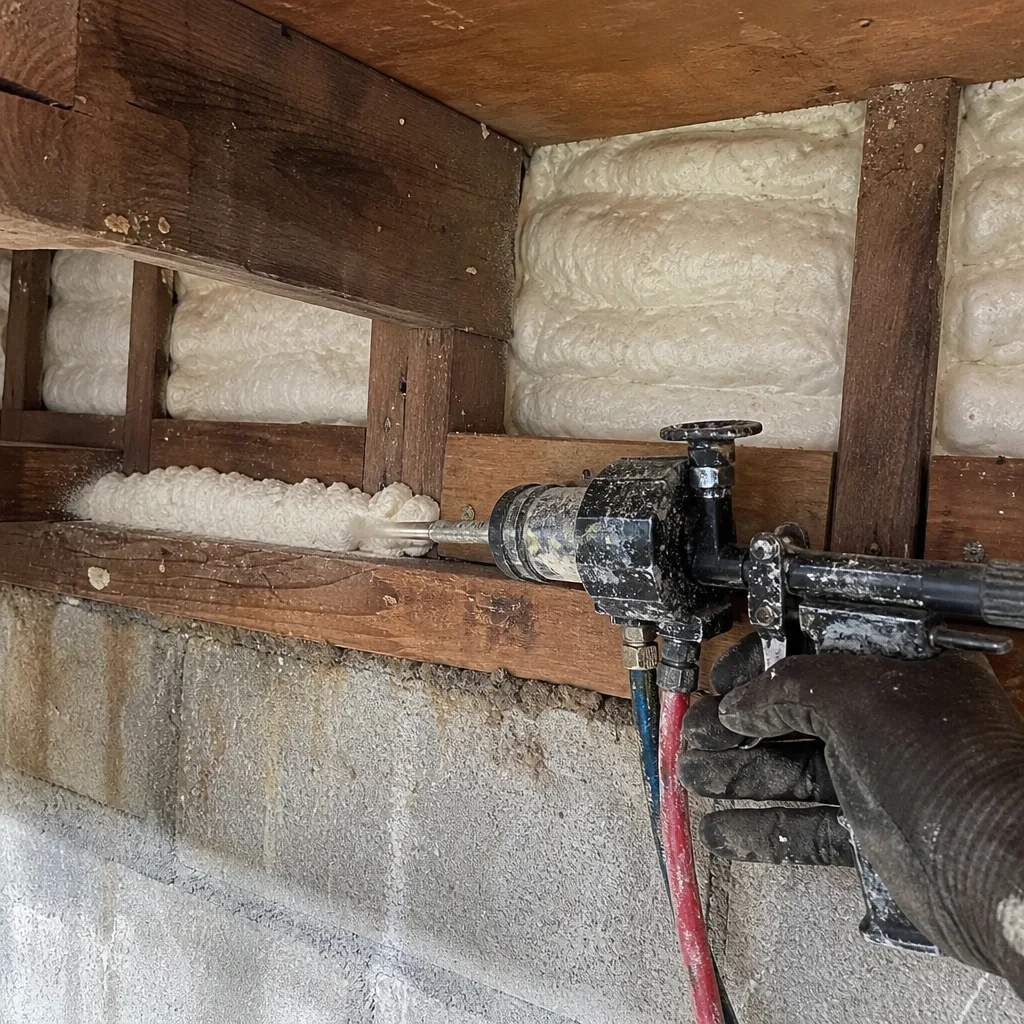
Rim Joist Sealing for Crawlspace Homes
Wildomar has a fair share of raised-foundation homes, especially in the older sections near Grand Avenue. The rim joist, the band of wood where the floor meets the foundation, is one of the leakiest parts of the entire house. Closed-cell foam applied to rim joists stops outdoor air from entering the floor system and dramatically improves comfort. Rim joist work in a Wildomar crawlspace typically runs $900 – $2,200.
Trusted Brands We Service in Wildomar
We install spray foam from two of the category’s most respected manufacturers: Icynene for open-cell applications and Demilec for closed-cell. We also keep CertainTeed fiberglass and GreenFiber cellulose in active inventory for projects where spray foam is one part of a larger insulation strategy. Because we stock products locally and dispatch from Placentia, turnaround on Wildomar jobs is measured in days, not weeks. Eight brands, three methods, one specialty: Spray Foam Insulation done right the first time.
Common Spray Foam Insulation Problems We See in Wildomar Homes
- Compacted attic batts under dark tile roofs. The original R-19 or R-30 fiberglass in many Wildomar attics has settled to R-11 – R-13. Spraying foam over it without removal just traps the problem and leaves the attic under-insulated.
- Rodent tunneling along the I-15 corridor and open-space edges. Homes near open land get rodent pressure in the attic, and rodents tunnel straight through fiberglass batts. Foam applied over tunnels masks the damage; removal and exclusion come first.
- Sagging wall batts in stucco homes. The R-13 batts in original 1990s walls have pulled away from the drywall, leaving voids. Blindly injecting foam without checking cavity depth can over-expand and crack the stucco.
- Attic hatch conduction after foam installation. A well-foamed attic with an uninsulated, unsealed hatch is like a winter coat with no zipper. We re-insulate and weatherstrip the hatch as standard practice on every Wildomar attic job.
Pricing for Spray Foam Insulation in Wildomar, CA
A typical spray foam attic insulation job in Wildomar runs $2,400 – $4,800. Roof deck applications run $4,200 – $7,800. Wall cavity retrofits are $4 – $7 per square foot of wall area. Rim joist sealing runs $900 – $2,200. What moves the number: attic accessibility, roof pitch, how much old insulation needs removal, and whether rodent damage requires exclusion work. Estimates are free, and we give you a written number before any work begins. For a precise quote on your Wildomar home, call (855) 773-6429.
We Also Serve Cities Near Wildomar
Placentia Insulation serves homeowners across Southwest Riverside County. If you’re in Murrieta, Murrieta Hot Springs, Sedco Hills, or Lakeland Village, our crews route through the area regularly. We’re also the team behind Spray Foam Insulation in Wildomar, and we bring the same attention to every 92595 neighborhood we serve.
Serving Wildomar, CA — Our Local Coverage Area
We’re based in the Wildomar area and know this community well. Use the map below to see our service coverage — if you’re nearby, we can almost certainly help.
FAQs About Spray Foam Insulation in Wildomar
No. In most cases the existing R-13 batts need to come out before spray foam goes in. The batts in 1990s Wildomar homes have typically sagged and settled, and in houses near the I-15 corridor or open-space edges, they’re often rodent-tunneled. Foam over compromised batts leaves voids and traps contamination. We remove, air-seal, then foam. Call (855) 773-6429 and we’ll assess your specific walls.
Closed-cell spray foam performs well in Wildomar’s heat because it creates both an air seal and a thermal barrier. The dark tile roofs absorb sun and push attic temps past 130°F, but closed-cell foam on the roof deck also stops radiant heat transfer. What matters more than foam chemistry is that the old compacted insulation is removed and the attic is air-sealed first, otherwise even the best foam underperforms.
Insulation work itself won’t interfere with your Wi-Fi or MyQ opener. However, spray foam on an attic floor or roof deck can change how signals travel through the space, and if the attic hatch isn’t re-insulated with a proper seal, the hatch becomes the weakest R-value point in the whole attic envelope. We address the hatch on every job. Your smart opener keeps working; your attic stops leaking conditioned air.
Wildomar homes near the I-15 corridor and open-space edges get persistent rodent pressure, and fiberglass batts are easy to tunnel through. Spray foam can deter future nesting because it’s dense and unappealing to rodents, but it isn’t pest control. If tunnels already exist, the compromised insulation has to come out and exclusion work completed before foam is applied. Foam over active tunnels just hides the problem.
Closed-cell foam applied correctly in an open wall cavity will not crack stucco. The risk comes from injecting foam into closed cavities without verifying depth, because over-expansion pushes against the plaster. That’s why we measure cavity depth and foam chemistry before any injection work on a Wildomar stucco home. We recently sprayed a 1990s home off Wildomar Trail after removing settled R-13 batts, and the stucco stayed perfectly intact. Call (855) 773-6429 to get an assessment of your specific walls.
Written by Alan Whitcomb, Owner at Placentia Insulation, serving Wildomar and Southwest Riverside County with spray foam, attic, and blown-in insulation.