Fast, Reliable Attic Insulation Across Colton
Attic insulation in Colton is a different job than it is ten miles west. The inland heat here routinely pushes attic temperatures past 140°F in July and August, and that kind of sustained heat does real damage to older insulation. Homes built before the 1980s make up a large share of Colton’s housing stock, and many of those attics still have the original batts, now sun-baked, compressed, and functionally useless. We treat insulation as a system: remove what’s failed, seal what’s leaking, then install the right material for this specific climate. Alan Whitcomb leads our team, and every job we do in the 92324 gets the same approach. Call (855) 773-6429 for a free estimate.
Why Placentia Insulation Is Colton’s Preferred Attic Insulation Company
We’re a pure-play insulation contractor, not a generalist that happens to own a blower. That distinction matters in a city like Colton, where the housing stock demands real product fluency. The mid-century ranch homes near Reche Canyon, the older frame houses around La Cadena Drive, the post-war neighborhoods off Valley Boulevard: each has its own attic conditions, wiring situations, and ventilation quirks. Our crews have worked through enough of these attics to know what to expect before the ladder even goes up.
We carry eight brands: Owens Corning, Johns Manville, Knauf, Rockwool, CertainTeed, Icynene, Demilec, and GreenFiber. Most insulation contractors carry one or two product lines. We carry eight because the right answer in one Colton attic is not the right answer in another. Open-cell foam in a vented attic? Sometimes. Blown-in cellulose over an air-sealed floor? Often. Mineral wool for sound and fire separation? Occasionally, and we’re one of the few crews in the area that actually stocks it. Alan Whitcomb built this company around that flexibility, and it shows in how we work.
We respond to Colton service calls Monday through Saturday, and we schedule carefully so estimates happen when you’re actually home. Reviews from Colton customers mention the same things: we showed up on time, we explained what we found clearly, and we did what we said we’d do. That’s the whole job, really. Call (855) 773-6429 and you’ll get a straight answer about your attic.
Attic Mold Removal in Colton
Attic mold removal in Colton usually starts with a ventilation problem, not a leak. The inland heat pulls moisture up from the living space, and when an older attic lacks proper baffles or soffit vents, that moisture condenses on the underside of the roof deck and feeds mold growth. In the high summer months, the cycle accelerates: hot attic air holds more moisture, the roof deck stays warm all night, and mold colonies spread fast. Colton homeowners often discover the problem only when a home inspection flags it or a musty smell starts filtering down into the upstairs rooms.
What the Job Involves in Colton Homes
We treat mold removal as a sequence: identify the moisture source first, remove contaminated insulation second, then sanitize the affected framing. Skipping step one guarantees the mold comes back. In Colton’s older attics, the moisture source is frequently blocked soffit vents or bathroom fans venting directly into the attic rather than through the roof. We fix those before we touch the mold itself, because mold is a symptom, not the root cause.
Typical Cost Estimates
Attic mold removal in Colton typically runs $1,800 to $4,500 depending on the square footage and how far the contamination has spread. Small, localized mold patches under a single roof valley might come in under $2,000, while a full attic with widespread colony growth and contaminated insulation removal can exceed $4,000. We’ll give you a written estimate before any work starts.
Attic Insulation Removal in Colton
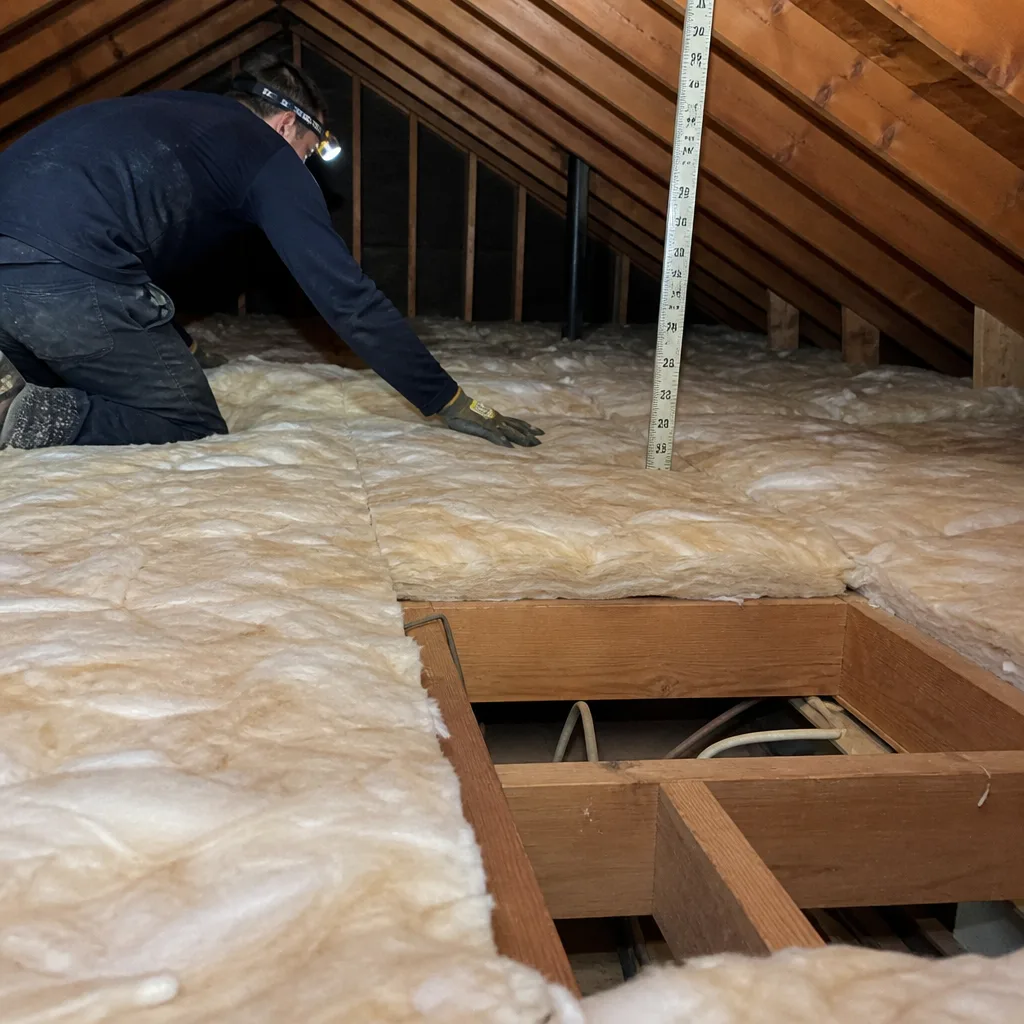
Attic insulation removal in Colton is often the highest-payback improvement we do, because so much of what’s up there is original to the 1950s and 1960s. Thirty years of 100°F-plus summers turns fiberglass batts into compressed mats less than an inch thick, with kraft paper facing that crumbles when you touch it. That material isn’t insulating anything anymore. Removing it is the first step in a real upgrade, and it also lets us see what’s underneath: wiring, air leaks, and framing conditions that new insulation would hide.
When Removal Becomes Necessary
You need insulation removal when the existing material is compacted, rodent-soiled, water-damaged, or contaminated with mold. In Colton’s pre-1980s housing stock, compacted batts are the most common trigger. The R-value of compressed fiberglass drops sharply, and a batt compressed from 12 inches to 2 inches offers almost no resistance to the 140°F heat radiating from the roof deck. Removal is also mandatory before any meaningful air-sealing work, since you can’t seal a floor you can’t see.
Colton Market Pricing
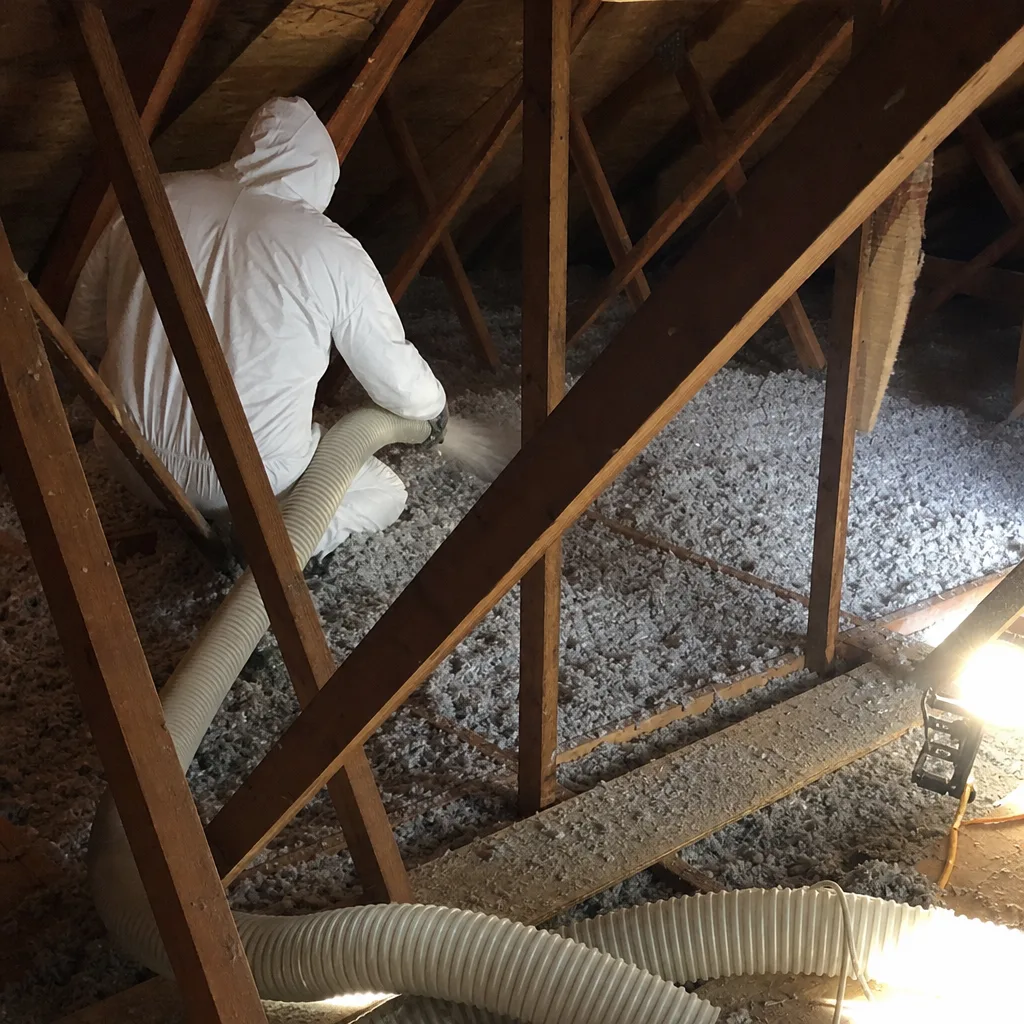
Attic insulation removal in Colton generally costs $1,200 to $3,000 for a standard single-family home, with the range driven by square footage, access difficulty, and what we find beneath the old material. Tight attics with low clearances or extensive knob-and-tube wiring take longer, which matters. We’ll quote the removal as a line item so you can see exactly what it costs before deciding on the replacement material.
Trusted Brands We Service in Colton
Our Colton customers get access to the same material library we stock for the rest of our service area. CertainTeed fiberglass batts for straightforward cathedral and attic-floor applications. Rockwool mineral wool when fire resistance or sound dampening is part of the conversation. Icynene open-cell and Demilec closed-cell spray foam for air-sealing and thermal performance in tight or irregular attic cavities. We don’t install one brand by default; we match the material to the job. If your Colton home needs a specific product for a specific attic geometry, we can usually have it loaded on the truck within a couple of days.
Common Attic Insulation Problems We See in Colton Homes
- Sun-baked, compacted batts. Colton’s sustained summer heat above 100°F eventually breaks down the binders and structure of older fiberglass. What remains is a thin, dusty mat that provides almost no thermal resistance. We see this in nearly every pre-1980s attic we open.
- 140°F+ attic heat reservoirs. After the sun sets, Colton attics keep radiating heat down into living spaces for hours. Insulation that worked marginally during the day gets overwhelmed by the heat load stored in the roof deck and framing. This is why rooms stay hot even after the outdoor temperature drops.
- Knob-and-tube wiring buried under insulation. Many Colton homes built before 1950 still have active knob-and-tube circuits in the attic. Adding insulation directly over these wires can create fire risk and violates current electrical code. Removal or professional separation is required before new insulation goes in.
- Blocked or missing attic ventilation. In a climate this hot, attic airflow is critical. We routinely find soffit vents painted over, baffles crushed or missing, and ridge vents that were never cut properly. Poor ventilation compounds every other attic problem we’ve listed here.
Pricing for Attic Insulation in Colton, CA
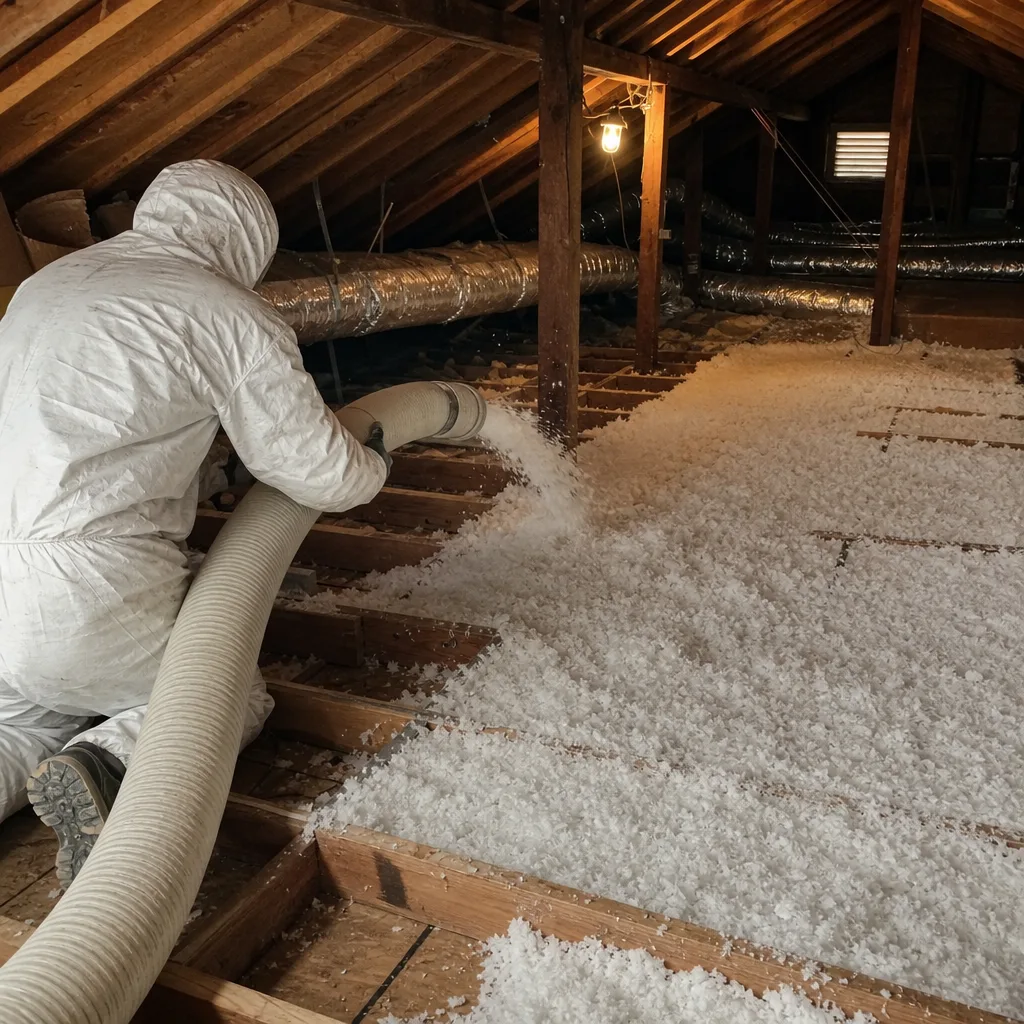
For a typical 1,200 to 1,800 square foot single-family home in Colton, here’s what you’re looking at. Blown-in attic insulation to bring an attic to R-38 runs $2,200 to $4,000, depending on current depth and square footage. A full insulation removal and replacement job with air-sealing typically lands between $3,500 and $6,500. Attic top-ups over existing, still-viable insulation run $1,500 to $2,800. Radiant barrier installation adds $1,800 to $3,500 depending on attic size and configuration. Attic baffle and ventilation prep work, including clearing blocked soffits, runs $400 to $900. Every estimate is free, and Alan Whitcomb personally reviews larger Colton jobs before we quote. Call (855) 773-6429 to schedule yours.
We Also Serve Cities Near Colton
Our coverage area includes Attic Insulation in Colton and the surrounding communities: Grand Terrace, Highgrove, Loma Linda, and Rubidoux. If you’re in one of these areas, the same Attic Insulation team does the work, with the same material options and the same straightforward estimates.
Serving Colton, CA — Our Local Coverage Area
We’re based in the Colton area and know this community well. Use the map below to see our service coverage — if you’re nearby, we can almost certainly help.
FAQs About Attic Insulation in Colton
Because the attic structure itself stores heat during the day. Colton’s inland location east of the coastal mountains means minimal marine influence: the sun beats on the roof all day, and attic surfaces climb past 140°F. Even after sunset, the roof deck, rafters, and framing radiate that heat into the attic air and down through the ceiling below. Insulation slows the transfer, but when it’s thin or compressed it barely matters. A radiant barrier plus proper attic insulation can drop that post-sunset heat load significantly. Call (855) 773-6429 and we’ll assess what’s actually happening in your attic.
No, not if the old batts are compressed, dusty, or degraded. Adding new insulation over failed insulation is like putting a new roof over rotted decking: the problem underneath remains. In Colton’s 1950s-era homes, old batts have typically been baked by decades of summer heat until they offer almost no R-value. The right approach is removal first, then air-sealing, then new insulation blown or battened to current code levels.
Have it evaluated before any insulation touches it. Knob-and-tube wiring was designed to dissipate heat into open air. Burying it under insulation traps that heat, which can degrade the wire insulation and create a fire hazard. Many Colton homes from the 1940s and 1950s still have active knob-and-tube circuits. We’ll identify it during our attic assessment and coordinate with a licensed electrician before we install anything around it. Call (855) 773-6429 and we’ll schedule a look at what’s up there.
R-38 for most Colton attics, though R-49 is worth considering for single-story homes with large roof areas. For California’s inland climate zone, R-38 is the current recommended minimum for attics, but it assumes the insulation is performing to spec. Given Colton’s extreme summer heat, properly installed and adequately ventilated R-38 insulation with a radiant barrier will outperform R-49 that’s poorly installed or vented. We’ll recommend an exact target for your specific roof geometry and comfort expectations.
Yes, and it helps more in Colton than it would in a milder coastal climate. A radiant barrier reflects radiant heat away from the attic floor before it soaks into the insulation below. In an attic that hits 140°F, blocking even 20% of that radiant transfer is a measurable win. Radiant barriers work especially well in dry climates because low humidity means the barrier surface doesn’t corrode or lose reflectivity as quickly. For Colton homeowners who’ve tried thicker insulation alone and still feel the heat radiating down after dark, a radiant barrier is often the missing piece. Estimates are free at (855) 773-6429.
Written by Alan Whitcomb, Owner at Placentia Insulation, serving Colton and the surrounding Inland Empire communities since day one.