
Fast, Reliable Attic Insulation Across Grand Terrace
Attic insulation in Grand Terrace isn’t a coastal-climate afterthought, it’s the single highest-impact upgrade most homeowners can make on an inland hillside house. Our crews work throughout the 92313 zip code weekly, and we know what your attic is actually doing during a 102°F July afternoon: baking. The answer to “why are my upstairs rooms 12 degrees hotter every summer” usually lives in the attic deck above them, not the AC unit. If you’re in Grand Terrace and tired of paying to cool air that leaks straight through an under-insulated ceiling, call us at (855) 773-6429. We’ll inspect, measure, and tell you exactly what’s going on up there.
Key Takeaways:
- Grand Terrace attics routinely exceed 140°F in summer; insulation needs here are about heat rejection, not mild-climate comfort.
- Most mid-century and 1980s homes in Grand Terrace still carry original, settled insulation delivering a fraction of its labeled R-value.
- We work in shallow, complex rooflines and through tiny closet hatches daily, that access challenge is part of every Grand Terrace job.
- We carry eight insulation brands, including Icynene, Demilec, and GreenFiber, so material choice follows the house, not the truck.
Why Placentia Insulation Is Grand Terrace’s Preferred Attic Insulation Company
Placentia Insulation is a dedicated insulation contractor, and that focus matters more in Grand Terrace than almost anywhere else in the Inland Empire. This is a city of steeply graded lots and postwar construction, where the attic is often the least forgiving part of the house. Generalist contractors who split their weeks between kitchens, bathrooms, and insulation tend to rush the attic work because it’s uncomfortable and hard to access. Our crews do one trade. Every day is spent in attics like yours.
Alan Whitcomb, who leads our team, has built the company around the principle that the right material for a Grand Terrace hillside home is not the same as the right material for a flat Riverside tract house. We carry eight product lines including Icynene, Demilec, and GreenFiber specifically because no single brand solves every attic problem. Grand Terrace homeowners call us after previous bids left them with one product option and no explanation of why. That’s not how we work.
Our response time to Grand Terrace is typically same-week for inspections and estimates, and we schedule installations around the weather patterns we know from working this area for years. When a homeowner off Barton Road or up the Blue Mountain slope calls about a bedroom that won’t hold temperature, we know before we arrive that we’re likely looking at heat gain through the deck, not an AC problem. That specific local knowledge means the diagnosis is accurate on the first visit.
Attic Ventilation in Grand Terrace
Attic ventilation in Grand Terrace is not a comfort upgrade, it’s a structural and energy necessity during the long 95-105°F summer stretch. Without balanced intake and exhaust airflow, attic temperatures climb well past 140°F, superheating whatever insulation sits below and forcing your air conditioner to fight heat radiating through the ceiling. In a semi-arid climate with cool winter nights, ventilation also moves moisture out before condensation settles into your insulation and framing. A proper ventilation retrofit in Grand Terrace typically runs $450 to $1,100 depending on the number of vents, soffit access, and roofline complexity. Many hillside homes here need the ventilation corrected before new insulation can perform as rated.
Venting Shallow Hillside Attics
Grand Terrace’s narrow hillside lots produced homes with low-pitch rooflines and tight attic clearances. Standard ridge and soffit venting doesn’t always fit those rooflines cleanly, so we often combine box vents or gable-end vents with existing openings to create enough crossflow. The goal is steady air movement across the entire deck, not just airflow near the access hatch.
Baffles and Vent Prep Before Blowing In
Before any blown-in insulation goes into a Grand Terrace attic, we confirm eave baffles are in place so insulation doesn’t block soffit airflow. In older homes along the I-215 corridor, original baffles are often missing or crushed. We install or replace those as part of the prep work, because insulating over a blocked soffit vent locks heat in the attic and guarantees the new insulation underperforms.
Radiant Barrier in Grand Terrace
Radiant barrier in Grand Terrace is one of the few upgrades that pays for itself almost entirely through summer cooling load reduction. The sloped deck surfaces facing Blue Mountain and the I-215 corridor absorb relentless afternoon solar radiation, and those surfaces radiate that heat directly into your attic air. A radiant barrier stapled to the underside of the roof deck reflects most of that radiant heat before it reaches your insulation. In Grand Terrace, a radiant barrier installation typically runs $1.20 to $2.50 per square foot of deck area, with most homes landing between $1,500 and $3,800 total depending on attic accessibility and roofline complexity. For an attic with a closet-hatch-only access, that material cost includes real labor because every square foot is installed from a contorted position.
Why Grand Terrace Slopes Need It Most
The worst afternoon heat gain in this city hits homes on the Blue Mountain-facing slopes, where the deck runs directly into that western sun exposure. We see attic deck temperatures climb 20 to 30 degrees higher on those streets than on interior flat lots. A radiant barrier is the most direct way to cut that solar load before it ever reaches your insulation or your ceiling.
Radiant Barrier With Existing Insulation
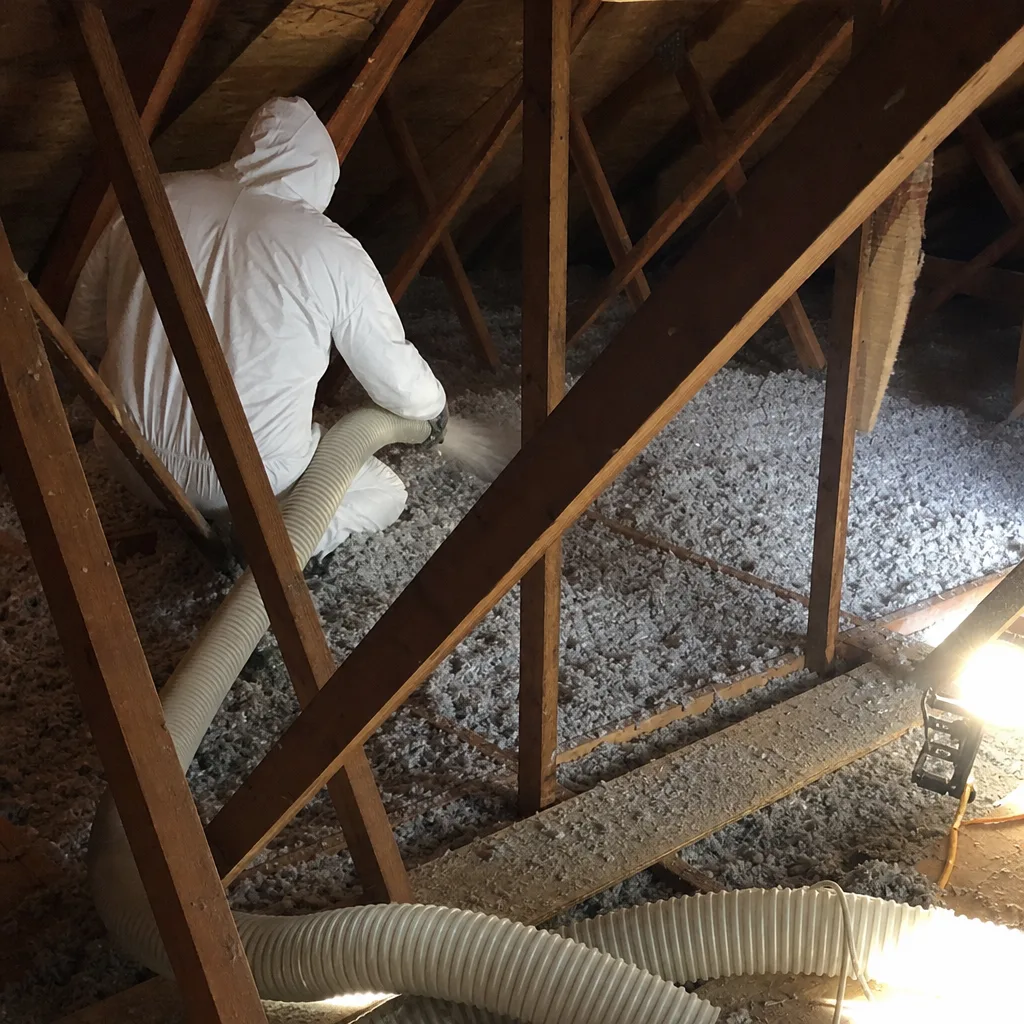
If your attic already has blown-in fiberglass or cellulose at code depth, adding a radiant barrier is still worth doing in Grand Terrace. The insulation slows conductive heat transfer, but it does little against radiant heat. The two systems work together: the barrier stops the radiant heat at the deck, and the insulation handles whatever gets through. We regularly install barriers as a retrofit in homes where the insulation itself is adequate but the attic still cooks.
Trusted Brands We Service in Grand Terrace
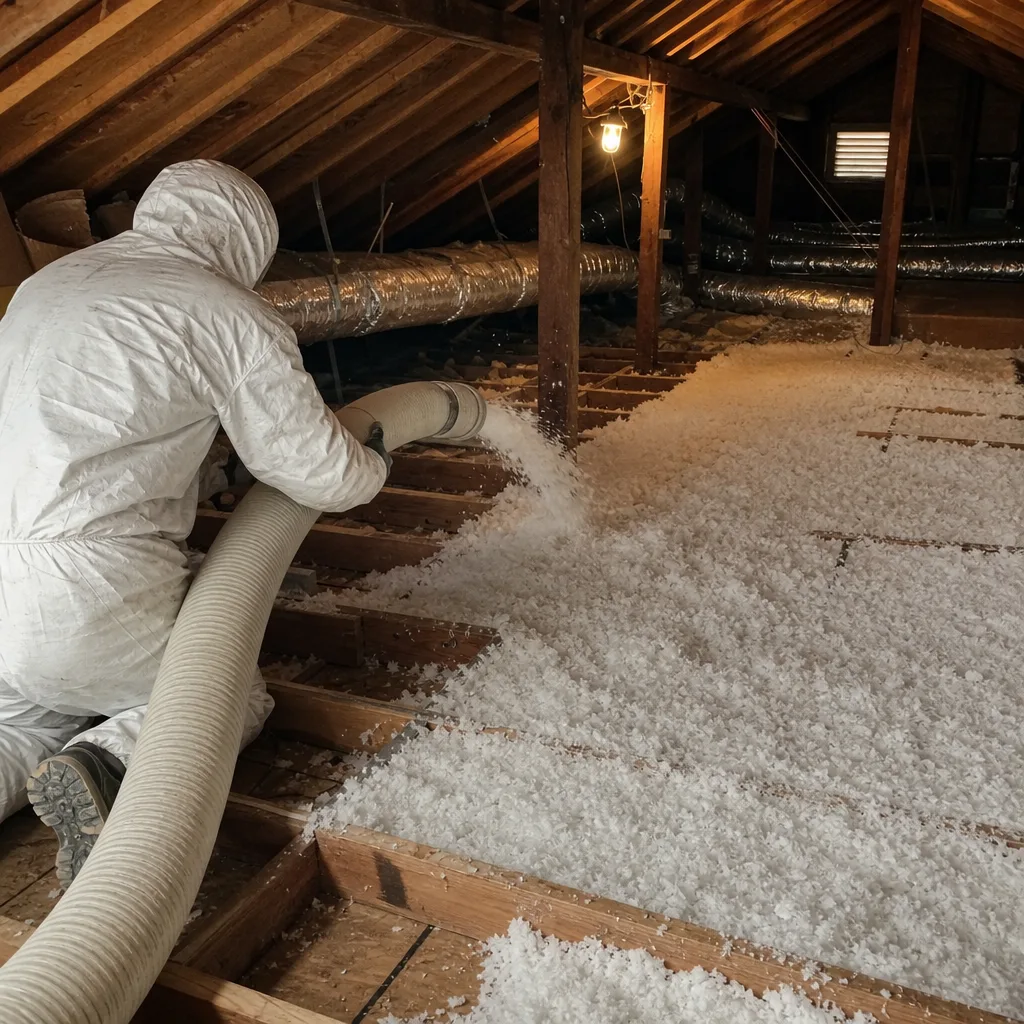
We stock and install eight insulation brands, which means a Grand Terrace homeowner never gets pushed into a product just because it’s what we happen to have on the shelf that week. For attic work specifically, we lean on GreenFiber blown-in cellulose for its coverage and air-sealing performance in tight, irregular attic spaces, and on Owens Corning batt for straightforward re-insulation jobs where the deck is accessible. When a homeowner asks about spray foam for a complex hillside roof deck, we quote Icynene and Demilec because both open-cell and closed-cell options should be on the table, not just whichever one the installer prefers. Most insulation contractors carry one or two product lines. We carry eight, so your home gets what it actually needs, and we can service every one of those products in Grand Terrace, often same-week.
Common Attic Insulation Problems We See in Grand Terrace Homes
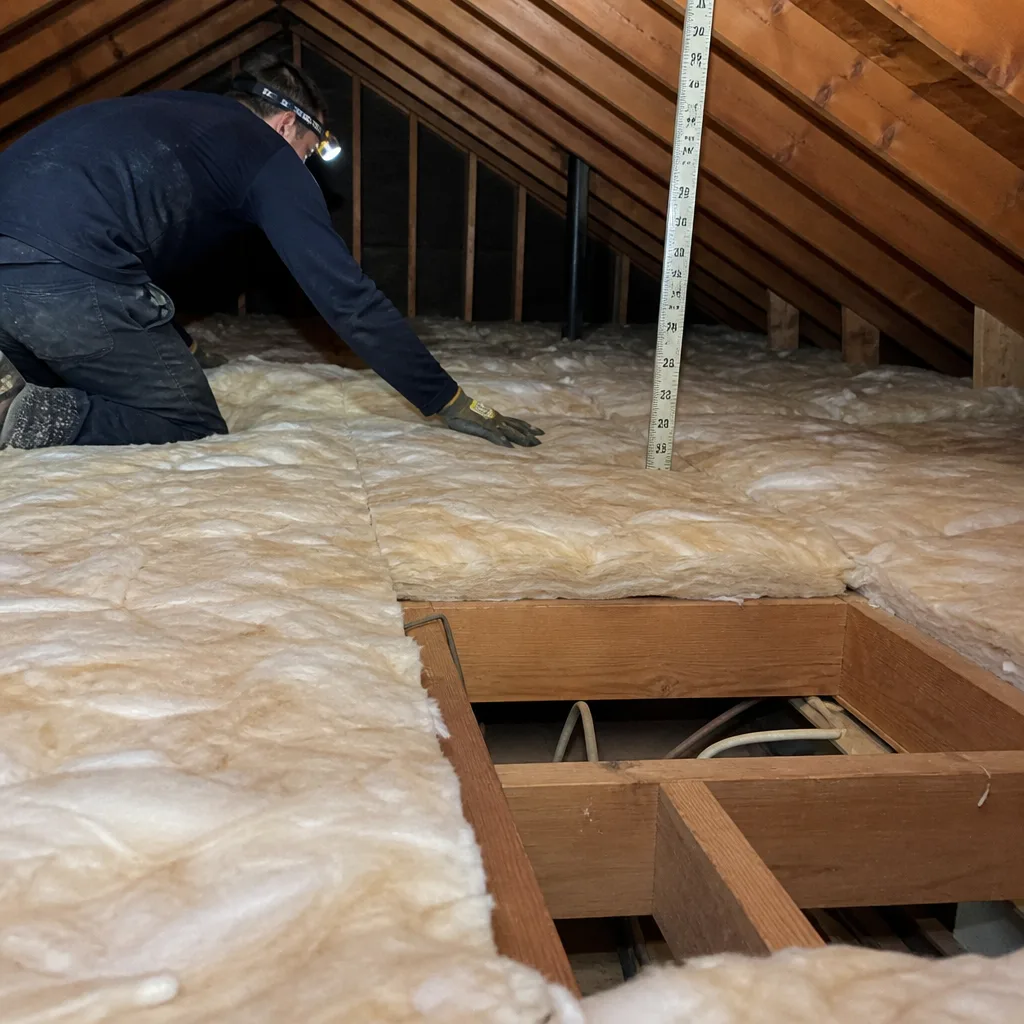
- Settled and compressed original batt insulation. Mid-century homes throughout Grand Terrace were built with 3-4 inches of fiberglass batt, and after 50-plus years in a hot, dry attic that material has compressed to a fraction of its original thickness. A house that was marginal in 1970 is actively hemorrhaging cooling energy today, and most homeowners don’t realize it until we show them the depth measurements.
- Unsealed attic penetrations around closet hatches. On the narrow hillside lots, attic access is often a small hatch in a bedroom closet, and those hatches rarely get weatherstripped or sealed. Hot attic air pours into the living space around those gaps all summer long, and in winter the same leaks let moist indoor air ride up into the attic to condense on the deck. Sealing the hatch and the top plates around it is a small job with an outsized payoff in a Grand Terrace home.
- Blocked or nonexistent eave baffles. We see this in nearly every older Grand Terrace house we open. The soffit vents are there, but the baffles were never installed or have collapsed under the insulation weight. That means the attic isn’t breathing, and the heat stays trapped. Ventilation correction has to happen before or during any re-insulation work, never after.
- No radiant barrier on sun-facing decks. The slopes facing Blue Mountain and the 215 corridor get hit with direct afternoon sun for hours, and without a radiant barrier the deck surface radiates that heat straight down into the attic. We’ll measure the deck temperature on a July afternoon and show you exactly why your west-facing bedrooms refuse to cool down by evening. It’s not an AC sizing problem; it’s a radiation problem.
Pricing for Attic Insulation in Grand Terrace, CA
Here’s what we quote in Grand Terrace, based on the actual homes we work on. A full attic re-insulation with blown-in cellulose for a typical 1,200-1,600 square foot house runs $2,800 to $5,500. Attic batt replacement on a smaller, straightforward ranch is usually $1,800 to $3,200. Adding a radiant barrier runs $1,500 to $3,800 as a retrofit, and attic ventilation corrections run $450 to $1,100. If your attic access is a tight closet hatch and your roofline is a series of valleys and short ridges, expect the higher end of those ranges, because the labor is real. We give free estimates, we measure the actual attic, and we don’t pad numbers to cover sloppy bidding. Call (855) 773-6429 to schedule a walkthrough, and you’ll have a written quote before we leave the property.
We Also Serve Cities Near Grand Terrace
While we spend a lot of time in Grand Terrace’s hillside neighborhoods, our Attic Insulation crews also work throughout the surrounding Inland Empire communities. Homeowners in Highgrove, Colton, Loma Linda, and Rubidoux call us for the same attic heat gain and ventilation problems we see every week in Grand Terrace. If you’re just over the city line into one of those areas, the access and roofline challenges are often identical, and so are the fixes. Explore our Attic Insulation in Grand Terrace page for more local detail, or call us directly for a free estimate anywhere in the 92313 corridor or beyond.
Serving Grand Terrace, CA — Our Local Coverage Area
We’re based in the Grand Terrace area and know this community well. Use the map below to see our service coverage — if you’re nearby, we can almost certainly help.
FAQs About Attic Insulation in Grand Terrace
Because Grand Terrace sits in one of the hottest, driest inland pockets of the Inland Empire, where summer afternoons push attic temperatures well past 140°F and the sun hits hillside roof decks at a punishing angle. Coastal insulation assumptions don’t apply here. Without adequate insulation plus ventilation and often a radiant barrier, your attic becomes a heat battery that radiates warmth into your living space all evening, forcing your AC to run hours longer than it should. The energy penalty is measurable in every summer bill. Call (855) 773-6429 and we’ll measure your attic deck temperature to show you exactly what’s happening.
Yes. We insulate Grand Terrace attics through closet hatches and small access panels constantly, and the tight access is a known part of the job for us, not a surprise. Blown-in cellulose works particularly well in these situations because the hose reaches deep into the attic cavity while the crew works from the hatch. The labor time goes up, and that’s reflected in the quote, but the result is the same full coverage you’d get in a walkable attic. We’ll also seal and weatherstrip that hatch so it stops leaking air year-round.
In nearly every Grand Terrace mid-century home we inspect, the answer is replace, because the original batt insulation has compressed so far that repair doesn’t make sense. Adding new material on top of settled, degraded insulation locks in the old problems and usually doesn’t fix the real issue: heat moving through unsealed penetrations and a baked roof deck. A full replacement with air sealing and proper depth gives you a measurable performance jump. We’ll show you depth measurements and a heat map before recommending anything.
If your home faces the Blue Mountain slopes or sits along the I-215 corridor with direct western sun on the roof, a radiant barrier will likely cut your attic temperature more than any additional insulation you could add. Insulation slows conductive heat transfer; it does very little against radiant heat. The two systems do different jobs, and in Grand Terrace’s solar load environment, the combination is what finally lets west-facing rooms hold temperature on a July evening. Ask us to measure your attic deck temperature during the estimate.
It can, if the attic isn’t air-sealed before insulation goes in. Grand Terrace nights drop into the 40s in winter, and warm indoor air leaking into a cold attic will condense on the deck and framing. Moisture collects in whatever insulation is underneath it. That’s why we always seal top plates, penetrations, and the access hatch before adding new material. A properly air-sealed and ventilated attic in Grand Terrace handles winter condensation without trapping moisture in the insulation.
Call Placentia Insulation for Attic Insulation in Grand Terrace
If your Grand Terrace attic is original, settled, or baking your upstairs rooms every summer, let’s measure it and find out what’s actually happening. We match the material to the job, not the job to whatever we have on the truck, and we work in these hillside attics every week. Call (855) 773-6429 for a free estimate. Alan and our Grand Terrace crew will give you an honest, specific recommendation and a written quote. No pressure, just numbers and a plan.
Written by Alan Whitcomb, Owner at Placentia Insulation, serving Grand Terrace and the surrounding Inland Empire.