
Fast, Reliable Attic Insulation Across Costa Mesa
Attic insulation in Costa Mesa is rarely about chasing the highest R-value on a label. It’s about managing the marine layer that rolls in off the Pacific every morning and settles into 1950s-era attics and wall cavities across 92626 and 92627. Those fog-morning dew points mean condensation, not extreme heat, is what ruins insulation here. We’ve worked in enough Costa Mesa ranch homes to know the difference. If your energy bills climb or upstairs rooms never feel right, call Placentia Insulation at (855) 773-6429. We’re a dedicated insulation contractor, and we’ll tell you straight what your attic actually needs.
Key Takeaways:
- Costa Mesa’s coastal marine layer makes attic air sealing and ventilation the priority over raw R-value.
- Most 1950s-60s homes in 92626 and 92627 were built with minimal insulation by design.
- We carry eight insulation brands, including Rockwool, CertainTeed, Icynene, and Demilec, so material choice matches the job.
- Free estimates on all attic insulation work in Costa Mesa. Call (855) 773-6429.
Why Placentia Insulation Is Costa Mesa’s Preferred Attic Insulation Company
Most insulation contractors carry one or two product lines. We carry eight, so your Costa Mesa home gets what it actually needs, not what happens to be on the truck. Alan Whitcomb built Placentia Insulation around a simple idea: match the material to the job. That means Rockwool mineral wool when a homeowner in 92627 wants fire resistance and sound dampening along a busy street, CertainTeed fiberglass batts for a straightforward attic top-up, or Icynene open-cell spray foam for a tight 2×4 wall cavity behind stucco. The right product changes by the house.
Costa Mesa homeowners call us because we understand the specific failure patterns of mid-century coastal housing stock. A 1955 ranch off Harbor Boulevard has different needs than a 2005 infill townhome near South Coast Plaza. We’ve seen both. Our crews work primarily in this area, so response times to Costa Mesa are consistent. When you call about an attic in Mesa Verde or a bungalow in Eastside Costa Mesa, we know the block, the construction era, and what’s likely living in that attic before we even climb the ladder. That local knowledge means fewer wasted trips and more accurate estimates on the first call.
We’re an insulation-only contractor. Every tool on the truck, every conversation with our techs, and every minute of training we do is about one trade. Not plumbing today and insulation tomorrow. That narrow focus shows up in the quality of an air-sealing job and the detail work around can lights and vent chutes, which is exactly where Costa Mesa attics fail.
Attic Insulation Removal in Costa Mesa
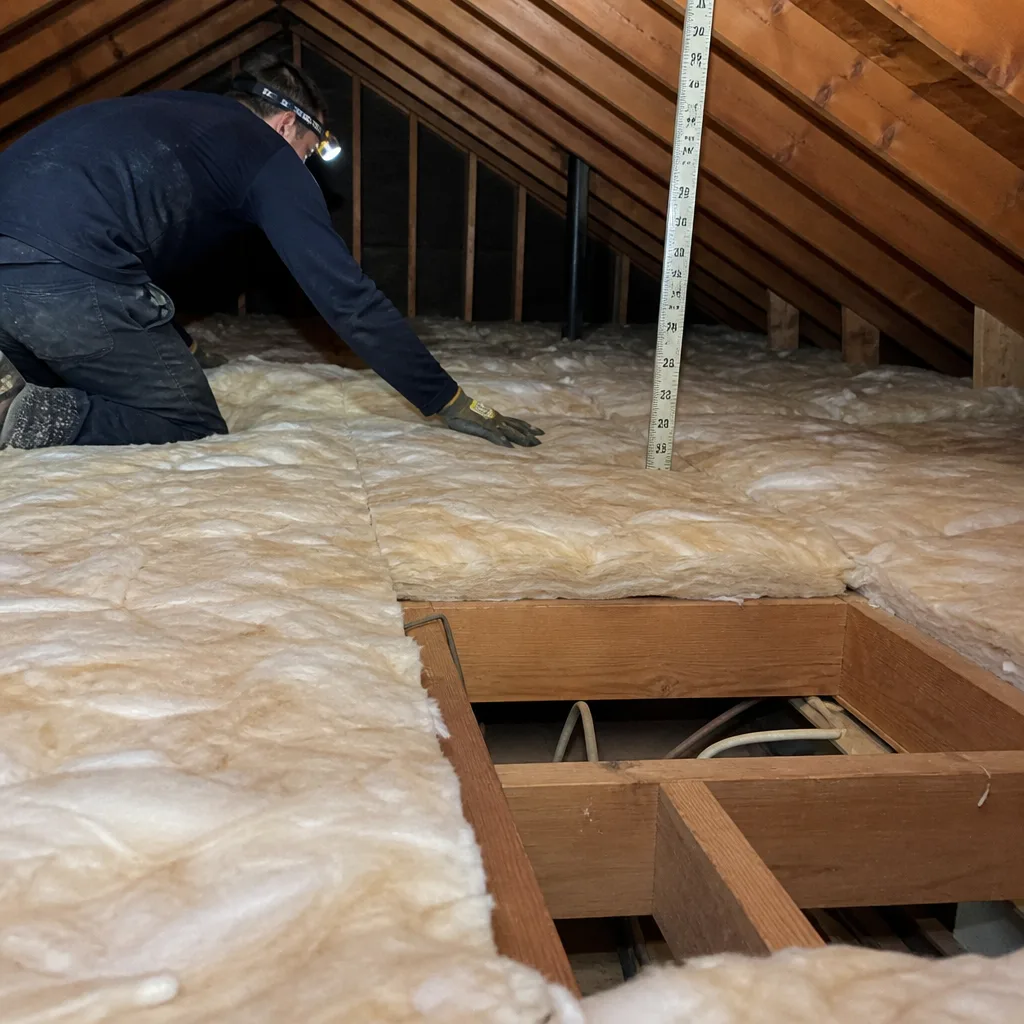
Attic Insulation Removal in Costa Mesa is often step one when we find decades of fog-morning condensation has matted the original batts against the roof deck and rusted the truss nail plates. You can’t just blow new insulation over the top of that. The old material has to come out so the air-sealing and ventilation work can happen on a clean, dry plane. We handle full removal, disposal, and the prep work that follows.
When Removal Makes Sense
If your 1950s ranch in 92626 still has its original fiberglass batts, they’ve likely settled and lost most of their effective R-value. In Costa Mesa’s damp attic conditions, that settled material also holds moisture against wood and fasteners. Removal is the only way to inspect what’s underneath and address rust or mold before it spreads behind the stucco.
A typical attic insulation removal project for a 1,200 to 1,500 square foot Costa Mesa home runs $1,400 to $2,600 depending on access, the condition of the existing material, and how much cleanup is needed afterward. That range covers the full removal, bagging, and disposal. If rodent activity or water damage is present alongside the insulation, the scope and cost can shift, so we always assess in person before quoting.
Pest and Rodent Contamination
Costa Mesa’s older neighborhoods have their share of roof rat traffic. When rodents nest in attic insulation, the material needs to come out for health and air-quality reasons, not just performance. We’ll tell you honestly whether the insulation can be cleaned up or if full removal is the only responsible path. Either way, the attic gets sealed before anything new goes in.
Insulation Contractors in Costa Mesa
Insulation Contractors in Costa Mesa are easy to find, but few of them specialize in the moisture-driven failure patterns that define 92626 and 92627. A generalist might install batts without addressing the blocked soffit vents or the missing air seal at the top plates. That’s exactly the mistake that quietly grows mold behind stucco walls in this climate. We approach every Costa Mesa attic as a ventilation-and-air-sealing project first, with insulation as the finishing layer.
True Air-Sealing Before Insulation
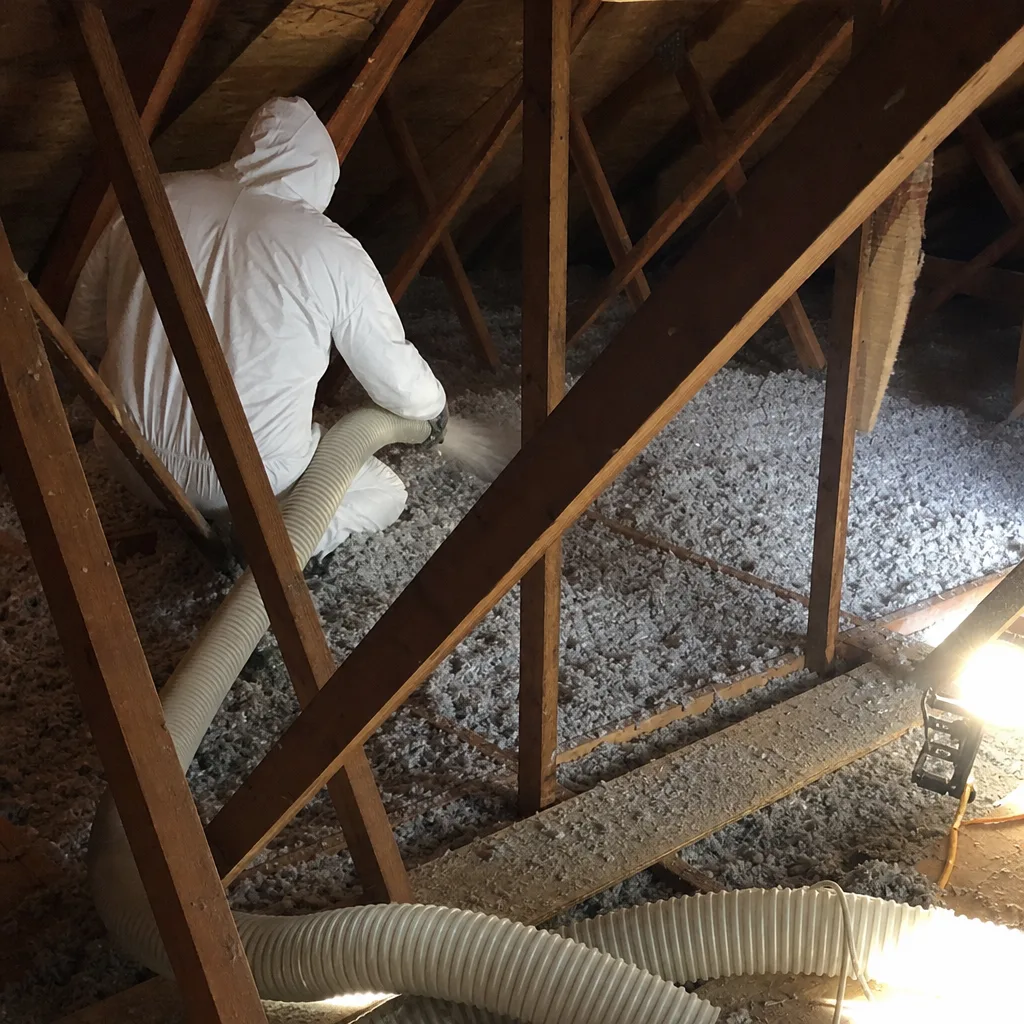
Before any new material goes in, our crew seals the top plates, can light housings, plumbing penetrations, and any gaps around the attic hatch. In Costa Mesa, this is not optional. The marine layer pushes moisture-laden air into the attic every morning, and every unsealed penetration lets that air move into the cavity where it condenses. A sealed attic plane is what keeps new insulation dry and effective for decades.
Ventilation Checks and Chute Repair
Blocked or undersized intake vents are one of the most common problems we find in Costa Mesa attics. When the chutes at the eaves get plugged with old insulation or debris, the ridge exhaust has nothing to pull from. Fog-morning moisture stays trapped. We inspect and correct chute placement on every job, often as part of a larger Attic Insulation retrofit. If the ventilation isn’t right, no amount of insulation will fix the problem.
Trusted Brands We Service in Costa Mesa
We stock and install materials from eight industry-leading brands, and for Costa Mesa homeowners that means choices a single-brand shop cannot offer. Rockwool mineral wool serves clients who want fire resistance and sound dampening along with thermal performance, particularly in denser 92627 neighborhoods. CertainTeed fiberglass batts work well for straightforward attic top-ups and replacements. For wall cavity retrofits in older stucco homes, Demilec closed-cell spray foam can solve air-sealing and moisture control in one pass. We keep local inventory available for Costa Mesa work, which means shorter lead times on material and faster project starts.
Common Attic Insulation Problems We See in Costa Mesa Homes
- Marine-layer condensation in the attic. Fog mornings push moisture into unconditioned attics, and without proper ventilation that water condenses on the underside of the roof deck. Over years, it mats the insulation and rusts the fasteners. This is the number one problem in 92626 and 92627.
- Vapor barriers installed on the wrong side. A 1950s Costa Mesa ranch that gets a vapor barrier on the wrong side of the ceiling assembly will condense before it ever gets hot enough for the R-value to matter. Once mold starts behind the stucco, the problem is invisible until it’s serious. We correct this on retrofits.
- Settled, matted original batts. Most original 1950s-60s fiberglass batts in Costa Mesa attics have settled well below their rated R-value. In damp conditions, they also mat against truss nail plates and hold moisture against the wood. Removal is often the only real fix.
- Blocked soffit vents and chutes. When intake vents get blocked, the ridge exhaust has nothing to pull from. Fog-morning moisture stays trapped in the attic. We check every chute on every job, and we replace damaged ones before new insulation goes in.
Pricing for Attic Insulation in Costa Mesa, CA
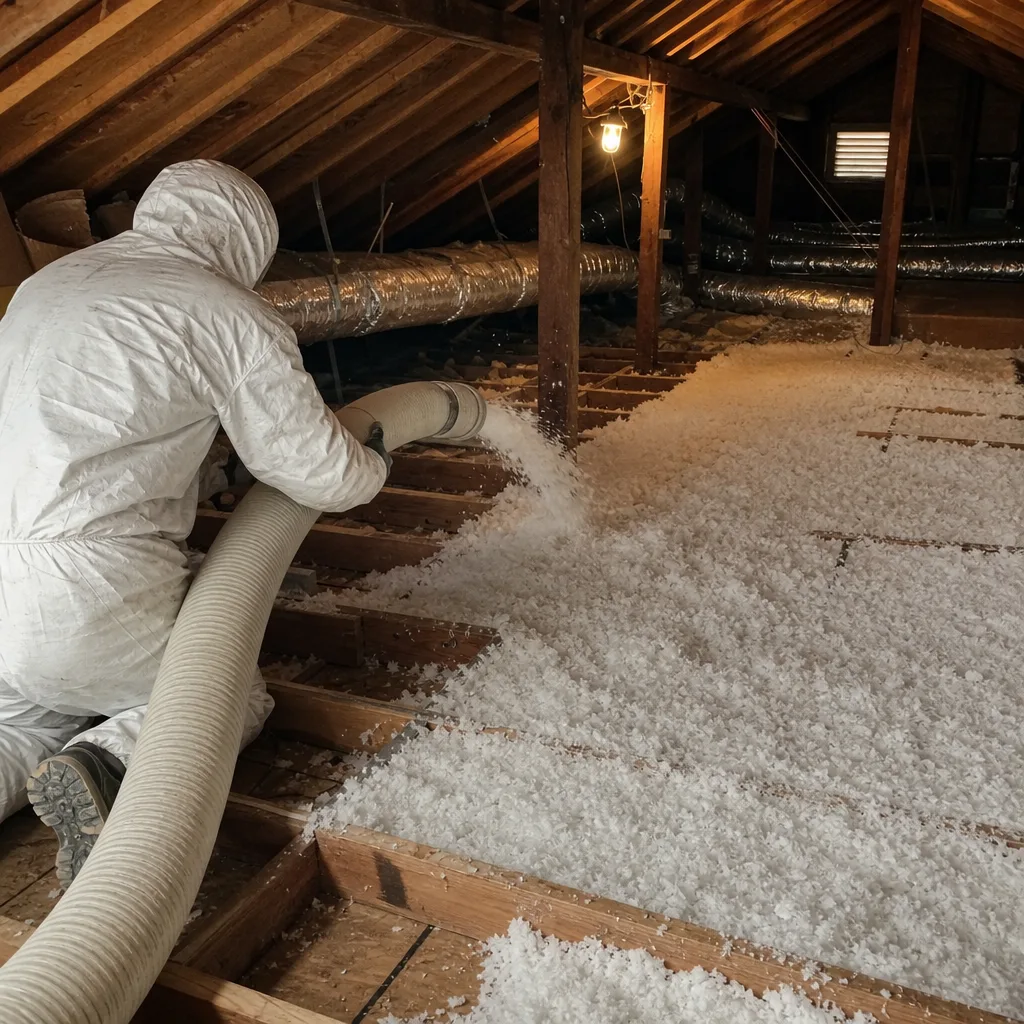
Attic insulation pricing in Costa Mesa depends on the scope of the job, but here are the ranges we typically see. Blown-in attic insulation for a standard 1,200 to 1,500 square foot ranch in 92626 or 92627 runs $1,800 to $3,200, depending on depth and whether we’re air-sealing first. Attic batt insulation for the same size home sits in the $1,500 to $2,800 range. A top-up over existing insulation is generally the least expensive option at $900 to $1,700, but only if the existing material is dry and viable. Full removal and replacement, including air sealing and vent correction, lands between $3,000 and $5,500 for typical Costa Mesa homes. The condition of your attic, access points, and whether we’re treating moisture or rodent issues will shift the final number. We give free estimates, and we’ll walk you through the options before you commit. Call (855) 773-6429 to schedule one.
We Also Serve Cities Near Costa Mesa
Beyond Costa Mesa, our crews regularly work in Newport Beach, Fountain Valley, Huntington Beach, and San Joaquin Hills. Each city has its own coastal microclimate and housing stock, and we adjust our recommendations accordingly. For a full look at what we do across the region, see our Costa Mesa service area or call us at (855) 773-6429.
Serving Costa Mesa, CA — Our Local Coverage Area
We’re based in the Costa Mesa area and know this community well. Use the map below to see our service coverage — if you’re nearby, we can almost certainly help.
FAQs About Attic Insulation in Costa Mesa
Your attic insulation gets wet because Costa Mesa’s marine layer pushes moisture-laden air into the attic every morning, and that air condenses on cooler surfaces like the roof deck and truss plates. It does not take rain; it takes fog and temperature swings. The fix is a combination of better attic ventilation and air-sealing the ceiling plane so moist indoor air stops moving into the attic. Call (855) 773-6429 and we’ll inspect your setup and tell you exactly what’s driving the moisture.
With a 1950s stucco ranch in 92626, we treat the wall retrofit as a vapor-management problem first. That means we evaluate the existing sheathing and stucco condition before choosing a material, and we never place a vapor barrier on the wrong side of the assembly. In most cases, we use Demilec closed-cell spray foam or a dense-pack cellulose approach that air-seals and insulates without creating a condensation trap. Costa Mesa’s marine layer makes this the single most important decision in a wall retrofit.
If the old insulation is damp, matted, or contaminated by rodents, yes. Settled 1950s-60s batts in Costa Mesa attics often hold moisture against truss nail plates and rust the fasteners, and adding new insulation over the top just hides the problem. Removal lets us air-seal the top plates and can lights and correct the ventilation before blowing in fresh material. If the existing insulation is dry and in decent shape, a top-up is a lower-cost option. We’ll tell you which applies after we see the attic. Estimates are free at (855) 773-6429.
For most Costa Mesa attics, we recommend R-38 to R-49 if you’re using blown-in cellulose or fiberglass, but the R-value on the bag matters less than the air-sealing underneath it. In a coastal 92626 or 92627 home, a properly sealed attic at R-38 will outperform an unsealed attic at R-60. The marine layer means ventilation and vapor control drive the specification. We’ll recommend the right depth for your roof pitch and vent setup.
No, new insulation alone will not stop rust on truss hardware in Costa Mesa. The rust is a moisture problem, and the moisture comes from condensation driven by inadequate ventilation and air leaks. Fixing the rust properly means removing the damp insulation, treating or replacing the affected hardware, air-sealing the attic plane, and correcting the vent chutes so fog-morning moisture has a path out. Then the new insulation goes in. If you’re seeing rust, call us at (855) 773-6429 before adding any material on top of the problem.
Written by Alan Whitcomb, Owner at Placentia Insulation, serving Costa Mesa and surrounding Orange County communities.