
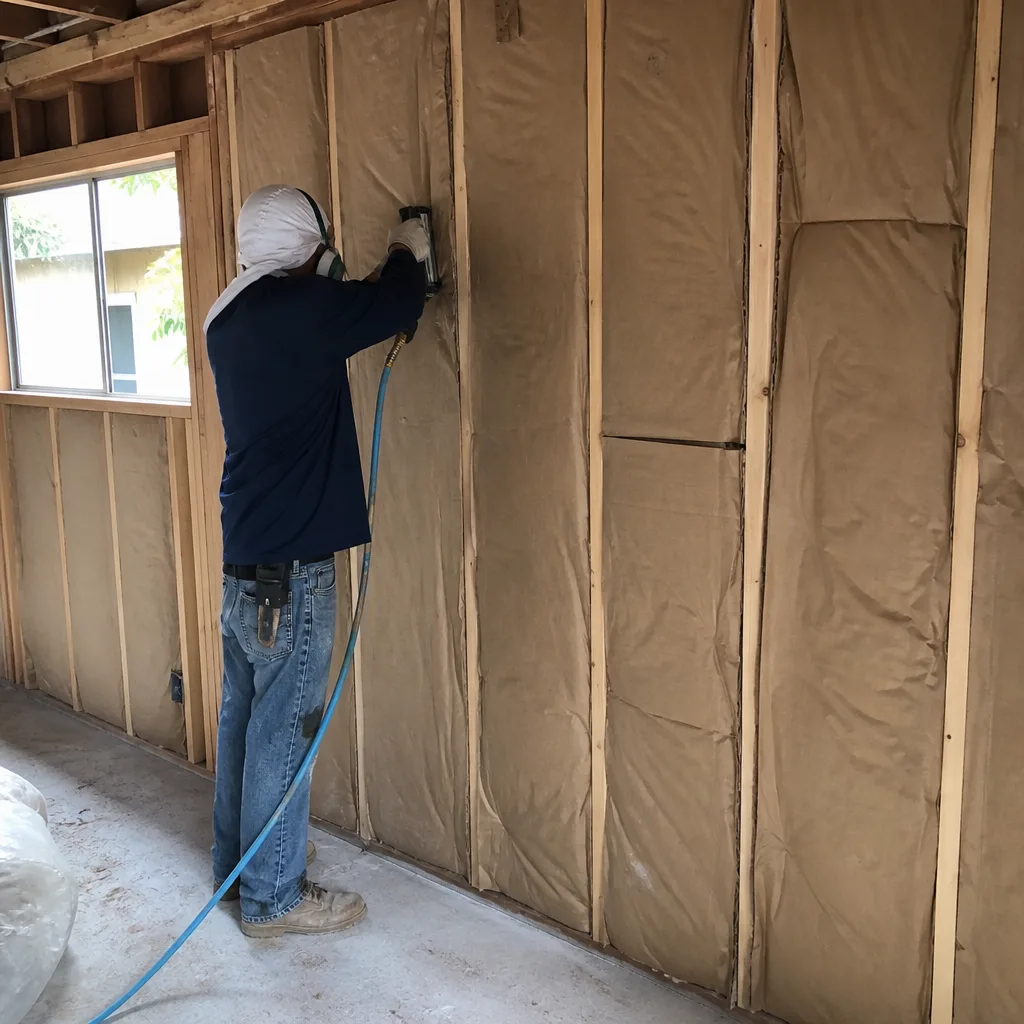
Reflectix Insulation in Downey, CA | Placentia Insulation
We provide independent Reflectix installation, troubleshooting, and removal across Downey as a dedicated insulation contractor. Most Reflectix foil fails in Downey not because the product is bad, but because it was installed over an attic assembly that was never set up to make a radiant barrier work. If your foil is stapled tight to the roof deck, buried under dust, or trapping heat in a converted garage, call (855) 773-6429 and we’ll tell you straight whether it’s worth saving.
We’re Placentia Insulation, and we’ve been retrofitting mid-century attics across the southeast LA Basin for years. Alan Whitcomb runs our operation, and he grew up patching ranch homes like the ones that dominate Downey’s neighborhoods. We don’t carry one Reflectix SKU and hope it fits. We assess the attic first, then pick the foil, baffle, and ventilation approach that actually works for a 1959 stucco tract house on a hot August afternoon. That’s the difference between foil that reflects heat and foil that cooks your shingles from underneath.
Why Downey Residents Choose Us for Reflectix Service
Most insulation contractors treat Reflectix as a roll of shiny stuff you staple up. It’s not. Reflectix is a low-emittance aluminum surface that only does its job when there’s a defined air gap on one side and a clean reflective face on the other. Get either wrong and you’ve installed a very expensive, very thin blanket.
We come to every Downey home with the same question: what does this attic assembly actually need? Alan’s been in enough 1950s ranch attics off Florence Avenue and Lakewood Boulevard to know the answer varies house by house, just as it does for our Santa Fe Springs Reflectix service customers. Some need roof-deck foil with new eave baffles. Some need the old contaminated batt removal first and no Reflectix at all. Some need the foil pulled out entirely because it’s trapping moisture in an unpermitted patio conversion. We’d rather tell you the truth than sell you another roll.
We’re a pure insulation contractor. We don’t do plumbing, roofing, or HVAC. Every tool on our truck, every conversation our crew has, every product in our inventory is about insulation. That means we’ve got Reflectix sales & service knowledge that generalist contractors simply don’t, and we’re not going to lean on a roofer’s opinion about your attic foil.
And because we stock eight major insulation brands, we can pair your Reflectix radiant barrier with the right supporting material beneath it. The foil is just one layer of a working attic system. The batts, blown-in cellulose, baffles, and ventilation all have to cooperate.
Common Reflectix Insulation Problems We Solve in Downey
Here’s what we see week after week in Downey attics, garages, and enclosed patios.
- Foil stapled tight against the roof sheathing with no air gap. This is the number one mistake, and in Downey it’s not just ineffective, it’s destructive. An attic that hits 140°F in August turns that foil into a conductor. Instead of reflecting radiant heat back out, it transfers it straight through to the sheathing and cooks your shingles from underneath. We remove it, install proper furring or re-hang with the gap, and the attic actually starts venting.
- Bubble-pack Reflectix laid flat on the attic floor over old compressed batts. Dust settles on the foil’s low-emittance surface within a couple of years, and once that surface is coated, it stops reflecting. Period. In Downey attics with roof-rat activity, we also find droppings and urine stains in that floor-laid foil. It becomes a contaminated, useless air pocket that has to be pulled before you can re-blow insulation.
- Reflectix in unvented garage conversions with no baffles. Downey’s older garages and enclosed patios were frequently converted to living space without permits. That means no eave vents, no baffles, and no ridge ventilation. Adding Reflectix to that cavity is like putting a lid on a pot that’s already boiling. We diagnose the cavity first, add ventilation where the structure allows, and only then consider foil.
- Duct wrap and foil tape seams breaking down from LA Basin thermal cycling. Hot days, cool nights, and dry air make adhesive fail. When the foil face peels from the bubble core on an attic duct run, you lose both the radiant benefit and the insulating air pocket. We re-wrap with fresh Reflectix Insulated Duct Wrap and the right tape, and we’ll tell you if duct sealing or replacement makes more sense first.
- Reflectix installed over rodent-contaminated or collapsed original insulation. In Downey’s 1950s and 1960s homes, the original batt insulation under the foil is often compressed to nothing or soaked with rodent waste. Laying new foil over it just seals in the problem. We remove the contaminated material, address the entry points, and re-insulate properly before any foil goes back.
Reflectix Service in Downey: What Local Conditions Mean for Your Equipment
Here’s the thing most Reflectix advice misses. Downey’s tract ranches, the ones built between 1945 and 1970 during the aerospace boom, were framed decades before radiant barriers became standard practice. That means most of these homes have no sheathing-level radiant barrier and, in a lot of cases, no eave baffles either. So when someone installs Reflectix roof-deck foil in a 1961 ranch off Stewart and Gray Road without adding baffles, the foil blocks the soffit-to-ridge airflow path and traps the very heat it was supposed to reflect.
We see this weekly in Downey and in our Reflectix repair in Pico Rivera calls. The attic was never designed for a radiant barrier, so retrofitting one isn’t a simple staple-up job. It requires adding eave baffles, sometimes ridge or gable ventilation, and understanding where the air is supposed to move. Alan’s uncle taught him to weatherize old ranch homes in Placentia summers, and it’s the same principle here: you can’t just add material. You have to fix the assembly.
That’s also why the answer to “should I just add Reflectix to my Downey attic?” is usually no unless the baffles and ventilation are already there. The right insulation in the right place does the work quietly – you notice it when your energy bill comes, not before.
Reflectix Models & Products We Service in Downey
We work with the full Reflectix line, and we stock or order based on what Downey homes actually need.
- Reflectix Double Reflective Insulation Roll (bubble-pack foil) for roof-deck applications where a defined air gap is achievable.
- Reflectix R-21 Attic Wall Radiant Barrier for gable-end walls and knee walls where heat gain comes through vertical surfaces.
- Reflectix Double Reflective Foil Insulation with adhesive seams for retrofits where seam tape longevity matters.
- Reflectix Insulated Duct Wrap for attic duct runs and knee-wall duct cavities, paired with fresh HVAC tape where the existing wrap has failed.
Here’s our honest parts stance. Where foil core and lamination quality actually matter, we use genuine Reflectix rolls, tape, and fasteners. But for the re-blow beneath the foil, we’ll use quality-comparable aftermarket vapor barriers or batt materials when that’s the smarter value. We match the material to the job, not the job to whatever we have on the truck. And if we think a different brand, like Rockwool mineral wool for fire resistance or GreenFiber blown-in cellulose, outperforms Reflectix for your specific Downey attic, we’ll tell you that too. Eight brands. Three methods. One specialty.
How Much Does Reflectix Service Cost in Downey?
Reflectix service in Paramount and Downey typically runs between $850 and $2,600 depending on the attic size, whether we’re removing contaminated material, and whether baffles or ventilation need to be added before the foil goes back. Simple foil removal over a small garage conversion starts lower. A full roof-deck retro fit with baffles, ridge ventilation, contaminated batt removal, and re-blown insulation sits at the higher end.
| Service | Typical Range in Downey |
|---|---|
| Reflectix removal only (contaminated or failed foil) | $350 – $750 |
| Roof-deck Reflectix install with air gap | $650 – $1,400 |
| Add eave baffles and verify ventilation | $300 – $900 |
| Contaminated batt removal + re-blow cellulose | $1,200 – $3,200 (combined with foil work) |
| Attic duct wrap replacement | $400 – $1,100 |
What drives Downey pricing is the condition of what’s already up there. The foil itself is rarely the expensive part. The removal, the baffle work, the ventilation corrections, and the re-blow beneath it are what take the time. Every estimate includes a full attic inspection, and we give you the number before any work starts. Call (855) 773-6429 for a free estimate.
Serving Downey, CA — Our Local Coverage Area
We’re based in the Downey area and know this community well, with teams handling Bell Gardens Reflectix service and nearby cities. Use the map below to see our full service coverage — if you’re nearby, we can almost certainly help.
FAQs – Reflectix Insulation in Downey
Yes, but only when it’s installed with a defined air gap on the roof deck and the attic has working eave-to-ridge ventilation. In Downey’s mid-century attics, most foil fails because it was stapled tight to the sheathing or installed in an unvented cavity. Without the air gap, the foil conducts heat into the roof deck instead of reflecting it. We’ll assess your specific attic before recommending whether foil is worth it. Call (855) 773-6429 for an honest read.
Start with blown-in attic insulation, not Reflectix. Downey’s cooling-dominated climate means attic heat gain is your biggest energy problem, and old ranch homes have severely compressed or missing attic insulation. A proper R-38 to R-49 blown-in layer will do more for your comfort and bills than a radiant barrier. Once the attic thermal layer is right, we can talk about Reflectix as a supplement. Call (855) 773-6429 and we’ll walk you through the logic for your specific house.
No, and we won’t. Laying new foil over contaminated insulation seals rodent waste, odors, and moisture into the attic assembly. We remove the soiled material and old foil first, clean and sanitize the deck, address entry points where we can see them, then re-insulate and install new foil only if the assembly supports it. It’s the only way to avoid bringing the problem back. Call (855) 773-6429 to have us inspect what’s up there.
Maybe, but typically not until we’ve solved the ventilation. Unpermitted conversions in Downey usually lack eave vents, baffles, and ridge ventilation. Adding Reflectix to that unvented cavity traps heat and moisture. We inspect the structure, see what ventilation is feasible without a full code retrofit, and tell you honestly whether foil helps or hurts. Call (855) 773-6429 and we’ll take a look.
It can, if the foil is installed wrong. We’ve seen manufacturers void shingle warranties where reflective foil was stapled directly against the roof sheathing with no air gap, causing excessive deck temperatures. That’s exactly why we insist on proper air gap and ventilation in Downey attics. Done right, the deck temperature stays close to normal. Done wrong, your shingles bake from both sides. We’ll confirm your assembly is set up correctly before any foil goes up.
Service Areas Near Downey
We serve Downey and the surrounding communities throughout the southeast LA Basin. If you’re in Reflectix service in South El Monte, Compton, South Gate, or East Los Angeles, we work in those attics too. We also run crews through Monrovia, San Gabriel, and Arcadia. And for coastal attics with different moisture dynamics, Reflectix service in Costa Mesa covers that side of the county. Our Downey service area spans the 90239, 90240, 90241, and 90242 ZIP codes.
Book Your Reflectix Service in Downey Today
If your Downey attic has old foil, contaminated insulation, or a converted garage that bakes all summer, call us. We’ll inspect it, explain what’s actually going on, and give you a straight recommendation. Call (855) 773-6429 for a free estimate. If it’s urgent, we’ll do our best to get a tech out quickly.
Written by Alan Whitcomb, Owner at Placentia Insulation. Alan grew up in Placentia and has spent his career fixing insulation in the mid-century homes that define southeast LA County’s housing stock.