Fast, Reliable Attic Insulation Across Downey
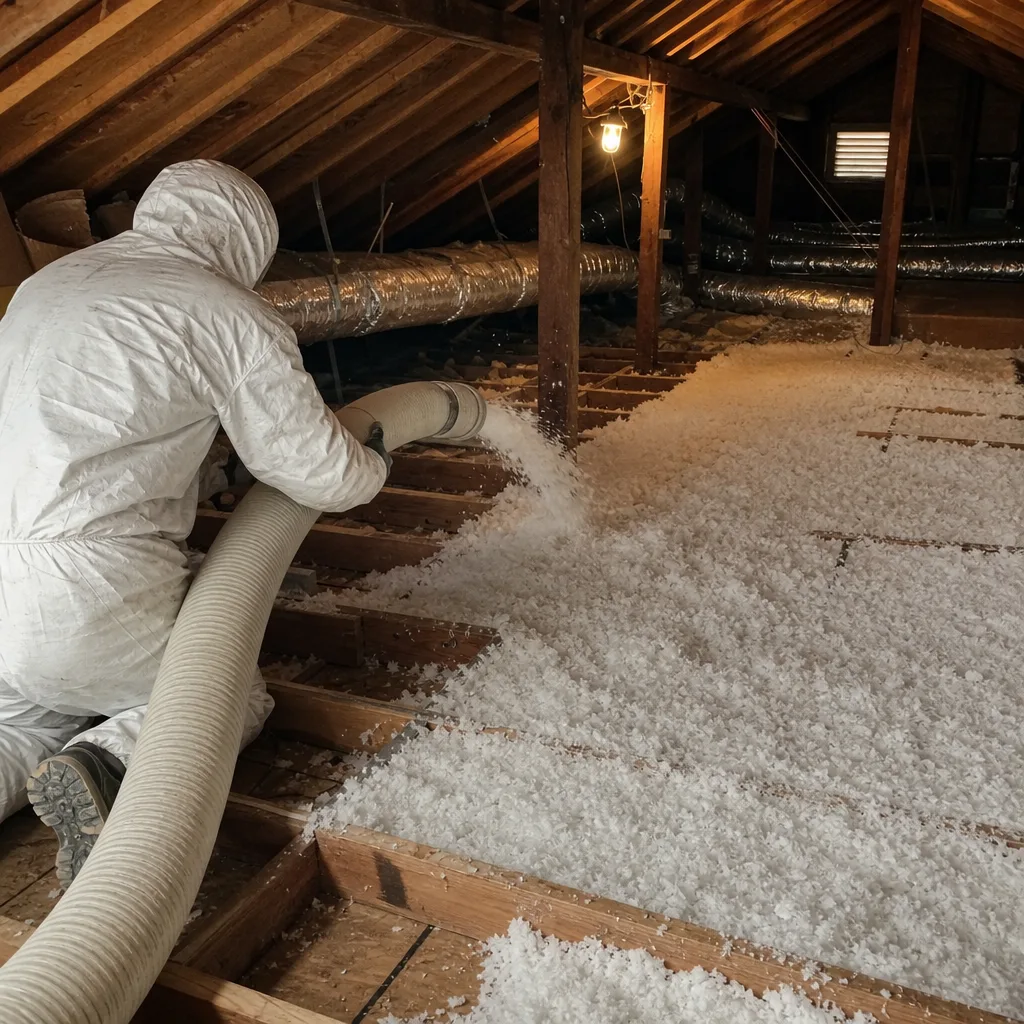
Attic insulation in Downey usually costs between $1,800 and $4,200 for a full re-blow or replacement in a typical 1950s – 60s ranch home, with most jobs completed in a single day. That range covers vacuuming out old contaminated material, air sealing, baffle installation, and blowing new insulation to R-49. If you’re chasing high summer cooling bills in a Downey home built during the aerospace boom, the attic is almost always the problem. Call Placentia Insulation at (855) 773-6429 for a free estimate. Our crews know these mid-century tract houses inside and out, and we respond to Downey neighborhoods including the 90240, 90241, and 90242 zip codes within a day or two in most cases.
Why Placentia Insulation Is Downey’s Preferred Attic Insulation Company
Downey homeowners call us for one reason: we’re an insulation-only contractor, not a generalist that happens to blow some fiberglass between other jobs. Alan Whitcomb built Placentia Insulation around a simple idea. Match the material to the job, not the job to whatever’s on the truck. That’s why we carry eight product lines including Owens Corning, GreenFiber, and Icynene. Most insulation shops in the Downey area stock one or two brands. We stock eight, so your 1958 ranch off Florence Avenue gets the right product for its specific problem, not a default.
Our crews have worked on hundreds of homes in Downey’s aging neighborhoods, from the streets around Apollo Park to the blocks between Stonewood Center and the Rio Hondo. We know what these houses look like when we open the attic hatch: compressed batt insulation, rodent contamination, and zero ventilation. That local experience means our quotes hold up. We don’t discover surprises and rewrite the estimate after the fact.
Downey customers work with a dedicated crew that only does insulation. This meansAttic Insulationon a Downey home isn’t a side job squeezed between a plumbing call and a roof repair. It’s the entire job. That single-trade focus shows up in how clean the work site stays and how carefully we seal every top plate and baffle every soffit vent.
Attic Ventilation in Downey
Attic Ventilation in Downey is the difference between an attic that stays under 110°F on an August afternoon and one that cooks at 140°F or hotter. Almost every 1950s and 60s tract house in Downey was built with minimal soffit venting and no ridge vent, so heat pours into the attic and sits there, radiating down into the living space all night. In the hotter blocks east of Lakewood Boulevard toward the San Gabriel Valley edge, we routinely measure attics at 135°F to 145°F before ventilation work.
Proper ventilation involves installing or clearing soffit baffles, adding a ridge vent or whirlybird where the roof pitch allows, and making sure air actually moves from the eaves to the top of the roof. For a typical Downey ranch, attic ventilation work runs $600 to $1,400 depending on how much baffle work is needed and whether a powered vent makes sense.
Why Ventilation Comes First
We won’t blow new insulation into an unvented Downey attic and call it done. Insulation slows heat transfer, but it doesn’t remove heat. A sealed, unvented attic holds that heat against the insulation for hours, which means your AC runs longer into the evening. Ventilation moves the hot air out, so the insulation does its actual job.
Signs Your Downey Attic Needs Baffles
If your upstairs rooms or the back half of your house never cools down even with the AC running, that’s hot attic air sitting above the ceiling. If you see paint peeling on the underside of the eaves, that’s trapped moisture from poor airflow. Both problems point to the same fix: clear the soffit vents, install baffles, and let the attic breathe.
Radiant Barrier in Downey
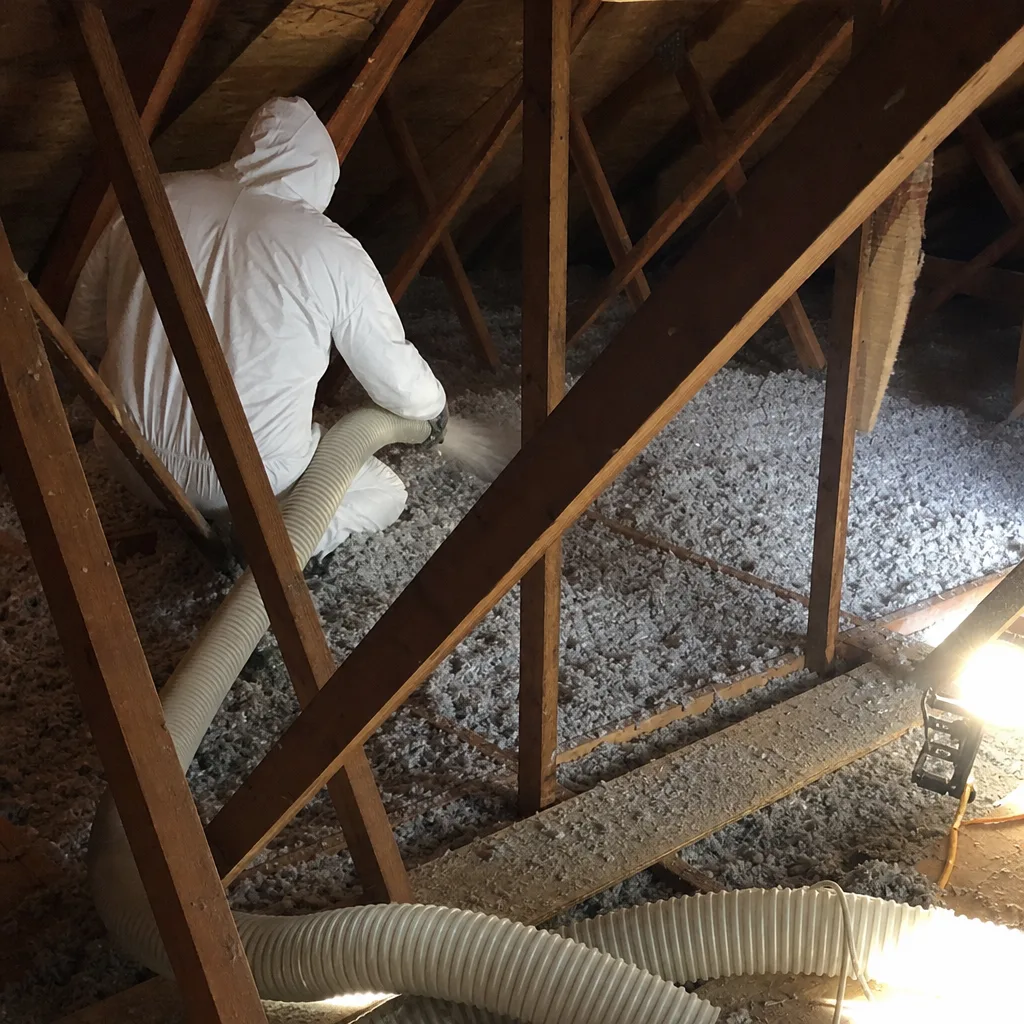
Radiant Barrier in Downey homes makes sense because our cooling season runs from late April through October, and the sun pounds directly on the roof deck all summer long. Radiant barrier is a reflective foil material installed on the underside of the roof rafters that bounces heat back out instead of letting it radiate down into the insulation and then into your ceiling. In a Downey summer, a radiant barrier typically drops attic temperatures by 15°F to 25°F by itself.
Installing radiant barrier in a typical Downey ranch attic costs $1,200 to $2,400 depending on the attic size and roof configuration. It works best when paired with ventilation and a proper insulation layer, so we quote it as part of a whole-attic fix rather than selling it as a standalone product.
What Radiant Barrier Actually Does
Radiant barrier isn’t insulation in the traditional sense. It doesn’t have an R-value. What it does is reflect 80% to 95% of the radiant heat that would otherwise soak into the attic. That matters in Downey because the sun’s heat on the roof is the biggest thermal load in these homes. You’re not trying to keep warmth in; you’re trying to keep heat out.
When Radiant Barrier Makes Sense
If your attic already has reasonable insulation depth but the upstairs still heats up by 3 p.m., radiant barrier is often the missing piece. The same goes for homes with dark composite shingle roofs that absorb heat aggressively. Lighter shingles reflect some sun. Dark ones bake. Radiant barrier levels the playing field.
Trusted Brands We Service in Downey
Placentia Insulation carries eight insulation brands, which means a Downey homeowner never gets a generic recommendation. For re-blowing attics in Downey’s aging ranch homes, we turn to GreenFiber blown-in cellulose because it packs densely, fills the odd cavities those 60-year-old attics always have, and handles moisture better than fiberglass in enclosed patio conversions. For open-cell spray foam in the unvented cavities left by unpermitted garage conversions, we use Icynene. For closed-cell applications where moisture control matters, we spec Demilec. And for batt work where builders left wall cavities partially filled, Owens Corning fiberglass is our go-to. Having these brands in active inventory means the right material shows up the same week you call, not three weeks after a special order from a distributor.
Common Attic Insulation Problems We See in Downey Homes
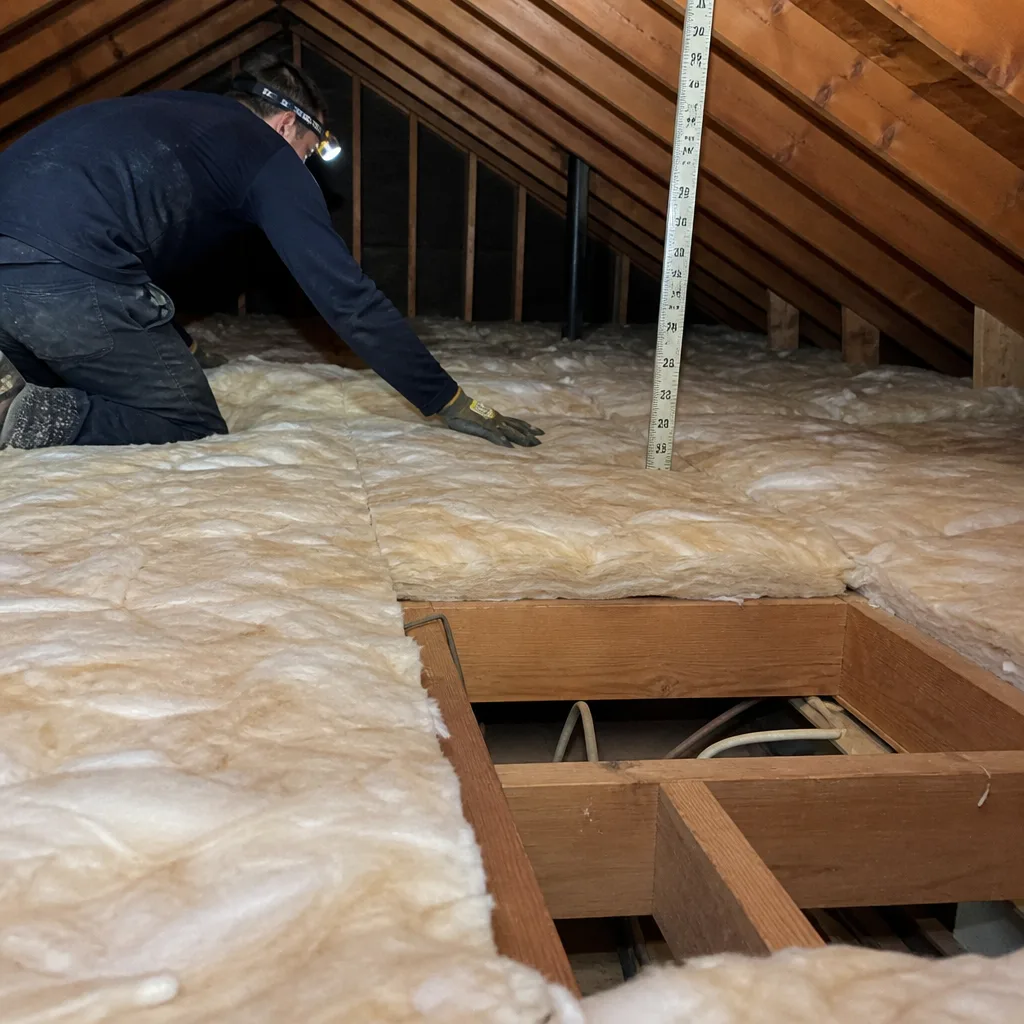
- Compressed original batt insulation. Downey tract homes from the 1950s and 60s were built with R-11 or R-13 batt insulation. Sixty years of heat, dust, and occasional roof leaks have compressed that material to an inch or less, which means the attic has effectively no insulation at all. The fix is removal and a full re-blow.
- Roof-rat and rodent contamination. Downey’s mature trees and older construction mean roof rats get into attics through soffit gaps and unscreened vents. Their droppings and urine soak into the old insulation. You can’t just blow new material over contaminated fiberglass. The old layer has to be vacuumed out first, which changes the scope and the price of the job.
- Unpermitted garage and patio conversions. Plenty of Downey homes had garages enclosed into bedrooms or dens decades ago without permits. These conversions usually have no insulation in the flat roof cavity, no ventilation, and odd framing that a standard attic quote doesn’t account for. Our crews have to diagnose each of these case-by-case because the floor plans and roof lines all differ.
- Dead or missing attic access panels. The original scuttle hole covers in these mid-century houses are thin plywood with no insulation and no gasket. Hot attic air leaks straight into the hallway through the gap. Replacing or re-insulating the hatch cover is a cheap fix that gets skipped by contractors who don’t think about it, and it’s part of every full attic job we do in Downey.
Pricing for Attic Insulation in Downey, CA
A straightforward attic re-blow in Downey with no contamination runs $1,800 to $2,800 for a home up to about 1,500 square feet. Add vacuuming of existing contaminated insulation and that climbs to $3,200 to $4,200. Attic ventilation work adds $600 to $1,400. Radiant barrier installs run $1,200 to $2,400 on top of that. Attic insulation top-ups for homes that just need additional depth run $900 to $1,500. The variables are attic size, access, contamination, and how much air sealing the top plates need. Alan Whitcomb provides a written, line-item estimate before any work starts, and the number on that estimate is the number you pay. Call (855) 773-6429 to schedule a free attic inspection and quote for your Downey home.
We Also Serve Cities Near Downey
If you own a rental property or a family member’s home just outsideDowney, we cover Bell Gardens, Santa Fe Springs, Paramount, and Pico Rivera with the same crews and the same eight-brand material library. The housing stock in those cities tracks Downey’s closely: mid-century ranches, small stucco tract homes, and converted garages that need a specialist’s eye. Call (855) 773-6429 and we’ll schedule an attic inspection anywhere in the Downey area.
Serving Downey, CA — Our Local Coverage Area
We’re based in the Downey area and know this community well. Use the map below to see our service coverage — if you’re nearby, we can almost certainly help.
FAQs About Attic Insulation in Downey
Because Downey’s heat problem is driven by the sun beating on the roof, not heat bleeding through the walls. Single-story ranch homes have a huge roof surface area relative to wall area, so the attic is where the heat enters. Wall insulation helps in cold climates; in Downey’s hot summer months, an R-49 attic with good ventilation does more for your cooling bill than anything done inside the walls. Plus, retrofitting wall insulation in these old stucco homes means drilling and patching every stud bay, which costs more and delivers less in this climate. Call (855) 773-6429 if you want us to look at your attic before reconsidering a wall job.
No. Downey’s original 1950s and 60s batt insulation is almost always compressed, contaminated, or both. Blowing new material over the top traps the problems underneath. The right approach is vacuuming out the old layer, inspecting the attic cavity for rodent damage and air leaks, then re-blowing to R-49. Skipping removal saves a few hundred dollars up front and costs you efficiency for the life of the house. We’ll show you the old insulation before we remove it so you see what’s been living in your attic.
Yes, and it’s one of the most common situations we see in Downey. Unpermitted garage conversions usually have a flat or low-slope roof cavity that never got insulated, no ventilation, and framing that makes standard batt installation awkward. We diagnose these case-by-case. Depending on the cavity depth and moisture risk, we may spec Icynene open-cell foam or a closed-cell Demilec application for the flat section, then handle the main attic separately. The quote changes because the scope changes. Call (855) 773-6429 and we’ll inspect the converted space along with the attic.
For Downey’s climate, we blow attic insulation to R-49, which is roughly 14 to 16 inches of blown-in cellulose depending on the product. That exceeds the California Title 24 minimum and accounts for the long hot summers where heat soaks through the ceiling for hours every afternoon. Older homes sometimes had R-19 or less, which is functionally nothing once compressed. If your attic was blown to R-30 a decade ago, a top-up to R-49 is a straightforward job. A stamped R-value card is left at your attic hatch after every re-blow.
Yes, and in many homes those two moves deliver more comfort than adding insulation alone. A 1960s Downey tract house with unvented soffits and a dark shingle roof is an oven by 2 p.m. Radiant barrier bounces the roof heat back out. Ventilation pulls the remaining hot air out of the attic. Together, they drop attic temperatures 20°F to 30°F on an August afternoon. The AC runs less, the upstairs stays cooler, and the insulation layer functions as intended. Call (855) 773-6429 for a free attic evaluation and an honest recommendation for your specific roof line and attic layout.
Written by Alan Whitcomb, Owner at Placentia Insulation, serving Downey with dedicated attic insulation, spray foam, and blown-in solutions.