
Fast, Reliable Attic Insulation Across Crestline
Most Crestline attics we inspect are under-insulated by half or more. It’s not neglect; those mid-century cabins off Lake Gregory Drive were built when propane was cheap and building codes barely mentioned R-value. Today that same attic is costing you real money every winter night, and on a 4,600-foot ridge it’s also the first place embers look for a way in. Our Attic Insulation crews work Crestline every week, and we quote based on what your actual rafters, vents, and framing tell us, not a generic square-foot formula. Call (855) 773-6429 and we’ll walk the attic with you.
Why Placentia Insulation Is Crestline’s Preferred Attic Insulation Company
Crestline homeowners call us because we speak mountain construction. A cabin built in 1962 with 2×4 rafters and a pier-and-beam foundation is not the same job as a Rancho Cucamonga tract house. The right material, vent detail, and fire hardening approach are different here, and our crews know what those differences look like before they pull the first batt. We show up with a plan that accounts for your roof pitch, your gable vents, your soffit condition, and how the whole assembly behaves in a hard freeze and a Santa Ana wind event.
Locals also notice we don’t rush the assessment. Alan Whitcomb built Placentia Insulation around one trade, so the person examining your attic is a dedicated insulation technician, not a generalist squeezing you in between a water heater swap and a faucet repair. We carry eight material brands, but we’ll recommend one that matches this specific house in this specific climate zone. For a Crestline cabin in the wildland-urban interface, that often means mineral wool and mesh screening, not the cheapest bag of fiberglass on the shelf.
Insulation Contractors in Crestline
Insulation Contractors in Crestline are not all equal, and the ones who quote over the phone without looking at your venting are guessing. A proper attic insulation job here starts with inspecting what’s already up there, checking whether the eave channels are clear, whether the existing batts have settled or compressed, and whether your gable vents are screened against embers. From there it’s a decision about material, depth, and airtightness. For a typical Crestline cabin, a full attic insulation project runs $1,800 to $4,200 depending on square footage, access, and whether we’re removing old material or topping up what’s there. The phone number for a free on-site estimate is (855) 773-6429.
Attic Batt Insulation for Mountain Cabins
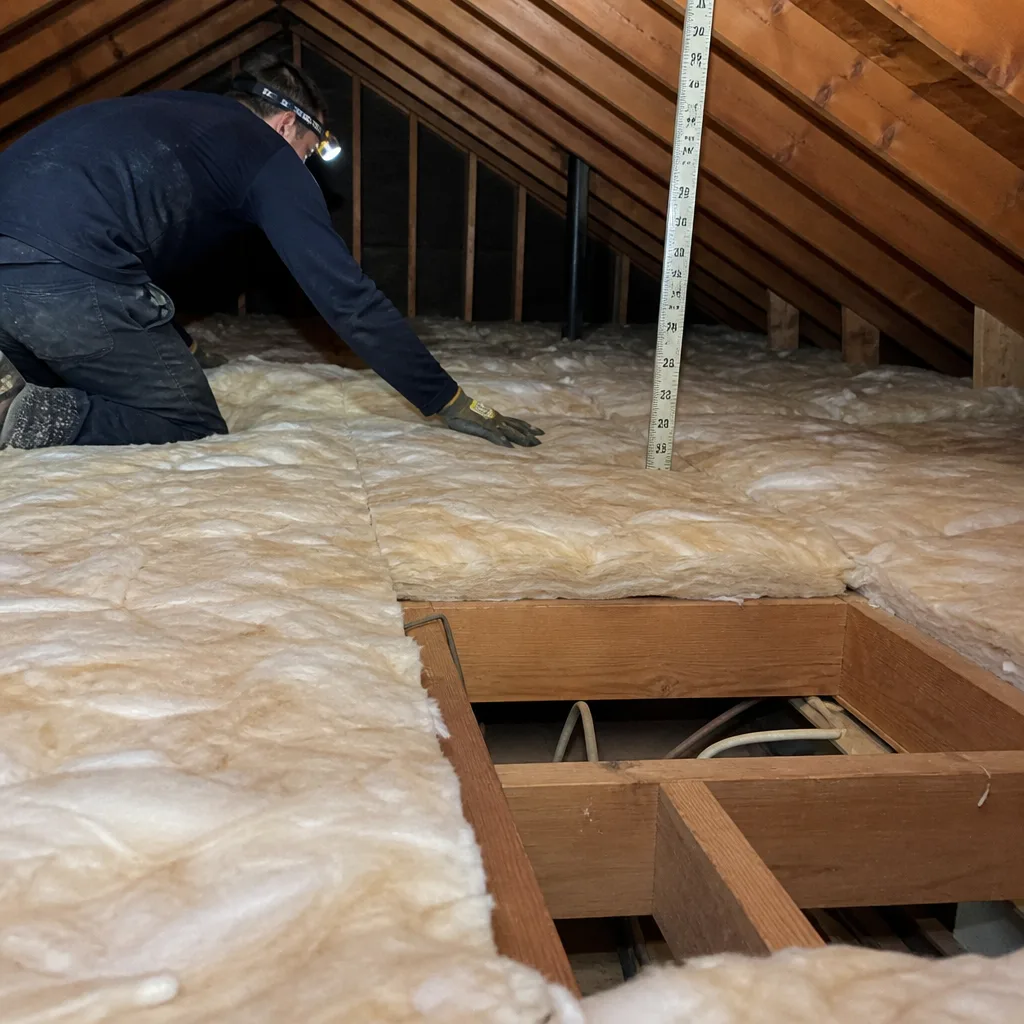
Batt insulation in Crestline’s older 2×4 rafter bays is thin, settled, and often full of rodent trails from decades of mountain living. We pull it, inspect the framing, and install fresh material at the correct depth for your heating season. Batt work in Crestline typically runs $1,400 to $2,600 for a standard cabin attic.
Blown-In Attic Insulation for Deep Coverage
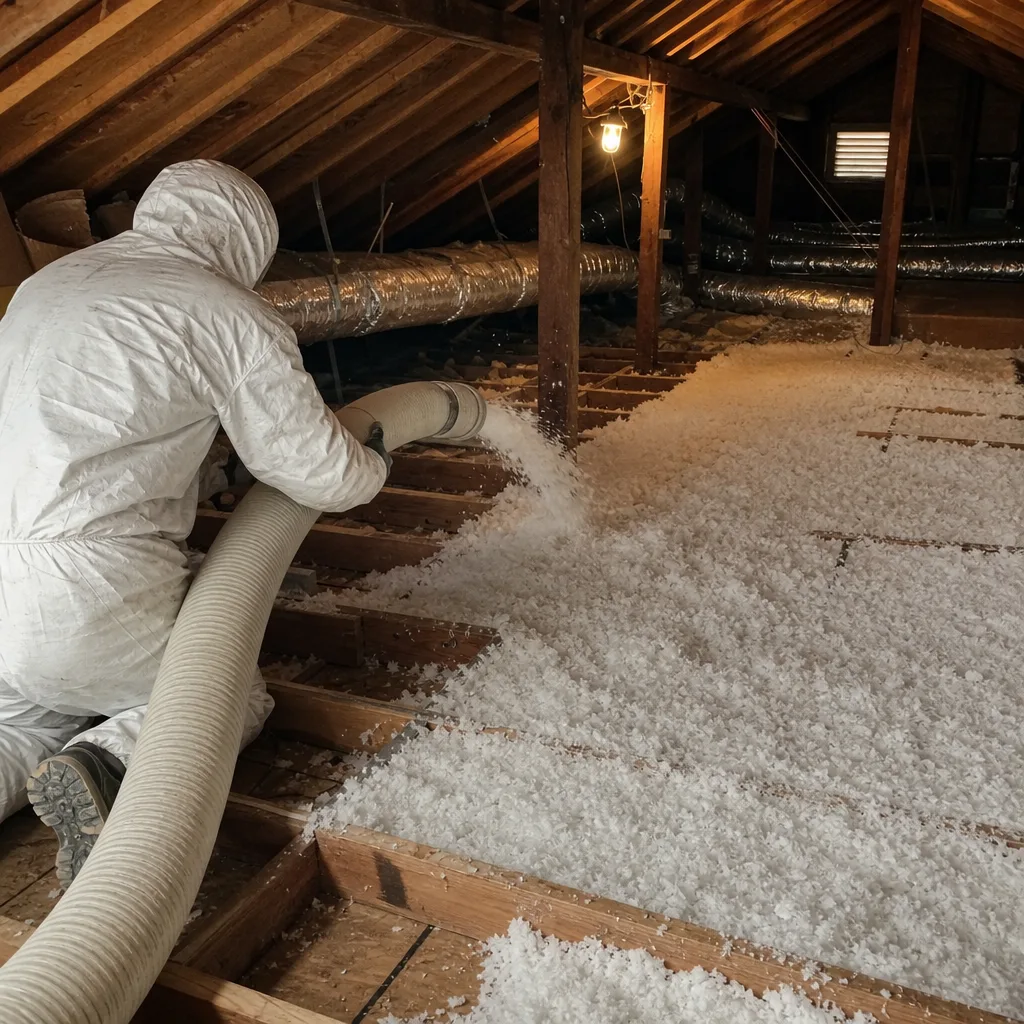
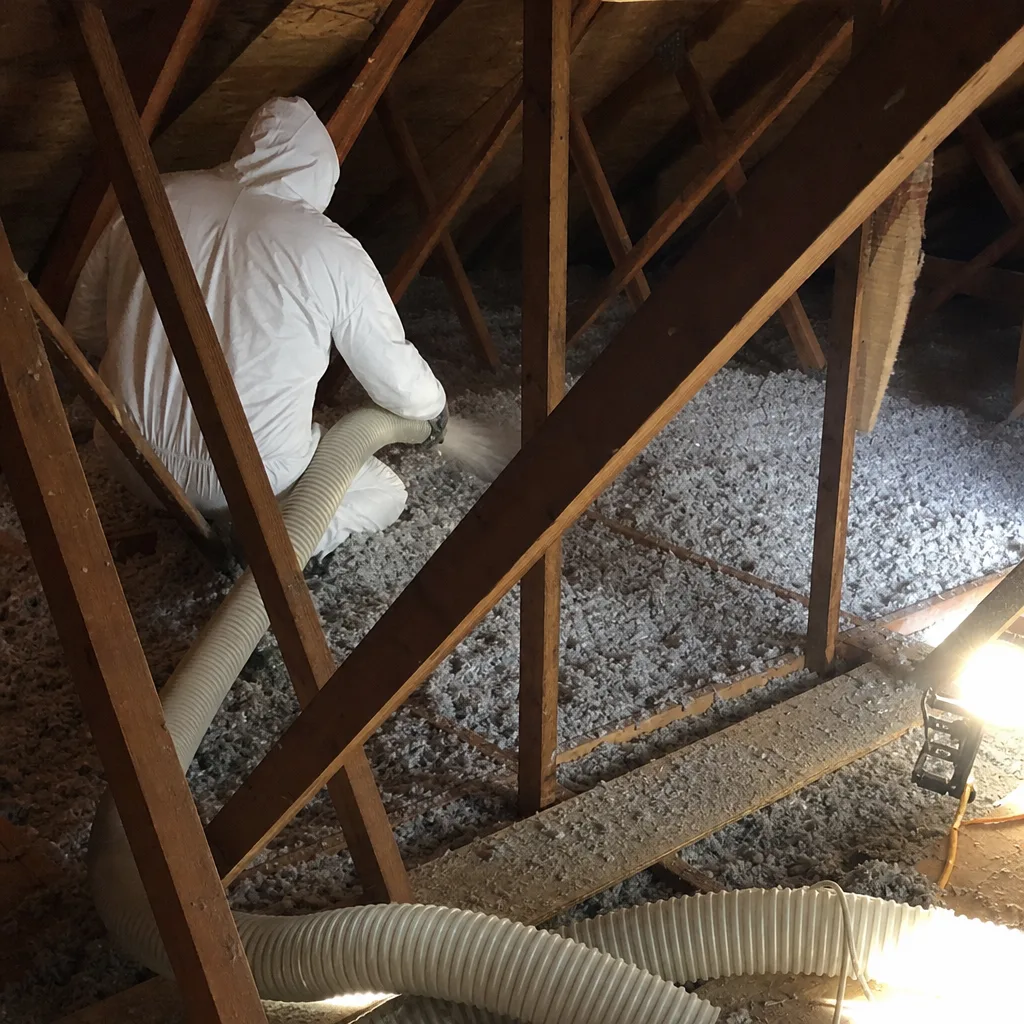
Blown-in cellulose or fiberglass gives you even coverage across irregular attic floors and around odd framing, which describes most of the cabins up here. We use GreenFiber cellulose and Knauf or CertainTeed fiberglass depending on the application. Blown-in jobs in Crestline generally run $1,600 to $3,400 depending on target R-value and square footage.
Attic Ventilation in Crestline
Attic Ventilation in Crestline is not the afterthought it is down the hill. At 4,600 feet, your attic sees freeze-thaw cycles, snow sitting on the roof deck, and dry Santa Ana conditions in the fall. Ventilation that’s wrong or blocked means winter condensation soaking into insulation and summer heat building up under the sheathing. For an older Crestline cabin, correcting baffles, adding vent screens, and clearing blocked eave channels typically runs $400 to $1,200 as part of an insulation job. That’s a fraction of what a roof-deck replacement costs after years of trapped moisture.
Ember-Resistant Vent Screening
Chapter 7A of the California Building Code applies to most of Crestline’s built environment, and open gable vents or unscreened soffits are direct ember entry points. We install 1/8-inch corrosion-resistant mesh over every vent opening we find during an insulation job. It’s a small line item, usually $150 to $500 depending on how many vents you have, and it’s the difference between an attic that survives a wind-driven ember event and one that doesn’t.
Baffle Installation for Soffit-to-Ridge Flow
Blown-in insulation without baffles gets pushed into the eave channels, cutting off the airflow your roof deck needs to stay dry in winter. On Crestline cabins with low-slope or shallow eaves, we install rigid baffles at every rafter bay before blowing anything in. That work is part of the insulation scope, not an extra charge on most jobs.
Trusted Brands We Service in Crestline
We stock and install Rockwool, CertainTeed, Icynene, and Demilec up here, among others. That matters in Crestline because the right material for your attic isn’t necessarily the one a single-brand shop carries. Rockwool mineral wool is our most common recommendation for WUI-adjacent cabins because it’s non-combustible and holds its R-value when temperatures swing hard. Icynene open-cell foam works well in tight, hard-to-reach rafter bays. CertainTeed fiberglass covers the straightforward insulation jobs. We bring what your house needs, not what our last supplier gave us a deal on.
Common Attic Insulation Problems We See in Crestline Homes
- Compressed batts in 2×4 rafter bays. The original insulation in most of these cabins was R-11 or less, and decades of stored holiday decorations have mashed it flat. You’re paying to heat the ridge line.
- Unscreened gable and soffit vents. On a slope lot off Lake Gregory Drive, those openings are straight-line paths for embers during a wildfire event. We see it on almost every pre-2000 cabin we inspect.
- Blocked eave channels from old blown-in work. Someone blew insulation years ago without baffles, and now the soffit vents are buried. That traps moisture against the sheathing every winter.
- Air leaks around top plates and framing junctions. Warm interior air escapes through gaps in the old framing, bypassing the insulation entirely and creating ice and condensation issues at the eaves.
Pricing for Attic Insulation in Crestline, CA
For a typical Crestline cabin between 900 and 1,400 square feet, expect to pay $1,800 to $4,200 for a complete attic insulation job. That includes material, labor, and basic vent screening. If we’re adding baffles or pulling old, rodent-damaged material, the high end applies. A straight top-up over existing insulation runs lower, often $700 to $1,200. Mineral wool or closed-cell spray foam pushes toward the upper end of any range because the material costs more, but in a Chapter 7A zone it’s often the correct call. Call (855) 773-6429 for a free estimate; we’ll tell you what your actual attic needs after we look at it.
We Also Serve Cities Near Crestline
Our crews cover the whole San Bernardino mountain corridor, and we’re regularly up in Lake Arrowhead, down through Muscoy, and over to San Bernardino and Highland. If you own a cabin or rental property anywhere in the area, our Crestline service area extends to you. One call books the assessment, and we’ll bring the material that fits the elevation and the exposure.
Serving Crestline, CA — Our Local Coverage Area
We’re based in the Crestline area and know this community well. Use the map below to see our service coverage — if you’re nearby, we can almost certainly help.
FAQs About Attic Insulation in Crestline
Chapter 7A of the California Building Code governs construction in wildland-urban interface zones like Crestline, and it treats your attic assembly as part of the ignition-resistance system. Insulation material choice, vent screening, and eave details all factor into whether your attic helps or hurts during an ember event. Non-combustible insulation like Rockwool mineral wool works with the code, not against it. Call (855) 773-6429 and we’ll assess your attic against current WUI hardening standards.
You can keep the vent, but only if it gets retrofitted with 1/8-inch corrosion-resistant mesh screening. An unscreened gable vent on a slope lot during a wind event is an open invitation for embers. We screen every vent as part of our standard Crestline insulation scope.
Most original Crestline cabins have R-7 to R-11 in the attic, which is far below what this elevation and heating season demand. We recommend R-38 to R-49 for attics at 4,600 feet, installed as either blown-in fiberglass or cellulose at the proper depth, or mineral wool batts in rafter cavities where fire hardening is a priority. The exact number depends on your framing and vent setup.
In most Crestline attics, yes. Mineral wool is non-combustible, which matters in a Chapter 7A zone, and it doesn’t sag or lose R-value as it ages. It’s also hydrophobic, so any moisture that does get in from a vent leak won’t collapse it the way it would fiberglass. Fiberglass still has its place for budget-conscious top-ups, but for the older cabins on exposed ridge lots, mineral wool is usually the right long-term call.
Because insulation and ventilation are one system in a mountain climate. Adding insulation without adequate baffles and screened vents creates condensation, moisture damage, and a fire vulnerability. A proper Crestline attic job handles both at once, so the insulation performs and the assembly stays dry and ignition-resistant. Call (855) 773-6429 to schedule an assessment that covers the full attic, not just the insulation layer.
Written by Alan Whitcomb, Owner at Placentia Insulation, serving Crestline and the San Bernardino Mountains.