
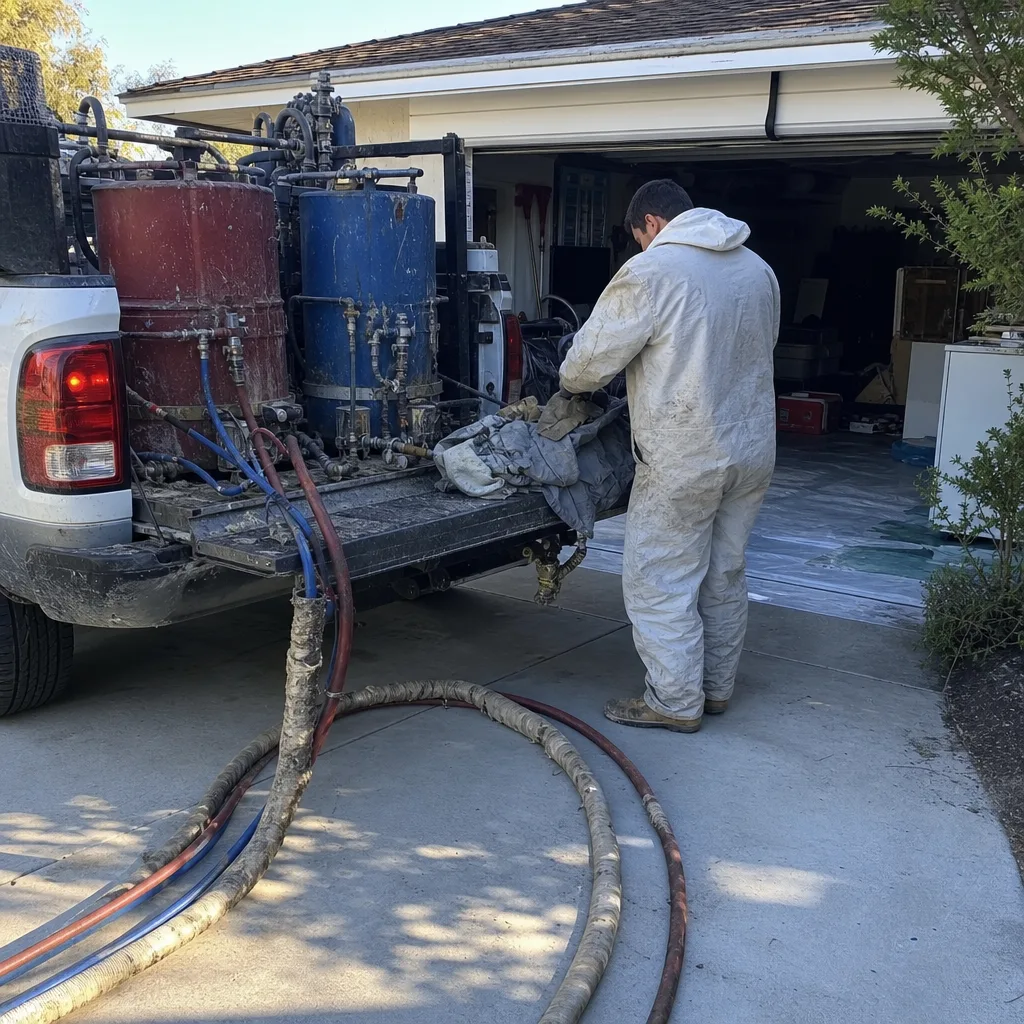
Fast, Reliable Spray Foam Insulation Across Covina
Spray foam insulation in Covina almost always starts with a hot room in July, not a cold one in January. We know this because we work the Covina tracts off Cypress, Lark Ellen, and Badillo regularly, and the pattern repeats: original 1960s attic batts flattened to R-8 or worse, sun-baked south and west roof planes pushing attic air past 140°F, and a back bedroom that hits 92°F by 3 p.m. We’re Placentia Insulation, an insulation-only contractor led by Alan Whitcomb, and we solve the specific radiant-heat problem Covina homes have. Call (855) 773-6429 for a free estimate and we’ll tell you honestly whether spray foam is the fix or something else is.
Why Placentia Insulation Is Covina’s Preferred Spray Foam Insulation Company
Covina homeowners call us for one reason: we match the material to the job, not the job to whatever we have on the truck. Most insulation contractors carry one or two product lines. We carry eight. For spray foam specifically, that means both Icynene open-cell and Demilec closed-cell formulations, which matters in Covina because a roof deck hitting 140°F+ demands closed-cell chemistry, while interior wall cavities in the same home might do better with open-cell. Alan Whitcomb builds every work scope around what the cavity and the roof assembly actually need, and he walks the attic himself before we quote.
The bigger point is specialization. Every crew member, every tool, every conversation we have is about insulation. We’re not a general contractor adding foam onto a kitchen remodel. That focus shows up in the details Covina homeowners notice: we scope and cap unsealed recessed lights and old overhead duct runs before adding a single bag of insulation or spraying a single board foot of foam, because in the older tracts we know those leaks otherwise defeat the whole assembly. Our Spray Foam Insulation team has been in enough Covina attics to know what’s up there before we climb the ladder.
Spray Foam Wall Insulation in Covina
Spray foam wall insulation in Covina is usually specified for two wall types we see constantly: exterior walls in 1950s-60s tract homes that were built with nothing but empty stud cavities, and gable-end walls on homes where an addition or conversion left the old framing exposed to attic heat. The job involves injecting or spraying foam into the cavities to stop the thermal bridge that lets 100°F+ summer air push through the wall assembly into living space. We scope the cavity first, check for existing wiring and blocking, then choose open-cell or closed-cell based on the wall’s moisture exposure and depth.
A typical wall spray in a Covina single-story tract home runs $1,100 – $2,800 depending on wall height, stud cavity depth, and whether walls are opened or foamed through drilled access. That’s the real range we quote; anything dramatically cheaper is usually someone spraying half the cavity depth. Half-depth foam in a Covina west-facing wall doesn’t stop radiant gain, it just slows it by an hour or two.
Why Wall Spray Works Better for Covina’s Older Tracts
Mid-century Covina framing is balloon-framed in many 1950s builds, meaning stud cavities run continuously from crawl to attic with no top or bottom blocking. Seal the bottom and top plates and foam the cavity, and you stop the stack effect that pulls hot attic air down through west-facing walls all afternoon. We check for balloon framing on every Covina quote because failing to catches that and foam underperforms from day one.
Icynene Open-Cell for Wall Cavities
For most Covina wall cavities, we spray Icynene open-cell. It expands into irregular old framing, fills gaps around electrical boxes and blocking, and air-seals without the rigidity that can crack in a settling 1960s wall. If moisture is a concern near a bathroom or at the base of a wall, we move to closed-cell and treat the cavity differently.
Rim Joist Spray Foam in Covina
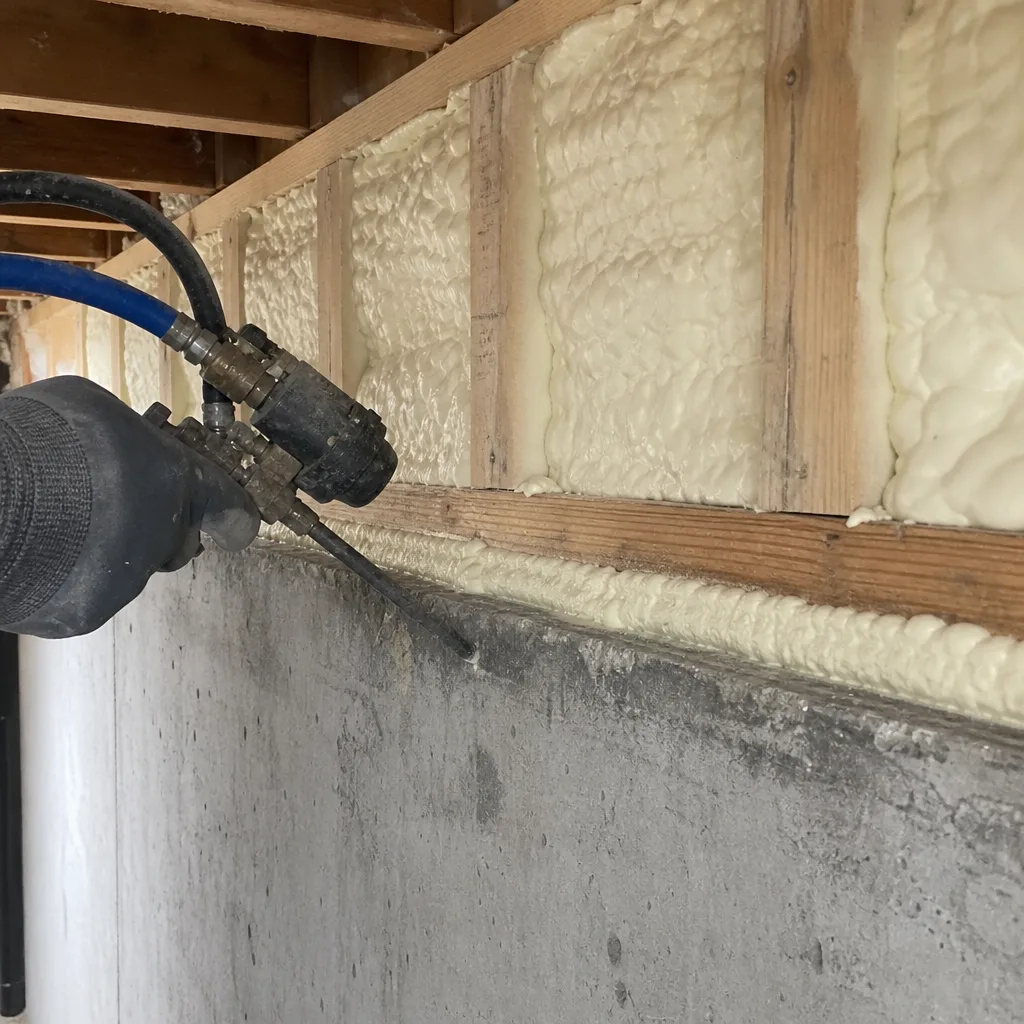
Rim joist spray foam in Covina tackles the perimeter of the home where the floor framing meets the foundation wall. In our Covina service area covering 91722, 91723, and 91724, we see this most often on raised-foundation 1950s-60s tract homes along the streets north of the 10 and south of Badillo, where old fiberglass shoved into rim cavities has slumped, molded, or been pulled out entirely. The job involves removing the degraded material, air-sealing the rim board with closed-cell foam, and bringing the perimeter assembly up to a continuous thermal and air boundary.
A full rim joist spray on a typical Covina single-story raised foundation runs $900 – $2,200, driven by linear footage around the perimeter and the condition of what’s currently in the cavities. If there’s mold, we flag it before we spray; spraying foam over active moisture in a Covina crawlspace just traps it against the framing, and that’s a warranty problem waiting to happen.
Why Rim Joists Matter When the Attic Is Already Foamed
We see this mistake on Covina jobs a lot: a previous contractor foamed the attic deck or blew in new attic insulation, and the homeowner still has hot rooms and a warm floor in summer. The missing piece is usually the rim joists. Hot foothill air pushes through unsealed perimeter cavities, flows up through wall framing, and defeats the whole assembly. Seal the rim joists and the attic work actually starts performing like the numbers said it would.
Demilec Closed-Cell for Rim Cavities
We spray Demilec closed-cell at the rim because Covina crawlspaces get damp in winter and hot in summer, and open-cell absorbs moisture in that environment. Closed-cell at 2 inches air-seals and insulates the rim board in one pass, and it holds up against the ground-moisture swings Covina’s older raised foundations create. Rockwool or mineral wool bats can work here too, but for a true air seal against foothill perimeter leaks, we spec closed-cell.
Trusted Brands We Service in Covina
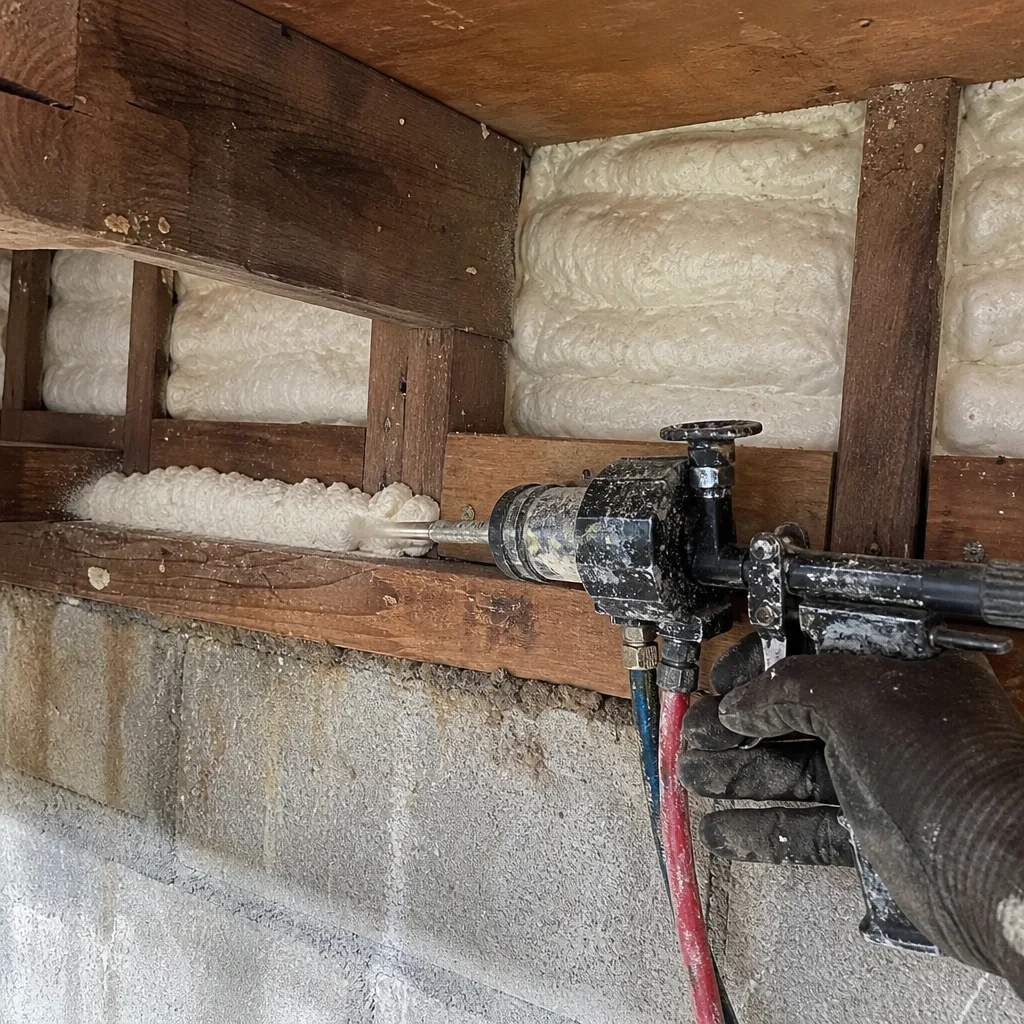
We stock and install both open-cell and closed-cell spray foam in Covina, and we’re set up to work with Icynene for open-cell cavity work and Demilec for closed-cell roof decks, rim joists, and moisture-exposed areas. We also carry Rockwool mineral wool for Covina homeowners who want fire-resistance or sound-dampening at the perimeter instead of foam. Because we carry eight brands across three methods, we don’t push one chemistry on every job. For Covina’s 140°F+ attic heat and older tract construction, the material choice actually matters, and we’ll tell you which one fits your roof plane and framing before we write the scope.
Common Spray Foam Insulation Problems We See in Covina Homes
- Foam sprayed over unsealed recessed lights. In the older Covina tracts near the 91722/91723 line, dozens of homes have recessed lights and old overhead duct runs in the attic. Foam sprayed over those without scoping and capping first traps heat against the wiring and around the fixture, and the back bedroom still bakes at 3 p.m. We find and seal those before any foam goes in.
- Open-cell foam under a sun-baked roof deck. A Covina attic deck facing south or west holds 140°F+ for weeks in July and August. Open-cell sprayed directly under that deck degrades, sags, and pulls away from the sheathing within a few summers. We evaluate roof-deck ventilation and heat exposure before recommending open-cell against a Covina deck; often the answer is closed-cell or a radiant-barrier-plus-blow-in approach instead.
- Balloon-framed walls with open cavities. Many 1950s Covina tract homes are balloon-framed, and wall cavities run open from crawl to attic. Foam injected without sealing top and bottom plates leaves a thermal bypass, and hot foothill air migrates through the wall all afternoon no matter how thick the foam is.
- Rim joists left unsealed while the attic gets foamed. We see this on Covina homes where a previous contractor sprayed the attic but never touched the perimeter. The hot attic air pushes through unsealed rim cavities along the foundation, the walls stay warm, and the homeowner thinks spray foam doesn’t work. It does work, when the perimeter is sealed as part of the same job.
Pricing for Spray Foam Insulation in Covina, CA
Spray foam wall insulation in Covina runs $1,100 – $2,800 for a typical single-story wall section, depending on cavity depth and access. Rim joist spray on a raised-foundation tract home runs $900 – $2,200 for the full perimeter. Attic roof-deck spray, which we quote after inspecting ventilation and deck condition, starts around $2,400 and runs up from there for larger 1960s-70s footprints in 91723 and 91724. What drives cost in Covina specifically is the pre-foam sealing work: scoping and capping old recessed lights, sealing overhead duct runs, and checking for balloon framing all add labor before any foam is sprayed. Skip that step and the foam underperforms. We quote the full scope up front and never surprise you with a sealing charge mid-job. Call (855) 773-6429 for a free estimate; we’ll measure and give you hard numbers, not a ballpark.
We Also Serve Cities Near Covina
Beyond Covina, we run Spray Foam Insulation in Covina and the surrounding foothill communities regularly. Our crews are in Irwindale, Azusa, Citrus, and West Covina every week, and the same attic-heat and mid-century-framing knowledge applies across the whole San Gabriel Valley foothill belt. If you’re on the edge of Covina near the Azusa or West Covina lines, we’re already working your neighborhood.
Serving Covina, CA — Our Local Coverage Area
We’re based in the Covina area and know this community well. Use the map below to see our service coverage — if you’re nearby, we can almost certainly help.
FAQs About Spray Foam Insulation in Covina
Covina’s southern and western roof planes bake under summer sun and push attic air past 140°F, which heats the back bedrooms first; homeowners notice the problem when the room hits 92°F at 3 p.m. and call then. Winter in Covina is too mild to drive insulation calls, so the phone rings in July and August. Call (855) 773-6429 and we’ll tell you whether spray foam, a radiant barrier, or attic sealing is the actual fix before you spend anything.
Yes, but we scope and cap the recessed lights and seal the duct runs first; spraying foam over leaking fixtures and ducts in a Covina tract attic traps heat against wiring and buries the leak. We do that work as part of the same job so the foam actually performs. If another contractor quotes foam without asking about your recessed lights, push back.
Yes, closed-cell foam like Demilec holds up under sustained 140°F+ attic heat far better than open-cell, which can sag and pull away from the sheathing; we evaluate deck ventilation and sun exposure before specifying either chemistry. For Covina south- and west-facing roof planes, closed-cell is usually the right call if you’re spraying the deck.
A rim joist spray seals the perimeter cavities where the floor framing meets the foundation, stopping hot foothill air from pushing through the walls; an attic spray addresses the ceiling plane and roof deck. Covina raised-foundation tract homes often need both done together, because sealing the attic while the rim joists stay open leaves the assembly leaking at the perimeter. We’ll scope both when we walk your home.
Spray foam alone rarely fixes a hot back bedroom in a 1960s Covina tract home, because the heat is usually coming from the sun-baked roof plane, not just the attic air; the fix often requires foam at the roof deck or a radiant-barrier-plus-blow-in approach with the attic sealed first. We’ll measure the actual temperatures and tell you what your home needs, not what we happen to stock. Call (855) 773-6429 for a free attic evaluation.
We sprayed the sloped roof deck and gable walls of a 1962 single-story tract home off Cypress Street near the 91722/91723 line, where the original R-8 batts had flattened and the back bedroom was hitting 92°F by mid-afternoon. Our tech scoped and capped two unsealed recessed lights and an old overhead duct run first, then applied Icynene closed-cell to the deck and GreenFiber blow-in over the flat ceiling field so the radiant load off the sun-baked roof stopped cooking the room. That’s the sequence that works in Covina: seal the leaks, then address the radiant load, then add insulation. Skip the first step and the third step underperforms no matter what you spray.
If you’re in Covina and tired of July heat turning your back bedrooms into ovens, call Placentia Insulation at (855) 773-6429. We’ll inspect the attic, the rim joists, and the roof plane, and give you a straight answer about whether spray foam is right for your home, and exactly what it will cost. Free estimates, no pressure.
Written by Alan Whitcomb, Owner at Placentia Insulation, serving Covina and the San Gabriel Valley foothill communities.