
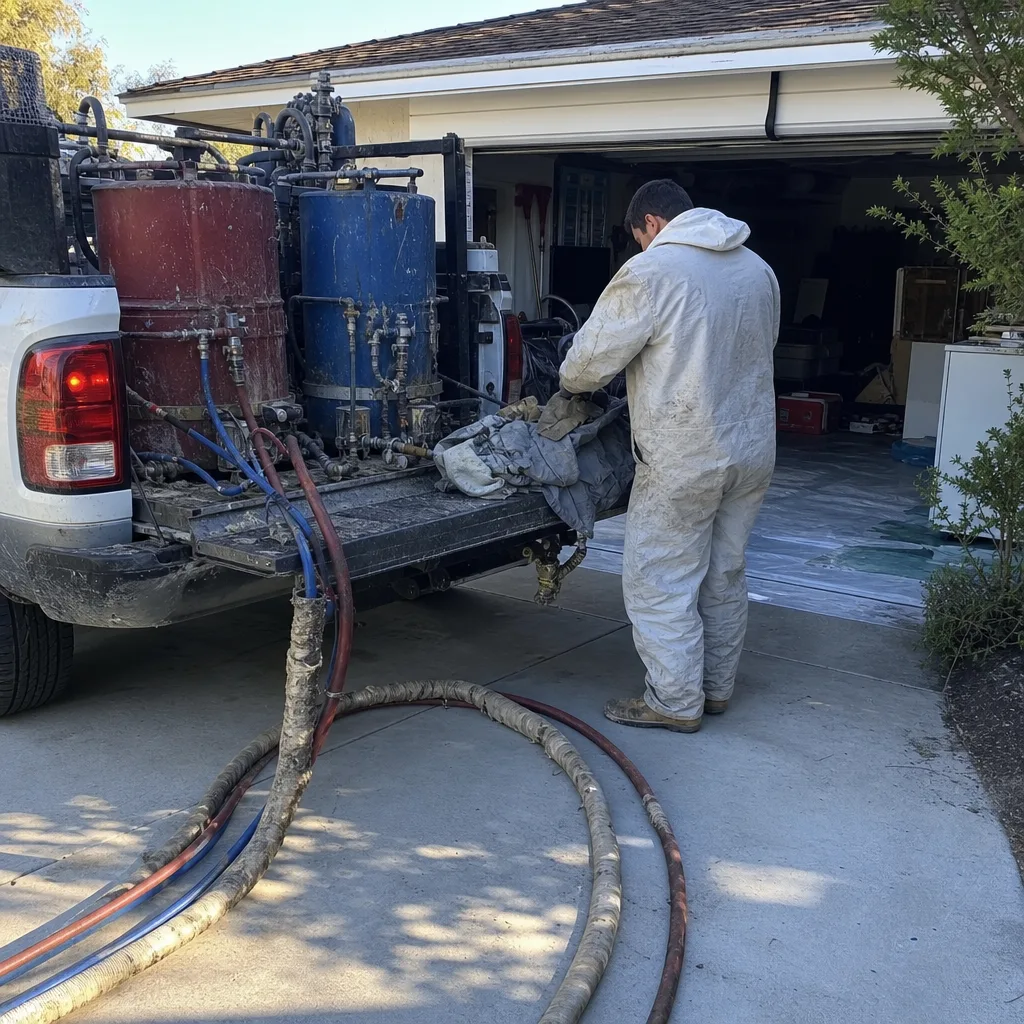
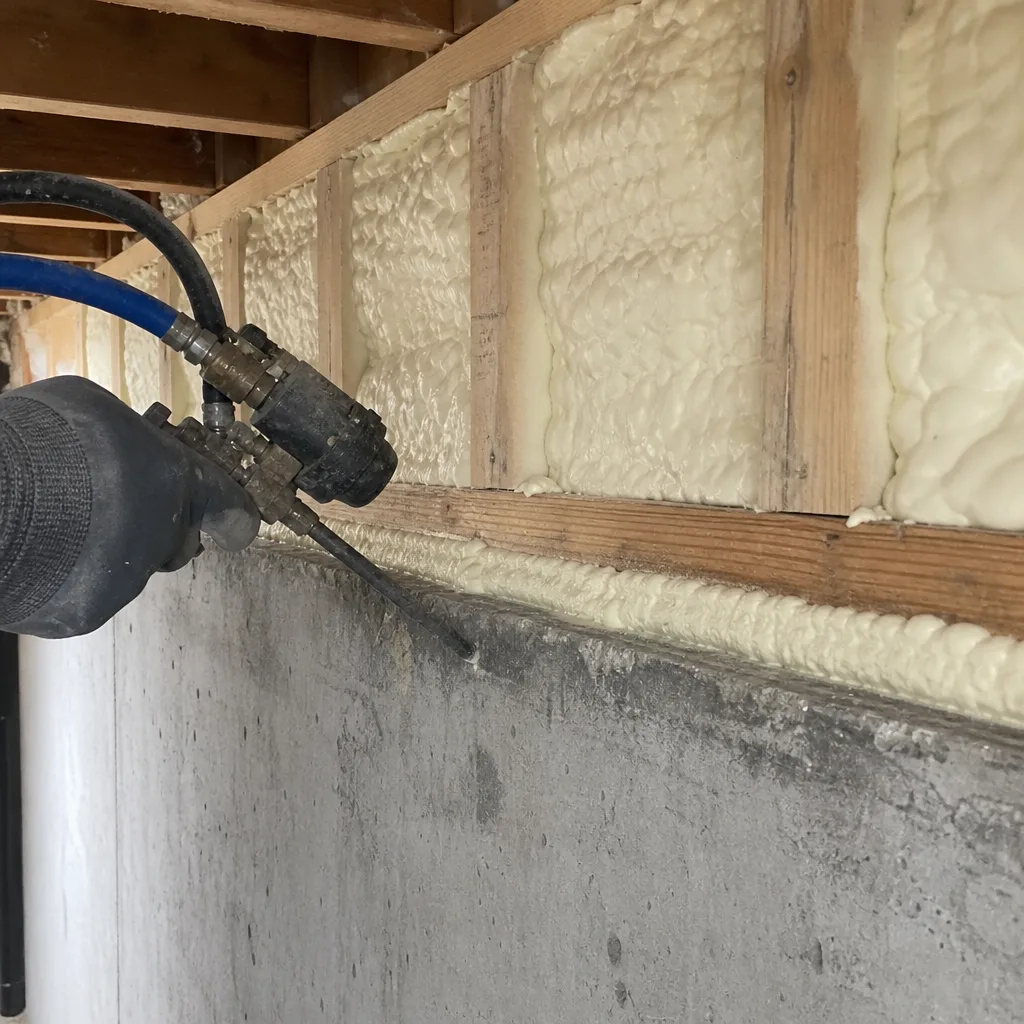
Fast, Reliable Spray Foam Insulation Across Encino
Spray foam insulation in Encino typically runs $2.50 to $7.00 per board foot depending on whether you need open-cell or closed-cell foam, and most attic jobs in the 91316 flats finish in one to two days. The real question for Encino homeowners isn’t whether foam works in the Valley heat. It’s whether you’re getting the right kind of foam for a low-pitch ranch roof versus a hillside vaulted ceiling, because those two homes need completely different specs. Placentia Insulation has been spraying both Icynene and Demilec foams across Encino long enough to know exactly which chemistry belongs where. Call (855) 773-6429 for a free estimate on your Encino home.
Why Placentia Insulation Is Encino’s Preferred Spray Foam Insulation Company
We’re an insulation-only contractor, which means every crew member who pulls up to your Encino home spends their entire working life thinking about air sealing, R-values, and moisture control. Not plumbing. Not roofing. Just insulation, and specifically spray foam in the San Fernando Valley’s punishing summer conditions. Alan Whitcomb built Placentia Insulation around a simple idea: match the material to the job, not the job to whatever’s on the truck.
Encino’s housing stock runs from 1950s flat-lot ranches off Ventura Boulevard to large contemporary builds in the hills above 91436. That range demands more than one foam product and more than one installation method. Most insulation contractors in the Valley carry one or two product lines. We carry eight brands, including Icynene and Demilec spray foam systems, so the recommendation you get is based on your house, not our inventory constraints. Our Spray Foam Insulation team has worked in every corner of Encino, from the tract homes near Louise Avenue to the hillside properties off Mulholland Drive.
Closed Cell Spray Foam Insulation in Encino
Closed cell spray foam insulation is the workhorse for Encino’s low-pitch ranch roofs and hillside vaulted ceilings, because it delivers R-7 per inch while also adding structural rigidity to older wood framing. This is the foam we specify when a 1950s or 1960s Encino home has a shallow attic cavity that can’t accommodate thick batts without choking the eave ventilation. A typical closed-cell roof deck job in Encino runs $4.50 to $7.00 per board foot, with most flat-lot ranch attics landing between $6,500 and $14,000 depending on square footage and access.
Low-Pitch Roof Deck Sealing
On Encino’s ranch tracts, the attic space is often only 18 to 24 inches deep at the eaves. Blowing more fiberglass into that cavity accomplishes almost nothing, because the radiant heat load from a 150°F roof deck bakes the batts from above. Closed-cell foam applied directly to the underside of the roof deck seals the cavity entirely, stopping both the heat gain and the dust infiltration that plagues older homes near Sepulveda Basin.
Hillside Vaulted Ceiling Applications
In 91436 hillside homes with exposed-beam tongue-and-groove ceilings, closed-cell foam does double duty. It insulates the roof deck while adding shear strength to the structure, which matters on steep lots where the framing carries unusual load patterns. We typically pair closed-cell foam with a vapor barrier on these jobs to prevent the moisture accumulation that can rot decking from the inside out.
Open Cell Spray Foam in Encino
Open cell spray foam is the right call for Encino homeowners who need air sealing and sound dampening at a lower material cost, especially in interior walls, floor cavities, and areas where the foam won’t face direct moisture exposure. At R-3.5 to R-3.7 per inch, open-cell expands aggressively into tight framing cavities, which makes it ideal for retrofit work in older wood-framed Encino homes with irregular stud spacing. Expect to pay $2.50 to $4.00 per board foot for open-cell applications, with typical wall cavity jobs in 91316 and 91416 landing between $3,000 and $8,000.
Interior Wall and Floor Cavity Work
Encino’s older ranch homes often share walls with neighbors or sit close enough to busy streets like Balboa Boulevard that noise becomes a daily annoyance. Open-cell foam’s sound-dampening properties are a real upgrade in these situations. The foam expands to fill every void, eliminating the hollow-wall drum effect that transmits street noise and neighbor noise straight through the framing.
Attic Air Sealing Without Roof Deck Foam
Not every Encino attic needs full roof deck encapsulation. When the attic floor already has some fiberglass but air leakage is driving the energy bill, open-cell foam on the attic floor penetrations and kneewalls delivers meaningful improvement without the cost of full deck foam. This approach works well on flat-lot ranch homes where the attic is genuinely attic space, not a shallow cavity.
Trusted Brands We Service in Encino
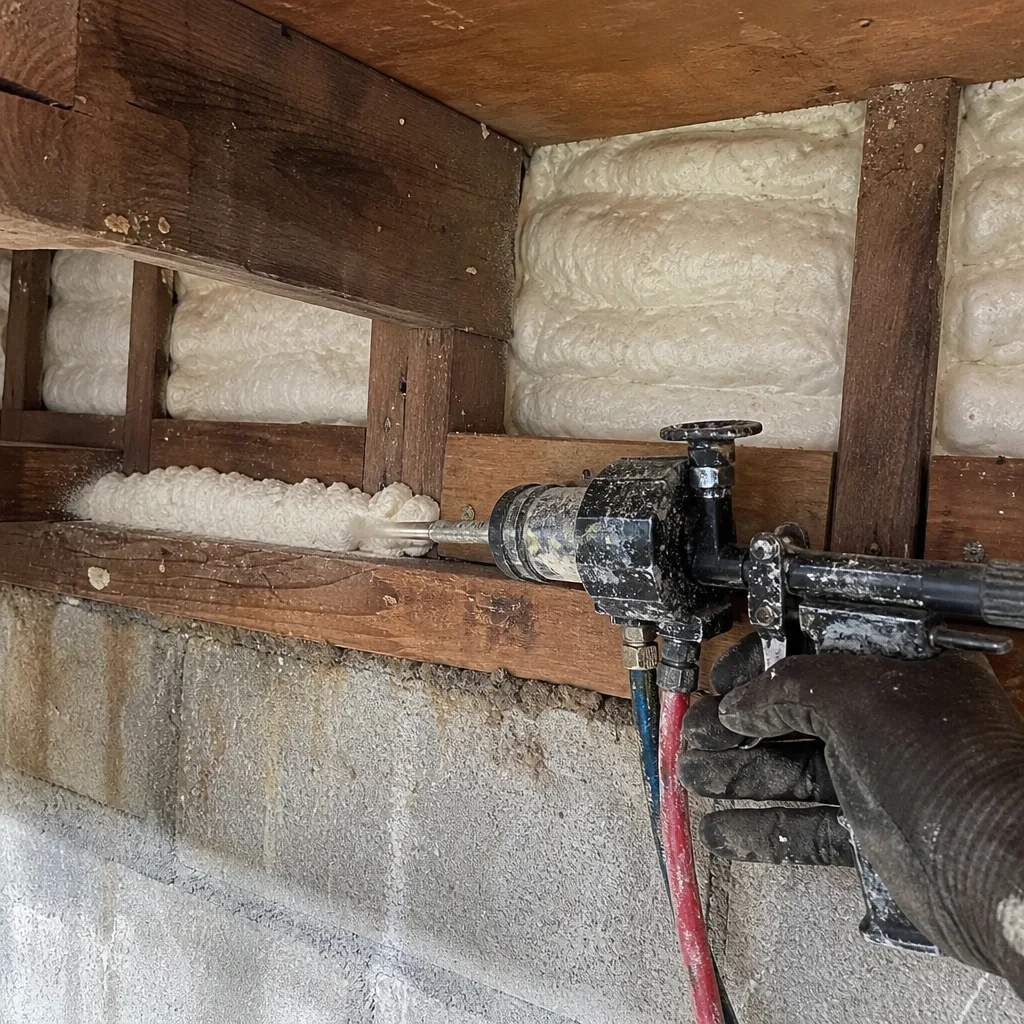
We stock and install Icynene open-cell and closed-cell foam systems alongside Demilec closed-cell products, which gives Encino homeowners access to two of the most recognized spray foam manufacturers in the industry. The choice between them comes down to application: Demilec’s closed-cell formulas deliver exceptional compressive strength for roof deck and foundation work, while Icynene’s open-cell product expands more aggressively for retrofit wall cavities. Because we carry both lines in active inventory, you won’t wait a week for material to ship while your Encino attic keeps baking. We also maintain stock of CertainTeed and GreenFiber products for hybrid approaches where spray foam pairs with traditional insulation in specific zones.
Common Spray Foam Insulation Problems We See in Encino Homes
- Delaminated foam on dusty old framing. Encino’s diurnal temperature swings, hot afternoons followed by cool nights, cause foam to expand and contract repeatedly. If the substrate isn’t properly cleaned before spraying, the foam separates from 60-year-old dusty framing, creating air channels that defeat the whole purpose. We see this constantly in 1950s tract homes where previous contractors skipped surface prep.
- Over-thick foam on low-pitch roof decks. Spraying closed-cell foam too thick on a low-slope Encino roof traps heat in the shingle layer. The foam insulates the deck from below, so shingles can’t shed heat downward, and summer surface temperatures climb high enough to warp or prematurely age the roofing material. This is a spec error we correct regularly.
- Open-cell foam against tongue-and-groove decking without a vapor barrier. In hillside 91436 homes with vaulted exposed-beam ceilings, open-cell foam sprayed directly on the back of the wood decking absorbs moisture from temperature differentials. Without a vapor barrier, that moisture sits against the wood and feeds rot. We’ve opened up ceilings in Encino hillside homes where this exact mistake had been festering for years.
- Foam cracking in earthquake-prone retrofits. Homes near the fault lines that run through the Santa Monica Mountains experience more structural movement than flat-lot houses. Closed-cell foam, while rigid, can crack if the framing shifts significantly. This is why we assess the home’s structural condition before specifying the foam density, especially in hillside 91436 properties.
Pricing for Spray Foam Insulation in Encino, CA
Closed-cell spray foam in Encino runs $4.50 to $7.00 per board foot, while open-cell lands between $2.50 and $4.00 per board foot. A full attic roof deck encapsulation on a 1,500-square-foot ranch in 91316 typically costs $7,000 to $15,000. Wall cavity retrofit work on the same home might run $4,000 to $9,000 depending on how much of the original stucco exterior you’re willing to open up. Hillside homes with vaulted ceilings cost more because access is harder and the foam specs are more demanding. Labor rates in the San Fernando Valley are competitive, so the difference between bids usually comes down to foam thickness and surface prep quality. Call (855) 773-6429 for a free estimate. We’ll walk your property, measure the cavities, and give you a written number before you commit to anything.
We Also Serve Cities Near Encino
Placentia Insulation covers Encino and the surrounding San Fernando Valley communities, including Sherman Oaks, Van Nuys, Valley Glen, and Northridge. Our crews are on the road across the Valley most days, which means scheduling a spray foam job in Encino doesn’t require waiting for a special trip. Call (855) 773-6429 to check availability this week.
Serving Encino, CA — Our Local Coverage Area
We’re based in the Encino area and know this community well. Use the map below to see our service coverage — if you’re nearby, we can almost certainly help.
FAQs About Spray Foam Insulation in Encino
Spray foam seals the attic cavity while it insulates, which fiberglass cannot do. In Encino’s low-pitch ranch roofs, the shallow attic space reaches 150°F or higher in summer, and that radiant heat bakes fiberglass batts until their effective R-value drops significantly. Closed-cell foam applied to the roof deck stops the heat before it enters the cavity. And because foam expands to fill every void, it seals the kneewalls and eave areas that are nearly impossible to insulate uniformly with batts. Call (855) 773-6429 for an assessment of your specific attic.
Yes, you can spray foam directly against the back of the tongue-and-groove decking without removing any wood, provided the foam is closed-cell and paired with a proper vapor barrier. This is the standard approach for hillside Encino homes with exposed-beam ceilings. The closed-cell foam adheres to the decking, insulates the cavity, and adds structural rigidity. Skipping the vapor barrier on this type of ceiling is a common mistake that leads to moisture accumulation and eventual wood rot, so we always include it in the spec. Call (855) 773-6429 to discuss your ceiling construction.
Open-cell foam is lighter, expands more aggressively into tight cavities, and costs less, but delivers only R-3.5 to R-3.7 per inch and absorbs moisture. Closed-cell foam is denser, delivers R-7 per inch, blocks moisture, and adds structural strength to old wood framing. For Encino’s low-pitch roof decks, closed-cell is almost always the right call because the attic cavity is shallow and you need maximum R-value per inch. Open-cell works well for interior walls, floor cavities, and sound dampening applications. Call (855) 773-6429 for a recommendation based on your specific house.
Spray foam handles Encino’s diurnal temperature swing by creating a continuous air barrier that stops the afternoon heat bake and the overnight heat bleed. Closed-cell foam on the roof deck prevents the attic from turning into an oven that radiates heat down into the living space all afternoon. Then at night, when Encino temperatures drop into the 60s, the same air barrier keeps the conditioned air inside instead of letting it escape through thousands of small framing gaps. This is the main reason foam outperforms fiberglass in the San Fernando Valley climate. Call (855) 773-6429 to discuss how foam would perform on your home.
No, you don’t need to remove old fiberglass insulation before spraying foam, but you do need to assess what condition it’s in and where it sits. In many Encino ranch attics, the original fiberglass batts are compressed, dusty, and sitting directly under the roof deck where they’re doing almost nothing. In those cases, we remove the old material because it’s in the way and it’s not contributing any R-value. If the fiberglass is in decent shape and located where it belongs, on the attic floor, we can often spray foam around it or use a hybrid flash-and-batt approach. Call (855) 773-6429 and we’ll tell you what you actually need after seeing the attic.
Written by Alan Whitcomb, Owner at Placentia Insulation, serving Encino and the San Fernando Valley.