
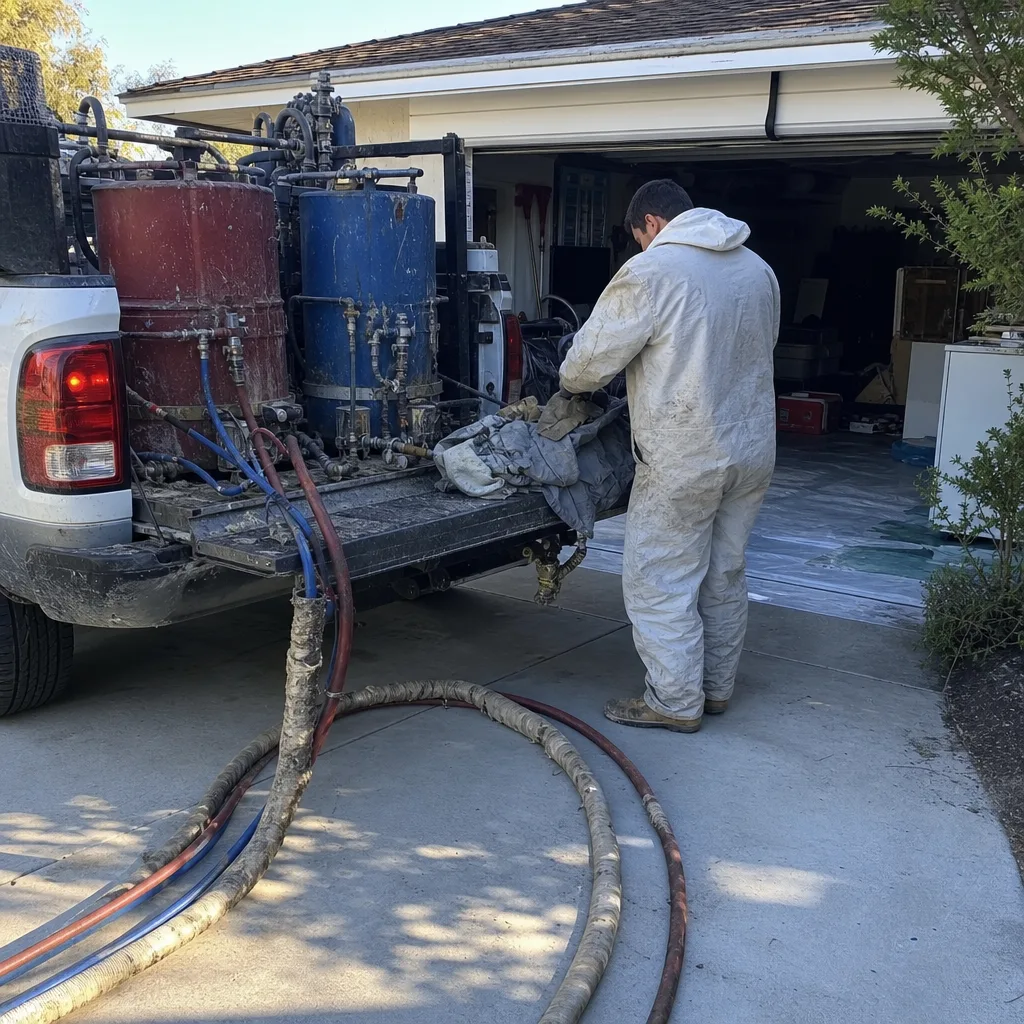
Fast, Reliable Spray Foam Insulation Across Garden Grove
Spray foam insulation in Garden Grove typically costs $2.50 to $6.50 per square foot installed, with most whole-wall retrofits in the 92840 and 92841 tracts landing between $4,800 and $11,500 depending on foam type and access. We’re Placentia Insulation, and we work in Garden Grove weekly, usually arriving within 24 to 48 hours of your call. If you’re tired of rooms that feel like ovens by 3 p.m. in August, or winter nights where the heat runs constantly, call Alan Whitcomb and our team at (855) 773-6429 for a free estimate.
This isn’t a generic insulation pitch. Garden Grove’s housing stock is specific: thousands of mid-century tract ranches with stucco exteriors, slab foundations, and walls that were never insulated. The retrofit approach we use here, especially around Nelson Street, Brookhurst, and the neighborhoods west of Euclid, is different from what works in newer Orange County developments. We’ll get into that below.
Why Placentia Insulation Is Garden Grove’s Preferred Spray Foam Insulation Company
We’re not a general contractor who fits in insulation between kitchen remodels. Insulation is the entire job. Every truck, every crew member, every conversation we have in Garden Grove is about one thing: getting the right material into the right cavity the right way. That single-trade focus matters when you’re drilling into 60-year-old stucco or working in a low attic where one wrong move blocks a soffit vent.
We carry open-cell and closed-cell foam from Icynene and Demilec, two of the most specified spray foam brands in North American building science. Most insulation crews in Orange County stock one foam chemistry and push it on every job. We match the material to the house. A tight wall cavity in a 1950s ranch on a slab gets a different foam than a vented attic in a 1960s two-story. That decision changes how comfortable the house feels and how long the assembly lasts.
Garden Grove homeowners call us because they’ve heard the same thing from neighbors: this company actually explains what they’re doing, why they’re drilling there, and what the foam will and won’t fix. We don’t sell a miracle. We sell an air seal and a thermal break, and we can show you exactly where the heat was getting in before we started. Alan Whitcomb has built the business around that transparency, and it’s why our Garden Grove jobs come mostly from referrals on streets we’ve already worked.
Closed Cell Spray Foam Insulation in Garden Grove
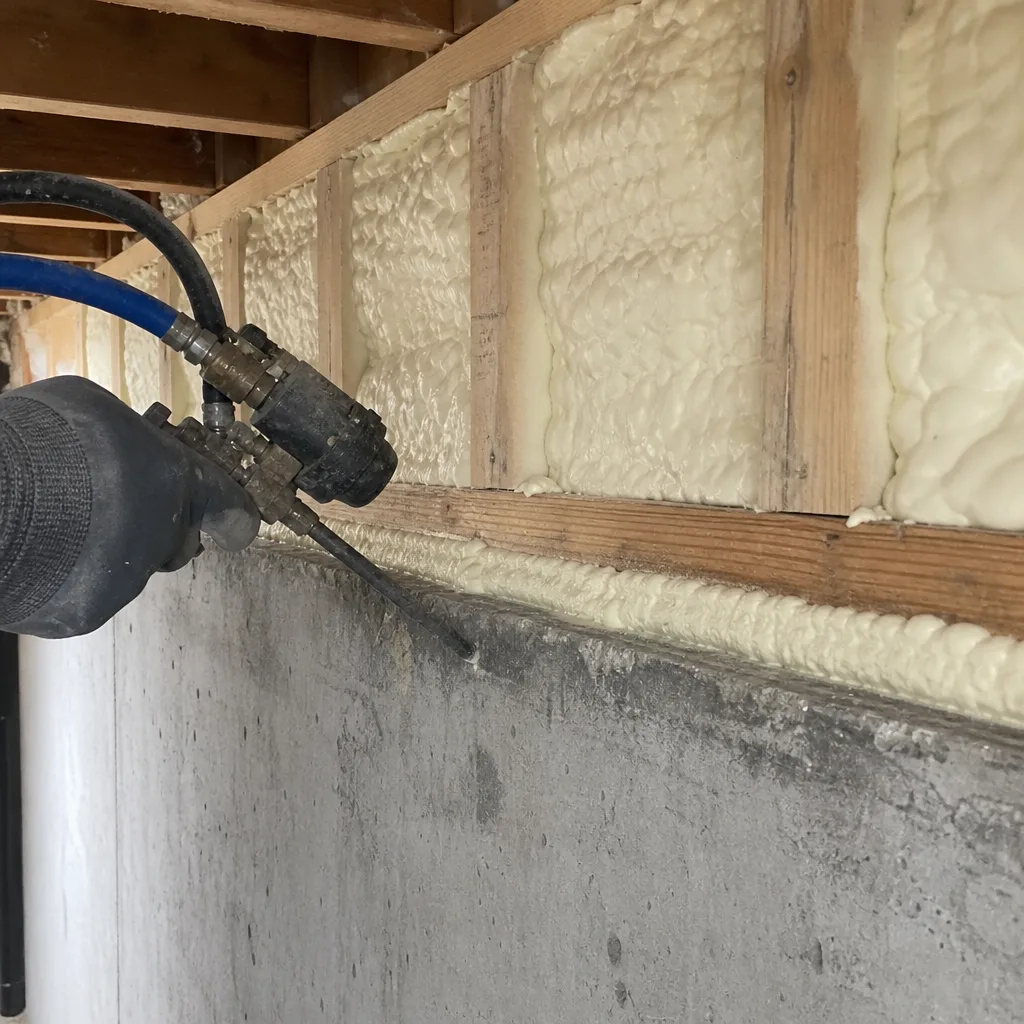
Closed Cell Spray Foam Insulation is the heavier, denser option, and for many Garden Grove homes it’s the correct choice where walls are shallow and moisture is a real concern. Closed cell foam expands to about 1 inch of thickness and hardens into a rigid, structural-grade air barrier. It carries an R-value of roughly 7 per inch, which means a 2×4 wall cavity in a Garden Grove ranch can reach R-20 or better, something original fiberglass batts never came close to achieving. We stock Demilec closed cell foam specifically for retrofit wall applications in the 92840, 92841, 92842, and 92843 ZIP codes.
Closed cell foam in Garden Grove typically costs $3.50 to $6.50 per square foot. A standard wall cavity retrofit on a 1,100 sq ft ranch runs about $7,500 to $10,500, including the drilling through stucco, the moisture barrier work, foam injection, and patching. Attic lid applications land closer to $3.00 to $4.50 per square foot, depending on access and roof pitch.
Where Closed Cell Makes Sense
Homes in the older Garden Grove tracts, especially 92840 and 92841, were built with raw stucco over studs and no sheathing. That wall system behaves differently than a modern plywood-sheathed wall. Closed cell foam’s rigidity and air-sealing properties actually reinforce the wall and stop outdoor air from moving through the stucco’s micro-cracks. If you’ve ever felt a draft coming through an electrical outlet in one of these old tract houses, that’s the wall breathing.
What to Expect During Installation
For a wall retrofit, we drill 5/8-inch holes through the exterior stucco or through interior drywall, depending on the siding and the homeowner’s preference. Closed cell foam goes in slowly, at a controlled rate, so it doesn’t over-expand and bow the wall. The holes get patched and color-matched. When the original stucco has no sheathing behind it, the foam is doing double duty: insulating and acting as the wall’s first real air barrier since the house was built in 1958.
Open Cell Spray Foam in Garden Grove
Open Cell Spray Foam is the lighter, more expansive option that’s often better suited to attic rooflines and rim joists in Garden Grove homes. Open cell foam expands to fill the entire cavity, about 3 inches per pass, and settles at R-3.7 per inch. It’s not a moisture barrier, which is actually a benefit in vented attics where you want the roof deck to breathe. We use Icynene open cell for most of our Garden Grove attic ceiling and roof deck applications.
Open cell spray foam in Garden Grove typically runs $2.50 to $4.50 per square foot. A standard low-clearance attic with R-11 batts getting a full open cell upgrade on the roof deck runs about $4,500 to $7,000 for a 1,000 sq ft attic floor footprint. Rim joist sealing in the crawlspace or on a slab edge starts around $1,200 to $2,400 for an average ranch.
Fixing the Hot Attic Problem
Garden Grove sits about 10 miles from the coast. Summers are warm, not scorching, but an uninsulated attic roof deck still radiates heat into the house all afternoon. Open cell foam sprayed directly to the underside of the roof deck stops that radiant heat at the source. We see attic temperatures in these mid-century ranches drop from 140°F to within a few degrees of the living space after an open cell application.
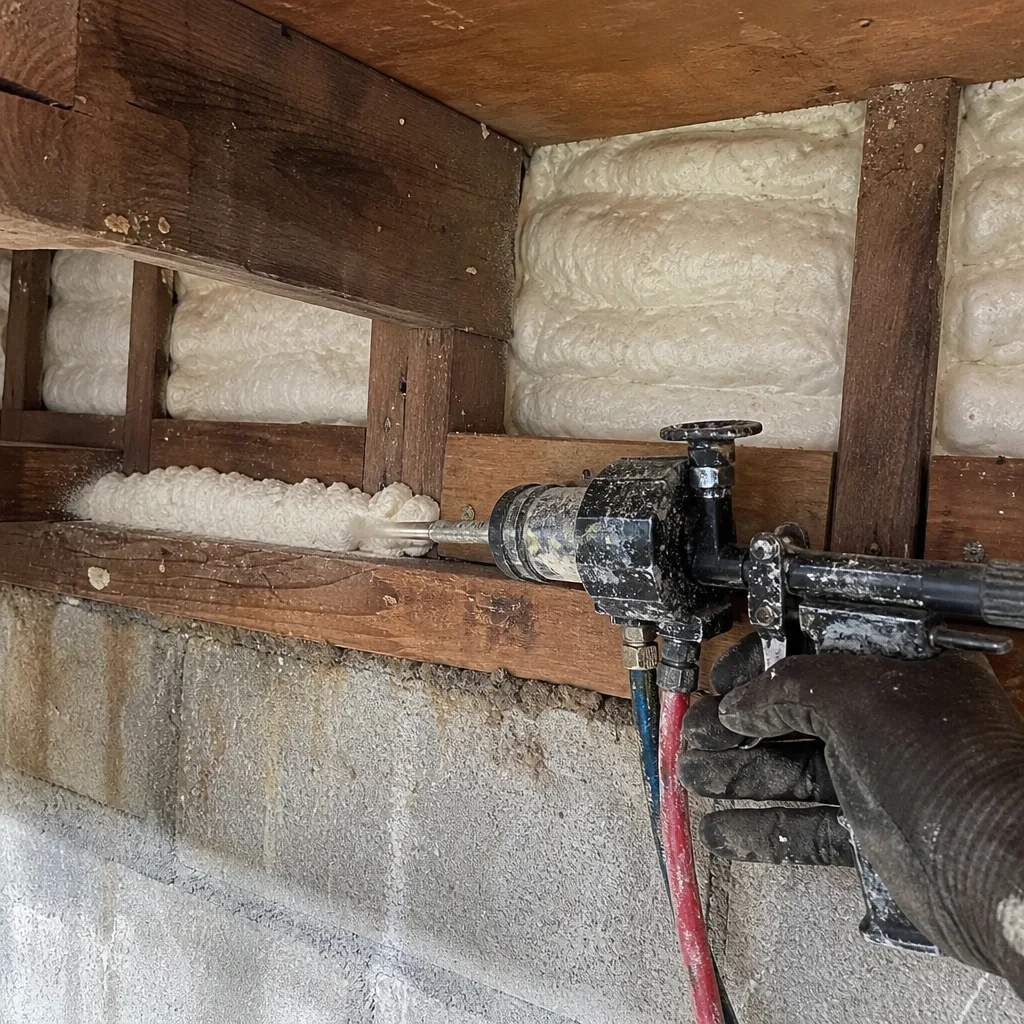
Low-Clearance Attic Work
Many Garden Grove ranches have attics you can barely crawl through, with 4:12 or flatter pitches and maybe 30 inches of clearance at the peak. Open cell foam works well here because it’s applied with a long-reach gun and expands gently into place. The key is not burying the soffit vents, which we protect with baffles before spraying. That detail is the difference between a roof deck that lasts and one that rots from trapped condensation.
Trusted Brands We Service in Garden Grove
We keep two foam chemistries on the trucks that run Garden Grove routes: Icynene open cell and Demilec closed cell. These aren’t the only brands we work with. Placentia Insulation stocks eight product lines across the insulation trade: Owens Corning, Johns Manville, Knauf, Rockwool, CertainTeed, Icynene, Demilec, and GreenFiber. For a Garden Grove homeowner, that breadth matters. If we assess your attic and determine that blown-in GreenFiber cellulose under the floor makes more sense than foam on the roofline, we can do that the same week without bringing in another contractor. If Rockwool mineral wool is the better call for a garage conversion or a soundproofing job on a shared wall, we have it in the warehouse, not on a six-week order. Most insulation contractors carry one or two product lines. We carry eight, because a 1955 stucco ranch in Garden Grove has different needs than a 2020 build in Irvine, and one foam chemistry can’t serve both.
Common Spray Foam Insulation Problems We See in Garden Grove Homes
- Moisture trapped against stucco with no sheathing. In the 92840 and 92841 tracts, original stucco often sits directly on studs. Foam injected without a moisture barrier can trap condensation against the stucco’s inner face, which leads to hidden rot inside the wall cavity. We always install a barrier before injecting closed cell foam in these homes.
- Hairline cracks along stucco patch lines. Drill-and-fill retrofit work on original stucco leaves patch marks. If the holes are oversized or the patching compound is applied incorrectly, hairline cracks radiate outward within a year or two. We use small-diameter holes and a flexible patch compound that moves with the stucco through Garden Grove’s temperature swings.
- Blocked soffit vents from over-sprayed foam. Tight, low-clearance attics in mid-century ranches have minimal venting to begin with. A contractor who sprays foam thick near the eaves can seal off the soffit vents entirely. Trapped moisture then condenses on the roof deck, shortening shingle life and encouraging mold. Baffles are non-negotiable on our Garden Grove attic jobs.
- Foam shrinkage from poor application temperatures. Closed cell foam needs the substrate to be within a specific temperature range to cure properly. Spraying when it’s too cool, especially on winter mornings when Garden Grove dips into the 40s, can cause shrinkage and loss of adhesion. We schedule foam work in the right temperature window, which is one reason our jobs in Garden Grove tend to be planned rather than rushed.
We recently sprayed closed cell foam in a 1950s ranch on Nelson Street in Garden Grove’s 92841 ZIP code. The homeowner had original stucco with no sheathing behind it, so we drilled small access holes, inserted a moisture barrier against the stucco’s inner face, and injected Demilec closed cell foam to create a continuous air seal. The result was a noticeably cooler attic and a September energy bill that dropped by over a third. That’s the kind of job this housing stock demands, and it’s the kind of job we’re set up to do correctly.
Pricing for Spray Foam Insulation in Garden Grove, CA
Spray foam pricing in Garden Grove breaks down by application. Wall cavity retrofits with closed cell foam run $3.50 to $6.50 per square foot, with most 900 to 1,400 sq ft ranches landing between $6,000 and $10,500 for full wall coverage. Open cell attic roof deck work runs $2.50 to $4.50 per square foot, so a typical 1,000 sq ft attic comes in at $4,500 to $7,000. Rim joist sealing on a slab foundation is a smaller job, usually $1,200 to $2,400. Garage ceiling spray foam, common in Garden Grove’s attached garages, runs $1,800 to $3,500 including prep. The main cost variables are stucco patching complexity, attic clearance, and whether the walls need a moisture barrier, which is standard on the no-sheathing homes we see throughout 92840 and 92841. Every estimate is free, and we give you a written number before any work begins. Call (855) 773-6429 and we’ll schedule a walkthrough, usually within a day or two.
We Also Serve Cities Near Garden Grove
Our crews run routes through Stanton, Westminster, Midway City, and Cypress every week, so response times to Garden Grove neighborhoods are short. If you’re in any of those surrounding cities, the same team handles the work. For a full picture of what we do throughout the area, see our Spray Foam Insulation service page, or if you’re focused on this specific community, our Spray Foam Insulation in Garden Grove page covers the local details in depth.
Serving Garden Grove, CA — Our Local Coverage Area
We’re based in the Garden Grove area and know this community well. Use the map below to see our service coverage — if you’re nearby, we can almost certainly help.
FAQs About Spray Foam Insulation in Garden Grove
Yes. Wall cavity retrofits on Garden Grove’s stucco-sided ranches require drilling access holes through the stucco, then patching each hole after the foam cures. On homes in 92840 and 92841 where the stucco has no sheathing behind it, we use small-diameter holes and a flexible patch compound that resists hairline cracking. The patch lines are visible up close for the first few months, then blend as the stucco weathers. Call (855) 773-6429 and we’ll walk you through exactly what the exterior will look like after the job.
Yes, but it requires baffles. In Garden Grove’s tight mid-century attics, where the peak clearance is often under 3 feet, the risk of sealing off soffit vents is real. We install baffles before spraying any foam near the eaves, which keeps the venting path open while the foam seals the roof deck itself. A properly baffled open cell application drops attic temperatures dramatically without trapping condensation. This isn’t optional on the ranch-style homes we work on in Garden Grove, it’s standard procedure.
Open cell foam is lighter, expands to fill the full cavity, and costs $2.50 to $4.50 per square foot. It’s usually the right choice for attic roof decks and rim joists. Closed cell foam is denser, carries about twice the R-value per inch, and acts as a moisture and air barrier. It runs $3.50 to $6.50 per square foot and is the better choice for the uninsulated 2×4 walls in Garden Grove’s older stucco tracts, where wall depth is limited and moisture resistance matters. For a free assessment of which foam fits your specific house, call us at (855) 773-6429.
Spray foam stops heat at the attic, not at the ceiling. On a warm Garden Grove afternoon, an uninsulated attic roof deck can reach 140°F or more. That heat radiates downward into the living space and forces the AC to work harder. Open cell foam sprayed directly to the underside of the roof deck brings the attic temperature down to within a few degrees of the house itself, which means the cooling system isn’t fighting a hot attic all day. Homeowners in Garden Grove’s older tract homes typically notice the difference the first warm week after installation.
Yes. We stock Icynene open cell and Demilec closed cell foam, and we select between them based on the application rather than defaulting to whichever is cheaper or easier to source. For wall cavity work on Garden Grove’s no-sheathing stucco homes, closed cell from Demilec is usually the right call. For attic roof deck work, Icynene open cell typically performs better. If we assess the house and determine a different material, like Rockwool or GreenFiber cellulose, fits the job better, we’ll tell you that too, it’s the advantage of being an insulation specialist with eight product lines instead of a single-brand shop.
If you’re in Garden Grove and ready to stop losing cool air through uninsulated walls and a hot attic, call Alan Whitcomb and the Placentia Insulation team at (855) 773-6429. Estimates are free, and we’ll give you a straight answer about what your house needs and what it costs.
Written by Alan Whitcomb, Owner at Placentia Insulation, serving Garden Grove and surrounding Orange County communities.