
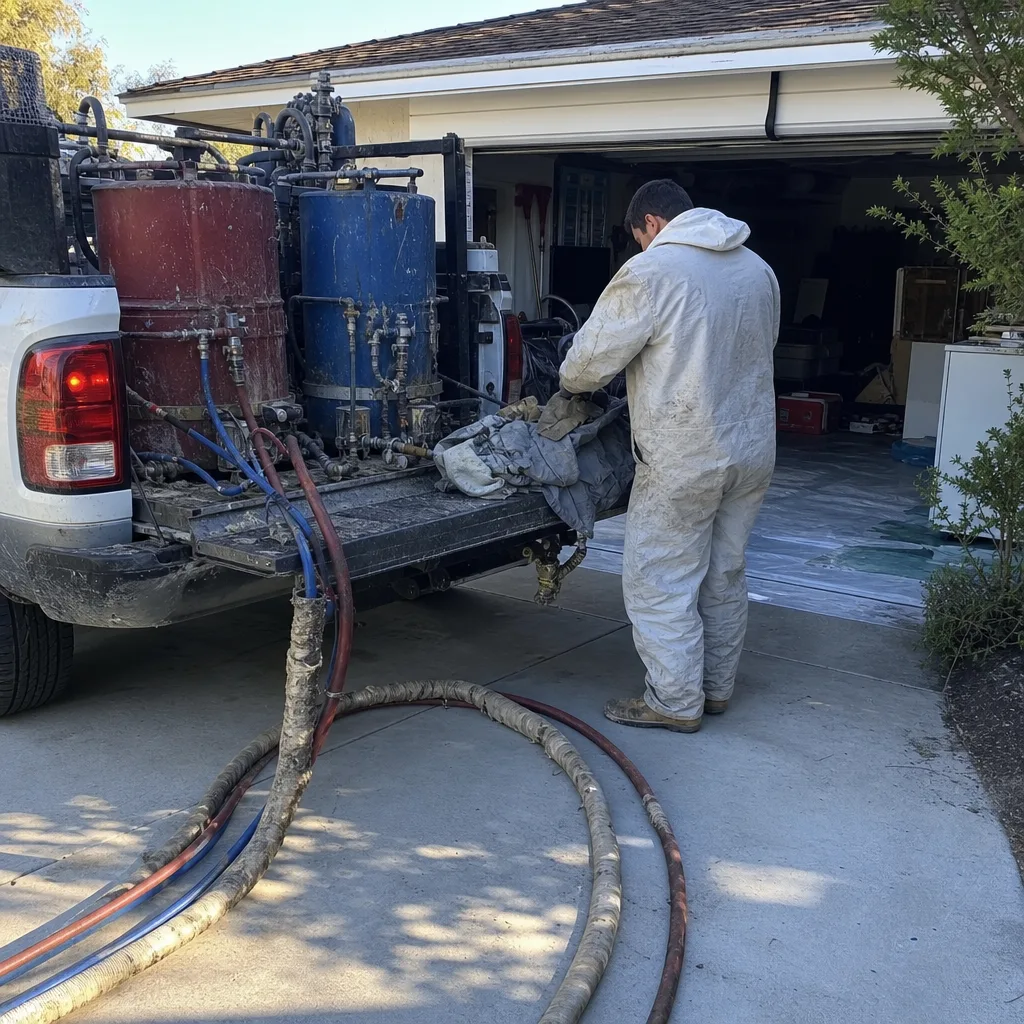
Fast, Reliable Spray Foam Insulation Across Long Beach
Long Beach homes fight a moisture problem most of Southern California doesn’t face. The marine layer rolls in most nights, saturates attics and wall cavities, and quietly rots sheathing while homeowners wonder why rooms feel clammy and energy bills creep up. Spray foam insulation in Long Beach solves this differently than fiberglass ever can: it air-seals and insulates in one pass, blocking the fog-driven air that carries moisture into your home. We’re Placentia Insulation, and we’ve been spec’ing spray foam for Long Beach’s coastal housing stock long enough to know the foam chemistry matters as much as the R-value. Call (855) 773-6429 for a free estimate and we’ll assess what your attic or walls actually need.
Why Placentia Insulation Is Long Beach’s Preferred Spray Foam Insulation Company
Most insulation contractors stock one or two product lines and default to whatever’s on the truck. We don’t work that way. Placentia Insulation carries eight brands across fiberglass, mineral wool, spray foam, and cellulose, which means a Long Beach homeowner gets the material matched to their specific house, not a sales pitch for one manufacturer. For spray foam specifically, we install both Icynene and Demilec systems in open-cell and closed-cell chemistries, so the decision between them is driven by your home’s exposure, framing, and moisture profile. That matters in a city where a 1950s bungalow in Belmont Shore and a 1970s tract home in Los Altos need very different specs.
Alan Whitcomb leads our crew, and his approach is simple: diagnose the actual problem before recommending a product. We’ve worked in the 90803, 90804, 90808, and 90814 ZIPs enough to know which neighborhoods fight condensation, which attics are under-ventilated, and which older homes have vapor retarders that are doing more harm than good. We’re not a general contractor dabbling in insulation between bathroom remodels. Insulation is the only trade we do.
Garage Spray Foam Insulation in Long Beach
Garage Spray Foam Insulation in Long Beach is one of the most effective upgrades for homes where the garage shares a wall or ceiling with living space, which describes most of the city’s 1950s and ’60s tracts. We see two common scenarios: attached garages that turn into ovens in the afternoon and radiate heat into adjacent bedrooms, and garages with rim joist gaps that let fog-damp air seep into the wall cavity year-round. Spray foam addresses both by sealing the rim joist band, the ceiling deck, and any penetrations around plumbing or electrical runs. A typical garage ceiling and rim joist spray foam job in Long Beach runs $1,400 to $2,800 depending on square footage and whether we’re doing open-cell or closed-cell.
Rim Joist Band Sealing
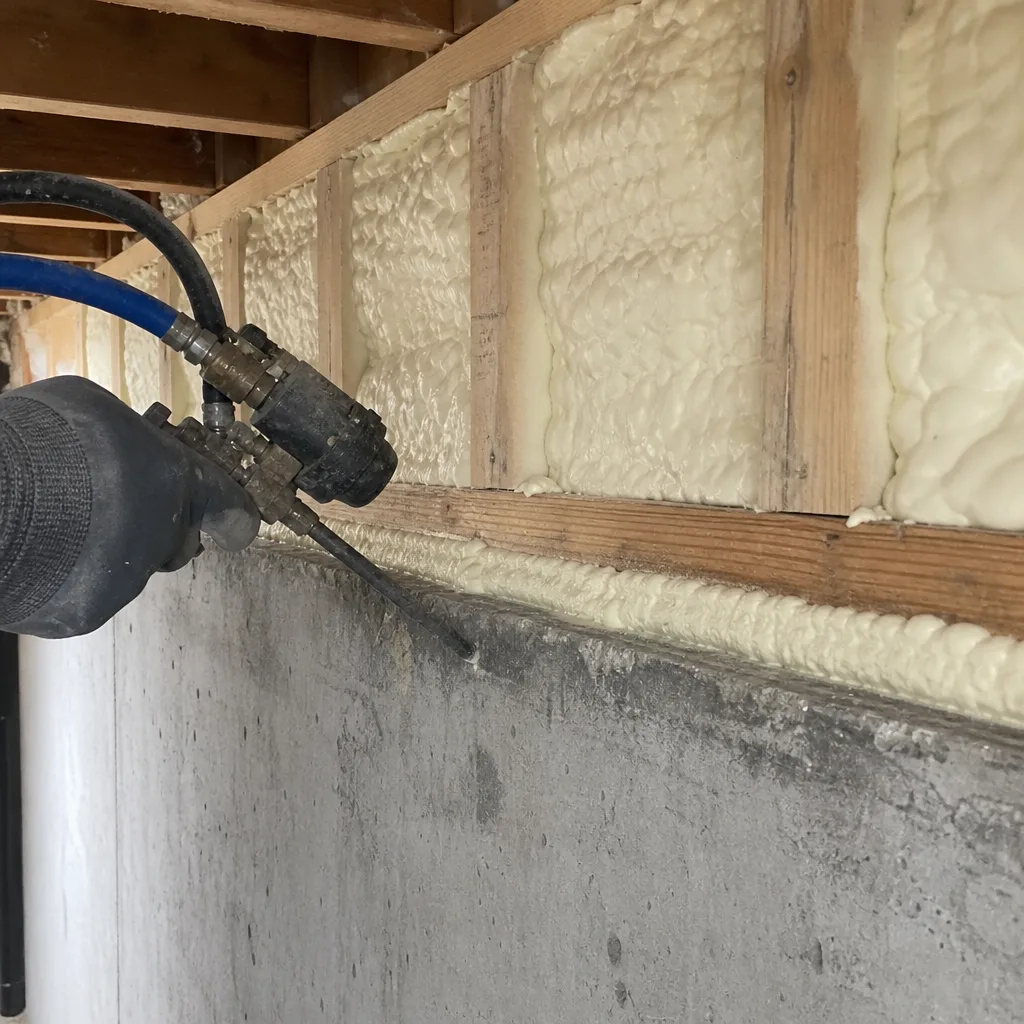
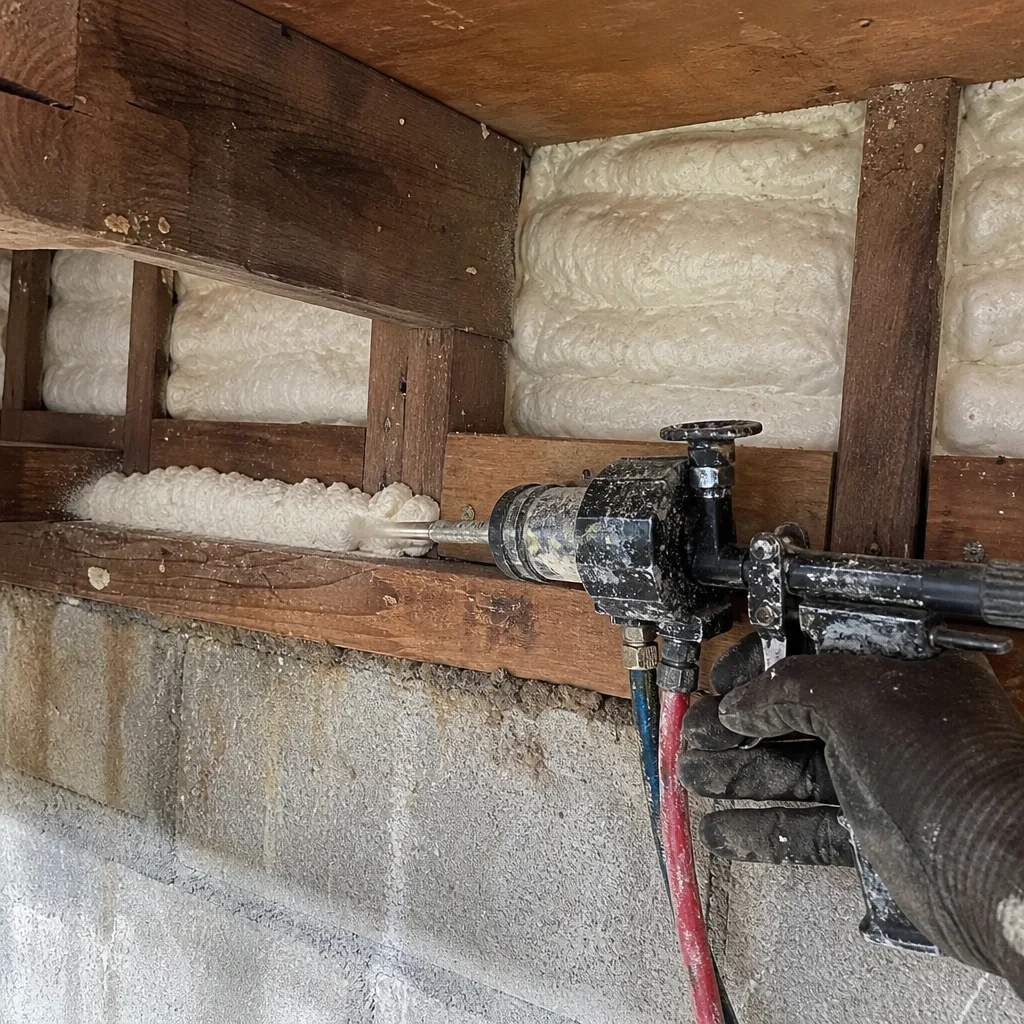
In Long Beach’s coastal ZIPs, the rim joist is a primary entry point for marine-layer air. We’ve opened walls in homes near Recreation Park and found daylight around rim joists where fiberglass batts had been stuffed in decades ago and had since slumped or rotted. Closed-cell foam injected into the rim joist space stops that air movement permanently and adds a vapor barrier where you need it most.
Garage Ceiling Decks and Bonus Rooms
If your Long Beach home has a bonus room above the garage, that floor assembly is a condensation risk every foggy night. Spraying closed-cell foam on the garage ceiling from below seals and insulates in one step, which fiberglass or batts cannot do. Homeowners with bedrooms over garages in Lakewood Village and Plaza neighborhoods report noticeable temperature stabilization after this retrofit.
Closed Cell Spray Foam Insulation in Long Beach
Closed Cell Spray Foam Insulation in Long Beach is the product we recommend most often near the coast, and for a reason that has little to do with temperature. Closed-cell foam is a vapor retarder as much as an insulator. At 2 inches thick, it blocks the moisture migration that saturates fiberglass in fog-belt attics and wall cavities. A typical closed-cell job on a Long Beach attic or wall cavity runs $2.50 to $4.50 per board foot installed, so a 1,000-square-foot attic at 2 inches lands between roughly $5,000 and $9,000. It’s a real investment, and for homes in the 90803 and 90802 ZIPs where marine-layer moisture is a constant, it’s usually the correct one.
Roof Deck Underside Application
For unvented attics or homes converting attic space to storage, applying closed-cell foam to the roof deck underside creates a sealed, conditioned attic. In Long Beach, this approach also eliminates the condensation problem that plagues under-ventilated attics in 1950s and ’60s ranches. The foam bonds directly to the sheathing and prevents warm, moist indoor air from ever reaching the cold deck surface.
Wall Cavity Retrofit in Older Homes
Many of Long Beach’s pre-1950s bungalows and smaller stucco apartments have no wall insulation at all, or degraded original materials that have settled or rotted. Closed-cell foam can be injected into these cavities during remodeling projects to create an air seal and insulation layer in one pass. This is where our Icynene and Demilec product lines give us options that single-brand shops simply can’t match.
Trusted Brands We Service in Long Beach
Placentia Insulation installs spray foam systems from Icynene and Demilec, two of the most recognized names in the industry, and we select between them based on the application. We stock the full range of open-cell and closed-cell formulations for Long Beach customers, which means we’re not waiting on a supplier when your job is scheduled. Beyond spray foam, we carry Owens Corning and GreenFiber for homes where a hybrid approach makes sense: closed-cell foam on rim joists and roof decks, blown-in cellulose over the flat attic floor. That flexibility is what allows us to match the material to the job, not the job to whatever one brand happens to stock.
Common Spray Foam Insulation Problems We See in Long Beach Homes
- Trapped moisture behind incorrect vapor retarders in pre-1950s homes. Older Long Beach bungalows in neighborhoods like Rose Park and Alamitos Beach often have vapor barriers that were installed on the wrong side of the wall assembly decades ago. Marine-layer humidity condenses behind them, and by the time we open the wall, the framing is damp and mold is present. Closed-cell spray foam eliminates this by acting as its own vapor retarder.
- Attic deck condensation in under-ventilated coastal attics. In ZIPs like 90803, we routinely find sheathing and insulation batts damp from fog even when the roof has no leak. The marine layer infiltrates attic vents and condenses on cool sheathing overnight. Applying closed-cell foam to the deck and sealing ventilation gaps stops this cycle.
- Poor foam adhesion on legacy surfaces. Many 1950s to 1970s Long Beach tracts used oil-tempered hardboard or old stucco that can cause spray foam to delaminate if the surface isn’t properly prepared. We identify these surfaces during the estimate and specify the right primer or preparation method so the foam bonds permanently.
- Gaps around legacy garage door frames letting fog-driven air into wall cavities. One-piece and early sectional garage doors, common in the city’s older housing stock, often have unsealed frames. Air moves freely through these gaps on foggy nights, carrying moisture into the wall assembly. Spray foaming these openings as part of a garage retrofit is a critical step most contractors skip.
Pricing for Spray Foam Insulation in Long Beach, CA
Spray foam pricing in Long Beach is driven by foam type, application area, and accessibility. Open-cell foam runs $1.20 to $2.50 per board foot installed, while closed-cell runs $2.50 to $4.50. A garage ceiling and rim joist job typically lands between $1,400 and $2,800. A full attic roof deck in closed-cell usually falls between $5,000 and $9,000 for a 1,000-square-foot attic at 2 inches. Wall cavity retrofits are priced per cavity and access point. What affects your number most is thickness and foam type: closed-cell costs more per board foot but delivers a vapor barrier and higher R-value per inch, making it the right choice for coastal Long Beach homes. Call (855) 773-6429 and we’ll give you an exact quote based on your home’s specific construction. Estimates are free.
We Also Serve Cities Near Long Beach
Placentia Insulation serves Long Beach and the surrounding South Bay and Gateway Cities. We regularly work in Signal Hill, Lakewood, Carson, and West Carson, bringing the same Spray Foam Insulation expertise to homeowners throughout the area. If you’re in Long Beach or a neighboring community, the same crew, same brands, and same moisture-focused approach apply.
Serving Long Beach, CA — Our Local Coverage Area
We’re based in the Long Beach area and know this community well. Use the map below to see our service coverage — if you’re nearby, we can almost certainly help.
FAQs About Spray Foam Insulation in Long Beach
Closed-cell spray foam is recommended for Long Beach coastal homes because it acts as a vapor retarder as well as an insulator, blocking the marine-layer moisture that saturates wall cavities and attic decks in fog-belt ZIPs like 90803 and 90802. Fiberglass and open-cell foam allow that moisture to pass through, which leads to hidden mold and rotted sheathing over time. Call (855) 773-6429 for an assessment of whether your home needs closed-cell or would be fine with open-cell.
No, spray foam should never be applied directly over old fiberglass batts. The batts must be removed first because the foam needs to bond to the framing or sheathing, and old batts in Long Beach bungalows are often saturated with marine-layer moisture and contaminated with rodent waste or mold. We remove and dispose of the old material, inspect the cavity for damage, and then apply foam to a clean, dry surface. Estimates include this removal step.
Spray foam helps a Long Beach garage by sealing the rim joist band, the garage ceiling, and any gaps around the door frame, which stops fog-driven air from entering the wall cavity and adjacent living spaces. This reduces heat transfer from the garage into bedrooms above or beside it, and it eliminates the moisture entry points that cause condensation issues in coastal homes. Most garage retrofits are completed in a single day.
Open-cell foam is a sound and air barrier that allows moisture vapor to pass through, while closed-cell foam is a vapor retarder that blocks moisture migration entirely. For Long Beach’s marine-layer climate, closed-cell is usually the better choice for coastal ZIPs, rim joists, roof decks, and any cavity exposed to fog-driven humidity. Open-cell works well in interior walls where sound control is the priority and moisture is less of a concern. We spec both, and the recommendation depends on your home’s location and construction.
Damp attic sheathing without a roof leak in Long Beach is caused by the marine layer, which brings cool, moisture-saturated air into the attic through vents and gaps every night. That moist air condenses on the underside of the roof deck as temperatures drop, and repeated cycles saturate the sheathing and anything touching it. In a 1950s bungalow off Ocean Boulevard, we found original fiberglass batts soaked from this condensation with mold already spotting the attic deck. We removed the saturated material, applied closed-cell foam to the sheathing and rim joists, and sealed the garage door frame gaps. The homeowner reported no more musty odors within weeks. Call (855) 773-6429 if your attic smells damp and we’ll inspect it.
Your Long Beach Spray Foam Insulation Assessment Starts With a Phone Call
If your Long Beach home fights moisture, uneven temperatures, or high energy bills, the first step is understanding what’s actually happening in your attic and walls. We’ll inspect, explain what we find, and give you a written recommendation with real numbers. No pressure, no generic pitch. Call (855) 773-6429 today for a free estimate, and we’ll match the material to the job, not the job to whatever’s on the truck.
Written by Alan Whitcomb, Owner at Placentia Insulation, serving Long Beach and surrounding communities.