
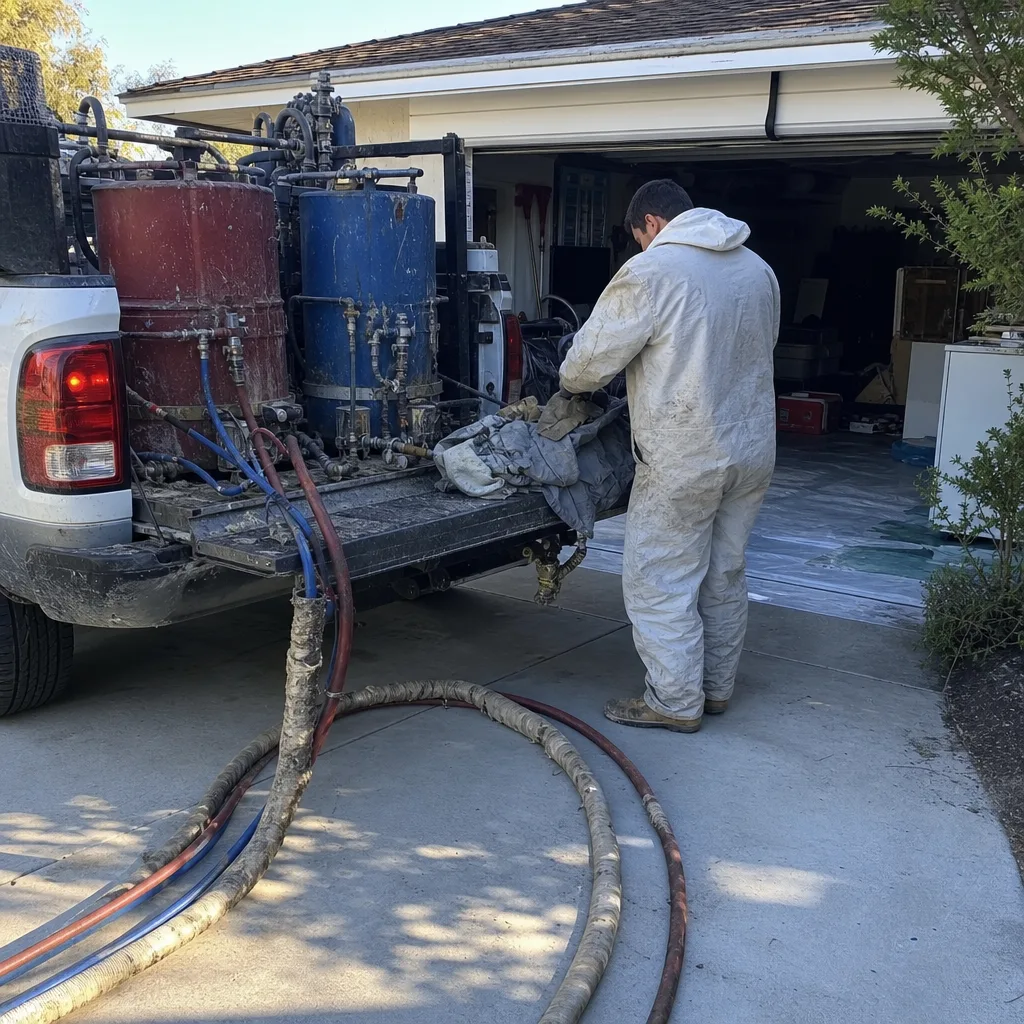
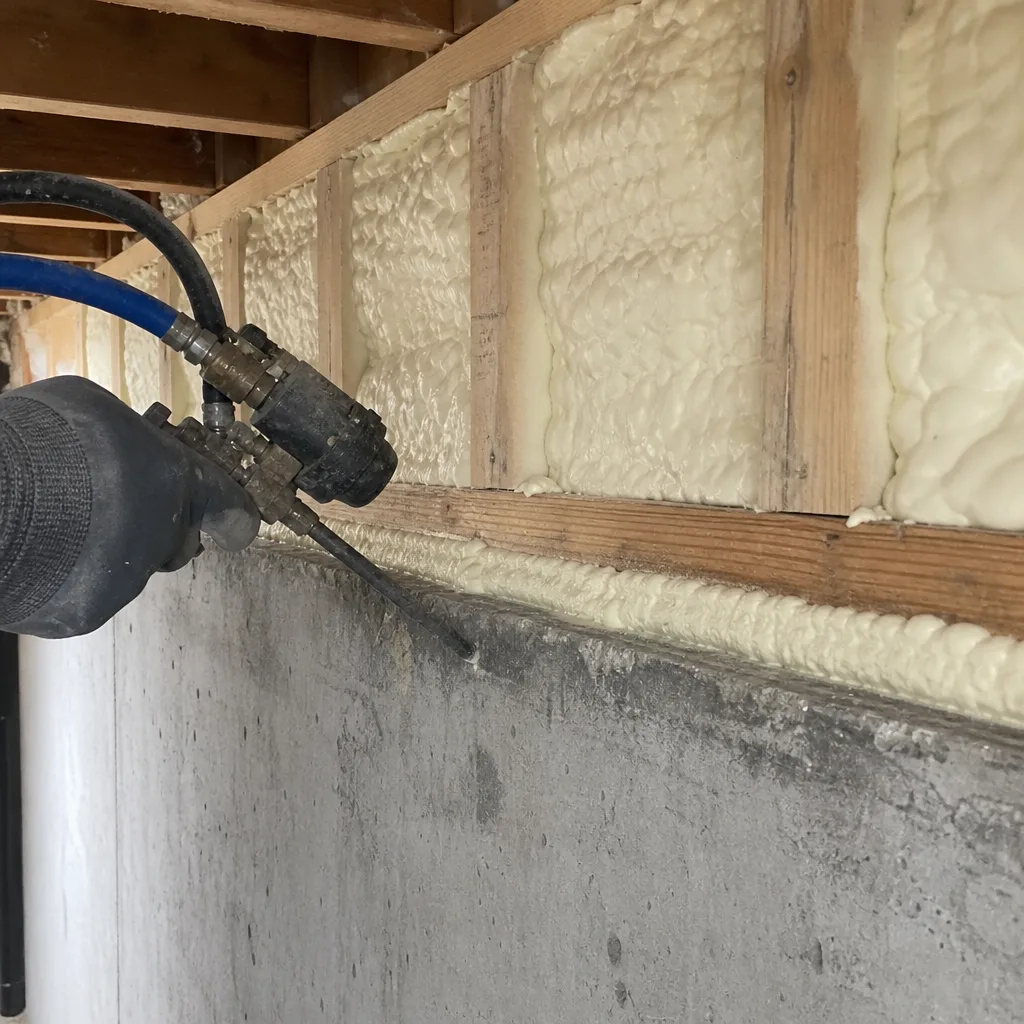
Fast, Reliable Spray Foam Insulation Across Signal Hill
Spray foam insulation in Signal Hill typically costs $2.50 to $6.50 per board foot for open-cell and $3.50 to $9.00 per board foot for closed-cell, with most full attic jobs landing between $2,800 and $7,500. We’re in Signal Hill weekly, usually within a day or two of your call, and most quotes are free and same-week. If you’re dealing with rooms that never hold temperature, a vented crawlspace that lets in oil-field odors, or stucco walls that bake in the afternoon sun, call (855) 773-6429 and Alan or one of our crew will walk you through what’s actually going on.
Why Placentia Insulation Is Signal Hill’s Preferred Spray Foam Insulation Company
Signal Hill homes are not like Long Beach or Lakewood homes. The housing stock here is older, tighter-packed, and carries a set of conditions most insulation companies never see: oil wells. Active and capped. Crawlspaces that vent soil gas. Knob-and-tube wiring still live in some wall cavities. We know these houses because we’ve opened up dozens of them across 90755, from the streets off Cherry Avenue to the hillside blocks above Willow Street. Alan Whitcomb, who leads our crews, has walked enough Signal Hill attics to know the difference between a 1948 stucco box and a 1990s infill before the ladder comes off the truck.
What matters to Signal Hill customers is that we’re insulation specialists. Not a general contractor who runs spray foam one day and drywall the next. Every tool on our truck, every conversation with our scheduler, every recommendation we make comes from one trade: insulation. Homeowners here notice. They refer neighbors. That’s how we’ve built our name in this city with three methods (spray foam, blown-in, attic) and eight product lines we can actually source, not just name-drop.
Spray Foam Attic Insulation in Signal Hill
Spray Foam Attic Insulation in Signal Hill is a different job than it is ten miles inland. Here, the marine layer keeps things mild, so nobody needs a deep Minnesota R-value. What Signal Hill attics actually need is an air and vapor seal that stops the afternoon sun from turning the attic into a broiler, and stops soil gas from the oil fields from sneaking through every penetration. Our crews typically specify closed-cell foam at the roof deck for Signal Hill attics, because it adds structural rigidity to older framing and performs as a true vapor barrier, not a filter.
On most Signal Hill attics, we remove old and failing insulation first, air-seal every penetration (can lights, wire chases, plumbing vents), then apply foam to the roof deck. That one step changes the entire thermal envelope. Our Spray Foam Insulation team handles this daily across Southern California, but the Signal Hill version of the job almost always involves more sealing than the average house: more gaps, more old framing, more decades of movement.
Radiant Heat and the Coastal Sun
Signal Hill sits in the LA Basin coastal zone, where summer sun beats down on stucco and shingle every afternoon. Open-cell foam alone doesn’t stop radiant transfer. We pair spray foam with a radiant-barrier approach where the roof deck gets direct sun, so the attic stops acting like a heat sink for the rooms below.
Attic Floor vs. Roof Deck
In an older Signal Hill attic, insulating the floor alone is a half fix. You seal the ceiling, but the attic itself stays hot and the vented roof continues to move marine air through it. Roof-deck foam creates a conditioned attic space. It’s a different cost structure, $4,000 to $7,500 for a typical 1,200-square-foot home, but it’s the difference between a patch and a solution.
Spray Foam Wall Insulation in Signal Hill
Spray Foam Wall Insulation in Signal Hill usually means working inside irregular cavities in 1940s and 1950s stucco-over-wood-frame construction. These walls were not built to today’s standards. Some still have knob-and-tube wiring. Many have been added onto over the decades, leaving seams where rooms meet, where a carport became a bedroom, where a wall cavity is wider at one end than the other. Closed-cell foam is what we reach for here because it fills those odd shapes and seals as it expands.
Wall work in Signal Hill generally runs $1,800 to $4,500 for a single exterior wall system, depending on access and cavity size. If rim joists are included, add $900 to $2,200. The reason we quote closed-cell more often than open-cell in this city is two words: vapor and odor. See below.
Hydrocarbon Odor and Vented Crawlspaces
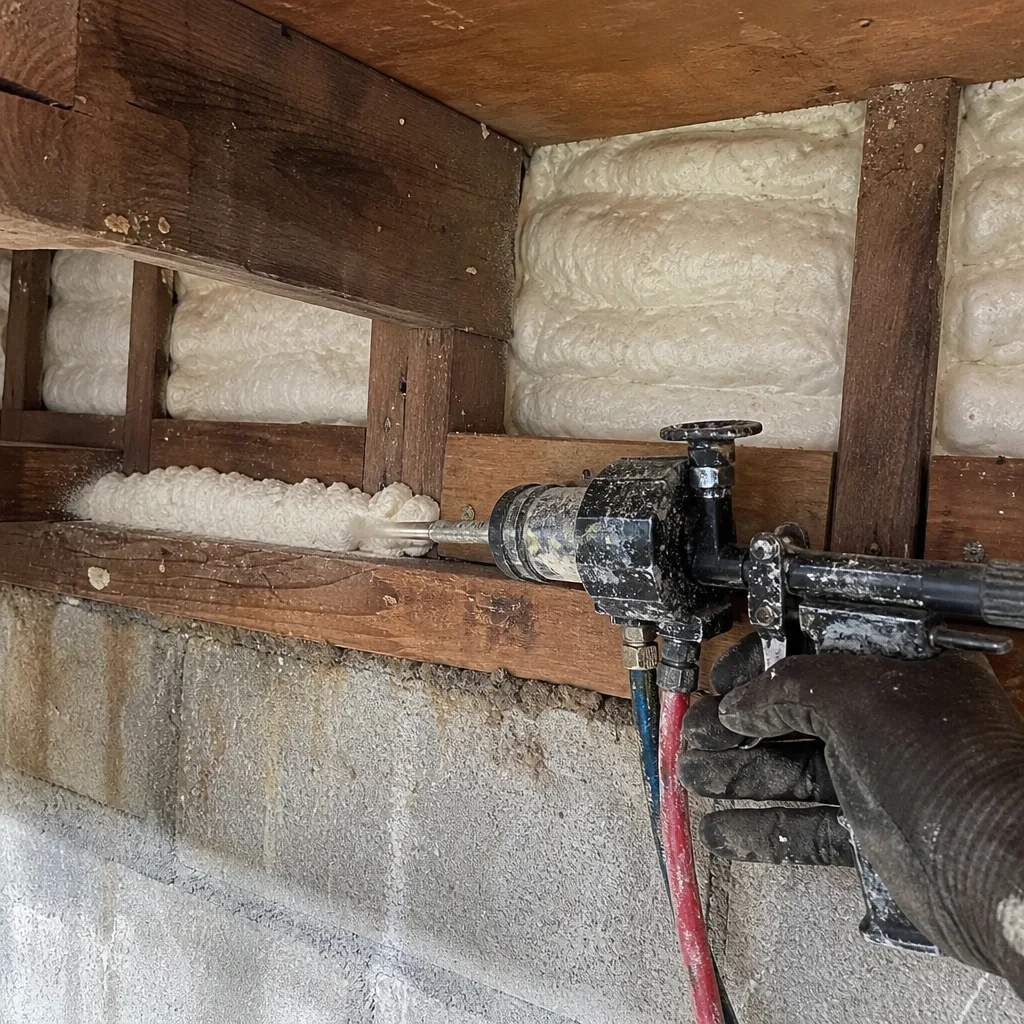
This is the Signal Hill difference. Because the city is ringed by active and capped oil wells, some homes have vented crawlspaces and wall cavities that pull faint hydrocarbon odors indoors. Air moves from the crawlspace up through the wall cavities and into living space. Open-cell foam does nothing to stop this; it’s vapor-permeable. Closed-cell foam, correctly applied with a sealed vapor barrier, blocks both odor and moisture vapor. Homeowners call us for comfort. They keep the foam because the house finally stops smelling like a refinery on a warm day.
Older Wiring Before Foam Goes In
We won’t spray foam over live knob-and-tube wiring. It’s a fire risk and it’s against code. On Signal Hill homes with original electrical, we flag it during the estimate and recommend having the wiring addressed first, then we finish the wall assembly. It’s a pause in the project, not a dead end.
Trusted Brands We Service in Signal Hill
We stock and install two spray foam product lines that cover every Signal Hill scenario we encounter: Icynene and Demilec. Icynene open-cell is our go-to for interior walls and sound dampening between units and rooms. Demilec closed-cell is what we specify for crawlspace walls, rim joists, and any assembly where moisture, vapor, or odor control drives the decision. Because we also carry fiberglass, mineral wool, and cellulose from brands like CertainTeed and GreenFiber, we’re not twisting a recommendation to fit whatever one supplier sent us. We match the material to the job, not the job to the truck. Signal Hill homeowners get the foam that actually solves their specific problem, not whatever happens to be in inventory.
Common Spray Foam Insulation Problems We See in Signal Hill Homes
- Open-cell foam in vented crawlspaces. We’ve seen houses on the hill where a previous contractor sprayed open-cell against crawlspace walls. The foam stayed vapor-permeable, the soil gas came through, and the homeowner lived with a faint smell for two years before calling us. It’s not fixable by adding vents. The foam has to come out or be encapsulated.
- Foam applied over knob-and-tube wiring. In 1940s stucco homes along Temple Avenue and Hill Street, old electrical still hides in wall cavities. Foam over live knob-and-tube is a hazard. We inspect before we spray, and if the wiring is present, the job pauses until that’s addressed.
- Adhesion failure behind foam in added-on rooms. Post-war Signal Hill homes often have rooms that were added in the 1970s or 1980s. The seam between the original stucco and the addition lets marine-layer moisture in behind the foam, and it delaminates. We find this more in Signal Hill than in Long Beach because the housing stock here is older and more heavily modified.
- No air-sealing before foam application. Spraying foam over penetrations without sealing them first turns the foam into an expensive object, not an air barrier. In Signal Hill attics with original framing and decades of movement, pass-throughs are everywhere. We seal first, then spray. Always.
Pricing for Spray Foam Insulation in Signal Hill, CA
Let’s talk in numbers, not vagueness. For Signal Hill homes, closed-cell spray foam runs $3.50 to $9.00 per board foot. Open-cell runs $2.50 to $6.50 per board foot. A typical attic roof deck in a 1,200-square-foot Signal Hill house runs $4,000 to $7,500. Exterior wall cavities run $1,800 to $4,500 per wall system, and rim joist work runs $900 to $2,200 for a typical post-war home. The variables are access, cavity size, and whether knob-and-tube wiring has to be addressed first. Every estimate is free, and Alan will walk you through exactly what we’re recommending and why. Call (855) 773-6429 for a straight number.
We Also Serve Cities Near Signal Hill
Most of our Signal Hill customers come from the neighborhoods around Cherry Avenue, Temple Avenue, and Hill Street, but we work throughout the LA Basin coastal zone. We regularly serve Signal Hill itself, plus Long Beach, Lakewood, Carson, and Hawaiian Gardens, with the same crew, the same brands, and the same pricing you get here. If you’re in a neighboring city and dealing with an older stucco home, vented crawlspace, or oil-field odor, call us at (855) 773-6429.
Serving Signal Hill, CA — Our Local Coverage Area
We’re based in the Signal Hill area and know this community well. Use the map below to see our service coverage — if you’re nearby, we can almost certainly help.
FAQs About Spray Foam Insulation in Signal Hill
Odor control matters more in Signal Hill because the city sits on and around active and capped oil wells. Vented crawlspaces draw hydrocarbon odors up into wall cavities and living spaces. Open-cell foam doesn’t stop this because it’s vapor-permeable. Closed-cell foam with a sealed vapor barrier blocks both odor and moisture. That’s why we specify closed-cell in Signal Hill more than in most neighboring cities. Call (855) 773-6429 for a free crawlspace assessment.
No. Spray foam over live knob-and-tube wiring creates a fire hazard and violates code. We inspect the wall cavity before we quote. If the wiring is live, the project pauses until it’s rerouted or encapsulated by an electrician. Then we finish the insulation. This is one reason Signal Hill wall work sometimes costs more than in newer cities. Call us for an honest look at what’s inside your walls before any foam goes in.
Closed-cell. Specifically Demilec closed-cell, which we keep in inventory for Signal Hill jobs. Open-cell foam remains vapor-permeable, so it lets soil gas pass through. Closed-cell at two inches, paired with a sealed vapor barrier, stops hydrocarbon migration from oil-field legacy vents. This is the standard we recommend for any vented crawlspace in the 90755 zip code.
Signal Hill is a small, dense city. Houses share walls with neighbors, sit close to Cherry Avenue and Willow Street traffic, and get constant noise from the Port of Long Beach and the 405 corridor. Open-cell foam is excellent for interior sound dampening. We apply it to shared walls, bedroom walls, and floor assemblies to cut airborne noise. For exterior walls, closed-cell adds both density and air-sealing. It’s the same product, two different jobs.
Yes, especially in pre-1970 housing. Old stucco-over-wood-framed Signal Hill homes have decades of penetrations: wire chases, plumbing vents, gaps at plate lines, seams where rooms were added. Foam alone can’t fix those. We air-seal every penetration before we spray. It’s standard on every Signal Hill job, and it’s the difference between real performance and an expensive band-aid. Call us for a free estimate and we’ll show you exactly what needs sealing.
We Specialize in Spray Foam, Not Everything Else
Placentia Insulation is a pure-play insulation contractor. We don’t repair roofs, install HVAC, or do general contracting. We do one thing: insulation, three ways. Attic, spray foam, blown-in. That focus is why Signal Hill homeowners call us for old houses with odd cavities, vented crawlspaces, and oil-field odors. We’ve seen it before. We know which foam chemistry solves it. And we can usually start within a week, not a month. If your Signal Hill house has rooms that won’t hold temperature, a crawlspace that smells, or walls that sweat on humid mornings, call (855) 773-6429 for a free estimate. We’ll be direct with you about what’s wrong and what it costs to make it right.
Written by Alan Whitcomb, Owner at Placentia Insulation, serving Signal Hill with dedicated insulation expertise.