
Fast, Reliable Spray Foam Insulation Across Wrightwood
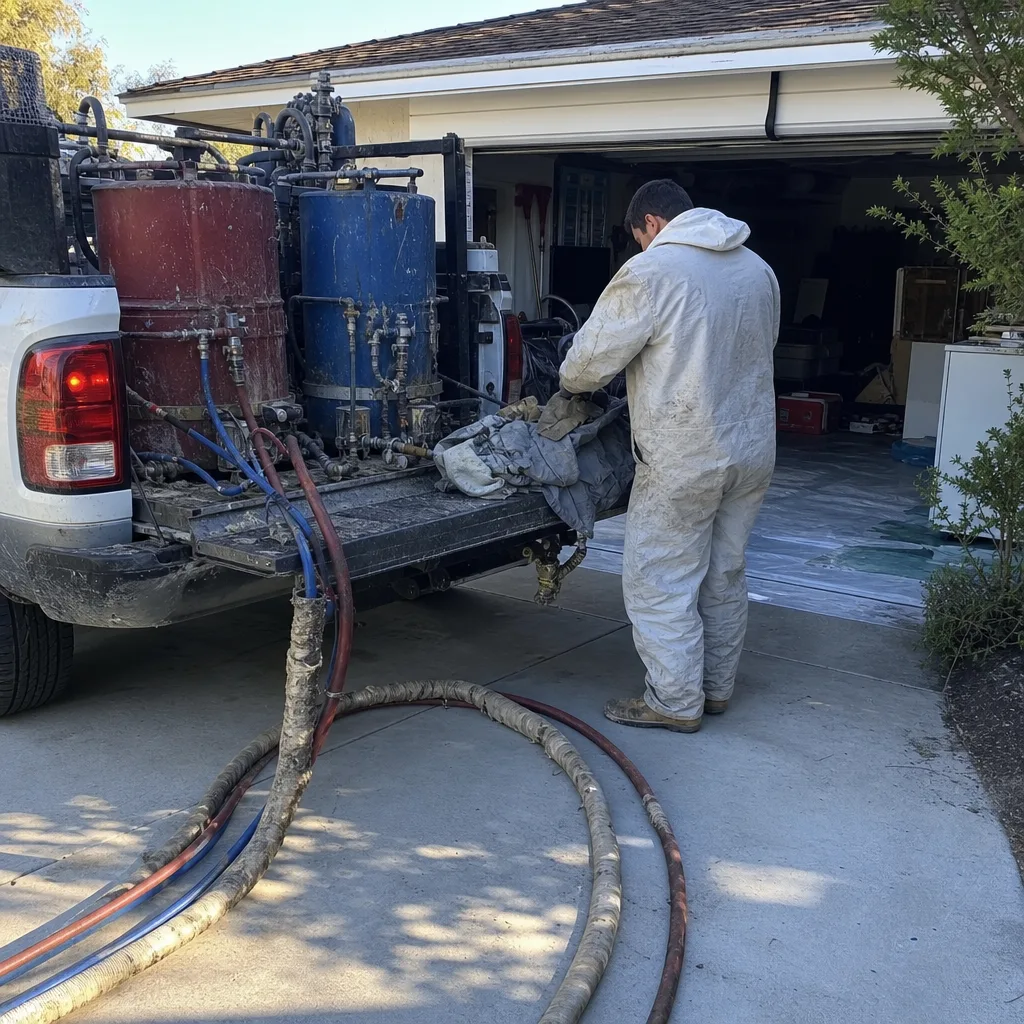
Spray foam insulation in Wrightwood is a mountain-climate retrofit problem, not a routine high-desert job. At 6,000 feet, your home’s insulation has to handle snowfall, hard freezes, snowmelt cycles, and big day-night swings that crews in Palmdale or Victorville rarely encounter. We send Spray Foam Insulation specialists who understand ice dams, vapor drive, and how an A-frame’s vaulted ceiling behaves in February. If you’re fighting cold rooms, eave icicles, or heating bills that climb every winter, call (855) 773-6429 for a free estimate. We’ll look at what’s in your ceiling and roof deck now and tell you what actually needs to change.
Why Placentia Insulation Is Wrightwood’s Preferred Spray Foam Insulation Company
Most insulation contractors in the Inland Empire carry one or two product lines and default to whatever’s on the truck. We carry eight brands, including Icynene and Demilec spray foams, so the foam chemistry gets matched to your Wrightwood cabin’s actual exposure: closed-cell where snowmelt and vapor drive are factors, open-cell where air sealing and cost per board foot matter more. That matters up here more than almost anywhere in Southern California.
Alan Whitcomb, our owner, runs a single-trade operation. Every crew member, every tool, every conversation on your job is about insulation. We don’t split our week between plumbing calls and insulation installs. When we arrive in Wrightwood, we’re there to diagnose your home’s thermal envelope, not to sell you a generalist’s menu.
We’ve worked on mid-century cabins, A-frames, and weekend homes throughout the 92397 ZIP. We know which properties off Lone Pine Canyon Road and the village core still have original batt insulation stuffed into odd ceiling cavities. We know the homes where the roof deck was never air-sealed and the snow melts unevenly every winter. That local familiarity means we spot problems faster, and our prep for each job accounts for elevation, snow exposure, and the age of your framing.
Spray Foam Insulation Contractors in Wrightwood
Spray Foam Insulation Contractors in Wrightwood need to understand one thing before quoting: your home’s roof plane is a freeze-thaw surface. Warm interior air rises through gaps in old insulation, melts snow on the roof, and the meltwater refreezes at the cold eaves. That’s an ice dam, and it’s a symptom of a thermal envelope failure, not just a drainage issue. A proper spray foam job here means air sealing the ceiling plane, choosing the right foam chemistry, and spraying at depths thick enough to keep heat out of the roof assembly during winter.
Open-cell and closed-cell both have a place in Wrightwood. The decision comes down to whether the foam will face direct moisture from snowmelt or stay buried in a wall cavity. Typical spray foam work in Wrightwood runs $1,200 to $4,800 depending on the area covered, and complex valve-corridor retrofits climb higher. We’ll give you a line-item quote before any material gets ordered.
Closed-Cell for Roof Decks and Ice-Dam Control
On a steep-pitched cabin roof deck, closed-cell foam from Demilec gives you R-value plus a vapor and air barrier in one pass. It doesn’t soak up snowmelt-driven moisture the way open-cell can at this elevation. That’s the foam we reach for when a Wrightwood homeowner is seeing icicles along the eaves or wet spots under the roof sheathing.
Open-Cell for Walls and Interior Air Sealing
Inside wall cavities away from direct moisture, Icynene open-cell air-seals gaps that batt insulation leaves open. It’s effective, costs less per board foot than closed-cell, and it’s the right tool when your home’s biggest problem is warm air leaking through walls and around window framing.
Spray Foam Attic Insulation in Wrightwood
Spray Foam Attic Insulation in Wrightwood works differently than in a Rancho Cucamonga tract home. Most of the cabins up here have vaulted ceilings or exposed beams, which means there’s no flat attic floor to pile batts on. The ceiling plane often follows the roofline, and every gap between beam pockets lets warm air reach the snow-covered roof deck. In February, that warm air is what starts the melt-freeze cycle that damages eaves and fascia boards.
We air-seal the entire ceiling plane before spraying. That includes the beam-to-sheathing joints, any old recessed light penetrations, and the top plates of interior walls. On many Wrightwood cabins, the air sealing alone cuts the ice-dam problem noticeably. Then the foam goes in: closed-cell against the roof deck for moisture control, or a hybrid approach with open-cell in vented assemblies where the roof deck can dry downward. Attic and vaulted-ceiling spray foam jobs in Wrightwood typically run $1,800 to $6,500, with A-frames and complex exposed-beam ceilings at the upper end.
Vaulted Ceiling Air Sealing First
On an exposed-beam ceiling, the beams create dozens of air channels. Foam sprayed over a leaky ceiling plane just traps the air leak behind the foam. We seal every junction before spraying. This is the single biggest difference between a Wrightwood retrofit that works and one that fails silently.
Roof Deck Insulation Depth at 6,000 Feet
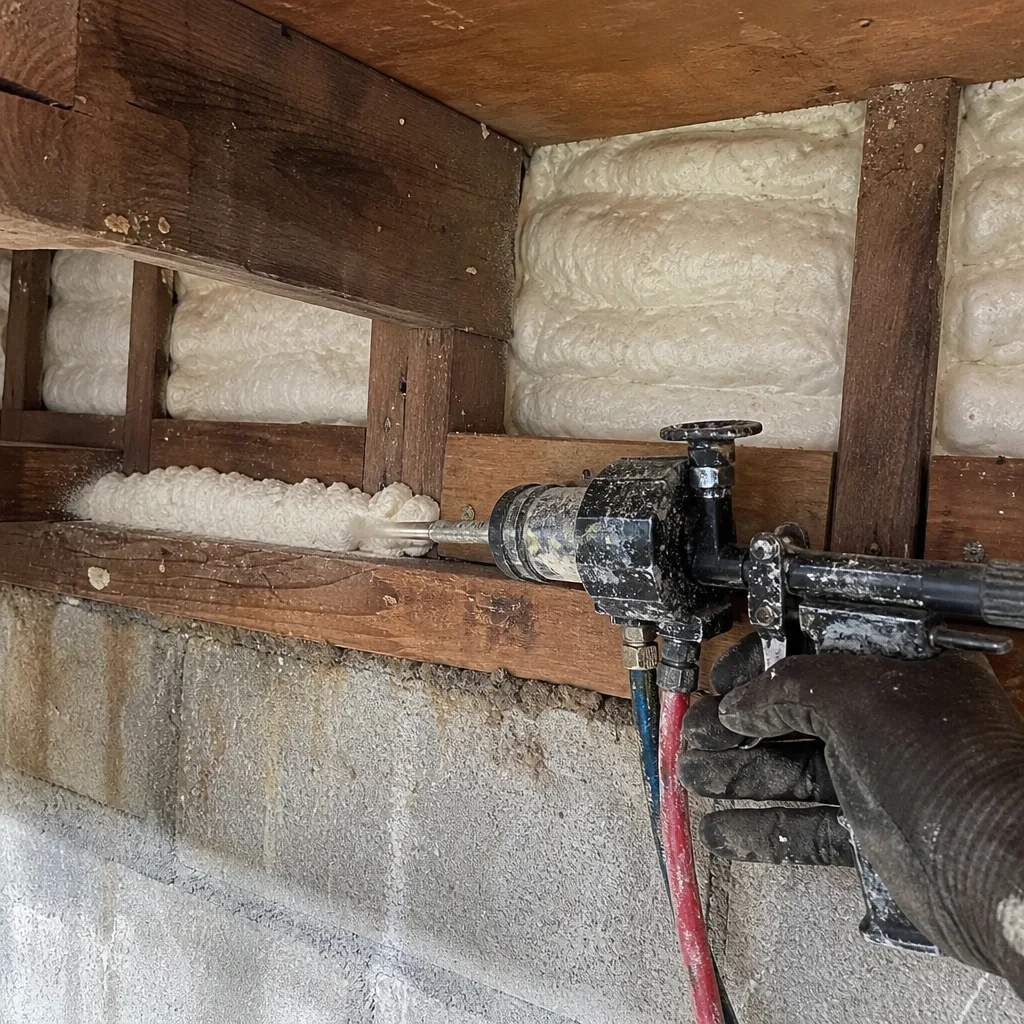
R-value minimums for Wrightwood exceed what the California low desert requires because of the sustained cold. We spray to depths that hold heat inside the living space during a February hard freeze, not depths that meet a flatland code. Our quotes always list the foam depth we’re proposing and why.
Trusted Brands We Service in Wrightwood
We stock and install Icynene and Demilec spray foam, along with Rockwool mineral wool and CertainTeed fiberglass for hybrid jobs where batts complement the foam. That’s a wider material library than most crews working the 92397 ZIP can pull from, and it means the material gets matched to your cabin’s problem rather than the other way around. We keep common retrofit parts and foam kit components staged for Wrightwood jobs, so a weekend-cabin owner doesn’t wait two weeks for a material order to arrive from a distributor in Ontario or San Bernardino.
Common Spray Foam Insulation Problems We See in Wrightwood Homes
- Ice dams from piecemeal batt insulation. Decades of owner-added fiberglass batts stuffed between exposed beams leave air gaps, warm air reaches the roof deck, snowmelt refreezes at the eaves, and the icicles start. Plain batts can’t air-seal a vaulted ceiling, and no amount of additional batts will fix the air leak.
- Open-cell foam on roof decks that see snowmelt. Open-cell is vapor-permeable, so on a steep-pitched cabin roof at 6,000 feet it absorbs moisture from melting snow and loses R-value through repeated freeze-thaw cycles. It belongs in wall cavities, not against a snow-covered roof deck.
- Weekend homes sitting unheated for weeks. Part-time Wrightwood properties get cold-soaked. Interior air hits cold framing, and moisture condenses on the back side of interior finishes. Foam sprayed without accounting for vapor drive and deep-set freeze risk can trap that condensation against the wood, and that’s where rot starts.
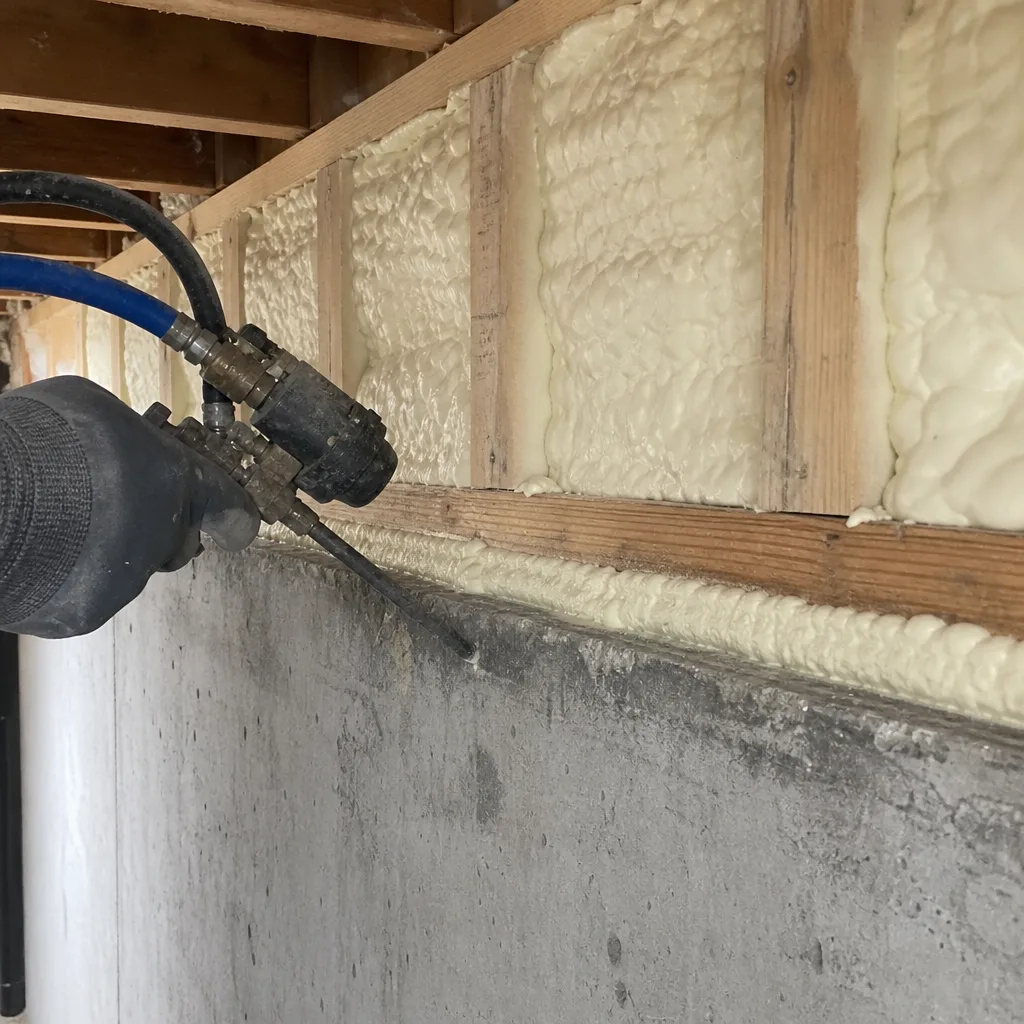
- Unsealed rim joists and crawlspace band areas. Mountain cabins often sit over vented crawlspaces that never got the rim joist air-sealed. Cold air washes through the floor framing, and the living space never holds heat. Foam in the rim joist pockets cuts the air movement that makes floors feel cold even when the thermostat says 68.
Pricing for Spray Foam Insulation in Wrightwood, CA
Spray foam in Wrightwood runs higher than in the nearby high desert because the work is more involved. A typical rim joist and band-area job starts around $1,200 to $2,400. Wall cavity foam in an older cabin runs $1,800 to $4,500 depending on cavity depth and whether old batts need removal first. A full vaulted-ceiling or roof deck spray on an A-frame starts around $3,200 and can reach $6,500 to $8,000 on a steep plane with heavy air-sealing prep. The biggest cost driver is rarely the square footage. It’s the prep: removing failed insulation, sealing beam pockets, and staging for mountain weather. We quote the full job in writing, foam depths listed, so you know exactly what’s covered. Call (855) 773-6429 and we’ll schedule a free on-site estimate in Wrightwood.
We Also Serve Cities Near Wrightwood
Our Spray Foam Insulation in Wrightwood coverage extends to nearby mountain and high-desert communities, including Piñon Hills, Phelan, Oak Hills, and San Antonio Heights. If you own a cabin or a primary home in any of these areas and want a spray foam specialist who knows mountain construction, we’ll map it and quote it with the same line-item detail we use for Wrightwood jobs.
Serving Wrightwood, CA — Our Local Coverage Area
We’re based in the Wrightwood area and know this community well. Use the map below to see our service coverage — if you’re nearby, we can almost certainly help.
FAQs About Spray Foam Insulation in Wrightwood
Because your roof sees snow, hard freezes, and snowmelt cycles that Palmdale’s roof never sees. At 6,000 feet, warm interior air escaping through a leaky ceiling melts roof snow and causes ice dams at the eaves. Spray foam’s air-sealing capability stops the warm air at the ceiling plane, which is the root cause of most of Wrightwood’s winter roof-edge damage. In Palmdale, a poorly insulated roof wastes energy; in Wrightwood, it actively damages the roof.
Closed-cell against the roof deck. An exposed-beam vaulted ceiling has no attic to vent, and the roof deck is the cold surface in winter. Open-cell foam is vapor-permeable, so snowmelt-driven moisture can move into it and degrade its R-value through freeze-thaw cycles. Closed-cell acts as an air, vapor, and thermal barrier in one pass. Call (855) 773-6429 and we’ll inspect your specific A-frame and confirm the right approach.
Yes, in most cases the icicles stop because the heat source that creates the ice dams is removed. We air-seal the ceiling plane and spray closed-cell against the roof deck so interior heat no longer reaches the snow sitting on your roof. Without warm air melting the snow from underneath, the melt-freeze cycle at the eaves stops. Some roof geometries still need additional eave detail, and we’ll flag that during the estimate.
Yes, it changes vapor control and foam selection. A house that cold-soaks for weeks then warms quickly creates strong vapor drive, and the wrong foam can trap condensation against cold framing. We account for deep-set freeze risk in your specific assembly, and we choose foam chemistry and depth that let the building dry appropriately. Unheated cabins are a specific retrofit case, not a standard tract-home application.
Spray foam is usually the better fix because batts cannot air-seal, and air leakage is what’s been causing the ice dams, the cold rooms, and the high heating bills in the first place. Adding more batts to a vaulted beam ceiling leaves the air gaps exactly where they were. We remove the failed batt layers, seal the ceiling plane, and spray foam at the correct depth for your elevation. You’re paying for the air seal, and that’s what fixes the problem.
Get a Wrightwood Spray Foam Assessment
If your mountain home is fighting ice dams, cold spots, or heating costs that climb every winter, let’s look at the actual assembly. We’ll inspect your ceiling plane, your roof deck, and your crawlspace, then give you a written quote with foam depths and material choices spelled out. Call (855) 773-6429 for a free estimate in Wrightwood.
Written by Alan Whitcomb, Owner at Placentia Insulation, serving Wrightwood since the company’s founding.