
Fast, Reliable Attic Insulation Across Fountain Valley
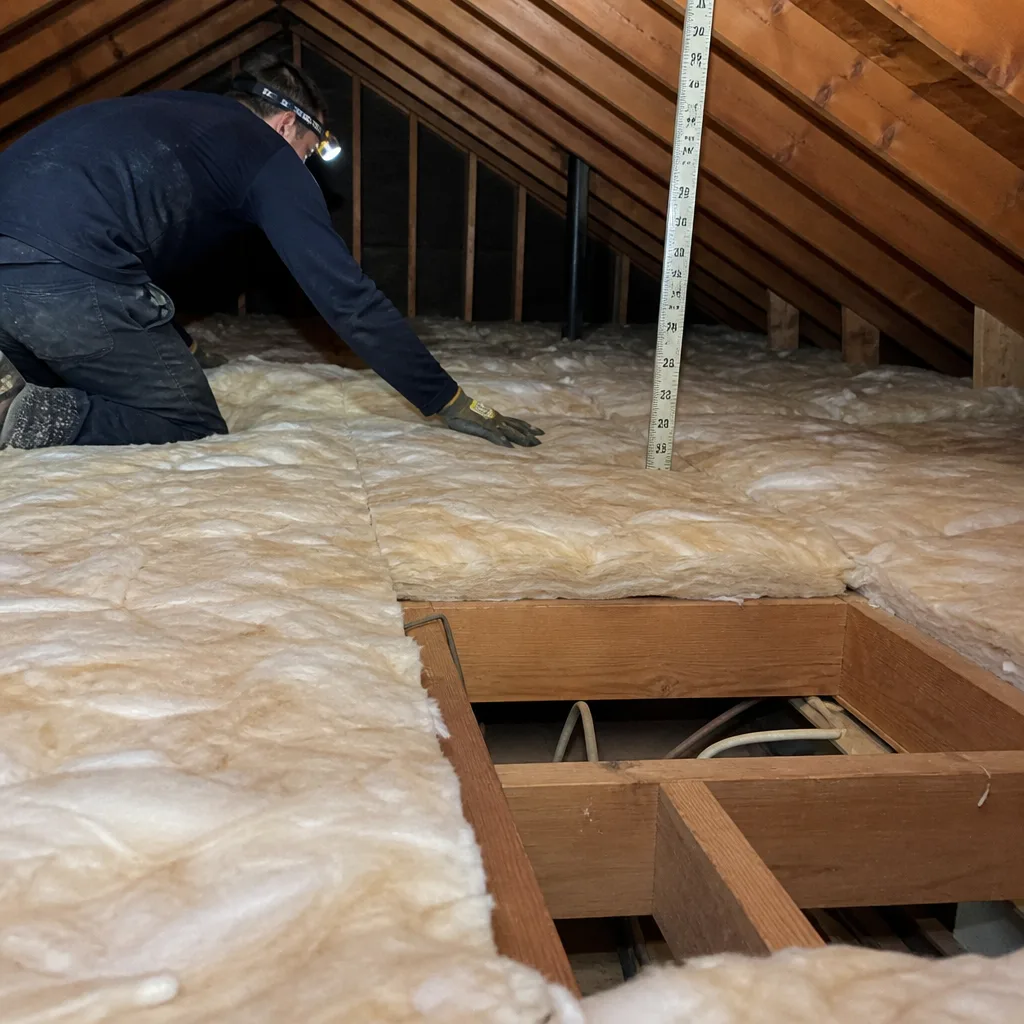
Attic insulation in Fountain Valley usually means one of two things: either you just learned that a reroof permit triggered a Title 24 insulation requirement, or you’ve noticed the upstairs runs hot every afternoon and you’re done ignoring it. Most homes here were built between 1958 and 1980, and the builder-grade insulation from that era has settled, compacted, and quietly stopped doing its job. We’ll assess what’s actually up there, tell you what it measures, and bring it to current Zone 6 targets without selling you material you don’t need. Our Fountain Valley response time runs same-day or next-day in most cases. Call (855) 773-6429 and we’ll put you on the schedule.
Key Takeaways
- Most Fountain Valley attic work is triggered by Title 24 enforcement on reroofs and remodels, not just energy bills.
- Original 1960s loose-fill often measures R-6 in reality, despite paperwork saying R-11.
- We stock eight material brands so the recommendation matches your attic, not our truck.
- Free estimates. Same-day response to most 92708 and 92728 properties.
Why Placentia Insulation Is Fountain Valley’s Preferred Attic Insulation Company
Fountain Valley is a specific place with a specific housing stock. It’s not Santa Ana. It’s not Irvine. These are post-WWII tract homes built on former lima bean and celery farmland, and the attics reflect that era’s assumptions about cheap energy. Our crews know what a 1963 single-story ranch off Euclid looks like inside the attic before they even climb the ladder. Shallow roof pitch, minimal depth over the top plates, and an old layer of loose-fill that has been cooking in Orange County heat for 60 years. That’s the job. Alan Whitcomb built this company around one trade, and every technician who heads to Fountain Valley knows the difference between a home that needs air-sealing, a top-up, or a full removal and replacement. We’re not a general contractor tacking insulation onto a broader remodel. This is what we do.
When a Fountain Valley homeowner calls us after a Title 24 notice from the building department, we know exactly what the inspector is looking for. That speeds the whole process up. We’ve worked in neighborhoods along Mile Square Park, in the tracts south of Talbert, and across the 92728 side near the Santa Ana River. The reviews we’ve earned from Fountain Valley customers tend to mention the same thing: we explained what was actually wrong and didn’t default to just blowing in more fiberglass over the problem. That’s the standard.
Radiant Barrier in Fountain Valley
A radiant barrier in Fountain Valley works differently than insulation. Insulation slows conduction heat. A radiant barrier reflects radiant heat back out of the attic, which matters a lot in west-facing Fountain Valley homes where the afternoon sun hammers the roof deck from about 2 p.m. onward. When a home has original single-pane windows and minimal attic ventilation, the attic can run 30-plus degrees hotter than the living space. A radiant barrier attached to the underside of the roof deck cuts that delta noticeably, and it costs less to install while a roof is already open. For most Fountain Valley homes, expect a radiant barrier to run $1,200 – $2,800 depending on attic square footage and access. Pair it with new insulation and you solve both the reflective and conductive heat paths at once.
Why It Works With Attic Insulation
Radiant barrier and insulation do not replace each other. They do different things. In Fountain Valley’s marine-influenced climate, where summers are warm but not brutal, the biggest comfort gain often comes from stopping the heat before it gets into the insulation. A west-facing attic with a radiant barrier stays measurably cooler, and the insulation below it works from a lower starting temperature. If you’re reroofing anyway, this is the cheapest time to add it.
When a Fountain Valley Homeowner Should Add It
If your bedrooms sit directly under a west- or southwest-facing roof plane and the air conditioner struggles to hold 78 degrees on an August afternoon, a radiant barrier will likely provide a faster comfort improvement than adding more insulation alone. We’ve seen this repeatedly in the tracts around Mile Square Park and along Brookhurst. The roof framing is already open during a reroof, which removes the access problem that makes retrofit radiant barrier installations awkward.
Attic Cleaning Services in Fountain Valley
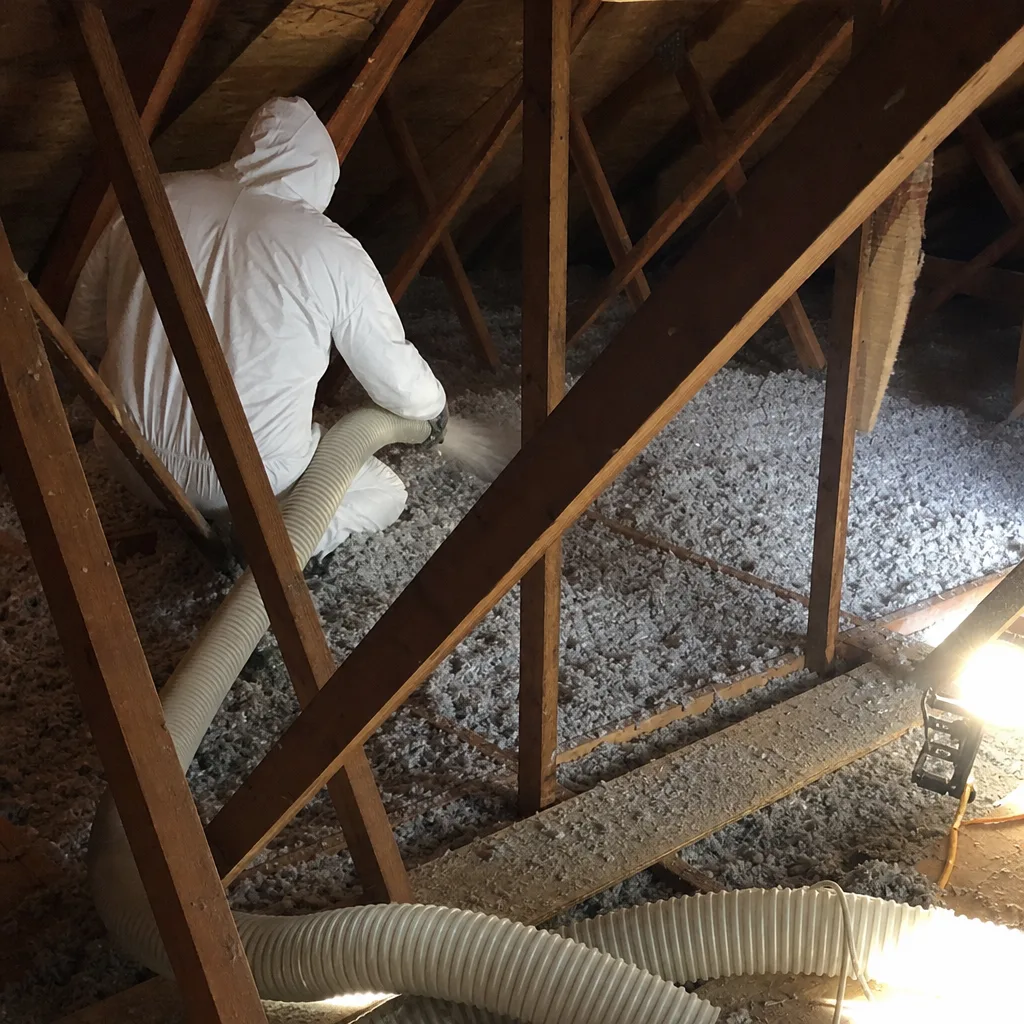
Attic cleaning in Fountain Valley is often the first step before any insulation upgrade, and we recommend it more often than homeowners expect. Sixty years of Orange County living puts dust, rodent droppings, old nesting material, and sometimes failed HVAC duct debris into an attic. You don’t want to blow fresh insulation over that. A proper attic cleaning removes the contaminated loose-fill, sanitizes the deck, and gives us a clean surface for air-sealing and new material. In Fountain Valley, full attic cleaning and old insulation removal typically runs $1,800 – $3,500 for a standard single-story tract home, with larger two-story homes or heavy contamination pushing the top of that range. We quote the job before we start. No surprises.
Rodent Activity and Old Insulation
Roof rats are a reality in Fountain Valley, especially near the river channel and older neighborhoods with mature trees. Rodent activity contaminates insulation and leaves behind droppings that should not stay in your attic. We remove the affected material, treat the space, and recommend exclusion work with a pest contractor before we put new insulation down. Putting fresh insulation over contaminated material is a waste of your money.
Clearing the Deck for Title 24 Work
When a reroof triggers a Title 24 insulation requirement, you don’t want a dirty attic with leaks and gaps hiding under the new material. Attic cleaning gives our crew a clear view of the top plates, recessed can lights, and vent penetrations that need air-sealing. If those gaps aren’t sealed first, the R-value upgrade underperforms. This is the step a lot of rushed jobs skip.
What happens when you call
- 1
A real person answersNo phone trees — you reach a local pro.
- 2
You get an upfront price rangeHonest numbers before anyone is dispatched.
- 3
A background-checked tech heads outLicensed & insured, dispatched right away.
- 4
You approve before work beginsNothing starts until you say go.
Trusted Brands We Service in Fountain Valley
We stock materials from eight manufacturers: Owens Corning, Johns Manville, Knauf, Rockwool, CertainTeed, Icynene, Demilec, and GreenFiber. That matters in Fountain Valley because no single material is right for every shallow 1960s attic. The homeowner near Mile Square Park whose reroof triggered Title 24 needed GreenFiber blown-in cellulose, because it air-seals better than batts in a shallow attic with irregular framing. Another Fountain Valley client with persistent noise and fire-resistance priorities got Rockwool. A third with a tight scuttle access and no room for depth got Demilec closed-cell spray foam. Most insulation contractors carry one or two product lines. We carry eight. Your home gets what it actually needs, not whatever we happen to have on the truck.
Common Attic Insulation Problems We See in Fountain Valley Homes
- Settled and compacted loose-fill. Original 1960s insulation in Fountain Valley tract homes has been settling for five or six decades. A layer that once measured R-11 often tests closer to R-6, which means the attic is doing about half its intended job. We verify with the actual measurement, not the label on the old paperwork.
- Shallow roof pitches limiting depth. Many Fountain Valley ranch homes have 4/12 pitches or shallower, leaving barely 18 inches of clearance at the eaves. Crews that don’t air-seal first just pile loose-fill over gaps and the upgrade underperforms. Our approach fixes the air leaks before we add material. This is the difference between a job that passes inspection and one that actually works.
- Marine-layer moisture and condensation. Fountain Valley sits a few miles from the coast, so June Gloom and May Gray are real. Humid marine air in an attic combined with a wrongly placed vapor barrier traps moisture against the roof deck and invites mold. We’ve pulled decaying fiberglass out of attics where the previous install put the vapor barrier on the wrong side. Coastal humidity requires specific material and ventilation choices, not a generic install.
- Slab-on-grade construction eliminating crawlspace options. Most Fountain Valley homes sit on slabs. There’s no basement and no crawlspace to insulate, so all the work concentrates in the attic and the walls. That means the attic carries the entire thermal load for the home, which raises the stakes on getting the attic right. A compromised attic in Fountain Valley leaves you nowhere else to add insulation cheaply.
Pricing for Attic Insulation in Fountain Valley, CA
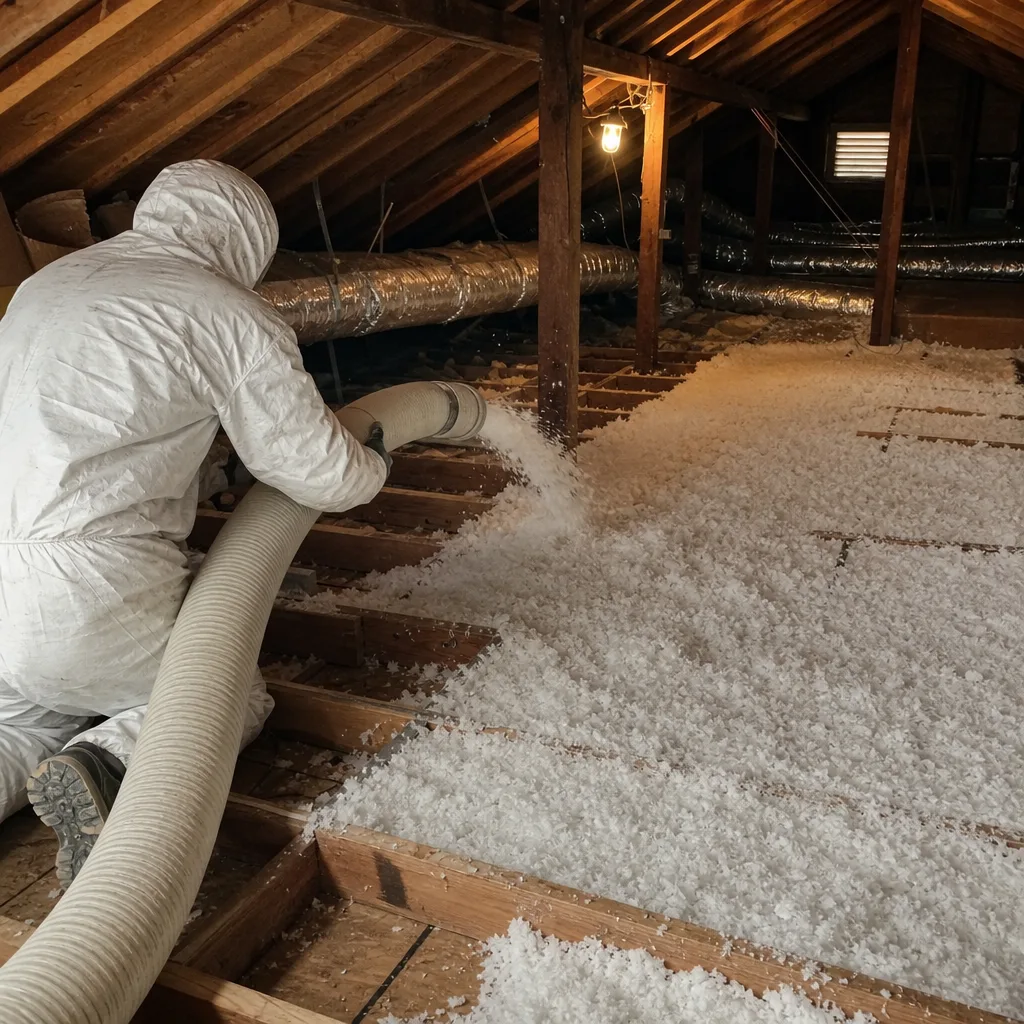
Here are honest numbers for the Fountain Valley market, based on our recent work in 92708 and 92728. A blown-in attic insulation top-up on a single-story tract home typically runs $1,500 – $2,800. A full attic insulation replacement with removal of old material ranges $2,800 – $5,500 depending on attic size and contamination. Attic batt insulation runs $1,800 – $3,400, and attic baffles and ventilation prep add $400 – $900 when a reroof is already open. Radiant barrier lands at $1,200 – $2,800. Attic cleaning alone typically runs $1,800 – $3,500. The biggest variables are attic height, access, and whether we need to remove contaminated material. We give a firm quote before any work begins. Call (855) 773-6429 for a free estimate.
We Also Serve Cities Near Fountain Valley
Our crews cover Fountain Valley plus the neighboring communities of Fountain Valley, Midway City, Huntington Beach, Costa Mesa, and Westminster. If you’re a Fountain Valley homeowner checking our work across the city line, we handle the whole area. The same team, the same eight-brand material library, and the same Title 24 experience applies no matter which side of the 405 you’re on. Our Attic Insulation team serves all of north and central Orange County.
Serving Fountain Valley, CA — Our Local Coverage Area
We’re based in the Fountain Valley area and know this community well. Use the map below to see our service coverage — if you’re nearby, we can almost certainly help.
FAQs About Attic Insulation in Fountain Valley
Yes, in most cases. Fountain Valley’s building department enforces California’s Title 24 energy code on reroofs and major remodels, which means if your existing attic insulation falls below the current Zone 6 requirement, the permit for your new roof will likely trigger a required insulation upgrade. We see this constantly in Fountain Valley’s 1958 – 1980 tract housing. The inspector doesn’t ask about your energy bills. The code is the code. We can assess your attic before the reroof starts and tell you exactly what the inspector will require. Call (855) 773-6429 for a free pre-roof inspection.
Look first at the physical condition. If the loose-fill has settled below the top of the ceiling joists, it’s likely performing well below its labeled R-value. In Fountain Valley’s mid-century tract homes, a paper label that says R-11 often tests closer to R-6 after five or six decades of settling. We can measure the actual depth and condition, check for moisture and rodent contamination, and tell you whether you need a top-up or a full replacement. Physical inspection beats any assumption based on the year the house was built.
It can, if it’s installed on the wrong side of the assembly. Fountain Valley’s coastal marine layer brings humid air into attics during May Gray and June Gloom. If a vapor barrier is placed incorrectly, it traps that moisture against the roof deck and invites condensation and mold. The correct placement depends on the assembly, the material, and which direction moisture is moving. This is one of the most common mistakes we see from careless installs in coastal Orange County homes. Don’t let someone guess at this.
Yes, if the roof deck is already open for a reroof, and especially if the roof faces west or southwest. A radiant barrier in Fountain Valley reflects afternoon radiant heat before it gets into the attic, which cuts attic temperatures significantly during summer afternoons. Insulation then works from a cooler baseline. If the roof isn’t open, adding a radiant barrier later is more expensive and more disruptive. The best time is during the reroof that already triggered your Title 24 review. Call (855) 773-6429 and we’ll assess whether your roof orientation makes a radiant barrier worth the cost.
Yes, but the attic remains the primary location. Most Fountain Valley tract homes sit on concrete slabs, so there’s no basement or crawlspace to insulate. Wall insulation can be added through drilling and blowing into stud cavities, or improved during a major remodel when walls are opened. But the attic carries the heaviest thermal load, and it’s where the best return per dollar sits. If your slab-on-grade home has settled attic insulation, fixing that first will deliver more comfort than starting with walls. We can inspect both and sequence the work sensibly.
If you’re dealing with a Title 24 trigger, a hot upstairs, or a roofer who just told you the attic needs insulation, call us at (855) 773-6429. We’ll give you a straight answer, a free estimate, and a plan that fits your Fountain Valley home.
Written by Alan Whitcomb, Owner at Placentia Insulation, serving Fountain Valley and Orange County’s mid-century tract housing stock.