
Fast, Reliable Attic Insulation Across West Puente Valley
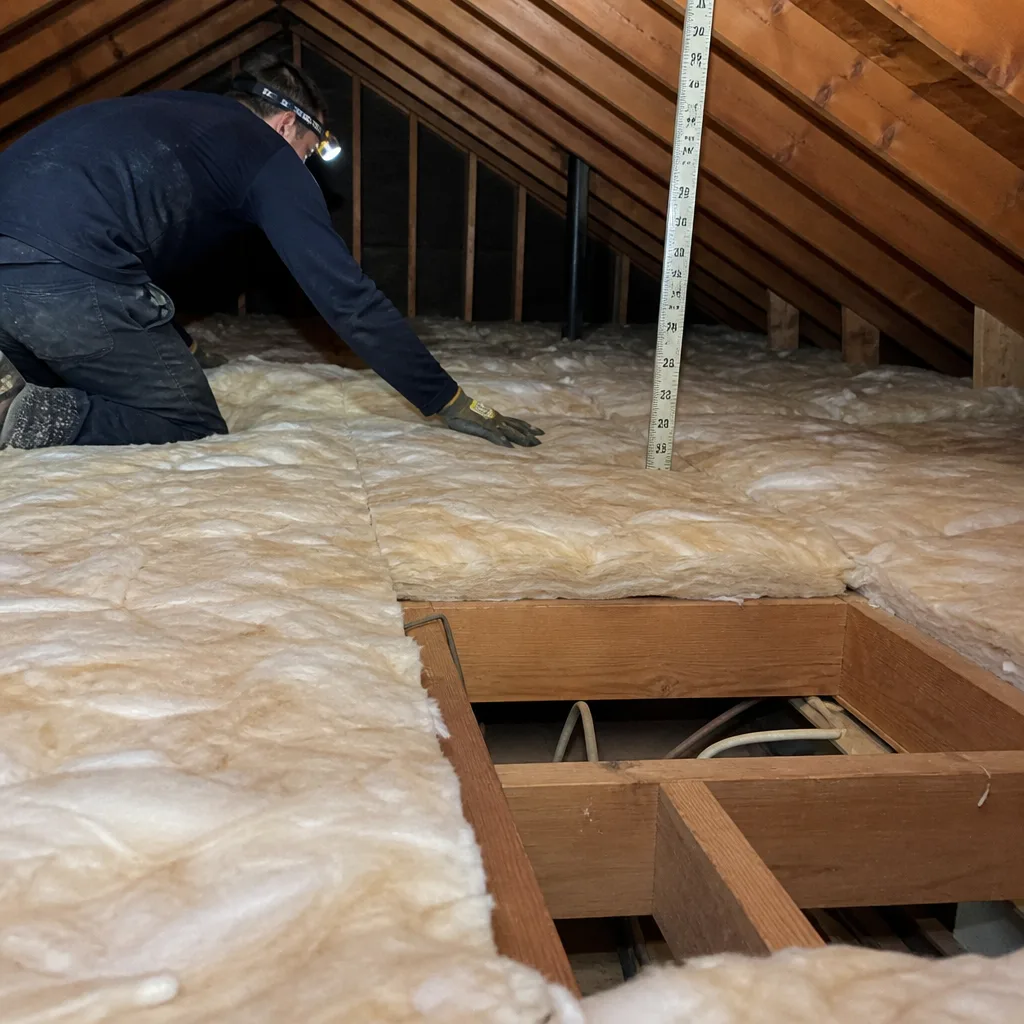
Attic insulation in West Puente Valley is a different animal than it is in newer parts of the San Gabriel Valley. Most homes here were built between 1950 and 1965, before California’s Title 24 energy code existed, and many still have whatever thin layer of insulation the original builder decided was enough. If your summer cooling bills are climbing and your ceiling feels warm to the touch by 3 p.m., the fix is almost always in the attic. We service West Puente Valley daily, and our crews know the housing stock, the access issues, and the LA County permit path on this side of the 605. Call (855) 773-6429 for a free estimate on any attic insulation job in West Puente Valley.
Why Placentia Insulation Is West Puente Valley’s Preferred Attic Insulation Company
We’re an insulation-only contractor. That’s the whole pitch. We don’t do roofing, we don’t do HVAC, we don’t send a guy who spent yesterday snaking drains. Every crew member, every tool in the truck, every conversation with a West Puente Valley homeowner is about insulation. Alan Whitcomb built the company around one question: what’s the right material for this attic, on this street, in this climate? For the unincorporated streets of West Puente Valley, that question matters more than most folks realize.
We’ve worked in 91746 long enough to know the rhythm of LA County permitting, the shallow attic clearances on the postwar stucco boxes off Amar Road, and the constant traffic hum from the 60 and 605 that seeps through under-insulated ceilings. Our Attic Insulation team carries eight brands and three installation methods, which means we match the material to the job, not the job to whatever’s on the truck. When a West Puente Valley homeowner calls, we’re typically scheduling within a week, and estimate visits are always free.
Why This Page Matters for West Puente Valley Homeowners
Here’s what most generic insulation pages won’t tell you, because they’re written for a national audience and copy-pasted into local templates. West Puente Valley is unincorporated. That means your attic insulation permit doesn’t go through a city building department. It goes through LA County. For a blow-in retrofit or a radiant barrier install, the county’s process adds a scheduling step that a city-permit job wouldn’t have. If a contractor doesn’t know that, you find out when the inspector doesn’t show up on the day you were told. We plan for it from the first phone call.
And the housing stock matters too. These are small single-story stucco tract homes, most built in the 1950s and early 60s, with shallow attics, low-slope roofs, and original insulation that’s compressed to a fraction of its rated value. Add the inland heat, where summer afternoons regularly push past 90°F, and you get attics that act like ovens, radiating heat through the ceiling until well after sundown. That’s the problem we solve here, more than anywhere else we work.
Radiant Barrier in West Puente Valley
Radiant Barrier work in West Puente Valley is one of the highest-impact upgrades a homeowner can make, and it’s the job we’d recommend first for anyone whose attic is basically an unventilated heat trap. A radiant barrier is a reflective foil-faced material installed on the underside of the roof deck. It reflects radiant heat from the sun back out of the attic, rather than letting the roof deck absorb it and radiate it down into the living space. In West Puente Valley’s inland climate, where July and August bring day after day of 90°F-plus heat, a radiant barrier alone can lower attic temperatures by 20 to 30 degrees.
Most homes here never had one installed. The original construction predates the practice, and the low-slope roofs mean the sun hits the roof plane nearly straight-on all afternoon. A typical residential radiant barrier install in West Puente Valley runs $1,200 to $2,600 depending on roof area, attic accessibility, and whether you pair it with new insulation. For a 1,000 to 1,400 square foot tract home, you’re usually looking at the middle of that range.
What a Radiant Barrier Job Involves
We staple or fasten the reflective material to the underside of the roof joists, leaving an air gap between the foil and the roof deck, which is what actually does the reflecting. On the tight, shallow attics common in West Puente Valley, we work in 30- to 40-minute shifts in hot weather and use the right PPE every time. The job is usually done in half a day.
When It’s the Right Call
If your ceilings feel warm by late afternoon, or your AC runs nonstop from noon to 8 p.m., the attic is almost certainly the problem. Radiant barrier makes the biggest difference in homes with dark composition shingle roofs and little or no attic venting, both of which are standard on mid-century tract houses here.
Attic Cleaning Services in West Puente Valley
Attic Cleaning Services in West Puente Valley almost always go hand-in-hand with a blow-in insulation project, and the reason is specific to this housing stock. These attics have been collecting dust, rodent debris, and sometimes the remains of the original insulation for 60-plus years. Before you add new material, that layer of compressed fiberglass and whatever’s living in it needs to come out. We don’t skip this step, and we’d caution any West Puente Valley homeowner against a contractor who does.
A full attic cleanout for a typical 1,000 square foot home in 91746 runs $800 to $1,500, depending on the depth of the existing material, how much debris is up there, and whether we’re sealing gaps afterward. If there’s rodent activity, which is common in older tract homes where garage-to-attic gaps were never properly sealed, the job climbs toward the top of that range.
Removal and Sanitation
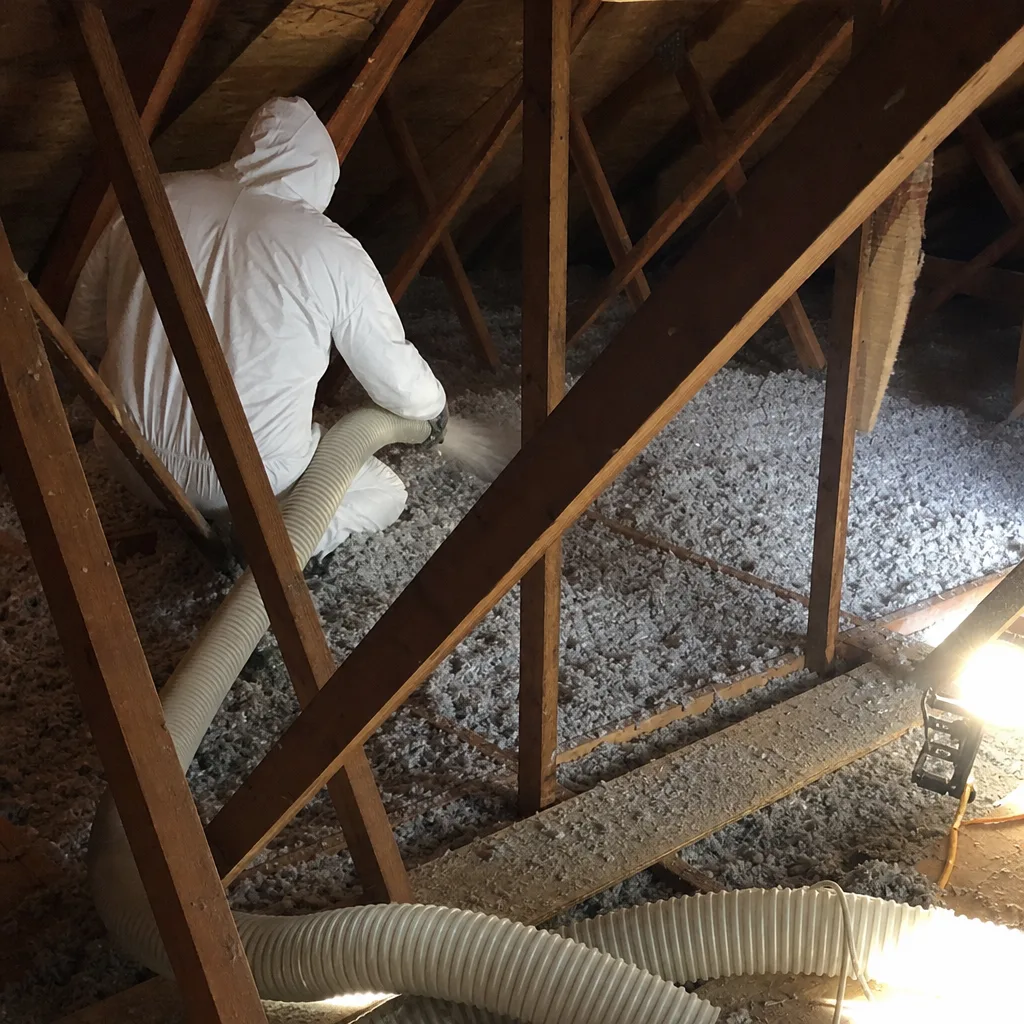
We vacuum out the old insulation with a commercial HEPA-filtered vacuum, bag it, and remove it through the attic access. Then we sanitize the exposed surfaces. For most West Puente Valley attics, the whole process takes one day.
Air Sealing During the Cleanout
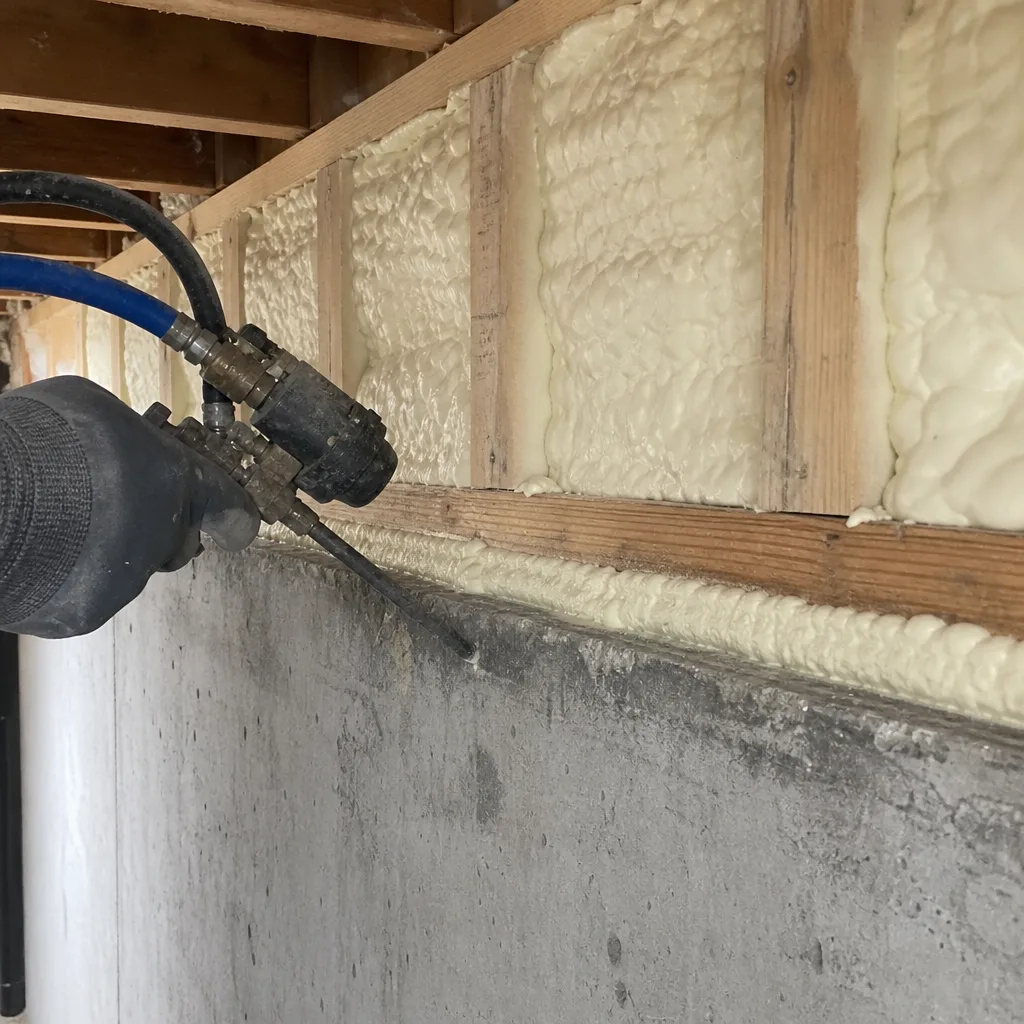
While the attic is empty, we seal top plates, wire penetrations, and that gap between the garage and living space that’s present in nearly every attached-garage tract home we’ve worked on here. It’s the cheapest, highest-leverage part of the job, and you can only do it properly when the attic is stripped clean.
What happens when you call
- 1
A real person answersNo phone trees — you reach a local pro.
- 2
You get an upfront price rangeHonest numbers before anyone is dispatched.
- 3
A background-checked tech heads outLicensed & insured, dispatched right away.
- 4
You approve before work beginsNothing starts until you say go.
Trusted Brands We Service in West Puente Valley
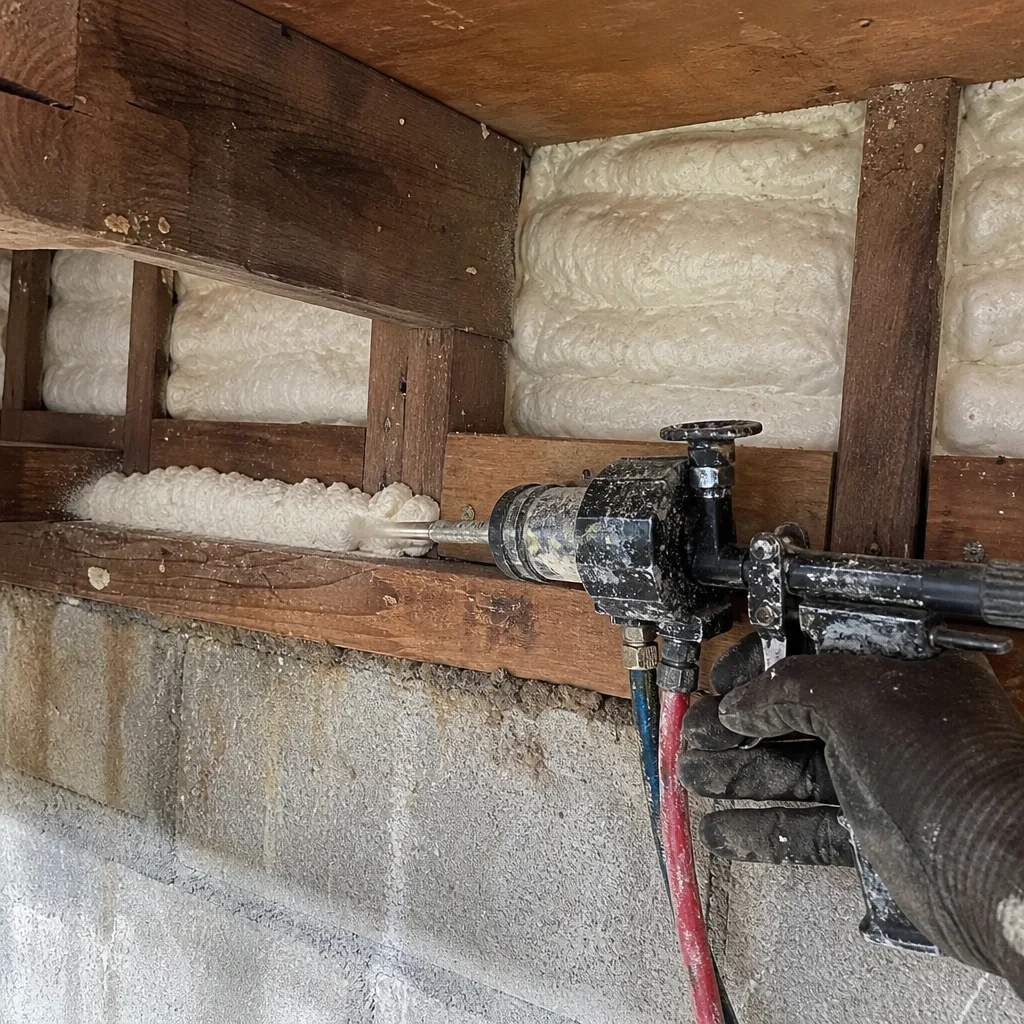
We stock and install insulation from Rockwool, CertainTeed, and Icynene, among others, and we don’t have a single-brand loyalty that pushes you toward whatever we bought in bulk last quarter. Rockwool mineral wool is the choice for West Puente Valley homeowners who want fire resistance plus serious sound dampening. CertainTeed fiberglass gives us a cost-effective batt option for standard attic retrofits. Icynene open-cell spray foam excels in tight, hard-to-reach cavities where batts won’t sit right. Eight brands. Three methods. One specialty. For West Puente Valley customers, that means we’re not going to sell you a product the house doesn’t need because it’s the only one in our warehouse.
Common Attic Insulation Problems We See in West Puente Valley Homes
- Compressed original fiberglass reading R-5 or less. The 1950s and 60s builders in this area put in the minimum: a thin layer of pink or yellow batts that’s since been walked on, rodent-nested, and compressed into something approaching cardboard. R-5 is what a code-minimal attic should have been; what you need today is R-49.
- Disconnected or uninsulated duct runs in shallow attics. The attached-garage layout of these tract homes forces ductwork through the attic. Ducts that leak conditioned air into a 130°F attic are the hidden reason your AC bill keeps climbing despite a newer unit.
- Freeway roar through under-insulated ceilings. Homes closer to the 60 or 605 carry a constant low-frequency rumble that thin insulation does nothing to stop. Adding mass or acoustic-focused material in the attic is the single best fix on these lots.
- No radiant barrier anywhere in the attic assembly. These homes were built years before radiant barrier became standard in hot climates. The low-slope roof collects sun at a brutal angle all afternoon, and with no reflective layer, that heat transfers directly into the ceiling.
Pricing for Attic Insulation in West Puente Valley, CA
Here’s what we quote for West Puente Valley jobs, and we quote them the same way every time. A blow-in attic insulation project for a typical 1,000 to 1,400 square foot tract home runs $1,800 to $3,400, depending on target R-value and attic access. Attic batt insulation for the same footprint falls in the $2,000 to $3,800 range. Top-up work, where you’re adding new material over existing insulation that’s still in acceptable condition, comes in lower: $900 to $1,800. Full replacement, including removal of old material, lands at $2,500 to $4,500. Radiant barrier installation adds $1,200 to $2,600, and a standalone attic clean runs $800 to $1,500. Call (855) 773-6429 and we’ll give you a fixed number over the phone after a quick description of the attic, no on-site visit needed for a ballpark range.
We Also Serve Cities Near West Puente Valley
Our crews run routes through the whole area, so if you’re in Avocado Heights, La Puente, Valinda, or El Monte, we’re close by with the same equipment and the same eight-brand material list. Learn more about our full coverage and service details at Attic Insulation in West Puente Valley.
Serving West Puente Valley, CA — Our Local Coverage Area
We’re based in the West Puente Valley area and know this community well. Use the map below to see our service coverage — if you’re nearby, we can almost certainly help.
FAQs About Attic Insulation in West Puente Valley
Yes, and because West Puente Valley is unincorporated, the permit goes through LA County, not a city building department. That’s not a reason to skip it. For a standard blow-in or batt replacement project, LA County treats it as a minor building alteration, and the process is straightforward when you know the path. We file the permit for you as part of the job, and our schedule is built around county inspection timing rather than fighting it. Call (855) 773-6429 and we’ll walk you through what to expect for your specific street in 91746.
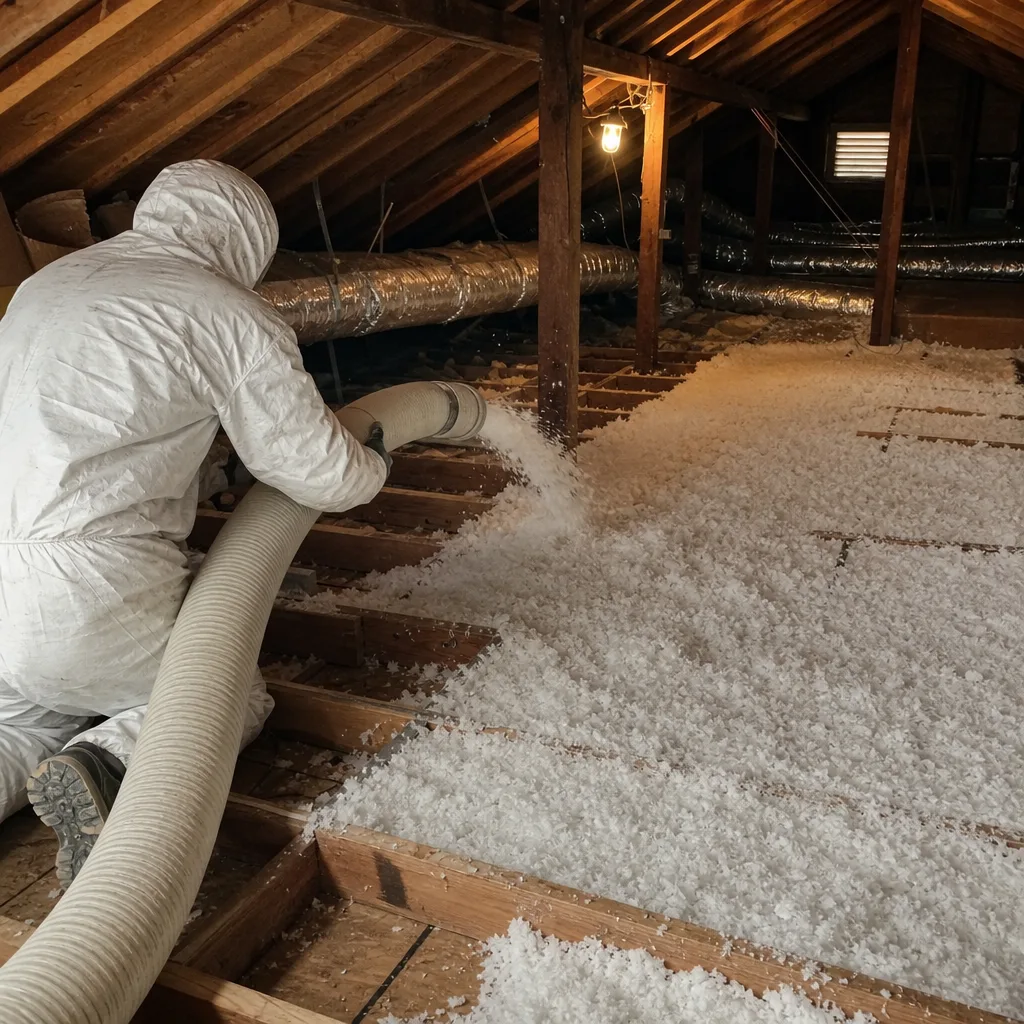
Most of the original attics in these homes test at R-5 to R-19 when today’s recommendation for our climate zone is R-49. That means a full top-up or a removal-and-replacement, depending on condition. For a typical 1,100 square foot ranch-style home, we’re blowing in roughly 14 to 16 inches of cellulose to reach R-49. The exact depth calculator starts with a measurement we take during the free estimate.
Yes, but the material choice matters. Blown-in fiberglass does almost nothing for low-frequency traffic roar. Blown-in cellulose is better, and Rockwool mineral wool is dramatically better, because dense mineral wool absorbs sound energy in a way lightweight materials don’t. For homes on the west end of West Puente Valley under constant 605 noise, we often recommend dense-packed Rockwool in the attic floor plus air sealing, which together cut the rumble noticeably. It’s not a replacement for double-pane windows, but it’s the step most people skip.
We install materials from Owens Corning, Johns Manville, Knauf, Rockwool, CertainTeed, Icynene, Demilec, and GreenFiber. For West Puente Valley’s post-war tract homes, the most common picks are GreenFiber blown-in cellulose for the attic floor, CertainTeed batts for tight spots, Rockwool for sound-sensitive lots near the freeways, and Icynene open-cell foam for rim joists and odd cavities. We’re not locked into any single brand, so the recommendation is based on your attic, not our inventory.
Sometimes. If the existing insulation is dry, not compressed, and free of rodent activity, we can top it up and save you the removal cost. If it’s been soaking in moisture, flattened by decades of foot traffic, or contaminated, it needs to come out first. In West Puente Valley homes from the 50s and 60s, we more often recommend removal than top-up, because the original material is rarely in usable condition. We’ll show you what’s up there during the estimate, so you can see the condition yourself before deciding.
Written by Alan Whitcomb, Owner at Placentia Insulation, serving West Puente Valley and the surrounding San Gabriel Valley.
Ready to get the attic sorted? Call (855) 773-6429 for a free estimate on attic insulation, radiant barrier, or a full cleanout in West Puente Valley. We’re local, we’re insulation-only, and we answer the phone.