
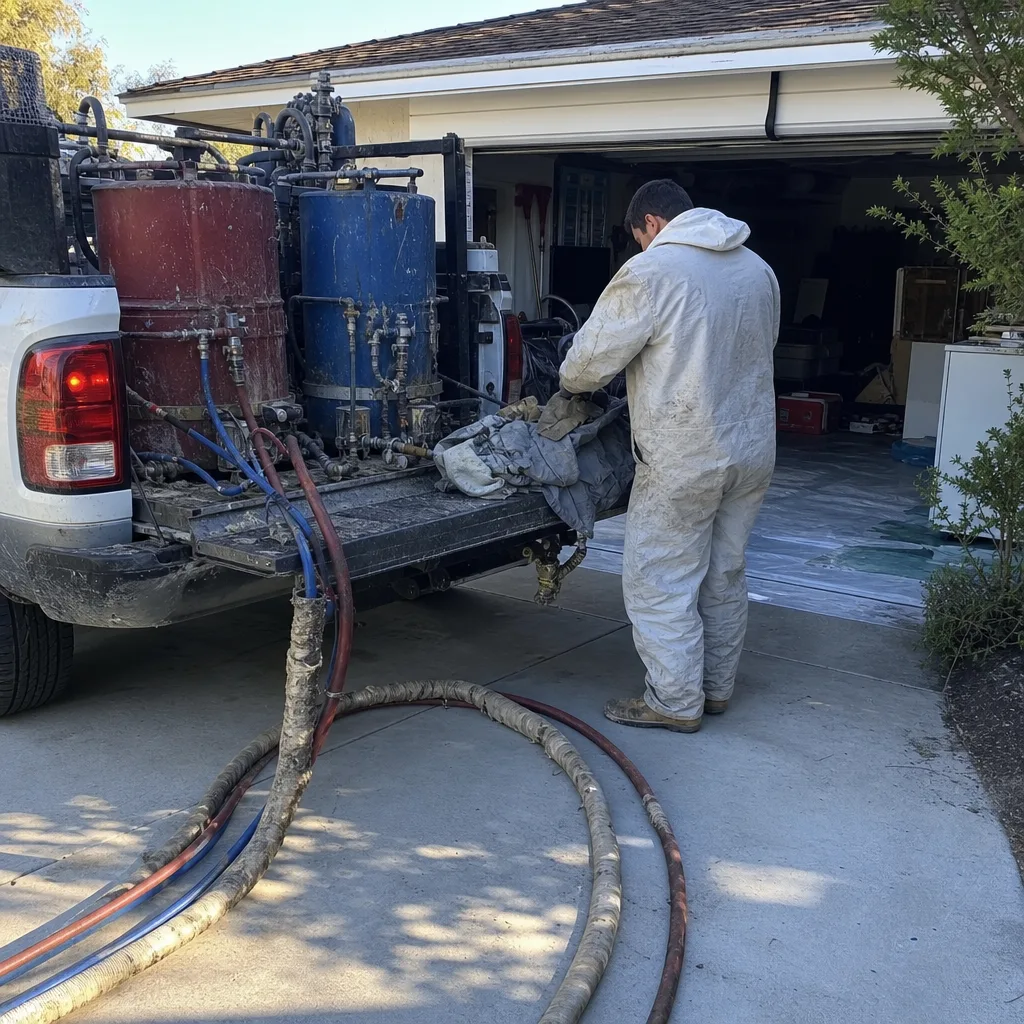
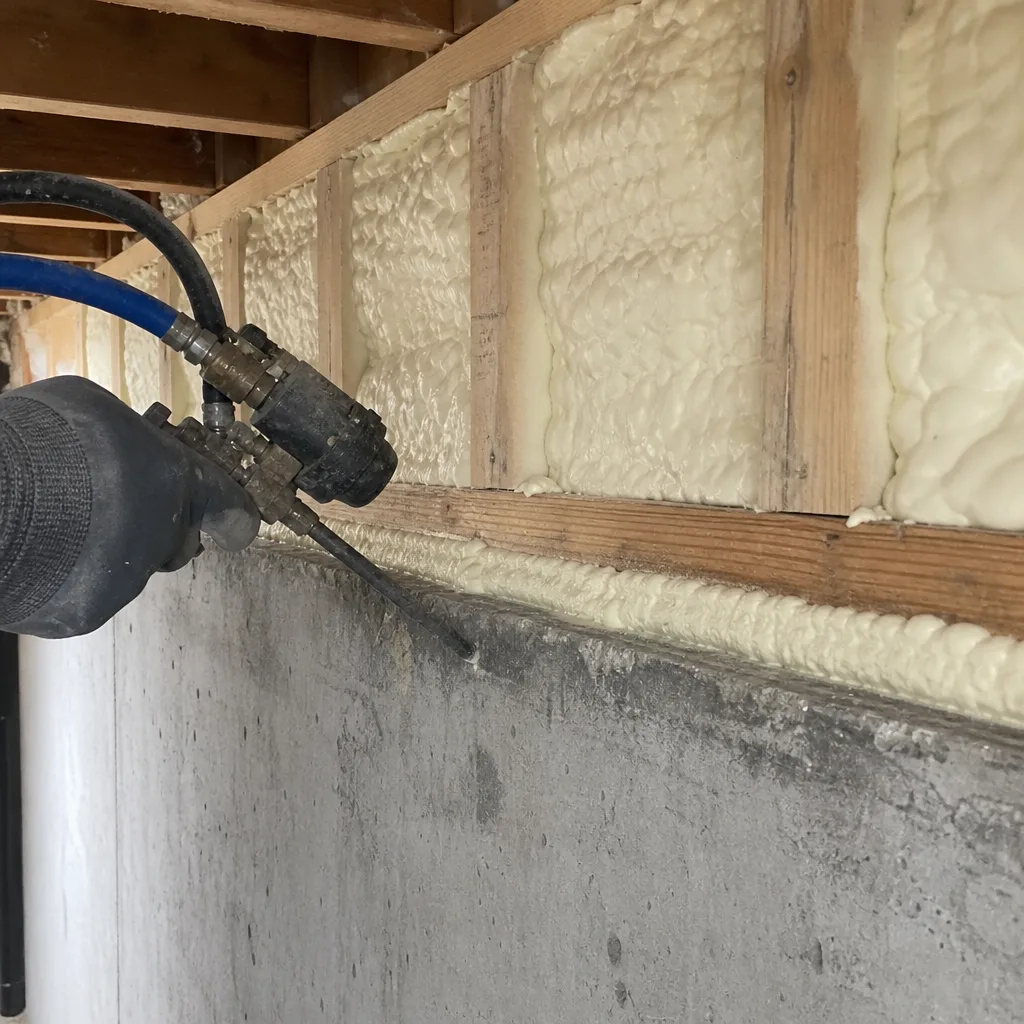
Fast, Reliable Spray Foam Insulation Across Costa Mesa
Spray foam insulation in Costa Mesa typically costs $2,800 to $7,500 for a full wall retrofit, with rim joist work running $1,200 to $2,400 on an average 1950s ranch. The real variable here isn’t square footage – it’s how much demolition and moisture remediation your existing stucco walls need before foam can go in. Most Costa Mesa homes we assess were built between 1950 and 1965 with 2×4 framing and zero original wall insulation, so we’re usually retrofitting cavities that have spent sixty-plus years collecting marine-layer condensation. We’re Placentia Insulation, and we’ve worked in every Costa Mesa zip code from 92626 to 92628. Call us at (855) 773-6429 and we’ll tell you straight what your house actually needs.
What our Costa Mesa customers keep telling us is the same thing: the house is cold at night from April through June, foggy mornings leave everything feeling damp, and the energy bill doesn’t match how mild the weather is. That’s not a heating problem. It’s an air-sealing and vapor-management problem – and it’s exactly what our Spray Foam Insulation team specializes in solving. We’re not a general contractor who happens to own a foam rig. Insulation is the only trade we work in.
Why Placentia Insulation Is Costa Mesa’s Preferred Spray Foam Insulation Company
We carry eight insulation brands – Owens Corning, Johns Manville, Knauf, Rockwool, CertainTeed, Icynene, Demilec, and GreenFiber – because no single product line fits every Costa Mesa home. A 1957 ranch in Mesa North needs different chemistry than a 2015 infill townhome near the South Coast Metro area. Most insulation contractors stock one or two brands and force your house to fit their inventory. We do the opposite: we match the material to the job, not the job to whatever we have on the truck.
Our work in Costa Mesa has put us inside enough original 1950s wall cavities to know exactly what’s waiting behind that stucco. Damp kraft-faced batts. Settled fiberglass. Rodent trails. Sometimes nothing at all. Alan Whitcomb, who leads our crew, has spent years developing retrofit protocols for this specific housing stock. We know which neighborhoods need open-cell Icynene for cavity drying and which exterior walls can handle closed-cell Demilec without trapping condensation against the sheathing. That local knowledge is why Costa Mesa homeowners call us before the generalists.
Response time to Costa Mesa is usually 24 to 48 hours for an assessment, and we schedule full retrofits around your availability. We’re based in Placentia, which means we’re close enough to be on-site quickly but not so close that we treat your job as routine. The marine layer in Costa Mesa doesn’t wait for a contractor who’s booked three weeks out. Neither do we.
Spray Foam Wall Insulation in Costa Mesa
Spray Foam Wall Insulation in Costa Mesa is rarely a simple drill-and-fill job. Most of the homes we work on in 92626 and 92627 are mid-century tract houses with stucco over 2×4 framing. The original wall cavities, if they were insulated at all, contain kraft-faced fiberglass batts that have spent decades absorbing moisture from coastal fog and morning condensation. Before any foam goes in, those cavities need to be opened, cleaned, and often dried. A full wall retrofit on a 1,200-square-foot ranch in Costa Mesa typically runs $4,500 to $7,500 when it involves removing stucco, prepping cavities, and re-sheathing. Smaller wall sections, like a single bedroom or a thermal problem wall, can run $1,800 to $3,200.
Open-Cell for Drying Wall Cavities
In Costa Mesa’s specific climate, we usually recommend Icynene open-cell foam for wall cavities. Open-cell allows moisture vapor to move through the wall assembly rather than trapping it. When you’re dealing with stucco exteriors and persistent marine-layer dampness, that breathability matters more than the R-value on the label. The foam expands into every gap, air-seals the cavity, and still lets the wall dry inward toward the living space.
Removing Old Batts Before Foam
We don’t foam over old insulation. Compressed, damp fiberglass buried under new foam creates exactly the kind of void and moisture trap that causes problems five years down the line. In Costa Mesa homes especially, where the original batts are often waterlogged from coastal condensation, extraction is non-negotiable. We remove everything down to bare framing, inspect the sheathing, and only then spray.
Rim Joist Spray Foam In Costa Mesa
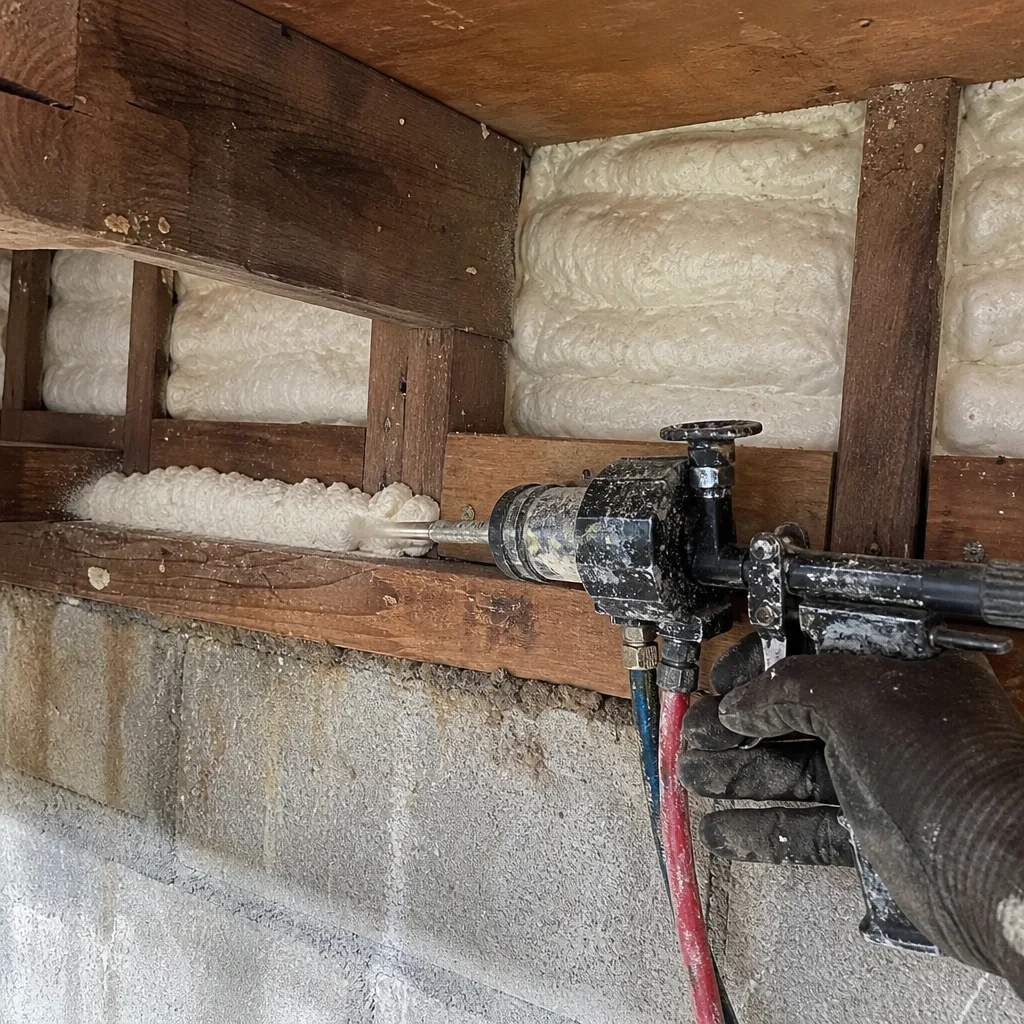
Rim Joist Spray Foam in Costa Mesa homes from the 1950s and 60s addresses one of the most overlooked air-leakage points in the entire building envelope. Rim joists – the box-sill area where floor framing meets the foundation wall – were left completely uninsulated in nearly every original construction from that era. Coastal air, fog, and damp crawl space air migrate straight through those gaps into the living space. Sealing them with closed-cell Demilec foam typically runs $1,200 to $2,400 for a standard single-story ranch. It’s one of the highest-impact retrofit jobs we do because it stops moist air at the exact point where it enters.
Air Sealing at the Foundation Line
The rim joist isn’t just a thermal leak – in Costa Mesa, it’s a moisture conduit. Crawl spaces in 92627 homes stay damp through most of the year. That damp air rises through rim joist gaps and pressurizes the wall cavities from below, accelerating the condensation problem inside 2×4 walls. Closed-cell foam sprayed along the rim creates a continuous air and vapor barrier at the foundation line. It’s dense, it’s rigid, and it doesn’t sag or settle the way fiberglass batts do.
One Trip, Done Right
We plan Costa Mesa jobs so rim joist work and wall insulation happen in the same visit whenever possible. You don’t want a contractor who seals the rim in March and comes back for the walls in June. That’s two mobilizations, two disruption cycles, and two chances for the marine layer to undo the first round of work. Our crews arrive with the full material package and finish the job in one sequence.
Trusted Brands We Service in Costa Mesa
We install and service Icynene and Demilec spray foam systems because they’re the two brands with the most documented performance in coastal climates. Icynene open-cell is our default for wall cavities that need to breathe and dry. Demilec closed-cell is what we use for rim joists, crawl spaces, and areas where a rigid air and vapor barrier is required. Both product lines have been in active inventory with us for years, which means we’re not ordering materials after you call – we’re loading the truck. We also keep GreenFiber blown-in cellulose and Rockwool mineral wool on hand for Costa Mesa homes that need hybrid approaches: foam for air sealing, cellulose or mineral wool for cavity fill in specific assemblies.
Common Spray Foam Insulation Problems We See in Costa Mesa Homes
- Closed-cell foam against stucco sheathing. This is the failure we see most often in Costa Mesa, usually from retrofits done by inland crews who don’t understand marine-layer dynamics. Closed-cell foam sprayed directly against stucco sheathing blocks outward drying. Moisture that condenses on the back side of the stucco during foggy nights has nowhere to go. It gets trapped, and mold grows inside the wall over the next several seasons. In Costa Mesa, walls need open-cell foam or a smart vapor retarder arrangement.
- Blocked attic vents from careless application. 1950s Costa Mesa attics were designed around passive ventilation: soffit vents in, ridge or gable vents out. When spray foam is applied without masking the vents, the intakes get sealed shut. Attic humidity rises, and you’ve created a warm, damp box above the ceiling – perfect conditions for mold on the underside of the roof deck. We see this constantly.
- Foam that didn’t adhere because the cavity was dirty or damp. Spray foam sticks to clean, dry surfaces. The walls in older Costa Mesa homes are anything but. Dust, old rodent droppings, and residual moisture from marine-layer condensation create a barrier between foam and framing. If the surface isn’t prepped, the foam cures with voids and gaps that let coastal air keep moving through the wall. We’ve opened walls in 92626 where foam was peeling off the studs in sheets because the installer sprayed over damp, dirty cavities.
- One-size-fits-all foam chemistry from single-brand contractors. A contractor who only installs closed-cell foam will put closed-cell in every cavity, including the ones that need to breathe. Costa Mesa’s specific climate – coastal, foggy, mild – means wall-cavity drying matters more than maximum R-value. When a single-brand shop shows up, you get their product, not the right product. We stock both open-cell and closed-cell specifically because this city demands both in different applications.
Pricing for Spray Foam Insulation in Costa Mesa, CA
Here’s what we quote in Costa Mesa right now. Rim joist sealing runs $1,200 to $2,400. Individual wall sections run $1,800 to $3,200. A full 2×4 wall retrofit on a standard 1,100 to 1,500-square-foot ranch runs $4,500 to $7,500 when it includes stucco removal, cavity prep, and re-sheathing. Larger homes or ones with extensive water damage push toward $9,000 and above. What changes the price is what’s inside your walls: how much old insulation needs removal, whether the sheathing is sound, and whether we’re working around existing plumbing or electrical. Estimates are free, and we’ll walk you through the quote line by line. Call (855) 773-6429 and we’ll schedule a time to look.
We Also Serve Cities Near Costa Mesa
Our crews run daily to Spray Foam Insulation in Costa Mesa and the surrounding coastal communities. We handle the same marine-layer moisture challenges in Newport Beach, Fountain Valley, Huntington Beach, and San Joaquin Hills – same 1950s stucco housing stock, same condensation patterns, same retrofit protocols. If you’re close to the coast, we’ve likely worked on a house like yours this month.
Serving Costa Mesa, CA — Our Local Coverage Area
We’re based in the Costa Mesa area and know this community well. Use the map below to see our service coverage — if you’re nearby, we can almost certainly help.
FAQs About Spray Foam Insulation in Costa Mesa
The marine layer changes everything. Costa Mesa’s coastal fog and cool, damp mornings mean wall cavities collect condensation that inland cities never see. In Riverside or San Bernardino, the priority is stopping heat – closed-cell foam’s high R-value and vapor-blocking properties make sense. In Costa Mesa, a closed-cell-only approach traps moisture against stucco sheathing and breeds mold. Open-cell foam or hybrid systems that let walls dry inward are the correct application here. We plan every Costa Mesa retrofit around vapor management first and R-value second. Call (855) 773-6429 if you want us to assess exactly what your walls need.
Yes, if it’s the wrong foam or the wrong application. Closed-cell spray foam sprayed directly against stucco sheathing in a 1950s Costa Mesa home blocks outward drying, trapping condensation that forms on the back side of the stucco during foggy nights. Within a few years, that moisture supports mold growth inside the wall. The fix is using open-cell Icynene foam for wall cavities or installing a smart vapor retarder on the interior side so moisture can dry inward. We’ve remediated enough foil-faced mold jobs in 92626 and 92627 to know this failure mode intimately. Call us at (855) 773-6429 and we’ll tell you what’s behind your walls.
We mask and protect every vent before any foam is applied. A 1950s Costa Mesa attic depends on soffit-to-ridge airflow to stay dry. If spray foam seals the soffit vents, attic humidity spikes and the underside of the roof deck grows mold. Our crews install vent baffles and confirm airflow before and after foaming – we don’t turn balanced attics into sealed boxes unless you’re specifically commissioning a full unvented attic conversion, which is a different scope with different requirements. The ventilation question is part of every quote we give in Costa Mesa.
Icynene open-cell for wall cavities that need to breathe and dry, Demilec closed-cell for rim joists and crawl spaces that need a rigid air and vapor barrier. That’s the split we use most in Costa Mesa. Both are in our active inventory, so we’re not ordering material after we diagnose your house. The larger point is this: the brand matters less than the chemistry, and the chemistry matters less than whether it’s applied correctly for your wall assembly. Most Costa Mesa homes need open-cell where the moisture is and closed-cell where the air leakage is.
Sometimes, but not in the way inland climate guides suggest. In Costa Mesa, a traditional polyethylene vapor barrier on the interior side of a 2×4 wall can trap moisture that migrated in from the stucco side during foggy weather. What many older homes we see actually need is a smart vapor retarder – a membrane that allows drying during the summer but blocks moisture drive during the winter. On a 1957 ranch in Mesa North, we paired open-cell Icynene with a smart vapor retarder after removing damp kraft-faced batts. The wall could finally dry inward, and the musty odor in the back bedroom disappeared after the next foggy season. We recommend vapor management based on what’s in your walls, not a chart in a product manual.
Written by Alan Whitcomb, Owner at Placentia Insulation, serving Costa Mesa since our first retrofit in the 1950s ranch neighborhoods of 92626.
For a free estimate on spray foam insulation in Costa Mesa, call (855) 773-6429. We’ll open a wall, show you what’s inside, and tell you exactly what it costs to fix.