
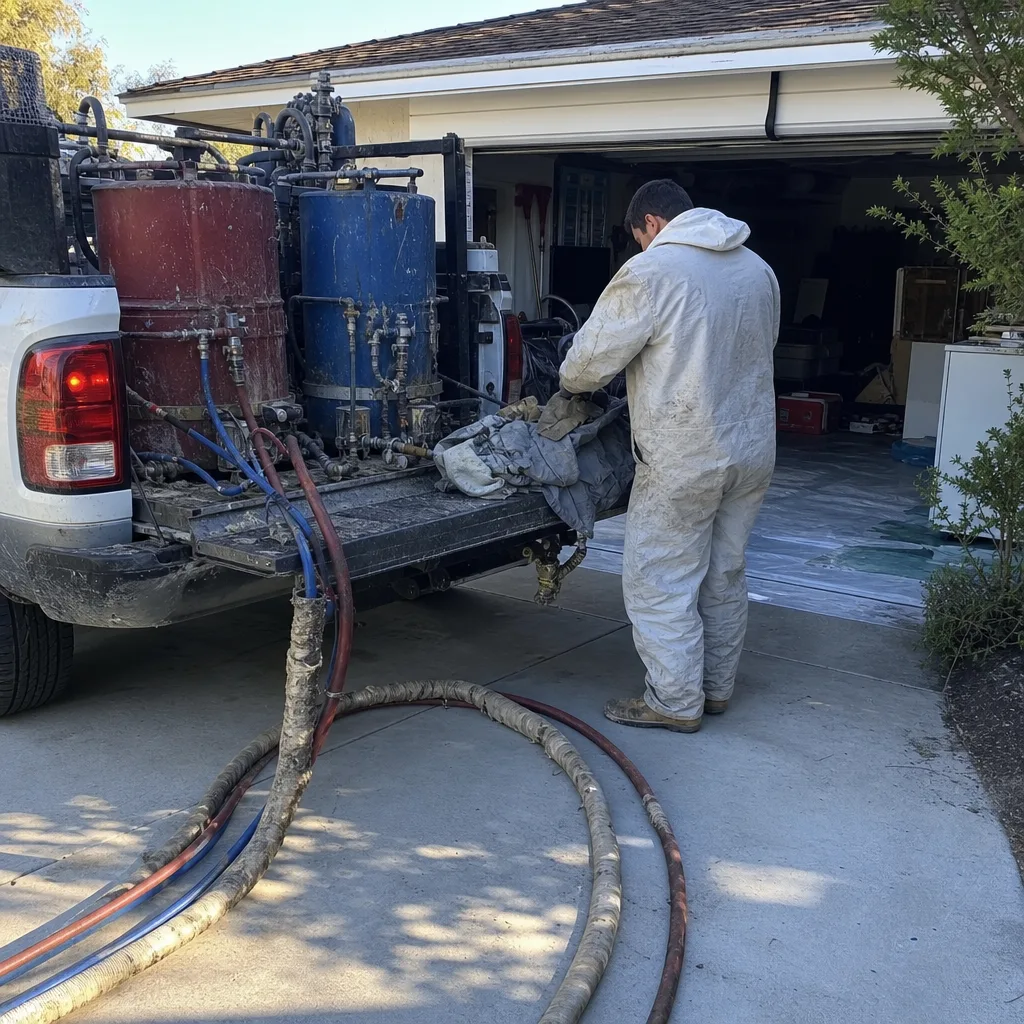
Fast, Reliable Spray Foam Insulation Across Corona
Spray foam insulation in Corona typically runs $2.50 to $6.50 per square foot installed, with a full attic air-seal and foam package on a standard 1,500-square-foot ranch landing between $4,000 and $9,000. We respond to Corona service calls within one business day, and the work usually wraps in a single visit. You spend one afternoon, then your house stops pulling Santa Ana dust through the eaves. If you’ve got a west-side Corona attic that bakes all July or a garage ceiling that radiates heat into the kitchen, call us at (855) 773-6429 and we’ll tell you exactly what you’re looking at. No vague estimates. No pressure. Just an insulation specialist who knows this city’s housing block by block.
Why Placentia Insulation Is Corona’s Preferred Spray Foam Insulation Company
Corona homeowners call us because we’re an insulation-only shop, not a general contractor squeezing your attic between a kitchen remodel and a roof patch. Every crew member, every tool, every conversation is about one trade. That focus shows up when we find the original 1960s fiberglass in your west-side attic has settled to a third of its labeled thickness, and we know immediately it’s not an R-value problem, it’s an air-sealing problem.
We carry eight brands: Icynene and Demilec for spray foam, Rockwool for mineral wool, Owens Corning, Johns Manville, Knauf, CertainTeed, and GreenFiber for fiberglass and cellulose. Most insulation contractors carry one or two lines. We carry eight so your home gets the right chemistry for the application, not whatever happened to be on the truck that morning. Alan Whitcomb built the company around that principle: match the material to the job.
Corona residents who’ve used us mention the same two things. We show up when we say we will, and we explain what we’re doing before we do it. That second part matters when you’re deciding between open-cell and closed-cell foam, or whether your garage ceiling needs a full spray or just air-sealing around the top plates.
Crawl Space Spray Foam Insulation in Corona
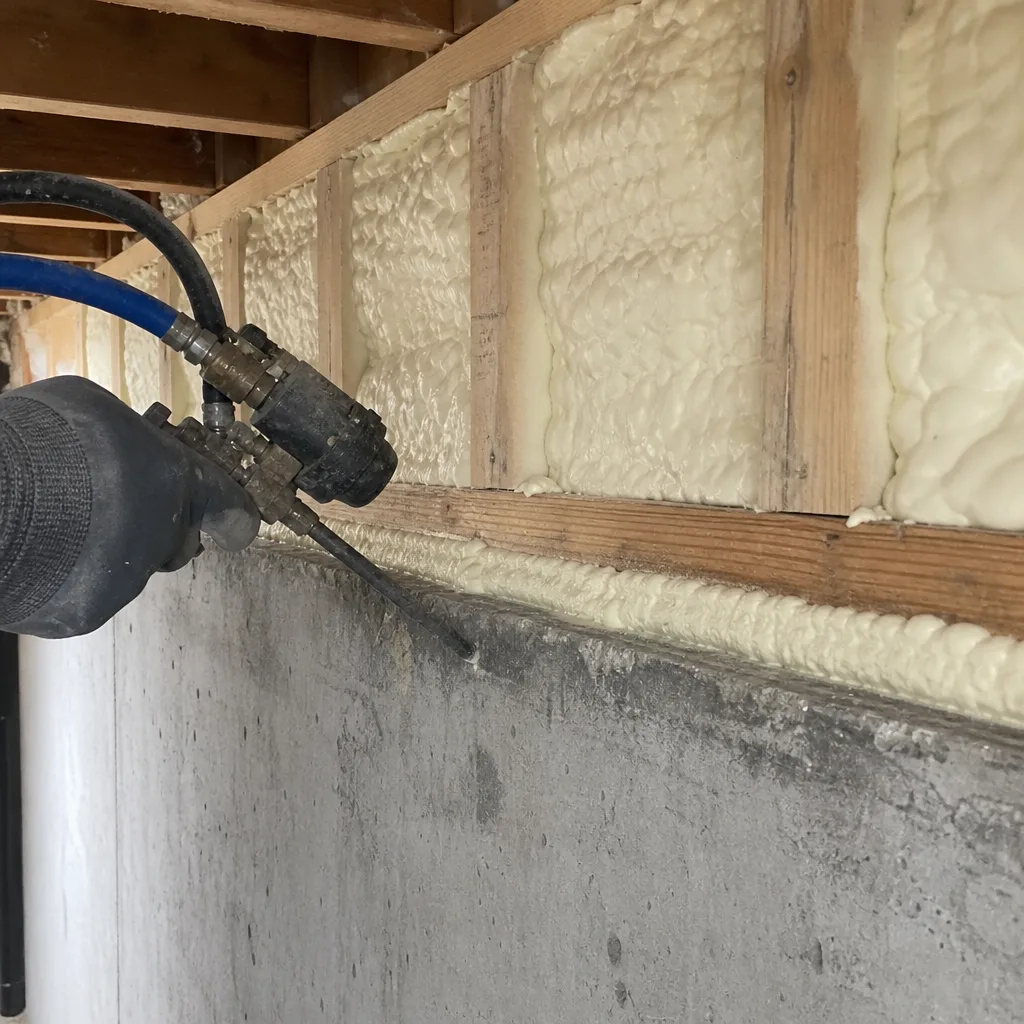
Crawl Space Spray Foam Insulation in Corona homes is a different job than it is in coastal cities, because our semi-arid soil and wind-driven dust push fine grit into vented crawl spaces all year. On west-side Corona properties, especially those older single-story tracts in the 92882 and 92879 ZIPs, we regularly find open vents pulling dust and dry, hot air under the floor while the living room above fights to hold 74 degrees. Closed-cell spray foam applied to the crawl space walls and rim joists seals those vents, blocks dust migration, and turns the crawl space into a semi-conditioned buffer that keeps floors warmer in December and cooler through the summer heat soak.
What a crawl space spray foam job in Corona gets you is a continuous air and thermal barrier where it counts most. The rim joist is the biggest air leak in almost any crawl space, and closed-cell foam is the standard fix. A typical crawl space in a 1,200 to 1,800-square-foot Corona home runs $2,800 to $5,500 depending on access and linear footage of rim joist.
Rim Joist Contact in Older Corona Crawls
Homes built in the 1960s and early 70s on the west side often have open rim joists with nothing but a thin fiberglass batt stuffed in by the original builder, if that. Those batts have usually sagged or fallen out entirely. Spraying closed-cell foam across every rim joist bay seals the connection between foundation and floor framing, which is where wind-driven dust and hot air get pulled in every time the Santa Anas pick up.
What About Vented Crawl Spaces?
Vented crawl spaces in Corona never actually ventilate the way they were designed to. The semi-arid climate means the outside air that gets pulled in is hot, dry, and loaded with fine dust from the Santa Ana corridor. Conditioning the crawl space with spray foam means closing those vents permanently and controlling air movement from the inside. If you’re tired of dust coating everything stored under the house, this is the fix.
Garage Spray Foam Insulation in Corona
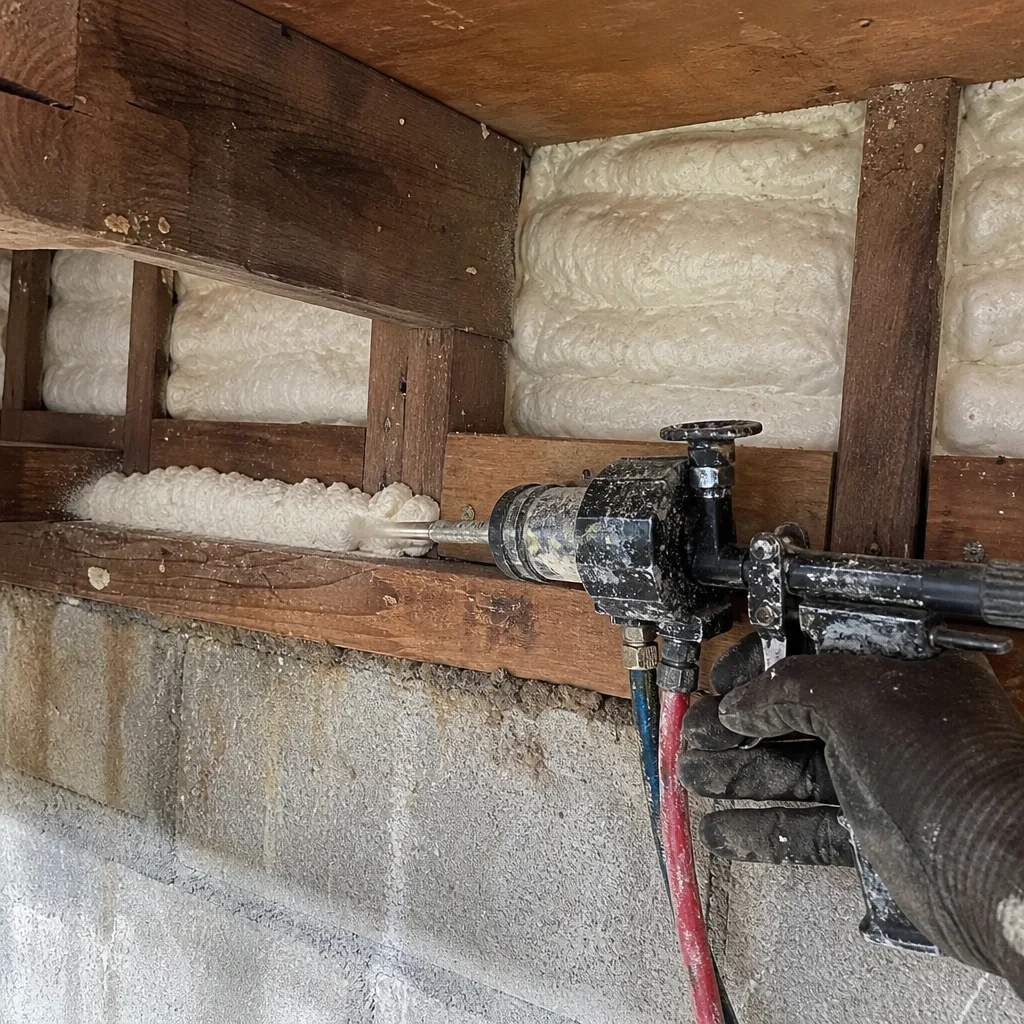
Garage Spray Foam Insulation in Corona addresses one of the most common comfort complaints we hear from west-side homeowners: the garage ceiling acting like a giant radiator pushing heat into the rooms above or beside it all summer. Those 1950s through 1970s single-story tracts were built with no insulation over the garage, and the drywall ceiling is often all that separates a 115-degree garage from a bedroom wall or a hallway. Closed-cell spray foam applied directly to the garage ceiling and band joists cuts that heat transfer dramatically, and it also helps block the dust that blows in through the garage door seals during Santa Ana events.
A standard two-car garage ceiling in Corona runs $1,800 to $3,200 for closed-cell foam, depending on square footage and whether we’re also air-sealing the attic access above. If your garage shares a wall or ceiling with living space, the return on comfort is immediate.
Older Garage Ceilings With No Insulation
Many original Corona tract homes have garages with bare drywall ceilings and no attic access at all. We’ll cut an access, inspect what’s above, and spray directly against the ceiling from below. It’s a one-day job on most single-car and two-car garages. The difference in the adjacent rooms is often noticeable the same evening.
Converting a Corona Garage Into Living Space
If you’re turning a west-side Corona garage into a workshop, gym, or additional living area, spray foam is the first thing to do, not the last. Closed-cell on the garage ceiling and walls gives you both insulation and air sealing in one pass. We see a lot of these conversions in the 92878 and 92879 neighborhoods, and the ones that skip insulation end up as ovens by May.
Trusted Brands We Service in Corona
We stock and install spray foam from Icynene and Demilec, two manufacturers that have been in the spray foam category for decades. For Corona homeowners who need more than foam, our Spray Foam Insulation team also brings options like Rockwool mineral wool for fire resistance and sound dampening, and GreenFiber cellulose for blown-in applications. Because we carry local inventory for Corona jobs, we don’t wait on special orders for standard materials. Open-cell Icynene for a tight attic in an older west-side home? We have it. Closed-cell Demilec for a rim joist? On the shelf. The right material shows up on the day we do.
Common Spray Foam Insulation Problems We See in Corona Homes
- Settled original fiberglass masking real air leaks. The original low-density fiberglass in 1950s-70s west-side attics has compressed and dust-fouled to about a third of its labeled thickness. Homeowners think they just need more insulation, but the real issue is air moving through the top plates and penetrations every time the wind blows.
- Clogged attic vents and soffit screens. Santa Ana winds push fine dust and brush-fire ash into attic ventilation on older Corona homes. When those screens load up, the attic can’t breathe, moisture sits trapped, and grit gets pulled into the living space through ceiling penetrations.
- Unsealed garage ceilings bleeding heat into adjacent rooms. West-side tract homes with no garage insulation transfer heat straight through the shared wall or ceiling. The hallway or bedroom next to the garage runs 8 to 12 degrees hotter in summer, and the fix is spray foam on the garage ceiling and band joists.
- Two-story south-hills homes with blown-in attic insulation that’s drifted. In 92881 and 92883, blown-in cellulose or fiberglass in attics has often drifted away from the eaves and settled in the center, leaving the perimeter of the attic under-insulated. Spray foam air-sealing at the eaves and top plates fixes the thermal boundary before you add more material.
Pricing for Spray Foam Insulation in Corona, CA
Here’s what you should expect to pay in Corona’s market, based on the jobs we do every week. Open-cell spray foam in an attic runs $2.50 to $4.00 per square foot. Closed-cell spray foam runs $4.50 to $6.50 per square foot. A rim joist job on a typical crawl space falls between $1,200 and $2,800. A garage ceiling runs $1,800 to $3,200. A full attic air-seal and open-cell foam package on a 1,500-square-foot ranch runs $4,000 to $6,500, and a closed-cell version of that same job runs $6,500 to $9,000. Factors that move the number: attic access height, how much old material we need to remove, whether we’re sealing ducts, and whether you’re doing rim joists or garage ceilings at the same time. Call (855) 773-6429 for a free estimate. We measure, we inspect, we give you a number you can actually plan around.
We Also Serve Cities Near Corona
Our crews work regularly in Home Gardens, El Cerrito Corona, Eastvale, and Norco. If you’re in Corona or any of those nearby communities, call us at (855) 773-6429 and we’ll schedule an insulation assessment. One crew. One specialty. The whole area covered.
Serving Corona, CA — Our Local Coverage Area
We’re based in the Corona area and know this community well. Use the map below to see our service coverage — if you’re nearby, we can almost certainly help.
FAQs About Spray Foam Insulation in Corona
Spray foam air-seals and insulates in one pass, so it fixes the actual problem in older Corona attics: air leakage through top plates and penetrations that wind events expose. New batts would just sit in the same shallow joist bays and leave the air leaks untouched. For a west-side tract home, open-cell foam is the better retrofit because it fills the shallow bays completely and stops wind-driven dust from pulling into the living space. Call (855) 773-6429 and we’ll tell you whether your attic is a foam candidate or a batts fix.
Blown-in insulation in 92881 attics usually drifts away from the eaves and settles in the center, leaving the perimeter of the attic under-insulated. Spray foam air-sealing at the eaves and top plates restores the thermal boundary before you add more material. Many south Corona homeowners pair that air-sealing with a fresh layer of blown-in cellulose over the top, and the result is a tighter attic that holds temperature through summer heat soak and winter nights.
Santa Ana winds push fine dust and brush-fire ash into attic vents, especially on west-side Corona homes. The vents and soffit screens load up until the attic can’t breathe, and fine grit gets pulled into the living space through ceiling penetrations. When we spray foam an older Corona attic, we also clear and reseal ventilation paths so the foam can do its job and the house stops pulling dust inward.
Yes. Spray foam on the garage ceiling and band joists cuts heat transfer from the garage into adjacent rooms. On a 1960s single-story Corona home with an uninsulated garage, this is often the single most effective comfort upgrade you can make for rooms that share a wall or ceiling with the garage. It also helps block dust that blows in through garage door seals during wind events. Call (855) 773-6429 for a free garage ceiling assessment.
Most older Corona homes need both, but the attic is almost always the higher priority. The attic is where the majority of heat loss happens in summer, and where wind-driven dust enters. If your crawl space is vented and open, it’s pulling in hot, dusty air that makes floors cold in winter and lets grit migrate upward. We can tell you after one inspection which space is leaking the most, and quote both separately so you can phase the work.
Written by Alan Whitcomb, owner of Placentia Insulation, serving Corona since day one with an insulation-only crew and an eight-brand material library.