
Fast, Reliable Spray Foam Insulation Across Eastvale
Spray foam insulation in Eastvale is rarely a whole-house retrofit. In this city, it’s a targeted fix: sealing the attic deck, the bonus room over the garage, and the cavity above the attached garage where builders left bare drywall or settled R-13 batts. We know exactly where those gaps are because we’ve opened enough Eastvale attics to see the pattern. Placentia Insulation serves all of 92860 with open-cell and closed-cell foam matched to what your specific house actually needs. Call (855) 773-6429 any weekday and we’ll schedule a walkthrough that starts in the attic, not at a sales pitch.
Why Placentia Insulation Is Eastvale’s Preferred Spray Foam Insulation Company
Eastvale homeowners don’t need a generalist. They need someone who understands why a 2008 stucco tract house off Hamner Avenue bakes by 3 p.m. and why the bonus room above the garage never cools down. That’s the conversation we have most weeks. Our crews work throughout Eastvale, from the neighborhoods around Eastvale Community Park to the newer tracks east of Archibald Avenue and the streets bordering the Santa Ana River. We know the housing stock, the sun exposure on west-facing garage walls, and the typical attic conditions in this zip code.
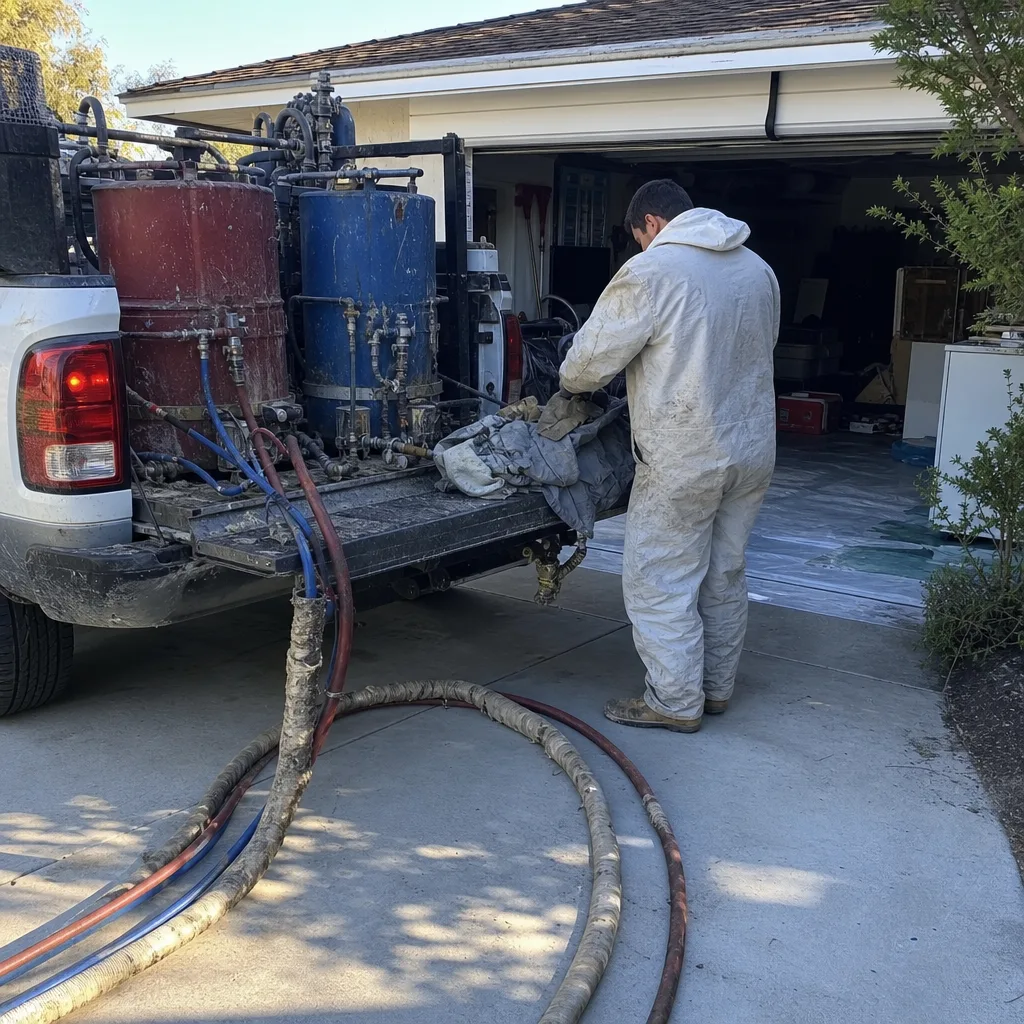
Placentia Insulation is a dedicated insulation contractor. Every crew member, every tool on the truck, and every conversation we have on site is about one trade. We carry both Icynene and Demilec spray foam, which means we choose the foam chemistry for the application instead of forcing one product into every cavity. Most insulation companies carry one or two product lines. We carry eight brands so your home gets what it actually needs. That’s the difference when you call us for spray foam in Spray Foam Insulation work in Eastvale.
Open Cell Spray Foam in Eastvale
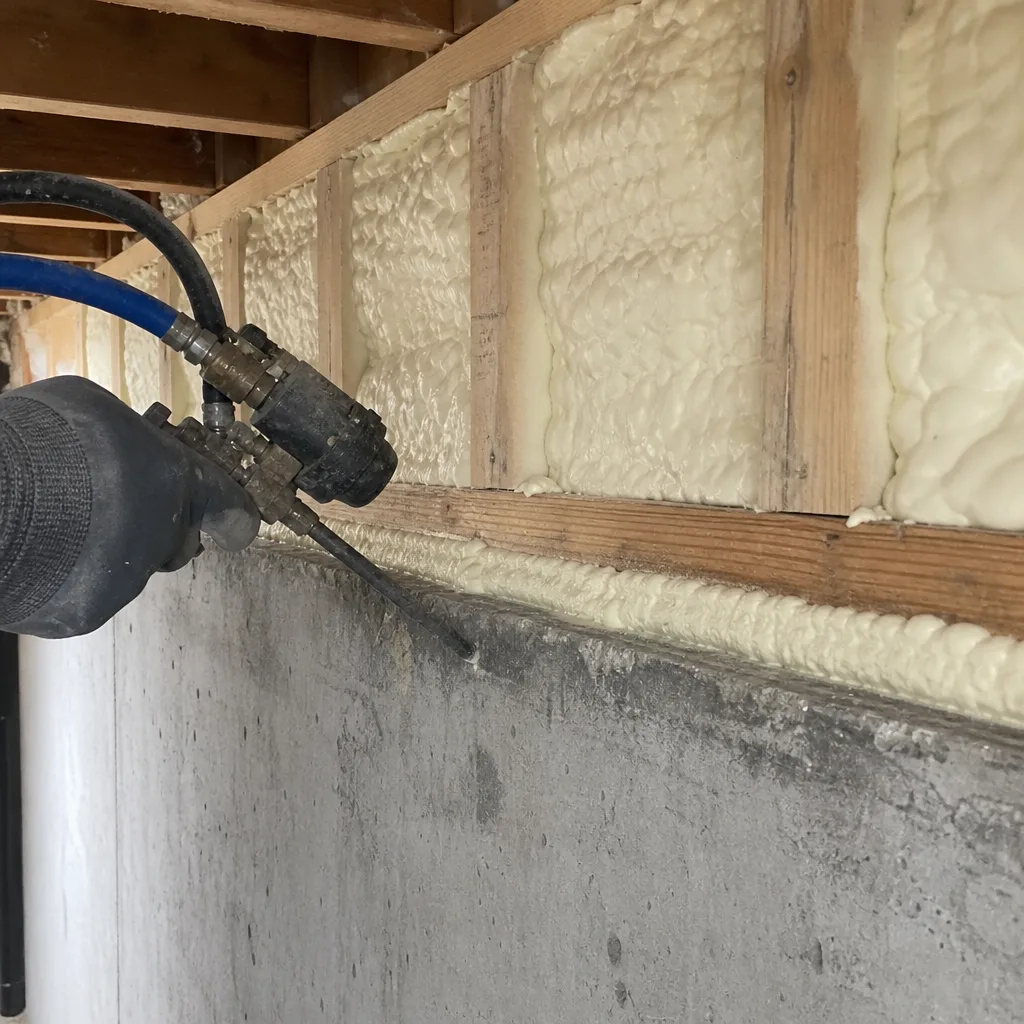
Open Cell Spray Foam is the workhorse for Eastvale’s typical two-story tract homes. It expands into cavities, seals around top plates and wiring penetrations, and stops the stack effect that pulls 140°F attic air into living space. Open-cell Icynene is what we most often recommend for bonus-room ceilings, garage-adjacent attic decks, and rim joists where air leakage matters more than maximum R-value per inch. A typical open-cell application on an Eastvale bonus room and garage-adjacent attic deck runs $1,800 to $3,400 depending on square footage and access.
Bonus Room and Garage Ceiling Sealing
The bonus room over the attached garage is the most common trouble spot in Eastvale homes built after 2005. Builders often left these cavities under-insulated or bare. Open-cell foam fills the entire cavity, adheres to the drywall above, and stops the heat that turns these rooms into ovens by early afternoon.
Attic Deck Air Sealing
In Eastvale’s hot dry climate, air sealing matters more than piling on more insulation. Open-cell foam sprayed across the attic deck seals top plates, can lights, and chase penetrations so the 140°F air in the attic stops channeling into the house. We pair it with the existing batts or cap the assembly with blown cellulose where the builder’s R-value is too low.
Spray Foam Insulation Contractors in Eastvale
Spray Foam Insulation Contractors in Eastvale should be able to look at your attic and tell you what the builder skipped. Most don’t. We do. When we inspect an Eastvale attic, the first thing we check is the space above the attached garage and any bonus room over it. In homes built in the 2000s and 2010s, these areas are frequently missing insulation entirely or have settled fiberglass batts that leave the drywall exposed. A typical closed-cell spray foam job on an Eastvale attic deck or rim joist area runs $2,400 to $5,100 depending on the size of the cavity and the foam depth specified.
Closed-Cell for Rim Joists and Roof Decks
Closed-cell Demilec gives you higher R-value per inch and acts as a vapor barrier. In Eastvale, we use it for rim joists on two-story homes and for roof deck applications where a homeowner is converting the attic or sealing an unconditioned space. It’s denser, firmer, and structurally reinforcing.
Garage Ceiling Spray Foam
The attached garage ceiling in an Eastvale tract home is often just bare drywall with no insulation at all. Afternoon sun on the garage door and west-facing wall pushes the garage ceiling surface well over 100°F. Spray foam on the garage ceiling cavity keeps that heat from radiating up into the bedrooms or bonus room above.
Trusted Brands We Service in Eastvale
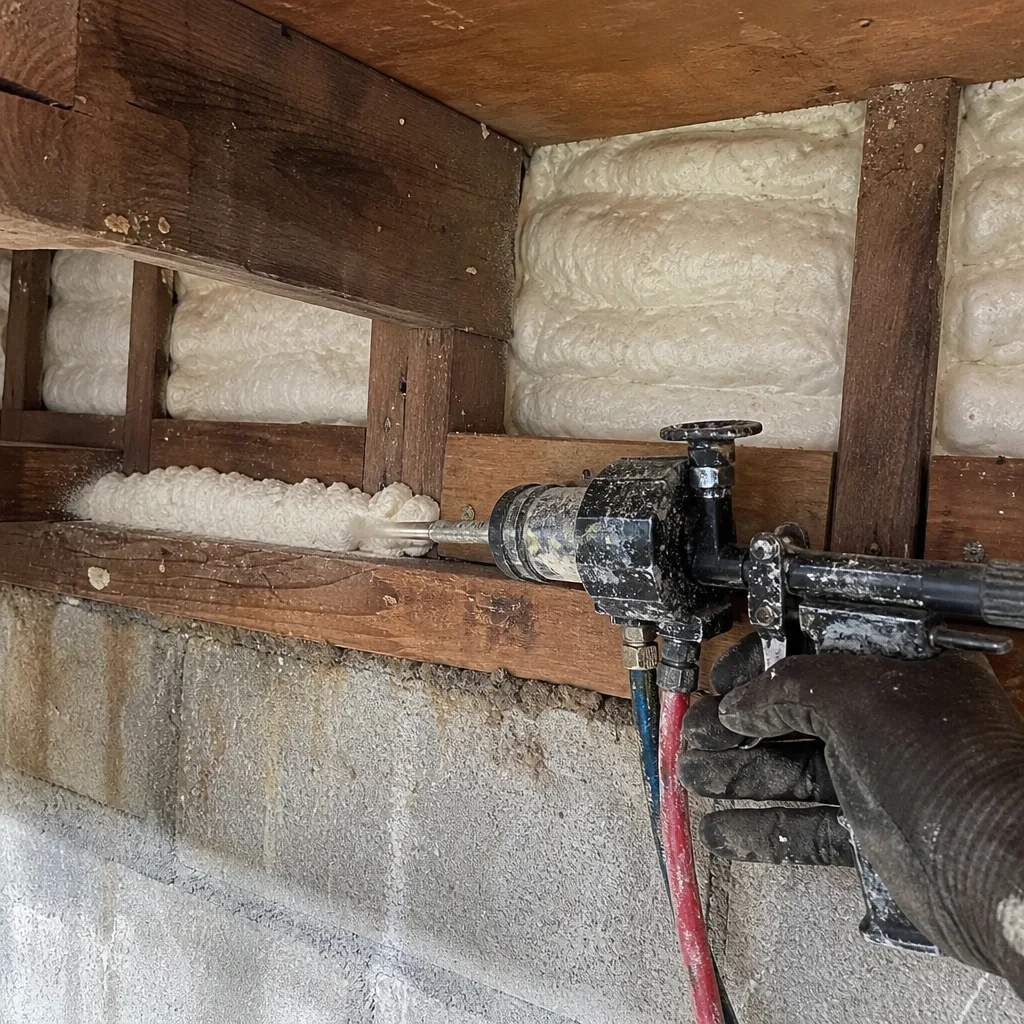
We stock and install Icynene open-cell foam and Demilec closed-cell foam, two of the category’s most established manufacturers. We also carry GreenFiber blown cellulose and Owens Corning fiberglass for projects where spray foam is paired with a cap of loose-fill over settled batts. Having multiple brands means we’re not pushing one product. For an Eastvale home with a bonus-room cavity that needs air sealing plus a boost in R-value, we can combine Icynene open-cell with a GreenFiber cap and get it done in one trip. That’s the advantage of working with a contractor that carries eight brands instead of defaulting to whatever one supplier stocks. For Eastvale homeowners, it means the material gets matched to the job, not the other way around.
Common Spray Foam Insulation Problems We See in Eastvale Homes
- Bare drywall above attached garages. In Eastvale’s 1990s-2010s tract builds, the garage ceiling cavity often has no insulation at all. The garage gets full afternoon sun and that heat transfers directly into whatever room sits above it.
- Settled builder-grade batts in bonus rooms. The R-13 batts installed in two-story foyer walls and bonus-room ceilings settle within a decade, leaving a gap at the top of the cavity. That gap is where 140°F attic air channels in.
- Air leaks at top plates and can lights. Builders in Eastvale’s newer tracks rarely air-sealed before insulating. Open-cell spray foam is the fastest way to close those cracks, and it’s often the difference between a bonus room at 78°F and one at 95°F on a summer afternoon.
- Foam specified for cold climates. Some contractors quote cold-climate R-values that don’t match Inland Empire heat gain. In Eastvale, the priority is stopping heat from entering, not trapping warmth inside. The foam depth and type need to reflect that.
Pricing for Spray Foam Insulation in Eastvale, CA
What you’ll pay for spray foam in Eastvale depends on the cavity, not just square footage. Here’s what we see in this market: rim joist sealing runs $900 to $1,800 on a typical two-story home. A bonus-room ceiling over the garage runs $1,500 to $3,200 with open-cell Icynene. A garage ceiling cavity runs $1,200 to $2,800. Full attic-deck air sealing with open-cell foam on a 2,000-square-foot home runs $3,500 to $6,000 depending on the roof pitch and access. If we’re capping settled batts with blown GreenFiber after foaming, add $1.50 to $2.20 per square foot. The estimate is free and it’s specific to your house. Call (855) 773-6429 and we’ll walk the attic with you.
We Also Serve Cities Near Eastvale
Placentia Insulation works throughout the Inland Empire and north Orange County. If you’re in Norco, Home Gardens, Corona, or Jurupa Valley, we can schedule the same week. Our crews carry the same eight-brand lineup and the same foam equipment to every job. If you’re outside Eastvale proper but still within a short drive, call (855) 773-6429 and we’ll confirm service for your address. Learn more about what we do in the area on our Spray Foam Insulation in Eastvale page.
Serving Eastvale, CA — Our Local Coverage Area
We’re based in the Eastvale area and know this community well. Use the map below to see our service coverage — if you’re nearby, we can almost certainly help.
FAQs About Spray Foam Insulation in Eastvale
The bonus room over your garage gets hot because the garage ceiling cavity below it usually has bare drywall and no insulation, and the builder’s R-13 batts in the bonus room walls have settled. The afternoon sun heats the garage to over 100°F and that heat radiates straight up through the floor assembly. Open-cell spray foam in the garage ceiling cavity and the bonus room knee walls stops this. Call (855) 773-6429 and we’ll confirm what’s actually in your cavities before quoting anything.
Yes. In most Eastvale homes we keep the existing batts where they’re still doing their job, air-seal the top plates and penetrations with open-cell foam, then cap the settled areas with blown GreenFiber cellulose. The batts only come out if they’re water-damaged, full of rodent droppings, or compressed past usefulness. We’ll tell you which situation you have after the attic inspection.
For Eastvale’s hot-dry Inland Empire climate, an R-19 to R-21 open-cell foam layer on the attic deck is typically what we recommend for air sealing and heat-gain control. Closed-cell at 2 inches gives you about R-14 and also acts as a vapor barrier where that matters. The priority in this climate is sealing the heat out of the attic, not chasing a high cold-climate R-value. Call (855) 773-6429 and we’ll give you a number matched to your house, not a one-size guess.
Go into your garage on a hot afternoon and put your hand on the ceiling drywall. If it’s noticeably warm, you’re missing insulation or the cavity is under-filled. In Eastvale’s newer tracts, the garage ceiling is frequently left as bare drywall with no insulation at all. We can scope the cavity and confirm what’s up there. The inspection is free.
No. Spray foam is applied from the attic side against the decking or framing, not from the roof exterior. Your tile roof and stucco exterior are untouched. We check for proper attic ventilation before foaming so the roof sheathing stays dry. In Eastvale’s dry climate, moisture buildup in the roof assembly is rarely an issue when the ventilation is right, but we verify it on every job.
Written by Alan Whitcomb, Owner at Placentia Insulation, serving Eastvale since day one.